Ethan did not hate me.
I discovered that less than an hour later.
He was furious because I had asked for the one man whose name he had spent seven years trying not to hear.
Liam Walker.
My boss dragged me into the networking reception after Ethan left.
I was pretending to study a tray of desserts when Chloe appeared again.
This time she looked terrified.
The moment she saw my uncovered face, the glass in her hand almost slipped.
“You.”
I frowned.
“What?”
She stared at me.
Then whispered:
“Oh my God.”
Something clicked.
“You recognize me.”
Chloe closed her eyes.
“I need to apologize.”
“For what?”
She pulled me toward an empty corridor.
“The phone you found…”
“Yes?”
“It wasn’t Liam’s.”
I stopped.
“What?”
“It belongs to Ethan.”
Everything inside me went silent.
I remembered the wallpaper.
My seventeen-year-old face.
The conference gossip.
He had someone in his heart. She died.
I stared at Chloe.
“Then why did you call him your husband?”
“Because Ethan is famous, the phone contains confidential contacts, and I panicked. I thought if I told a stranger it belonged to Ethan Grant, someone might sell it or search through it.”
“You invented an abusive husband?”
Her face turned red.
“Yes.”
“That was a terrible thing to lie about.”
“I know.”
She looked genuinely ashamed.
“I was desperate and stupid. Liam is actually my husband. He called because he was helping me look for Ethan’s phone.”
I remembered Chloe’s claim that she had been slapped seven times.
“You made all of that up?”
“Yes.”
“And the substitute-wife story?”
She covered her face.
“Also made up.”
I stared at her.
“You need better improvisation skills.”
Despite everything, she almost laughed.
Then her expression became serious again.
“But one part was true.”
“What?”
She pointed toward the conference hall.
“The woman on Ethan’s screen.”
My throat tightened.
“He believes she died.”
I found Ethan in a private meeting room.
He was standing beside the window with both hands braced against the table.
His recovered phone lay in front of him.
My photograph glowed on the screen.
I closed the door.
“You should change your wallpaper.”
He turned.
For several seconds he simply looked at me.
Then:
“Chloe told you.”
“Yes.”
His jaw tightened.
“I’ll deal with her.”
“She already apologized.”
I walked toward the table.
“Why do you think I’m dead?”
Ethan’s eyes changed.
Not surprise.
Pain.
“Ask Liam.”
“You told me you didn’t have his contact.”
“I lied.”
“Why?”
“Because seven years ago Liam Walker stood outside a hospital and told me you were dead.”
The room seemed to tilt.
I sat down.
“What?”
Ethan picked up his phone.
His fingers shook.
“The night of your accident, I heard about it from a classmate.”
He had gone to the hospital.
By the time he arrived, my family had already arranged to transfer me elsewhere.
Liam met him outside.
Ethan asked to see me.
Liam told him there was nobody left to see.
I stared at him.
“He said I died?”
“Yes.”
“Why would he do that?”
Ethan’s expression became cold.
“That is exactly what I have wanted to know for seven years.”
Then he opened a locked folder on his phone.
There were photographs.
An old hospital entrance.
Our high-school graduation program.
A newspaper clipping about the accident.
Even a photograph of the apartment building where my family had once lived.
“I looked for your parents,” he said. “The apartment was empty.”
“My father moved us.”
“I know that now.”
“At the time?”
“At the time Liam told me your family had left because they couldn’t bear to stay after losing you.”
I suddenly felt sick.
“And you believed him?”
“No.”
That surprised me.
“Not immediately.”
Ethan spent months searching.
School records said I had transferred.
But no forwarding school was listed.
Our old numbers were disconnected.
My family had left no address with neighbors.
Then Liam gave Ethan something.
A funeral notice.
My name.
My birth date.
My photograph.
I stared at him.
“There was never a funeral.”
“I know.”
“Then where did he get it?”
Ethan looked toward the door.
“I just sent someone to bring him here.”
Liam arrived forty minutes later.
Chloe came with him.
The smiling boy I remembered from high school had become a polished man in an expensive suit.
But the moment he saw me, every trace of color disappeared from his face.
“Ava.”
I stood.
“So you knew I wasn’t dead.”
He said nothing.
Ethan’s voice came from behind me.
“Answer her.”
Liam slowly sat down.
“Yes.”
Chloe stared at her husband.
“What?”
He closed his eyes.
“I knew.”
Ethan’s hand slammed against the table.
Not at anyone.
Just enough to make every glass jump.
“Seven years.”
I had never seen him lose control before.
“You watched me bury someone who was alive for seven years.”
Liam looked at me.
“Your father asked me to.”
That sentence hurt more than I expected.
“My father?”
After my accident, my father had found messages showing how obsessively I had pursued Ethan.
He knew how harshly Ethan had rejected me.
He blamed that entire period for distracting me, for making me miserable, for everything he could not control.
When I survived the accident, he decided I needed a completely clean break.
New city.
New school.
New number.
New life.
But he knew Ethan might search.
So he contacted Liam.
Liam’s father had done legal work for my family.
My father asked Liam to tell Ethan I had died.
“He said Ethan would forget eventually,” Liam whispered.
Ethan laughed bitterly.
“You knew I didn’t.”
Liam’s eyes reddened.
“I tried to tell your father it had gone too far.”
“When?”
“Two years later.”
“And?”
“He told me Ava was doing well. She had started university. He said reopening the past would only hurt her.”
I stared at Liam.
“So you chose for me.”
He looked at the floor.
“Yes.”
“Just like my father.”
“Yes.”
“And you kept letting Ethan believe I was dead.”
His voice broke.
“Yes.”
Chloe stood abruptly.
“You told me Ava really died.”
Liam looked at his wife.
“I couldn’t explain without admitting what I had done.”
She stepped away from him.
I suddenly understood why Ethan’s expression had turned so dangerous when I asked for Liam’s contact.
He hadn’t been jealous.
He thought the dead girl he had mourned for seven years had suddenly returned asking for the man who had buried her with a lie.
I turned toward Ethan.
There was still one question.
“Why?”
He frowned.
“Why what?”
“Why keep my picture?”
He looked at the phone.
Then at me.
“Because I was cruel to you.”
That was not the answer I expected.
“You rejected me.”
“Yes.”
“Repeatedly.”
“I know.”
“You practically humiliated me the last time.”
His face tightened.
“I remember every word.”
At seventeen, Ethan had told me:
Stop following me. Even if you were the last girl on earth, I would never choose you.
I remembered running away so fast I could barely see through my tears.
He remembered too.
“I liked you,” he said.
I stared at him.
“Don’t rewrite history.”
“I’m not.”
“People who like someone don’t speak to them that way.”
“You’re right.”
No excuse.
He continued.
“I was eighteen, arrogant, about to leave for university, and terrified that if I gave you even a little hope, you would build your entire future around me.”
“So you decided cruelty was kindness?”
“Yes.”
He gave a humorless laugh.
“It was one of the stupidest decisions of my life.”
Then the accident happened.
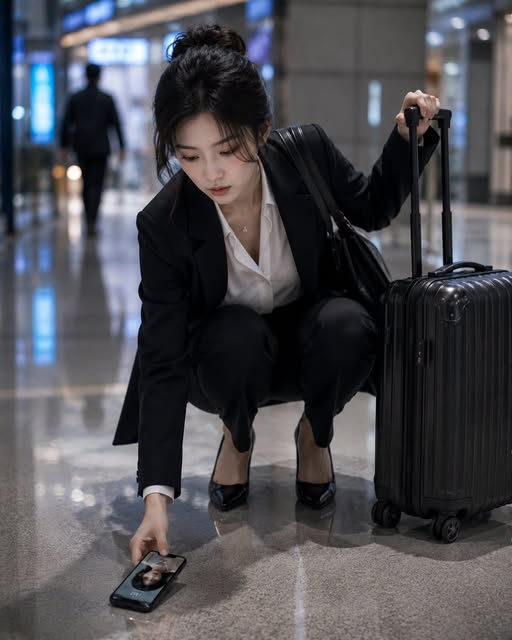
And before Ethan could ever apologize—
Liam told him I was dead.
For years Ethan had believed the last meaningful thing he ever gave me was rejection.
That was why he kept the photograph.
Not as some romantic trophy.
As punishment.
A reminder of the person he could never apologize to.
I looked at him.
“You built GrantTech after that?”
“Yes.”
“Because of me?”
“No.”
That answer made me trust him more.
“I built it because I wanted to build it.”
Then he added quietly:
“But I stopped taking people for granted because of you.”
I confronted my father that night.
He did not deny anything.
“Ava, you were seventeen.”
“I was alive.”
“I was protecting you.”
“You told someone I was dead.”
His face hardened.
“You don’t understand how obsessed you were with that boy.”
“Then move me.”
“We did.”
“Change my number.”
“We did.”
“Tell Ethan never to contact me.”
My voice shook.
“But you do not get to fake my death.”
He looked older suddenly.
“I thought he would move on.”
“And when Liam told you he hadn’t?”
Silence.
That was the answer that mattered.
“You knew.”
“Yes.”
“For years.”
“Yes.”
“And you never told me.”
“I didn’t want you running back.”
I laughed bitterly.
“I wasn’t running anywhere.”
By university I had barely thought about Ethan.
I had built friendships.
A career.
A life.
My father had been protecting a seventeen-year-old version of me that no longer existed.
And in doing so, he had lied to two adults for years.
“I can forgive you for being afraid for me,” I said.
Hope appeared in his face.
“I cannot forgive you yet for deciding that fear gave you ownership of my life.”
Then I left.
The GrantTech collaboration went ahead.
That was awkward.
For three months, Ethan and I sat across conference tables discussing contracts, research schedules and product launches as though neither of us had spent seven years on opposite sides of a fake funeral notice.
He never pushed.
Never asked me to dinner.
Never mentioned the high-school photograph.
Until our final project meeting.
When everyone else left, he placed his phone on the table.
The wallpaper was blank.
“You finally deleted me.”
“No.”
He opened his photo archive.
My old photograph was still there.
“I stopped using it as my screen.”
“Why?”
Ethan looked at me.
“Because you’re alive.”
Simple.
Then he said:
“And because if I ever have your photograph there again, I want it to be one you gave me.”
I laughed.
“That sounds suspiciously like flirting.”
“I’m trying.”
“You’re bad at it.”
“I had seven years without practice.”
That made me laugh harder.
For the first time, Ethan smiled too.
Not the cold CEO smile.
The boy from school.
Just older.
Less certain of himself.
That mattered.
Liam apologized separately.
I did not forgive him immediately.
Neither did Chloe.
Their marriage had its own problems to solve once she discovered how easily he could maintain an enormous lie “for someone’s good.”
I told him only one thing:
“Never protect another person by stealing their right to know the truth.”
He nodded.
“I won’t.”
Whether he deserved forgiveness would depend on what he did after that.
Not on how sorry he looked while apologizing.
Six months later, Ethan finally asked me to dinner.
I said no.
He accepted it.
A month later, he asked again.
I said maybe.
He smiled.
“Is that progress?”
“Don’t get excited.”
Two weeks later, I said yes.
Not because we were destined.
Not because he had secretly loved me forever.
And definitely not because seven years of mourning entitled him to me.
It didn’t.
I went because the man sitting across from me was finally speaking to the living woman in front of him instead of the memory on his phone.
We started slowly.
Painfully slowly, according to Mia.
She complained after a year:
“You two have been circling each other longer than some countries conduct peace negotiations.”
I told her to mind her business.
She refused.
Two years after I found the lost phone, Ethan and I returned to the same convention center.
GrantTech was launching a joint program with my company.
Before the event, he handed me his phone.
“Something wrong with it?”
“No.”
On the screen was a photograph of us standing beside the conference display.
I looked suspicious.
“When did you take this?”
“Mia.”
“Traitor.”
“Do I have permission?”
“For what?”
“To keep it as my wallpaper.”
I stared at him.
Then smiled.
“Yes.”
He changed it in front of me.
The seventeen-year-old girl with bangs disappeared.
In her place was the woman I had become.
Alive.
Older.
Smiling because she wanted to.
I handed the phone back.
“Don’t lose this one.”
Ethan looked at me.
“I already did once.”
I shook my head.
“No.”
“You lost the girl in that old picture.”
I tapped the new photograph.
“She doesn’t exist anymore.”
He nodded.
“I know.”
That was why we had a chance.
The lost phone did not bring me back to my first love.
It brought me face-to-face with a lie that had kept two people trapped inside the same memory for seven years.
My father thought pretending I was dead would protect me.
Liam thought keeping the lie would protect everyone.
Ethan thought mourning me forever could repay words he had said as a teenager.
They were all wrong.
The dead girl on Ethan Grant’s phone had never existed.
I had simply grown up somewhere he couldn’t see.
And when we finally met again, I made one thing clear:
If he wanted a place in my life, he had to stop loving the girl he lost—
and learn to know the woman who came back.
