Mom stood in my doorway clutching the handle of her suitcase.
For several seconds, neither of us spoke.
Then her lower lip trembled.
“Rachel, I don’t have anywhere else to go.”
My anger disappeared immediately.
Not at Daniel.
Not at Eric.
At her.
She was seventy-four years old, standing in the cold because her sons had apparently decided their inheritance came without responsibility.
I took her coat.
“You’re not sleeping outside.”
She looked relieved.
“But understand me clearly, Mom.”
I carried the suitcase inside.
“You can stay tonight.”
“Tomorrow we solve this as a family.”
“I am not becoming the permanent solution just because Daniel drove away fastest.”
She nodded.
And then she started crying.
I made tea.
Mom barely touched hers.
Finally I asked:
“What happened?”
She stared into the cup.
“Daniel’s wife wanted her mother to move into the house.”
“The house Dad left Daniel?”
“Yes.”
“So Daniel asked you to leave?”
“He said it was temporary.”
“How long?”
Mom didn’t answer.
“Mom.”
“Three months.”
I put my cup down.
“And before Daniel?”
“Eric.”
I already knew that.
“What happened there?”
“He said the children needed their rooms.”
“His house has five bedrooms.”
Silence.
I closed my eyes.
“Did either of them ask me before bringing you here?”
“No.”
“Did Daniel even wait to see whether I opened the door?”
Another silence.
That answer hurt more than I expected.
He hadn’t dropped Mom off.
He had abandoned responsibility.
There was a difference.
At eight the next morning, I created a family group chat.
Daniel.
Eric.
Tyler.
Me.
I wrote:
Mom is safe with me today.
At 6 p.m. we meet at James Porter’s office.
We are making a written care plan.
If either of you refuses to attend, my attorney will contact you separately.
Daniel replied first.
Why are you making this dramatic?
I stared at the screen.
Then wrote:
You left a seventy-four-year-old woman on my doorstep at night and drove away before I opened the door.
We can discuss “dramatic” at six.
Eric sent:
I’m working.
I replied:
So am I.
Six o’clock.
Tyler wrote nothing.
James looked exhausted when all of us arrived.
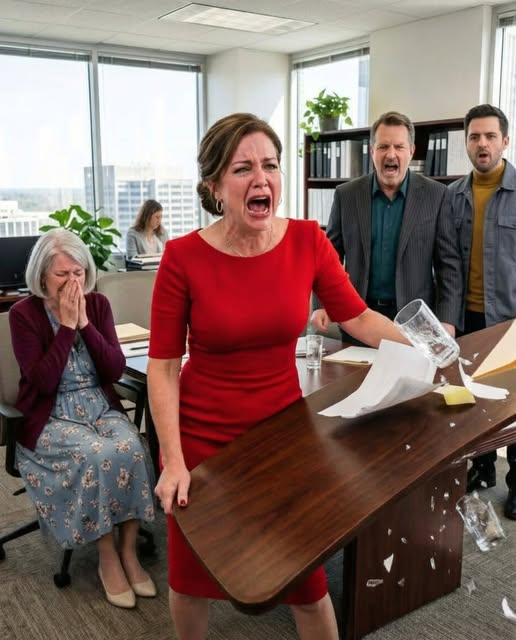
He probably remembered the table.
This time, he had removed the water glasses.
Smart man.
Mom sat beside me.
Daniel entered angry.
Eric entered annoyed.
Tyler arrived last and looked embarrassed.
James folded his hands.
“Rachel says the family needs clarification about Margaret’s care.”
Daniel immediately pointed at me.
“Dad specifically assigned it to her.”
I turned toward James.
“Did he?”
James looked at Daniel.
“No.”
The room went quiet.
Daniel frowned.
“What?”
James opened the will.
“Your father expressed a wish that Rachel oversee Margaret’s care.”
“A wish is not a legal obligation.”
I looked at my brothers.
“Say that again.”
James sighed.
“Rachel was never legally required to become Margaret’s full-time caregiver.”
Daniel’s face changed.
“But Dad said—”
“Your father wrote what he wanted.”
James looked directly at him.
“He did not create a funded caregiving trust.”
“He did not establish compensation.”
“He did not impose an enforceable personal-service obligation on Rachel.”
“So legally, your mother’s care was never exclusively her responsibility.”
I leaned back.
For almost a year, my brothers had repeated Dad’s sentence as though it were a court order.
It had never been one.
Eric crossed his arms.
“Fine. Then what do you want?”
I opened the folder in front of me.
“A plan.”
“Mom has retirement income.”
“She also has medical expenses.”
“She should not be moved from house to house whenever one of us becomes inconvenienced.”
Daniel scoffed.
“So she stays with you.”
“No.”
His expression changed.
I continued.
“She needs stability, not whichever sibling loses the argument.”
I had spent the morning researching senior communities near her cardiologist.
Not nursing homes.
Mom did not need that level of care.
She needed a small apartment, transportation, medication support and family who actually visited.
I placed three brochures on the table.
“She chooses the place.”
“Her income covers part of it.”
“The remainder is divided between the three of us.”
Eric stared at me.
“Why equally? You don’t have kids.”
I laughed.
“There it is.”
“What?”
“The reason daughters always end up with the work.”
I leaned forward.
“Daniel inherited a house.”
“You inherited a house.”
“Your son received two hundred thousand dollars.”
“I inherited instructions.”
“And somehow I’m still the one being asked to prove I have fewer reasons to live my own life.”
Nobody answered.
Then Tyler spoke.
“I’ll contribute.”
Everyone turned.
Eric frowned.
“You don’t have to.”
Tyler looked at his father.
“Grandpa gave me two hundred thousand dollars.”
“Exactly. It was your inheritance.”
“And Grandma got dropped at Aunt Rachel’s door.”
Eric’s expression tightened.
“Stay out of this.”
“No.”
Tyler looked ashamed.
“I knew Uncle Daniel wanted her gone.”
Mom looked at him.
“What?”
Tyler swallowed.
“He called Dad last week.”
Eric immediately said:
“Tyler.”
But Tyler continued.
“They were arguing about whose turn it was.”
The room went still.
Whose turn.
Like Mom was a lawn mower they shared custody of.
Tyler looked at me.
“They said you’d take her eventually because you always do.”
I felt something cold settle inside me.
There it was.
The whole family philosophy.
Rachel will do it.
Rachel always does.
Mom started crying.
“I never wanted to be a burden.”
I turned toward her immediately.
“You aren’t.”
Daniel muttered:
“Nobody said she was.”
I looked at him.
“You left before confirming she could get inside my house.”
He stopped.
Eric looked away.
I continued:
“She is not the burden.”
“The assumption that one daughter must sacrifice everything while two sons keep their inheritance untouched is the problem.”
James quietly nodded.
That seemed to irritate Daniel even more.
Then Mom reached into her handbag.
She pulled out an envelope.
Old.
Folded.
Dad’s handwriting was on the front.
For my children.
I stared at her.
“What is that?”
“Your father gave it to me before he died.”
Daniel sat forward.
“You had another letter?”
Mom nodded.
“He told me to give it to you if the family started fighting.”
I almost laughed.
“Mom, we flipped a table eleven months ago.”
“I was hoping you’d calm down.”
Fair.
She handed it to James.
He opened it.
Read silently.
Then looked at all three of us.
“This is not legally binding.”
Daniel groaned.
“Just read it.”
So James did.
Dad had written:
I have divided property based on what I believed each child needed at the time.
Daniel has always wanted the Cleveland house.
Eric helped me with the Columbus property for years.
Tyler needs capital to start his life.
Rachel has always been the person I trusted most with Margaret.
If I made a mistake, it was believing trust was enough compensation.
I stopped breathing.
James continued.
I do not want Rachel to carry her mother alone.
Daniel and Eric, if you read “Rachel will take care of Mom” and hear “we are free,” then I failed to raise you properly.
Nobody moved.
Not even me.
James read the final lines.
Margaret is all of your mother.
Her care belongs to all of you.
And Rachel, if they try to leave everything to you again, say no.
I stared at the page.
Dad had actually written it.
Say no.
My eyes burned.
For nearly a year, I had been furious at a dead man.
Part of me still was.
Because he should have put that fairness into the actual estate plan.
Trust without resources is still an unfair gift.
But at least he had understood something before the end.
Too late to fix the will.
Not too late to tell me I was allowed to refuse.
Daniel looked down.
Eric stared at the wall.
Tyler wiped his eyes.
Mom whispered:
“Your father knew he had handled it badly.”
I answered:
“He did.”
That didn’t erase it.
But it mattered.
The written care agreement took two weeks.
Not one dramatic evening.
Two weeks of numbers.
Appointments.
Arguments.
Assessments.
Mom chose a senior apartment twelve minutes from her cardiologist and fifteen minutes from me.
She liked the balcony.
She hated the wallpaper.
I told her wallpaper was not a medical emergency.
She informed me that I had inherited my father’s bad taste.
That was the first time I heard her laugh in months.
Her retirement income paid most of the monthly cost.
Daniel and Eric each contributed a fixed amount.
So did I.
Tyler insisted on covering her transportation service for the first two years.
I told him he didn’t need to.
He said:
“I know.”
That made the difference.
Then came the family schedule.
Daniel took Mom to cardiology appointments every other month.
Eric handled insurance paperwork and pharmacy pickups.
I coordinated major medical decisions because I already knew her doctors and, unlike Dad, we wrote that responsibility down.
But coordinating was not the same as doing everything.
If I was unavailable, there were backups.
Names.
Phone numbers.
Responsibilities.
For the first time in five years, caring for Mom became a system instead of a woman.
Daniel hated it at first.
He complained constantly.
Traffic.
Work.
Appointments.
One afternoon, after waiting ninety minutes at a cardiology clinic, he called me.
“This is insane.”
“What?”
“They’re running an hour and a half behind.”
“Yes.”
“You used to do this every month?”
“For years.”
Silence.
Then he said:
“I didn’t know.”
I almost replied:
You never asked.
Instead, I said:
“Now you do.”
He never complained to me about cardiology again.
Eric’s moment came with the pharmacy.
Mom had six prescriptions.
One changed dosage.
Another needed insurance approval.
He spent half a day sorting it out.
That evening he called.
“How did you manage all of this?”
“Mostly during lunch breaks.”
Another silence.
“You had a job.”
“I still do.”
“I thought…”
He stopped.
“What?”
“I thought you had more time.”
I laughed.
“Because I’m unmarried?”
He sighed.
“Yes.”
At least he admitted it.
I said:
“I had the same twenty-four hours you did.”
That conversation changed him more than any accusation I had made at the will reading.
Mom changed too.
That surprised me.
For years, she had called me first because I always answered.
After we established the schedule, she called Daniel when it was Daniel’s responsibility.
Eric when it was Eric’s.
Once she called me because her television remote stopped working.
“Whose day is it?” I asked.
“Eric’s.”
“Call Eric.”
“But you live closer.”
“Call Eric.”
She sighed dramatically.
Then called Eric.
He drove twenty-five minutes to discover she had put the batteries in backward.
I laughed for an entire afternoon.
He did not.
At first.
Six months later, we had Sunday lunch at Mom’s apartment.
Daniel brought chicken.
Eric brought vegetables.
Tyler brought dessert.
I brought nothing.
Absolutely nothing.
Mom looked at my empty hands.
“You forgot something?”
“No.”
“What?”
“My assignment.”
Daniel laughed.
“Sit down, Rachel.”
So I did.
Someone else set the table.
Someone else filled Mom’s water.
Someone else packed the leftovers.
For the first time in years, I was simply her daughter.
Not her driver.
Not her nurse.
Not her emergency contact.
Her daughter.
I had almost forgotten how different that felt.
Daniel apologized a year after leaving Mom at my door.
Not because anyone forced him.
We were standing outside her apartment.
He said:
“I knew you would take her in.”
“I did.”
“That’s why I drove away.”
I looked at him.
He continued:
“I told myself it was because she was safer with you.”
“But really, I just knew you’d clean up what I didn’t want to deal with.”
I nodded.
“Yes.”
He swallowed.
“I’m sorry.”
I accepted it.
Not because leaving Mom outside had become okay.
Because he finally apologized for the actual thing he had done.
Eric apologized later.
Tyler grew his landscaping company and repaid the portion of his inheritance he had borrowed from himself to get started.
He kept paying Mom’s transportation anyway.
When I told him to stop, he said:
“Grandpa gave me a head start.”
“I can give Grandma some rides.”
Good kid.
Maybe Dad had gotten one inheritance right.
Mom lived another nine years.
Not with me.
Not with Daniel.
Not with Eric.
In her own apartment.
With her own key.
Her own chair.
Her terrible wallpaper.
When her health eventually declined, we increased professional support.
All three of us paid.
All three of us visited.
When she finally needed more intensive care, we chose it together.
Nobody dumped her anywhere.
Nobody asked:
Whose turn?
By then, we had learned.
After Mom died, James called us back to his office.
I joked that he should bolt the table to the floor.
He did not laugh.
Mom had left a small estate.
Nothing like Dad’s.
Mostly savings.
A few pieces of jewelry.
Her furniture.
She divided the money equally between the three of us.
But she left me one extra thing.
Dad’s letter.
The original.
At the bottom, underneath his handwriting, Mom had added one sentence of her own.
Rachel,
I’m sorry we taught everyone that your strength meant you needed less.
I sat in James Porter’s office and cried harder than I had the day Dad’s will was read.
Because that had been the real inheritance all along.
Not houses.
Not two hundred thousand dollars.
A role.
The responsible daughter.
The dependable sister.
The child who needed nothing because she could handle everything.
It had taken our family years to understand how unfair that role had been.
When Dad’s will was first read, I thought my brothers inherited property while I inherited my mother.
I was wrong.
Mom was never the burden.
The burden was the belief that loving her meant I had to disappear inside caring for her.
The night Daniel left her at my door, I said:
“Ask your sons.”
It sounded cruel.
It wasn’t.
It was the first fair thing I had said in years.
Because daughters are not born with extra hours in the day.
Sisters do not owe more because they are dependable.
And being the person everyone trusts should never mean being the person everyone exploits.
Dad gave my brothers two houses.
Tyler got two hundred thousand dollars.
And me?
In the end, I kept the only line from his will that actually changed my life.
Not:
Take care of Mom.
The one he wrote later:
If they leave everything to you again, say no.
