The contract in front of me belonged to Horizon Development.
Gu Real Estate’s largest competitor.
I had not applied there.
They had approached me three months earlier.
At the time, I refused.
I was still Adrian Gu’s wife.
Still his assistant.
Still foolish enough to believe loyalty meant staying even after love had disappeared.
But the night before the divorce, Horizon called again.
This time, I listened.
Their vice president, Marcus Chen, placed the contract in front of me.
“Director of Strategic Operations.”
I looked at the title.
“You know I was an executive assistant.”
Marcus smiled.
“No.”
“You performed the duties of an operations director while carrying the title of executive assistant.”
He opened another folder.
Inside were projects I had worked on over six years.
Land acquisitions.
Government negotiations.
Financing schedules.
Tender presentations.
Crisis plans.
Adrian’s name appeared on almost every final report.
Mine appeared in footnotes.
Sometimes not at all.
Marcus tapped the page.
“We know who actually coordinated these.”
For the first time in years, somebody had looked at my work without first looking at Adrian.
I signed.
Adrian called again.
I rejected it.
Then came another message.
Come back to the office. We need to talk.
I replied for the first time.
For personal matters, contact my lawyer. For company matters, contact my replacement.
Three dots appeared.
Then disappeared.
Then returned.
You resigned because of the divorce?
I stared at that sentence.
Six years.
And he still believed everything I did revolved around him.
I answered:
I resigned because I no longer wanted my entire life to be organized around you.
No response.
That evening, Sofia poured me wine and asked:
“Did that hurt?”
“Yes.”
“Do you regret it?”
“No.”
That distinction mattered.
Adrian discovered the practical meaning of my resignation within forty-eight hours.
His Monday schedule had two overlapping meetings.
Nobody had confirmed the airport transfer for a visiting investor.
The Japanese delegation’s dietary restrictions had disappeared from the briefing notes.
A board packet contained the wrong version of a land valuation report.
None of these were disasters.
They were ordinary mistakes.
The kind that happen when a company treats invisible labor as something that happens automatically.
Adrian called Human Resources.
“Hire someone experienced.”
They did.
The first assistant lasted nine days.
The second lasted three weeks.
The third told HR:
“Mr. Gu expects me to remember decisions he never tells me he made.”
I laughed when Sofia sent me that sentence.
Not because Adrian was suffering.
Because for six years, I had done exactly that.
Then Horizon announced its bid for Riverside East.
That was the project Adrian had been preparing for almost two years.
A mixed-use development worth billions.
Transportation hub.
Commercial district.
Residential towers.
Public green space.
It would decide which company dominated the city’s next development cycle.
And now I was working for the rival team.
Adrian found out at the pre-bid conference.
I entered the hall wearing a navy suit and carrying Horizon’s proposal folder.
He was speaking with three executives.
The moment he saw me, he stopped.
Not subtly.
Completely.
Marcus leaned toward me.
“You okay?”
“Yes.”
Adrian walked over.
“Elena.”
“Mr. Gu.”
His expression hardened.
“You joined Horizon?”
“Yes.”
“When?”
“The day after our divorce.”
“You planned this.”
“No.”
“You expect me to believe that?”
“I expect you to believe whatever makes your life easier. You usually do.”
Marcus coughed into his hand.
Adrian ignored him.
“You know confidential information about Gu Real Estate.”
“I know.”
“If you use it—”
“I won’t.”
He stopped.
I looked directly at him.
“I signed a conflict and confidentiality declaration before joining.”
“Horizon’s legal team reviewed my previous responsibilities.”
“I will not use Gu’s private information.”
“What I will use is my own experience.”
That answer bothered him more.
Because he could challenge stolen secrets.
He could not challenge competence.
The Riverside competition lasted four months.
Horizon did not win because I knew Adrian’s schedule.
We won because our proposal was better.
We redesigned the traffic plan after residents objected.
We reduced the luxury-commercial footprint and increased affordable housing.
We brought in a transit consultant Adrian’s team had dismissed as too cautious.
And, most importantly, we listened.
I had spent six years sitting beside Adrian while powerful men entered conference rooms believing money could replace patience.
I knew where those negotiations failed.
Not because I stole information.
Because I had watched arrogance repeat itself.
At the final presentation, Adrian spoke first.
Polished.
Precise.
Impressive.
Then I presented Horizon’s operational plan.
When I finished, the committee chair asked:
“Ms. Lin, you previously worked for Gu Real Estate?”
“For six years.”
“In what position?”
I paused.
“Executive assistant.”
Several people looked surprised.
The chair glanced at my presentation.
“Only executive assistant?”
I smiled.
“That depends on who was writing the job title.”
Across the room, Adrian looked away.
Horizon won Riverside East by a narrow margin.
Not because Gu collapsed.
Not because Adrian was incompetent.
The evaluation report later showed Gu scored higher on financing strength.
Horizon scored higher on implementation, community planning and operational risk.
Three points decided the project.
Three.
Adrian called me that evening.
This time I answered.
“Congratulations,” he said.
His voice was flat.
“Thank you.”
“You knew exactly where to attack.”
“No.”
“What?”
“I knew where to improve.”
Silence.
Then:
“Is there a difference?”
“Yes.”
“One is about you.”
“The other is about the project.”
He said nothing for several seconds.
Then quietly:
“You always hated when I made everything personal.”
“I didn’t hate it.”
“I just got tired of disappearing inside it.”
He hung up first.
But not angrily.
That was new.
Two months later, Gu Real Estate invited Horizon to a joint industry forum.
I expected Adrian to avoid me.
Instead, he waited outside the auditorium.
“You cut your hair.”
I touched it automatically.
Shorter now.
“Yes.”
He looked embarrassed.
“I never noticed when you changed it before.”
I smiled faintly.
“No.”
He had missed birthdays.
New glasses.
Illness.
Promotions I turned down because his schedule required me.
Once, I wore a wrist brace for three days before he asked why I was typing slowly.
Now he noticed three inches of hair.
Too late.
But noticed.
He asked:
“Can we have coffee?”
“No.”
His face fell.
Then I added:
“But we can talk here for five minutes.”
He nodded.
Progress.
He looked through the glass wall toward the conference hall.
“I hired a chief of staff.”
“That sounds smarter.”
“And two assistants.”
“Even smarter.”
He almost smiled.
“Apparently one person should never have been doing everything you did.”
I said nothing.
Then:
“I reviewed your old personnel file.”
My expression changed.
“Why?”
“I wanted to know what I missed.”
That answer surprised me.
He continued:
“You requested a promotion four years ago.”
“Yes.”
“It was rejected.”
“Yes.”
“I signed the rejection.”
“I know.”
His face tightened.
The reason listed had been:
Current position provides greater strategic value to executive leadership.
Translation:
Adrian needed me where I was.
So my career stayed still.
He whispered:
“I don’t remember signing it.”
“I do.”
That hurt him.
Good.
Not because I wanted revenge.
Because forgetting consequences does not erase them for the person who lives with them.
He asked:
“Why did you stay?”
I thought about it.
“Because I loved you.”
His eyes lifted.
“And because every year I told myself next year would be different.”
“I thought once the company stabilized, you’d notice.”
“Once the merger closed.”
“Once the board fight ended.”
“Once your father retired.”
“Once we had more time.”
I smiled sadly.
“There was always another once.”
Adrian looked down.
“I thought you were happy.”
“No.”
“You never said—”
“I did.”
He stopped.
I continued:
“I told you I was tired.”
“You sent me vitamin supplements.”
“I told you I wanted another role.”
“You said we couldn’t afford disruption.”
“I told you our marriage felt like work.”
“You booked a weekend resort and spent half of it on conference calls.”
His eyes closed.
“I said plenty.”
“You just translated every complaint into something easier to solve.”
That night, Adrian sent one message.
I’m sorry I made you feel invisible.
I stared at it.
Then replied:
You didn’t make me feel invisible. You behaved as if I were.
He did not answer.
For once, he seemed to understand that the difference mattered.
My life at Horizon became busy.
Very busy.
But differently.
When I stayed until midnight, it was because the project belonged partly to me.
When I solved a problem, my name appeared on the report.
When I disagreed with Marcus, he argued back.
He did not say:
“Just handle it.”
He said:
“Convince me.”
Sometimes I failed.
Sometimes he did.
Work became work again.
Not marriage.
Not emotional housekeeping.
Not the invisible infrastructure under someone else’s success.
Adrian’s mother called me six months after the divorce.
“Elena, Saturday dinner.”
I almost laughed.
Apparently nobody had updated her calendar either.
“Mrs. Gu, Adrian and I are divorced.”
Silence.
Then:
“I know.”
That surprised me.
“Then why are you inviting me?”
Her voice softened.
“Because I owe you an apology.”
I went.
Not for Adrian.
For closure.
His mother had always treated me kindly but passively.
She praised me for “taking care of Adrian.”
Never once asked who took care of me.
At dinner, she placed a folder beside my plate.
Inside were copies of old family photographs.
In almost every picture, I was slightly outside the center.
Holding someone’s coat.
Fixing the table.
Checking a phone.
Adrian standing in front.
She whispered:
“I looked through six years of photos.”
“I realized you were always working even when you were supposed to be family.”
I looked at her.
She continued:
“I thought you enjoyed taking care of everyone.”
“I should have asked.”
I accepted that apology.
Not because it changed the past.
Because it correctly named it.
A year after Riverside, Adrian and I met again during a real estate summit.
He seemed different.
Not transformed.
Just quieter.
He no longer carried two phones.
His chief of staff interrupted him twice during our conversation.
The old Adrian would have been irritated.
This one listened.
Then he asked:
“Are you seeing someone?”
I raised an eyebrow.
“That sounds personal.”
“It is.”
“No.”
He nodded.
Hope appeared for half a second.
I removed it.
“That is not an invitation.”
He laughed softly.
“I know.”
Then:
“Would you ever consider trying again?”
There it was.
Not demanded.
Not assumed.
Asked.
I respected that.
So I answered honestly.
“No.”
His smile disappeared.
“Never?”
“Adrian.”
I looked at him.
“I spent six years being your wife and your assistant.”
“I don’t know how to become only your wife without eventually becoming responsible for your life again.”
“I’m changing that.”
“I know.”
“Then why isn’t that enough?”
“Because your improvement does not obligate me to return.”
He looked down.
That sentence hurt.
But he nodded.
“I understand.”
Maybe he finally did.
Two years later, Riverside East broke ground.
I stood onstage with the project team.
Not behind anyone.
Not holding someone else’s folder.
My name appeared on the screen:
ELENA LIN — VICE PRESIDENT, STRATEGIC DEVELOPMENT
Sofia sat in the front row and cried embarrassingly loudly.
After the ceremony, she hugged me.
“You realize you used to schedule groundbreaking ceremonies for other people.”
“I know.”
“And now?”
I looked at the construction site.
“Now someone else scheduled mine.”
That felt surprisingly good.
Gu Real Estate continued doing well.
Adrian remained CEO.
He rebuilt his executive team.
Created clearer roles.
Promoted his new assistant after eighteen months instead of keeping her permanently at his desk.
I heard about that through industry gossip.
For some reason, it made me smile.
Not because I wanted credit.
Because maybe the next woman would not need to resign to be seen.
Three years after our divorce, Adrian and I met at the opening of Riverside’s first completed tower.
He walked over carrying two cups of coffee.
He handed one to me.
No sugar.
One splash of milk.
I looked at it.
“You remembered.”
His expression turned almost embarrassed.
“You drank it that way for six years.”
“Yes.”
“I should have remembered then.”
Probably.
But I took the coffee anyway.
We stood beside the window overlooking the city.
He asked:
“Are you happy?”
“Yes.”
“Really?”
I smiled.
“Really.”
He nodded.
Then said:
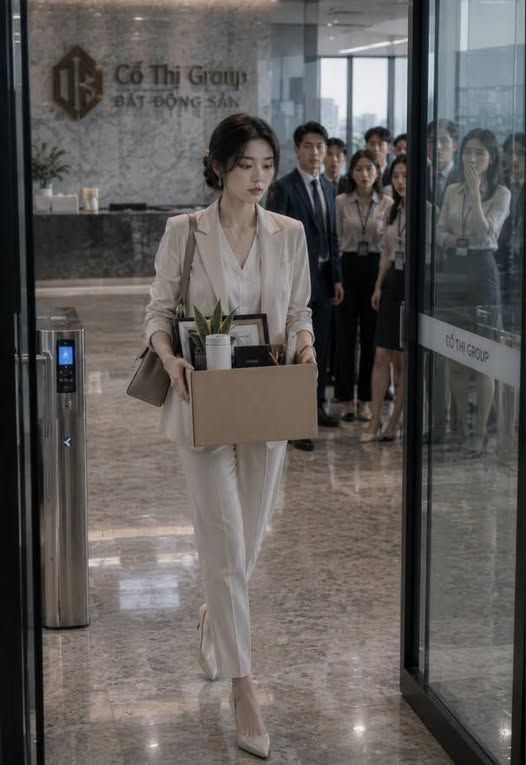
“I kept your old plant.”
I looked at him.
“What?”
“The one from your desk.”
“The fifteen-yuan plant?”
“Yes.”
“I thought I took it.”
“You left it in the lobby when you went to HR.”
I laughed.
Of course I had.
He continued:
“It nearly died.”
“That sounds like your management style.”
He laughed too.
Then:
“My assistant saved it.”
“Promote her.”
“I did.”
That made both of us laugh harder than the joke deserved.
Before leaving, Adrian said:
“I still remember the day after our divorce.”
“So do I.”
“I walked into the office and asked where you were.”
“Yes.”
“I was angry that nobody knew.”
He looked at me.
“It never occurred to me that I should have known.”
I said nothing.
He continued:
“I knew where every investor was.”
“Every board member.”
“Every contract.”
“But not my wife.”
There was nothing left to add.
So I simply said:
“You know now.”
He nodded.
“Yes.”
Too late.
But yes.
The day I signed my divorce, Adrian left the civil affairs office in twelve seconds.
I watched him disappear and thought six years of my life had meant nothing.
I was wrong.
Those six years taught me exactly what I never wanted to become again.
The woman who knew everyone else’s schedule but had no plan for herself.
The wife who organized anniversaries her husband forgot.
The employee whose best work was mistaken for loyalty instead of skill.
So I resigned.
And when Adrian arrived the next day asking:
“Where is Elena?”
Nobody could answer him.
Not because I was lost.
Because for the first time in six years—
I was somewhere he had not chosen for me.
Years later, Adrian finally knew where I was.
On another company’s leadership team.
At the front of my own projects.
Inside a life that did not require managing his.
But by then, he had learned the answer to the question far too late.
Where was Elena?
Exactly where she should have been all along.
Building something with her own name on it.
