The voice on the phone answered immediately.
“Mrs. Whitmore, stay in your room. We’re already inside the hospital.”
My fingers tightened around the phone.
“Who are you?”
“Dr. Elena Cross. Your father contacted me years ago about medical ethics work. Your message reached my team last night.”
I closed my eyes.
The number had been hidden in one of my father’s old files.
I had called it without knowing whether anyone would still answer.
“Can you get me out?”
“Yes.”
A pause.
“But Marina, once we move you, your husband will know you discovered everything.”
“I know.”
“Are you certain?”
I looked toward the door Adrian had just walked through.
“Completely.”
Four minutes later, two nurses entered with a wheelchair.
Not from Adrian’s medical team.
Their badges belonged to another hospital.
Behind them came a woman in a gray suit carrying legal papers.
“Emergency transfer authorization,” she said quietly. “Independent medical review requested by the patient.”
My heart started pounding.
For months, everyone had acted as if Adrian’s signature mattered more than mine.
For the first time, someone asked:
“Do you consent to leave?”
“Yes.”
That one word felt like breathing after being underwater.
We used the service elevator.
No dramatic alarms.
No chase through hallways.
Just paperwork, locked doors, and people who finally treated me like a person instead of a project.
We were already in the ambulance when Adrian called.
Once.
Twice.
Ten times.
Then a message appeared.
Where are you?
Another.
Marina, answer me.
Then:
YOU CANNOT LEAVE THE HOSPITAL IN YOUR CONDITION.
I stared at the screen.
And typed:
Watch me.
At the new hospital, everything changed.
My medications were reviewed.
My records were copied before Adrian’s team could alter them.
Every consent form carrying my signature was examined.
Several were genuine.
Several were not.
One senior surgeon looked at the file for almost twenty minutes before quietly saying:
“This should never have been approved.”
I looked at him.
“Will my baby be okay?”
“That is our priority.”
“And me?”
He met my eyes.
“You are also our priority.”
I almost cried hearing that.
Not the experiment.
Not Celeste.
Not Adrian.
Me.
Hours later, Adrian found us.
He arrived with two lawyers and three members of hospital security behind him.
“Marina!”
I heard his voice outside the room.
“I’m her husband.”
Dr. Cross answered calmly.
“That gives you no right to override a competent patient.”
“She is seriously ill!”
“Yes.”
“Then let me see her.”
“No.”
His voice rose.
“I authorized her treatment!”
Dr. Cross went silent for one second.
Then:
“That is exactly why you are not coming inside.”
I closed my eyes.
The door never opened.
For the first time in seven years, Adrian Whitmore was standing outside a room I had locked him out of.
The delivery happened the next morning.
I remember bright lights.
Voices.
Fear.
Then a cry.
Small.
Angry.
Alive.
My son.
They placed him near me for only a moment before the doctors continued working.
But I saw him.
Tiny face.
Dark hair.
Furious little mouth.
And for the first time during the entire pregnancy, nobody was discussing another person’s heart.
Only him.
Only me.
When I woke again, Dr. Cross was sitting beside the bed.
My son was safe.
So was I.
The experimental tissue had been removed from the treatment plan entirely.
Celeste would not receive it.
I stared at the ceiling.
“What happens to her?”
Dr. Cross hesitated.
“She will continue receiving standard care while another solution is considered.”
I felt something strange.
Relief.
Not because Celeste might suffer.
Because I had expected myself to hate her.
But I didn’t.
Adrian had tried to turn us into two women fighting over one life.
The truth was uglier.
Neither of us had been given a real choice.
That afternoon, Celeste asked to see me.
I almost refused.
Then I said yes.
She entered in a wheelchair, pale and visibly exhausted.
No makeup.
No elegant dresses.
No first-love perfection.
Just a sick woman.
Her eyes filled the moment she saw me.
“I didn’t know.”
I said nothing.
She gripped the blanket over her knees.
“Adrian told me the tissue was being grown from an approved regenerative program.”
My mouth went dry.
“He never told you it was inside me?”
“Not until the final weeks.”
“And when you found out?”
“I told him to stop.”
I remembered the conversation outside her room.
If Marina dies for me, I will never forgive myself.
Celeste looked down.
“He said the risk to you was controlled.”
I laughed bitterly.
“He told me the risk was minimal too.”
She covered her face.
“I’m sorry.”
For a long moment, I simply watched her.
Then I asked:
“Will you testify?”
Her hands dropped.
“What?”
“Against him.”
She stared at me.
I continued.
“If you’re sorry, don’t apologize.”
My voice stayed calm.
“Tell the truth.”
Celeste nodded.
“I will.”
That decision destroyed Adrian’s last defense.
The investigation began within days.
The hospital records showed that he had financed the experimental program through private foundations.
Several approvals had been routed through companies he controlled.
Consent documents had been altered.
Medical risks had been minimized in reports given to me.
And Adrian had been receiving updates about the development of the implanted tissue throughout my pregnancy.
One message from a researcher became central to the case.
Patient Whitmore showing worsening complications. Recommend termination of experimental protocol.
Adrian’s reply:
Continue until viability target is reached.
I read it only once.
That was enough.
He had known.
Not suspected.
Not misunderstood.
Known.
And he had chosen to continue.
The cruelest part was that he still insisted he loved me.
He asked for a supervised meeting three weeks later.
I agreed for one reason.
I wanted to hear him say it to my face.
He entered the room looking like he had aged ten years.
“Marina.”
I said nothing.
His eyes moved toward the baby carrier beside me.
“Our son?”
“My son is sleeping.”
The correction hurt him.
Good.
He sat down.
“I never wanted you to die.”
“But you accepted that I might.”
His face twisted.
“It wasn’t like that.”
“Then tell me what it was like.”
He struggled.
“I loved Celeste before I met you.”
“I know.”
“When she became ill, I thought I could save her.”
“So you used me.”
“I thought I could save both of you.”
“No.”
I leaned forward.
“You decided that if someone had to carry the risk, it would be me.”
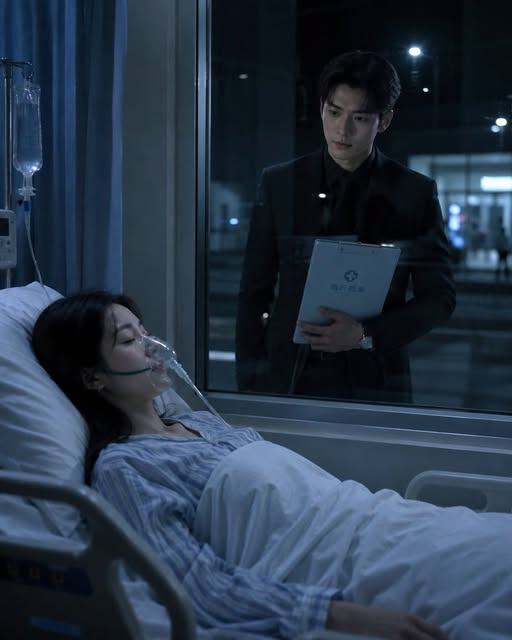
He went silent.
Then he whispered:
“I loved you too.”
I believed him.
That was the tragedy.
Adrian probably had loved me.
In the limited, selfish way a man can love someone while still deciding his own wishes matter more than her life.
“That doesn’t help you,” I said.
His eyes reddened.
“Marina, seven years…”
“Were real for me.”
He flinched.
“For you?”
I looked at him.
“I don’t know anymore.”
He reached across the table.
I moved my hand away.
“Don’t.”
His fingers stopped.
“I can fix this.”
“No.”
“I’ll cooperate with the investigation.”
“You should.”
“I’ll transfer everything to you.”
“I don’t want to be paid for surviving you.”
His face went white.
Then I said the sentence he finally understood.
“I am filing for divorce.”
He closed his eyes.
“Because of Celeste?”
“No.”
I shook my head.
“Because you looked at my life, measured it against hers, and decided mine was the one you were allowed to gamble.”
He had no answer.
The legal process lasted more than a year.
Adrian lost his executive authority in several medical foundations.
The hospital terminated the doctors who had knowingly participated.
Licensing boards opened investigations.
Civil and criminal cases followed over forged consent documents, unauthorized procedures, and financial misconduct.
Celeste testified.
So did Dr. Cross.
So did I.
Adrian’s lawyers tried to portray him as a desperate man trying to save someone he had once loved.
Perhaps that was true.
It was also not an excuse.
Desperation did not give him ownership of another person’s body.
The divorce was finalized before the final investigations ended.
I received primary custody of our son.
I named him Daniel.
My father’s name.
The man who had once told me:
“Anyone who truly loves you should never require you to disappear so they can be happy.”
I had forgotten those words.
I remembered them now.
Celeste survived too.
Not because of me.
Months later, she received another treatment through a legitimate program.
She sent me one message afterward.
I’m alive. So are you. That is enough.
I answered:
Yes.
We never became friends.
We didn’t need to.
She had never been my enemy.
The last time I saw Adrian was almost two years later.
He was allowed a supervised visit with Daniel.
Our son had his eyes.
That used to bother me.
It no longer did.
Children are not guilty of their parents’ choices.
When the visit ended, Adrian stood near the door.
“Do you hate me?”
I thought about it.
“No.”
His face almost looked relieved.
Then I continued.
“Hate requires too much space.”
He looked down.
“I still think about what our life could have been.”
“So do I.”
He looked up.
“But I think about something different now.”
“What?”
“The life Daniel and I almost didn’t get.”
Adrian had nothing to say to that.
He left.
I watched the door close.
Then Daniel began crying because he had dropped his toy.
I picked it up.
He stopped immediately.
Such a small problem.
Such an ordinary moment.
And I loved it.
For months, Adrian had treated my pregnancy like a countdown toward someone else’s miracle.
He had watched my body weaken and told himself it was worth the risk.
He thought he was waiting for a heart that would save Celeste.
He was wrong.
The heart that mattered most was already there.
Mine.
Beating.
Warning me.
Refusing to disappear quietly.
And the night I sent Adrian across town for almond cake, I finally listened to it.
He returned to an empty hospital room.
I left with my son.
And for the first time in seven years,
Adrian Whitmore was the one left waiting for something that would never come back.
