The lawyer’s sentence stayed in Ethan’s head long after the call ended.
“Clara left because there is nothing left in you that she wants back.”
He sat alone in his office until the building emptied.
For the first time, he stopped asking where Clara had gone.
And started asking what had happened before she left.
That evening, his father sent him a cardboard box.
Inside were his mother’s belongings from the hospital.
Her glasses.
Her wedding ring.
A small notebook.
And her phone.
The battery was almost dead.
Ethan charged it.
There were eleven outgoing calls from the night she died.
Six to him.
Three to Clara.
One to emergency services.
And one to Natalie.
Ethan stared at that last number.
Why had his mother called his secretary?
He opened the voicemail folder.
One message remained.
His mother’s voice was weak but clear.
“Natalie, put Ethan on the phone. I know he’s with you. Tell him this is not business. Tell my son I need him.”
Ethan stopped breathing.
The recording continued.
“I called the hotel. They said your company reservation included both of you. Don’t lie to me.”
Then silence.
The message ended.
Ethan called Natalie immediately.
She answered after several rings.
“Ethan?”
“My mother called you.”
Silence.
“What?”
“The night she died.”
Natalie’s voice changed.
“I receive many calls.”
“You remember this one.”
Another silence.
Finally:
“She called.”
Ethan stood slowly.
“And?”
“You told me before the trip that you didn’t want interruptions.”
“My mother said she needed me.”
“I thought she was upset about us traveling together.”
“Did you tell me?”
Natalie began crying.
“Ethan, I didn’t know she was going to die.”
“No.”
His voice became strangely calm.
“Neither did I.”
He paused.
“But you knew she called.”
Natalie whispered:
“Yes.”
The truth was ugly.
But it was not as convenient as Ethan wanted it to be.
He could not place all the blame on Natalie.
He had turned off his own phone.
He had chosen the island.
He had chosen the dinners.
He had chosen a trip that had crossed boundaries long before anyone entered a hotel room.
Natalie had hidden one call.
Ethan had built the circumstances that made hiding it possible.
The next morning, he ended her employment under the company’s conflict procedures and removed himself from the disciplinary decision.
Then he confessed everything to his father.
His father listened.
When Ethan finished, the old man said:
“Good.”
Ethan looked up.
“Good?”
“You finally stopped telling the story as though women keep ruining your life.”
The words landed hard.
“Your mother died.”
“Clara left.”
“Natalie lied.”
His father leaned forward.
“But you made your own choices in every part of that story.”
Ethan lowered his head.
Then his father pushed the cardboard box toward him.
“There’s something else.”
Inside the notebook was an envelope.
His mother had written:
For Clara.
Not Ethan.
For Clara.
His father said:
“She gave it to me months ago.”
“Why didn’t you send it with her?”
“Clara already read it.”
Ethan looked up.
His father continued:
“Your mother wrote two copies.”
Ethan unfolded the letter.
Eleanor Caldwell’s handwriting shook slightly.
Clara,
If you are reading this, then I finally said something I should have said years ago.
You are not responsible for saving my son from himself.
You have taken me to appointments he forgot.
You have remembered my medication when he was traveling.
You have sat with me through nights when I was frightened.
And too many times I thanked you by saying, “Ethan is busy.”
I turned his neglect into something you were supposed to understand.
I am sorry.
Ethan stopped reading.
His vision blurred.
He forced himself to continue.
I love my son.
But loving him does not mean asking you to disappear so his life can remain comfortable.
If one day you are exhausted, go.
Do not stay because of me.
Do not stay because of this family.
And certainly do not stay because you think leaving means you failed.
You have already given us more than we had any right to expect.
Live somewhere that does not require you to wait for a door to open.
At the bottom, his mother had added one line:
If I leave first, take me to the cliffs at St. Ives. Clara knows why.
Ethan sat there with the letter in his hands.
Clara had not stolen his mother’s ashes.
She had fulfilled her final wish.
His father said:
“They went there once, years ago.”
“Your mother said it was the happiest week she’d had after her diagnosis.”
Ethan swallowed.
“Where is Clara now?”
His father looked at him.
“I don’t know.”
This time, Ethan believed him.
The divorce continued.
Clara refused every request for a meeting.
She did not ask for money beyond what the law required to settle shared obligations.
She did not demand the company.
She did not leak the island photographs.
She did not expose Natalie publicly.
That frustrated Ethan at first.
He almost wished she would attack him.
At least anger would mean he still occupied space in her life.
Instead, Clara handled him through lawyers.
Efficiently.
Politely.
From a distance.
Three months later, Ethan signed the final papers.
His attorney asked:
“Are you sure?”
Ethan looked at his own signature.
The same signature he had once placed beneath wedding vows.
“Yes.”
For once, he understood that refusing would not preserve a marriage.
It would only prolong its ending.
Almost a year passed.
Then Ethan learned where Clara was by accident.
Not from investigators.
He had stopped using them.
He saw her name on a conference program.
Clara Whitmore.
Director of Operations, Whitmore Coastal Health Foundation.
Cornwall.
He stared at the page.
Before marrying Ethan, Clara had managed healthcare projects with her father.
She had stepped away after Eleanor’s health declined because Ethan traveled constantly and someone needed to be available.
Someone had always meant Clara.
Now she had returned to work.
Ethan did not attend the conference.
He wanted to.
He didn’t.
Instead, he wrote one email.
I saw your name.
Congratulations.
I won’t come unless you invite me.
She answered two days later.
Thank you.
Nothing else.
It was the first direct message she had sent him in almost a year.
He read those two words at least twenty times.
Then did something the old Ethan would never have done.
Nothing.
Two more years passed.
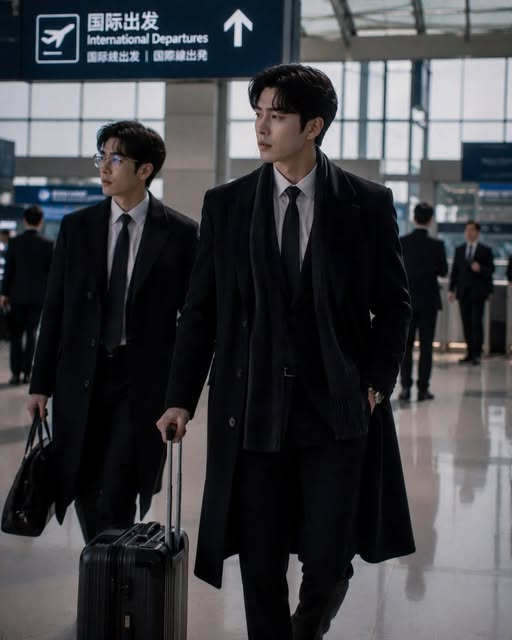
Ethan changed.
Not dramatically.
He still ran Caldwell Industries.
Still traveled.
Still made mistakes.
But he stopped treating availability as proof of love.
He hired proper care when his father needed surgery instead of expecting a woman in the family to absorb it.
He stopped allowing assistants into personal spaces that blurred professional boundaries.
He never contacted Natalie again.
Not because Clara might return.
Because she probably wouldn’t.
Change performed to win someone back is negotiation.
Ethan eventually understood he needed to change even if nobody rewarded him.
Then, on the third anniversary of his mother’s death, he went to St. Ives.
Alone.
He stood above the water carrying flowers.
Someone was already there.
Clara.
He stopped.
She had shorter hair.
A long gray coat.
No wedding ring.
For several seconds, neither spoke.
Then Clara said:
“Your father told me you might come someday.”
“I didn’t know you would.”
“I come every year.”
Ethan looked toward the sea.
“So this is where you brought Mom.”
“Yes.”
“Thank you.”
Clara nodded.
He did not ask why she had left.
He knew.
He did not ask whether she missed him.
That no longer mattered.
Instead he said:
“I found her letter.”
Clara looked at him.
“She loved you.”
“I know.”
“She was angry with you near the end.”
“I know that too.”
Then Ethan whispered:
“I used to think you left at the cruelest moment of my life.”
Clara remained silent.
“I thought, how could my wife leave when my mother had just died?”
He laughed bitterly.
“It took me months to understand that your worst moment happened before mine.”
Her expression shifted.
“You were the one who found her.”
“You handled everything.”
“And when you tried to reach me…”
He looked down.
“I had made myself unreachable.”
Clara’s eyes filled slightly.
Not with longing.
With memory.
Ethan continued:
“I’m sorry.”
No explanation followed.
No mention of Natalie.
No request for another chance.
Just:
“I’m sorry.”
Clara looked toward the water.
Then said:
“I believe you.”
For years, Ethan had imagined those words would open a door.
They didn’t.
He finally understood that they were not supposed to.
He asked:
“Are you happy?”
Clara thought about it.
“Yes.”
The answer hurt.
And somehow it also relieved him.
“Good.”
She smiled faintly.
“You?”
Ethan looked at the flowers in his hands.
“I’m learning.”
That was enough.
They stood together for several minutes.
Then Clara turned to leave.
Ethan said her name.
She stopped.
“I won’t ask you to come back.”
Clara looked at him.
“I know.”
He swallowed.
“But I want you to know something.”
“What?”
“You didn’t abandon me.”
Her expression softened.
“I abandoned the marriage long before you left the house.”
For the first time since that terrible week, Clara’s eyes filled completely.
She nodded once.
Then walked away.
Ethan never chased her.
That became the final lesson.
Years earlier, when Clara disappeared, he had mobilized drivers, lawyers, airport contacts and private investigators because he believed losing someone gave him the right to pursue them.
Now he understood:
Sometimes loving someone after you have failed them means respecting the distance they chose.
Clara built a new life near the coast.
She never returned to Caldwell Industries.
Never became Mrs. Caldwell again.
Ethan remained part of her past, but not the center of her future.
And Ethan?
He carried his mother’s letter for the rest of his life.
Not because it punished him.
Because one sentence kept him honest:
You are not responsible for saving my son from himself.
Clara had spent years doing exactly that.
Saving his schedule.
Saving his family relationships.
Saving his mother from loneliness.
Saving his reputation.
Saving a marriage he had stopped protecting.
When she finally left, Ethan believed she had taken everything from him.
In reality, she had only stopped carrying what had always been his responsibility.
His mother’s death broke him.
His wife’s disappearance humbled him.
But the truth that changed him came much later:
Clara had not left so he would chase her.
She had left because, for the first time in years, she had finally chosen a life where nobody needed to be chased at all.
