There was silence on the other end of the line.
Then Maria spoke.
“No.”
I frowned.
“What?”
“You are not going into an active conflict zone.”
“I’m qualified.”
“You are grieving, recovering from surgery, and calling me in the middle of the night after five years away from journalism.”
Her voice softened.
“I want you back, Elena.”
“But I will not confuse your need to escape with courage.”
That sentence stopped me.
For several seconds, I said nothing.
Then Maria continued:
“We need an investigative correspondent at our regional bureau in Prague. You’ll cover displaced families, aid contracts and cross-border corruption. Real reporting. Real responsibility.”
“Six-month contract.”
“If you still want field assignments afterward, we discuss them then.”
I looked at my old credential.
It had spent years underneath Adrian’s desk.
Supporting furniture.
Just like I had spent years supporting everything else in his life.
“I’ll take it.”
The next morning, I called a lawyer.
I sent her photographs of everything in Adrian’s safe.
The house purchased for Sophie.
The boutique.
The transfers.
The trips.
The messages.
I expected outrage.
Instead she asked one question:
“Were any of these paid from marital accounts?”
I checked.
Many were.
Not all.
Enough.
“Then preserve everything,” she said. “Do not confront him. Do not move money. Let us document it properly.”
For once, I followed advice instead of emotion.
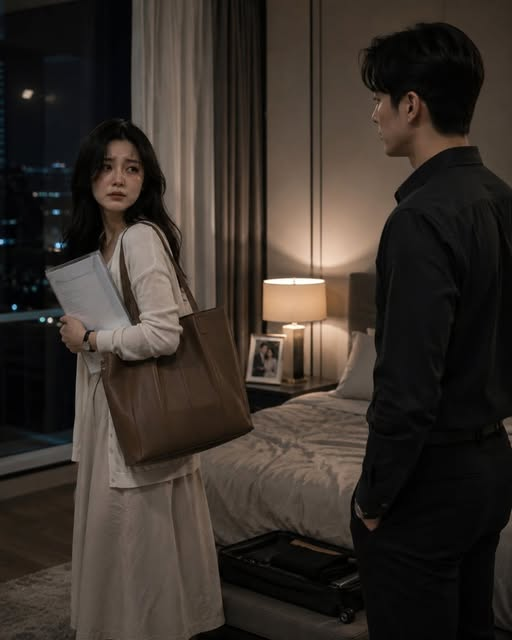
Three days later, I left the house.
I took my clothes.
My parents’ photographs.
My laptop.
My credential.
And the small box containing the ultrasound image I had not yet been able to throw away.
I left Adrian everything else.
Including the apron.
He returned that evening.
Sophie had called him again because another puppy was weak.
This time, a veterinarian was already there.
Adrian had simply stayed because Sophie was frightened.
When he opened the front door, the house was dark.
“Elena?”
Nothing.
He walked upstairs.
My wardrobe was half empty.
My toiletries were gone.
The bedside drawer was open.
Then he saw the papers on the bed.
Divorce petition.
Hospital discharge report.
Death certificates for my mother and father.
And a copy of the medical record confirming the pregnancy loss.
Adrian sat down.
For a long time, he apparently did not move.
Later, he told me the thing that destroyed him most was not any single document.
It was the dates.
The time my parents were admitted.
The time I underwent emergency treatment.
The time I called him seventy-six times.
And, beside those numbers, the timestamp of his social media post.
Congratulations, Luna.
After a difficult night, you are finally a mother.
He had celebrated the birth of puppies while his own child was being lost.
He had told me to ask my parents to accompany me when my parents were already fighting for their lives.
And when I finally returned home carrying their death certificates—
he had asked:
“Who died?”
Then Sophie called.
And he left before hearing the answer.
His phone rang.
Sophie.
Adrian stared at the name for a long time before answering.
“Adrian, can you come over?”
“No.”
She paused.
“What happened?”
“Elena’s parents died.”
Silence.
“And she lost the baby.”
Sophie whispered:
“Oh my God.”
Adrian’s voice broke.
“She called me seventy-six times.”
Sophie said nothing.
Then:
“I didn’t know.”
“I know.”
“You can’t blame me for something I didn’t know.”
That sentence changed something in him.
Because she was right.
Sophie had crossed boundaries.
She had kissed a married man.
Accepted his money.
Allowed him to behave like her partner.
But Sophie had not taken Adrian’s phone from his hand seventy-six times.
She had not forced him to dismiss my pregnancy.
She had not made him call my parents useless.
Those choices belonged to him.
Adrian asked:
“Why did you call me about the puppy that night?”
She sounded confused.
“Because I was scared.”
“And why did I come?”
Silence.
Finally Sophie answered:
“Because you always do.”
Exactly.
Adrian ended the call.
The divorce became ugly only once.
When his attorney reviewed the financial disclosures.
The house Adrian had bought for Sophie had been partially funded through money earned during our marriage.
So had the boutique.
So had several trips disguised in our household records as “professional hospitality.”
I did not ask for everything.
I asked for my lawful share.
Adrian called me the day he received the accounting.
“You photographed my safe.”
“Yes.”
“You planned this.”
“No.”
I stood beside the window of my temporary apartment.
“I planned to divorce you.”
“The evidence simply decided what kind of divorce it would be.”
He breathed heavily.
“Elena, come home. We need to talk face-to-face.”
“I don’t live there anymore.”
“Then tell me where you are.”
“No.”
“Why?”
Because for five years, every time I told Adrian where I was emotionally, he treated it like an inconvenience.
Lonely.
Wait.
Afraid.
You’re dramatic.
Sick.
I’m busy.
Pregnant.
Later.
Grieving.
Sophie needs me.
“I’m leaving the country for work.”
His voice sharpened.
“What work?”
I almost smiled.
“Journalism.”
Silence.
Then:
“You quit journalism years ago.”
“Yes.”
“For us.”
“No, Adrian.”
I finally corrected the lie I had told even myself.
“I quit for you.”
“That was not the same thing.”
Weeks later, my divorce was finalized.
The marital funds used for Sophie’s property and business were accounted for in the settlement.
Adrian kept his career.
His home.
His money.
He was not destroyed.
He simply had to stop financing a second life while expecting me to preserve the first one.
Sophie’s relationship with him did not survive.
Not because I exposed them.
I never published a story about my marriage.
Once Adrian stopped paying for her expenses and stopped answering every emotional emergency, Sophie discovered that what they had called an extraordinary connection depended heavily on his constant availability.
She moved away months later.
As for me, Prague was difficult.
The first time I entered a newsroom again, I stood in front of my desk for almost a minute.
Someone had placed a press card there.
ELENA CARTER had been printed automatically from my old records.
I stared at it.
Then took it to administration.
“Please change the surname.”
“To what?”
I gave them my original name.
Elena Moore.
The new credential arrived the following afternoon.
I wore it around my neck for hours.
Maria eventually laughed.
“You know you can take that off when you’re eating.”
“I know.”
I just didn’t want to.
My first major investigation concerned money intended for temporary housing that had disappeared through a chain of shell contractors.
My second focused on families separated during emergency evacuations.
Neither story made me famous overnight.
I did not need that.
I needed deadlines.
Sources.
Questions.
The sound of my own voice asking them.
Slowly, the woman Adrian had reduced to dinners and waiting rooms returned.
One year later, I received an international journalism award.
My article was about people whose warnings had been ignored until tragedy made them impossible to overlook.
Adrian watched the ceremony online.
I knew because he sent one message afterward.
Your parents would be proud of you.
I stared at it for a long time.
Then replied:
Thank you.
Nothing more.
Three years after the divorce, we met by accident at a medical charity conference.
Adrian looked older.
Quieter.
He approached carefully.
“Elena.”
“Adrian.”
His eyes fell to my press credential.
He smiled sadly.
“I remember that card.”
“No.”
I touched it.
“This one is new.”
He understood.
We talked for several minutes.
Then he finally said:
“I’ve wanted to ask you something for years.”
“What?”
“If I had answered one of those seventy-six calls…”
I stopped him.
“Don’t.”
His face tightened.
“You cannot build another version of our life around one phone call.”
“It wasn’t one call.”
“It was years.”
Years of choosing whoever cried louder.
Years of assuming I would wait because I always had.
Years of treating my patience as proof that I needed less.
Adrian nodded.
“I know.”
Then he whispered:
“I’m sorry about the baby.”
I looked down.
“And your parents.”
My throat tightened.
“I’m sorry I wasn’t there.”
I believed him.
I also knew some apologies arrive after the life they were meant to save has already ended.
“I know.”
He looked at me.
“Do you hate me?”
“No.”
That surprised him.
“Hating you would require too much space.”
He gave a small, painful laugh.
“That sounds like the journalist I should have met years ago.”
“You did meet her.”
I looked directly at him.
“You just used her credential to fix a table.”
He closed his eyes.
There was nothing more to say.
I walked away.
For a long time, I believed that night had taken everything.
My pregnancy.
My parents.
My marriage.
The future I thought I had.
But grief did not give me a new life.
It simply removed my ability to keep pretending the old one was enough.
Adrian had once promised another woman:
“I will spend my life protecting your dreams.”
For years, I thought those words proved I had never been loved.
Eventually I understood something more important.
My dreams did not need Adrian to protect them.
They needed me to stop abandoning them.
So I picked up the credential he had used beneath his desk.
I put my name back on it.
And I left.
The seventy-six unanswered calls became the symbol Adrian could never escape.
But I stopped counting them long ago.
Because the most important call of my life was the one I made afterward—
when I called the woman I used to be and finally asked if there was still a place for me.
There was.
