Adrián found the divorce papers exactly where I had left them.
According to Rosa, he stood beside the bed for several minutes without moving.
Then he opened the second envelope.
The photograph.
Isabella leaving the hotel wearing his coat.
My sentence on the back.
“This time don’t come back with roses. Come back with a lawyer.”
His first reaction was anger.
Not guilt.
“Where did she go?”
Rosa shook her head.
“I don’t know, sir.”
“She must have told you.”
“No.”
Adrián looked toward the empty nursery.
The crib was gone.
The changing table.
The bottles.
Even the little moon-shaped night-light he had never once turned on.
He pulled out his phone and called me.
Blocked.
He tried another number.
Blocked.
Email.
No response.
Then he noticed something beside the divorce papers.
A hospital folder.
I had almost taken it with me.
Then I changed my mind.
Inside were our daughter’s records from the week he was in Paris.
Seven days old.
Fever.
Two visits.
One overnight observation.
And beneath them, screenshots of my calls to Adrián.
Nine that night.
Twelve the following morning.
Messages that read:
Please answer.
The baby is sick.
I’m scared.
The doctor wants to monitor her overnight.
Adrián, please.
Every message had been delivered.
None had been answered.
The only response came fourteen hours later.
Can’t talk. Meetings all day.
Rosa later told me that was when he sat down on the nursery floor.
Still wearing his expensive Paris coat.
Still holding the dead champagne roses.
The next morning, Isabella called him.
He answered.
“Did Clara really leave?”
“Yes.”
A pause.
“I’m sorry.”
Adrián laughed bitterly.
“Are you?”
Isabella went silent.
Then she said something he apparently did not expect.
“Don’t do that.”
“What?”
“Don’t make me responsible for your marriage.”
He froze.
Isabella continued:
“You asked me to Paris.”
“You extended the trip.”
“You bought the necklace.”
“I never told you your wife and newborn daughter didn’t matter.”
Adrián’s voice hardened.
“You knew Clara had just given birth.”
“Yes.”
“And you still went out with me.”
“Yes.”
She did not pretend innocence.
“But I wasn’t the person married to her.”
That ended the conversation.
For years, Adrián had found comfort in dividing women into roles.
Isabella was the exciting one.
The unfinished story.
The woman connected to youth, Paris and possibility.
I was home.
Dependable.
Patient.
The woman who would still be there afterward.
Now there was no afterward.
My lawyer contacted him three days later.
He asked immediately:
“Where is Clara?”
“My client is safe.”
“And my daughter?”
“Safe with her mother.”
“I want to see her.”
That part I did not refuse forever.
He was her father.
But being her father did not mean he could appear at my new house whenever guilt became unbearable.
The first meeting happened through an agreed arrangement.
Neutral place.
Daytime.
Short.
Adrián arrived twenty minutes early.
For once.
When I walked in carrying our daughter, his entire expression changed.
He stopped breathing.
She had grown slightly in fifteen days.
Of course she had.
Babies do not pause because their fathers are in Paris.
He approached slowly.
“Can I hold her?”
I hesitated.
Then nodded.
He took her awkwardly.
Our daughter opened her eyes, stared at him for two seconds, and began crying.
Adrián panicked.
“What do I do?”
That almost broke me.
Not because it was funny.
Because the man who had spent years acting as if he understood everything had no idea how to comfort his own child.
I showed him.
Support her head.
Hold her closer.
Walk slowly.
Speak softly.
Eventually she settled.
Adrián looked down at her.
His eyes filled.
“I missed everything.”
I corrected him.
“You chose to miss it.”
He closed his eyes.
“Yes.”
That was the first time he did not defend himself.
The divorce took months.
Adrián initially wanted to fight it.
Then his lawyer explained that fighting would not recreate a marriage I no longer consented to live in.
So he stopped.
The financial settlement was straightforward.
I did not want his mansion.
I did not want the jewelry.
I did not want punishment disguised as compensation.
I wanted a fair division of what belonged to us and stable support for our daughter.
The Paris necklace became a small issue during the accounting because it had been purchased from our joint funds.
Adrián reimbursed that amount.
When Isabella learned, she returned the necklace.
Not to me.
To him.
With a note:
Stop turning expensive gifts into apologies.
I almost respected her for that.
Almost.
She and Adrián did not become a couple.
Whatever fantasy had survived from their youth could not survive ordinary daylight.
Without secrecy, hotels and unfinished history, there was not much left.
My life became quieter.
I learned how to raise my daughter without organizing every hour around whether Adrián might come home.
I slept when she slept.
Accepted help when people offered it.
Stopped believing exhaustion was proof of devotion.
Rosa visited often.
The first time she came to my new house, she stood in the sunlight beside the windows and smiled.
“This place feels different.”
“It is.”
“No giant staircase.”
“No marble hallway.”
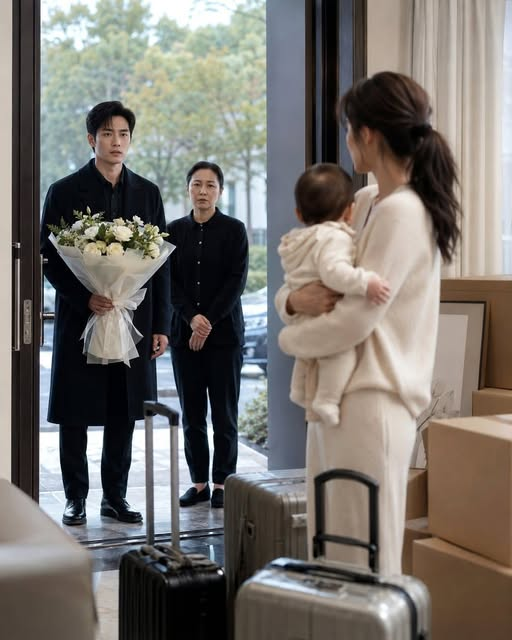
“No dining room nobody uses.”
I laughed.
“My daughter doesn’t care about marble.”
“She cares whether someone answers when she cries.”
That sentence stayed with me.
Adrián slowly learned it too.
At first, he tried to compensate with things.
Designer baby clothes.
Expensive toys.
A stroller that cost more than my first car.
I sent most of it back.
One afternoon I finally told him:
“She does not need a better stroller.”
“What does she need?”
“You.”
He looked confused.
“Consistently.”
“Not when you feel guilty.”
“Not between trips.”
“Not after someone reminds you.”
“Show up when you said you would.”
So he did.
Not perfectly.
But more often.
He learned feeding times.
How to change diapers without looking terrified.
Which song made her stop crying.
Which stuffed animal she refused to sleep without.
He became a better father.
He did not become my husband again.
That distinction mattered.
Almost two years after the divorce, Adrián asked if we could talk after dropping our daughter off.
We stood outside my house.
He looked through the window at the little girl stacking wooden blocks on the floor.
Then he said:
“I thought you would always wait.”
I said nothing.
“You were so patient that I turned it into permission.”
“Yes.”
“I thought because you never screamed, nothing I did was serious enough to make you leave.”
“Yes.”
His voice dropped.
“And when you did leave, I blamed Paris.”
“Then Isabella.”
“Then work.”
“Then the pressure of becoming a father.”
He looked at me.
“It took me a long time to admit that the common factor was me.”
For once, I did not need to add anything.
He asked:
“Do you ever miss us?”
I thought about the mansion.
The flowers.
The nights watching the door.
The expensive apologies.
Then I looked through my own window.
My daughter laughed at something Rosa said.
“I miss who I thought we were.”
Adrián nodded.
“That’s fair.”
Before leaving, he handed me something.
Not roses.
The old joint card.
Cut cleanly in half.
“I finally closed the account.”
I smiled faintly.
“Good.”
Then he left.
Years later, our daughter once asked why her father and I did not live together.
I gave her the simplest truth she could understand.
“Your dad and I are better at being your parents than we were at being married.”
She accepted that.
Children often accept truth more easily than adults accept consequences.
Adrián never stopped being part of her life.
But he stopped expecting to be the center of mine.
And I never again waited beside a door with dinner growing cold, wondering whether I was asking too much by wanting my husband to come home.
For years, Adrián believed champagne roses could erase absence.
He believed flowers meant forgiveness.
That coming back was the same as being present.
It wasn’t.
The last bouquet he ever brought me fell onto the floor of an empty mansion.
By then, I had already learned something fifteen days in Paris had finally made impossible to ignore:
A man can always come back.
But sometimes the woman he expects to find waiting has already gone home.
