The next morning, Leo woke up before me.
He was still wearing one Mickey sock.
The other had disappeared somewhere in the hotel room.
“Mommy.”
I opened my eyes.
“Hmm?”
“Are we going to Grandma’s today?”
For a moment, I didn’t know which grandmother he meant.
Then he added:
“Daddy’s grandma.”
I sat up.
“No, love.”
“Why?”
I looked at his sleepy face.
Because your grandmother told us not to come back.
Because your father chose boxes of wine over seats for you and me.
Because I had finally reached the end of six years of being told to understand.
Instead, I said:
“Because today we’re going home.”
That was true.
I just hadn’t decided yet whether it would remain our home.
When we arrived that afternoon, Mark’s SUV was already in the driveway.
So was his mother’s car.
Of course.
I had barely opened the front door when she came out of the living room.
Her face was hard.
“Elena.”
I took off Leo’s coat.
“Happy New Year.”
She ignored the greeting.
“You really took the child to Disneyland?”
“Yes.”
“While the entire family was waiting?”
“I thought there wasn’t enough room for us.”
Her face changed.
“You know perfectly well what I meant.”
“No.”
I looked at her.
“I know exactly what you said.”
Mark appeared behind her.
He looked exhausted.
Maybe from driving.
Maybe from spending an entire night explaining why his wife had refused to appear obediently at his parents’ house.
“Mom, let me talk to her.”
His mother crossed her arms.
“She owes the family an apology.”
I laughed softly.
Mark winced.
“Elena.”
“What?”
“Don’t make this worse.”
I looked at him.
There it was again.
Not:
I’m sorry I made you and our four-year-old son take a bus.
Not:
I should have made space.
Just:
Don’t make this worse.
I placed Leo’s backpack on the floor.
Then I crouched.
“Sweetheart, go upstairs and play for a while.”
He looked at Mark.
“Daddy, Disneyland has a giant castle.”
Mark forced a smile.
“I know.”
“You should come next time.”
Something flickered across his face.
“Maybe.”
Leo ran upstairs.
I waited until his bedroom door closed.
Then I turned back.
“Now we can talk.”
Mark’s mother spoke first.
“Good. Apologize.”
“No.”
She blinked.
“What?”
“I’m not apologizing.”
Her face reddened.
“You ignored forty-seven calls!”
“Yes.”
“You embarrassed us in front of the family!”
“Yes.”
“You disappeared with my grandson!”
“No.”
My voice sharpened.
“I took my son somewhere safe and enjoyable after his father told us to find our own transportation because gifts were more important than seats.”
Mark interrupted.
“That isn’t what I meant.”
“Then what did you mean?”
Silence.
“Tell me.”
He looked away.
“I thought you could take the bus for a few hours.”
“With a four-year-old.”
“Yes.”
“In the holiday rush.”
He sighed.
“Elena, people travel with children every day.”
I nodded.
“Then next year, you take the bus.”
He frowned.
“And I’ll drive the wine.”
His mother snapped:
“Enough!”
I looked at her.
She pointed toward the staircase.
“Take Leo and come with us now. Everyone is waiting for the family photograph.”
I nearly laughed.
There it was.
Not because they missed us.
Not because they wanted Leo.
The photograph.
“No.”
Her voice dropped.
“If you continue behaving like this, don’t blame me if there is no place for you in this family anymore.”
I looked at Mark.
He said nothing.
Six years earlier, that silence would have terrified me.
Three years earlier, I might have cried.
One year earlier, I would have gone upstairs, changed clothes, and followed them.
That day, I simply nodded.
“Fine.”
Mark looked at me.
“Elena?”
I walked to the cabinet beside the dining table and pulled out a folder.
I had started preparing it after Leo’s fever incident.
Not divorce papers.
Not then.
Just records.
Household accounts.
Mortgage contributions.
Car payments.
Receipts.
Transfers.
I placed it on the table.
His mother frowned.
“What is that?”
“Our finances.”
Mark’s face changed.
“Elena, why do you have those?”
“Because I pay them.”
He stared at me.
The SUV he had filled with gifts was registered in my name.
Not because I had tried to control him.
Because two years earlier, Mark’s credit had been damaged after he guaranteed a business loan for his brother.
He never told his mother.
I took the financing.
I made the down payment.
Every month, the payment left my salary account.
The apartment was jointly owned.
But the original down payment had come largely from my premarital savings.
The family vacation fund?
Mine.
Most New Year gifts?
Purchased with my year-end bonus because Mark always said:
“Family shouldn’t calculate so much.”
His mother flipped through several pages.
“This is ridiculous.”
“What is?”
“Why are you showing us receipts?”
“Because for years you have treated everything I paid for as though Mark naturally provided it.”
Mark’s face tightened.
“Elena.”
I continued:
“The wine in your car yesterday?”
“My card.”
“The massage chair?”
“My bonus.”
“The imported cherries?”
“My order.”
“The gold necklace for your mother last year?”
I looked at him.
“Also mine.”
His mother’s expression became ugly.
“You’re counting gifts now?”
“No.”
I closed the folder.
“I’m stopping them.”
Silence.
Mark stared.
“What does that mean?”
“It means from today, your family gifts come from your income.”
“Your parents’ expenses come from your income.”
“And if you want to load a car with presents until there is no room for your wife and child…”
I looked directly at him.
“…use a car you pay for.”
His mother exploded.
“You’re taking the car?”
“No.”
I looked at Mark.
“He can keep using it for now.”
Relief appeared.
Then I added:
“But he will take over the remaining payments and insurance if he wants it transferred to him.”
His face fell.
His mother turned toward him.
“How much is left?”
He didn’t answer.
Because he didn’t know.
That was another problem.
He had been driving it for two years.
He had never once asked.
His mother looked back at me.
“You planned this.”
“No.”
“I became tired of being the only person who knew how much our life cost.”
Mark finally snapped.
“This is insane!”
“No.”
I said it quietly.
“Sending your wife and son away because fruit baskets needed legroom was insane.”
He went silent.
I picked up the folder.
Then said:
“I’m taking Leo to my parents for a while.”
His face changed.
“For how long?”
“I don’t know.”
“You can’t just leave.”
“I can.”
“We’re married.”
“For now.”
His mother gasped.
Mark stared at me.
“What does that mean?”
“It means I have an appointment with a lawyer after the holiday.”
He actually laughed.
Not because it was funny.
Because he thought I was bluffing.
“You’re divorcing me over a car ride?”
“No.”
I looked at him.
“I’m considering divorcing you because yesterday was the first time I stopped explaining away the previous six years.”
His smile disappeared.
I went upstairs.
Leo had arranged his Disneyland souvenirs across the bed.
“Mommy, are we packing?”
“Yes.”
“Where?”
“To Grandma and Grandpa’s.”
He brightened immediately.
“Your grandma?”
“Yes.”
“Do they have chairs?”
I froze.
Children hear everything.
I sat beside him.
“They have plenty.”
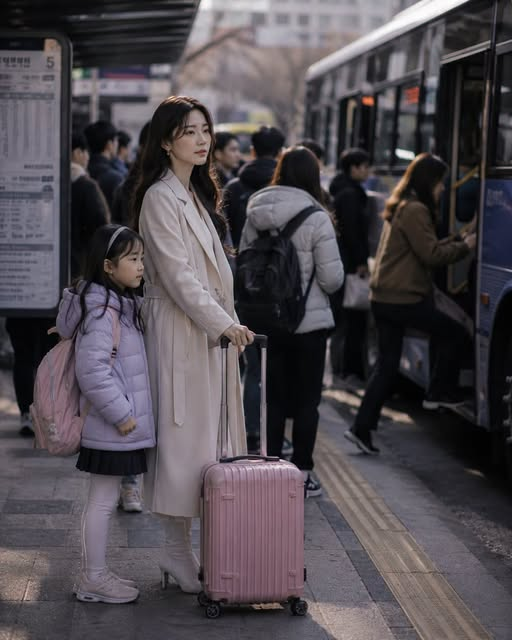
He smiled.
“Good.”
That sentence stayed with me.
My parents lived in a modest house forty minutes away.
When my father opened the door and saw our suitcases, he didn’t ask questions immediately.
He took Leo’s bag.
My mother hugged me.
Only after Leo fell asleep did she say:
“Do you want to tell us?”
I told them everything.
My father listened quietly.
When I finished, he asked:
“Do you want us to tell you to stay married?”
“No.”
“Good.”
My mother glared at him.
He continued:
“Do you want us to tell you to divorce?”
“I don’t know.”
“Then we won’t.”
He poured tea.
“You can stay here until you know what you want.”
It was the first useful advice anyone had given me.
Mark called every day.
At first, angry.
Then defensive.
Then confused.
Finally, scared.
On the fifth day he said:
“I told my mother she can’t speak to you like that anymore.”
I was silent.
“Elena?”
“I heard you.”
“I also told her we won’t spend New Year’s Day there next year.”
I almost smiled.
“You’re planning next year already?”
He stopped.
“I mean…”
“Mark, you’re still negotiating the holiday.”
“This isn’t about the holiday anymore.”
That surprised me.
Maybe he was finally beginning to understand.
Three weeks later, we met with a counselor.
Not because I had promised to stay.
Because six years and one child deserved at least one honest conversation.
The counselor asked Mark:
“When Elena’s place in the car was replaced by gifts, what did you think she would feel?”
He frowned.
“I didn’t think it was that serious.”
“That wasn’t the question.”
Long silence.
Finally:
“I assumed she would understand.”
“Why?”
“Because she always does.”
I looked at him.
There it was.
The entire marriage in one sentence.
He continued slowly:
“My mother gets upset easily.”
“My sister complains.”
“My father takes things personally.”
“Elena…”
He looked at me.
“Elena usually adapts.”
The counselor asked:
“So when everyone’s needs conflicted, whose did you choose to disappoint?”
Mark’s face changed.
“Her.”
“Why?”
“Because I thought she’d still be there afterward.”
I looked down.
That hurt.
Not because it was surprising.
Because it was finally honest.
Mark began changing after that.
Real changes.
He stopped using our money for family gifts without discussing it.
He took over the SUV payments.
When his mother demanded that he bring Leo over without me, he said no.
The first time she threatened:
“Then don’t come at all,”
Mark answered:
“Okay.”
She didn’t speak to him for nine days.
He survived.
But change did not automatically repair everything.
I needed time.
And during that time, I learned something uncomfortable:
I liked my life without constantly anticipating his family.
I slept better at my parents’ house.
Leo was calmer.
I stopped checking the family group.
I started saving again.
I went out with friends I had neglected.
When Mark and I met, I no longer felt relief simply because he was being decent.
Decency had become the minimum.
Four months after Disneyland, I asked for divorce.
He cried.
I had never seen Mark cry before.
“Even after I changed?”
I nodded.
“Yes.”
“Then what was the point?”
“The point was that you needed to change.”
“For Leo.”
“For yourself.”
“For whoever you love next.”
He stared at me.
“But not for you?”
I shook my head.
“I spent too many years teaching myself that being hurt wasn’t serious enough to leave.”
“Now I don’t want to teach myself the opposite just because you finally understood.”
The divorce was peaceful.
Not painless.
Peaceful.
Leo remained primarily with me, with regular time with Mark.
Mark became a better father after the separation.
More present.
More attentive.
Less afraid of disappointing his mother.
His relationship with her changed too.
It didn’t disappear.
He loved her.
But love stopped meaning obedience.
The next Lunar New Year, Mark asked:
“What are you doing with Leo?”
I sent him the itinerary.
Three days with me and my parents.
Then three days with Mark.
No battles.
No competing grandparents.
No guilt.
My mother looked at the schedule and said:
“This is surprisingly civilized.”
My father nodded.
“Boring.”
“Good,” I said.
“I’ve had enough drama.”
Two years later, Leo barely remembered the day we went to Disneyland instead of his grandparents’ house.
I remembered it perfectly.
Not because of the rides.
Not because of the fireworks.
Because that was the first day I understood that choosing joy for my son did not make me selfish.
And choosing dignity for myself did not make me difficult.
Mark eventually apologized without trying to get me back.
He said:
“I thought the fact that you always stayed meant you didn’t mind.”
I answered:
“No.”
“It meant I kept hoping you would notice.”
He nodded.
“I’m sorry it took losing you.”
I believed him.
And I let the apology be enough.
The morning Mark filled our car with gifts and told Leo and me to go by bus, he thought he was making a small logistical decision.
He wasn’t.
He was showing me, with perfect clarity, the order in which he had arranged his priorities.
His mother.
His relatives.
Their gifts.
Their expectations.
His peace.
Then, somewhere after all of that—
his wife and son.
So I stopped arguing for space.
I took Leo’s hand.
Called a car.
And went somewhere that had room for both of us.
Mark thought I was ruining the New Year.
In reality, I was finally ending a tradition much older than one holiday:
the tradition of teaching myself to accept whatever was left after everyone else had been accommodated.
That day, there was no room for us in his car.
So I built a life where my son and I would never again have to ask for a seat.
