The day after I left the toy car for An An, I packed the last box.
His clothes were easy.
Mine were easier.
The hardest things were An An’s.
A tiny military cap his father once brought home.
A school notebook.
Three wooden blocks.
And a drawing of our family standing beneath a crooked red sun.
Chu Pho Xuyen was drawn taller than everyone else.
Beside him, An An had written in uneven characters:
Dad protects everyone.
I folded the drawing and put it into my suitcase.
On Friday, I submitted my resignation.
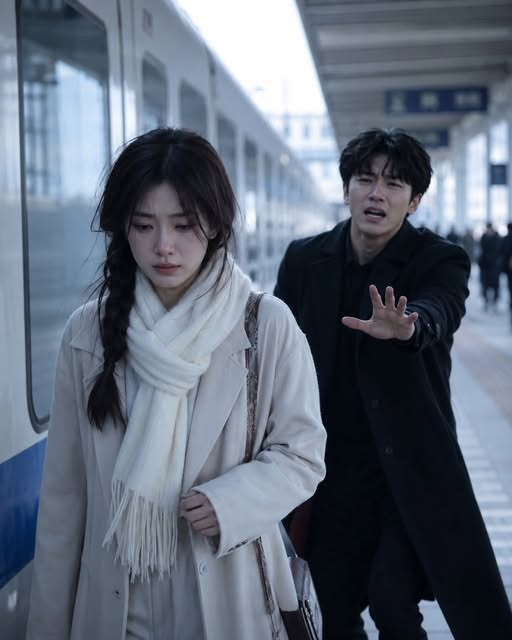
On Saturday morning, I boarded the train.
I sat beside the window with An An’s photograph pressed between the pages of a book.
When the train started moving, I did not look back.
Seven years of marriage.
One child.
One home.
It all disappeared behind me.
I thought I would cry.
I didn’t.
Maybe I had already used up all my tears beside An An’s hospital bed.
Chu Pho Xuyen returned that afternoon.
He had promised to take me to the clinic to “visit” An An.
He carried a bag of fruit.
And, strangely, another toy car.
The same model I had bought.
Apparently Canh Canh had pointed it out in the shop after I left, and something about my expression had made him uncomfortable.
So for the first time, he bought something An An had wanted.
Too late.
He opened the door.
The house was empty.
My shoes were gone.
My coat was gone.
An An’s small cup was gone.
He called:
“Phuong Nhuoc?”
No answer.
Then:
“An An?”
Silence.
He walked into the child’s room.
The bed had been stripped.
The wardrobe was open.
On the desk stood only one photograph.
An An smiling.
A small black ribbon at the corner.
The bag of fruit slipped from Chu Pho Xuyen’s hand.
He stared at the photograph.
Then he ran.
Not to Co Tran.
Not to headquarters.
To the clinic.
The nurse at the desk recognized him.
“Captain Chu?”
“Where is my son?”
The woman’s expression changed immediately.
For the first time, fear appeared on Chu Pho Xuyen’s face.
“Where is An An?”
The nurse did not answer quickly enough.
He grabbed the edge of the desk.
“My wife said he had a fever. Which room?”
The doctor came out from behind the curtain.
He looked at Chu Pho Xuyen for a long time.
Then said quietly:
“Your son passed away six days ago.”
Everything stopped.
Chu Pho Xuyen stared at him.
“No.”
The doctor did not argue.
“He had already been buried when you returned to the military compound.”
“No.”
This time his voice cracked.
“My wife would have told me.”
The doctor’s expression became complicated.
“She called you repeatedly.”
Chu Pho Xuyen stepped backward.
“She said he had a fever.”
“She said much more than that.”
The doctor opened the record.
Critical notice.
Emergency treatment.
Family contact attempts.
Next to the contact section were several notes:
Mother present.
Father contacted repeatedly. No arrival.
Chu Pho Xuyen looked at the page.
Then at the date.
That night.
Canh Canh’s birthday.
The Barbie doll.
The tomato eggs.
Co Tran smiling while everyone sang.
His son had been waiting for him at the same time.
The doctor said:
“Before he became too weak, An An kept asking whether his father was on duty.”
Chu Pho Xuyen’s hands began trembling.
“He said you were a soldier.”
“He told his mother not to blame you.”
That was when Chu Pho Xuyen finally sat down.
Not because someone pushed him.
Because his legs no longer seemed able to hold him.
He called me thirty-one times.
My phone remained off.
Then he called the political commissar.
“Where is Phuong Nhuoc?”
The commissar was silent.
“Captain Chu, she left this morning.”
“Where?”
“Her hometown.”
“I need the address.”
“She did not authorize us to give it to you.”
Chu Pho Xuyen’s voice rose.
“She is my wife!”
The political commissar replied:
“No.”
One word.
Then:
“The divorce procedure was approved yesterday.”
Chu Pho Xuyen went silent.
“You signed the application yourself.”
“I thought…”
He could not finish.
He had thought it was ordinary paperwork.
Because anything I placed in front of him had become ordinary.
My meals.
My calls.
My tears.
My son’s fever.
My divorce.
The commissar said:
“You should have read what you signed.”
Chu Pho Xuyen hung up.
Then he found the grave.
The new soil was still surrounded by flowers.
Beside the marker sat the little toy car I had bought.
He stood there until evening.
Later, Co Tran found him.
She had learned what happened from another military wife.
She stood several meters away.
“I’m sorry.”
Chu Pho Xuyen did not turn.
Co Tran continued:
“That night, when your phone kept ringing…”
He finally looked at her.
She swallowed.
“I asked whether you needed to go home.”
He remembered.
He had laughed.
Said Phuong Nhuoc always became emotional whenever he spent time with her.
Co Tran lowered her eyes.
“I didn’t know An An was so sick.”
Chu Pho Xuyen’s voice was empty.
“Neither did I.”
Then he corrected himself.
“No.”
“I didn’t want to know.”
That was worse.
He had been told.
He simply decided the information was not important enough to interrupt another child’s birthday.
Co Tran whispered:
“Don’t blame yourself for everything.”
Chu Pho Xuyen looked at her.
“For years I blamed my wife instead.”
“She was jealous.”
“She was unreasonable.”
“She didn’t understand friendship.”
“She made problems.”
He looked back at the grave.
“It was convenient.”
Co Tran had no answer.
After that day, they stopped being close.
Not because I demanded it.
I was already gone.
Some relationships only survive while there is someone else available to absorb the consequences.
Once I left, Chu Pho Xuyen had to look directly at his choices.
He tried to find me for months.
Not by sending soldiers or using his position.
The political commissar made it clear that would be unacceptable.
He sent letters through my lawyer.
I returned the first three unopened.
The fourth contained no request for reconciliation.
Only one sentence:
I know An An asked you not to blame me. I have no right to use his kindness to ask you to come back.
I read that one.
Then put it away.
I returned to the town where I had grown up.
My old home was small.
The roof leaked when it rained.
The courtyard had weeds taller than my knees.
But nobody there expected me to smile.
Nobody asked me to understand.
I found work at a local administrative office.
The salary was ordinary.
The days were quiet.
At first, every child around An An’s age made me stop walking.
Every school bell hurt.
Every time I saw tomato eggs on a table, I remembered a father learning to cook them for someone else’s daughter.
But grief changed slowly.
It stopped being the entire room.
It became something I carried inside one corner of it.
A year later, I began making shrimp dumplings again.
The first plate stayed untouched for a long time.
Then my neighbor’s little boy came over.
“Auntie Phuong, can I have one?”
I looked at him.
Then laughed softly.
“Take two.”
That evening, for the first time since An An died, I cooked without crying.
Chu Pho Xuyen came to my hometown on the second anniversary of An An’s passing.
He waited outside instead of entering.
When I opened the door, I almost did not recognize him.
He looked older.
The sharp arrogance was gone.
In his hands was a small repaired toy car.
The same type An An had wanted.
“I won’t stay long.”
I nodded.
We walked to An An’s resting place.
For several minutes, neither of us spoke.
Then Chu Pho Xuyen placed the car down.
“I learned how to make tomato eggs.”
I looked at him.
His eyes reddened.
“I know.”
He laughed bitterly.
“Too late.”
“Yes.”
He closed his eyes.
“I keep thinking about everything I didn’t know.”
“His teacher’s name.”
“Which side he slept on.”
“What stories he liked.”
“The fact that he wanted that stupid car.”
His voice broke.
“Seven years.”
“He lived seven years and I kept thinking I would know him later.”
I looked down.
“That is what you did with us.”
He nodded.
“I know.”
Then he said:
“Phuong Nhuoc, I’m sorry.”
No explanations.
No duty.
No Co Tran.
No excuses.
Just an apology.
I answered:
“I don’t blame you the way you think I do.”
Hope appeared in his eyes for half a second.
I continued:
“But not blaming you does not mean I can live with you again.”
The hope disappeared.
“An An asked me not to hate you.”
“I kept that promise.”
I looked at him.
“He never asked me to remain your wife.”
Chu Pho Xuyen lowered his head.
After a long time, he said:
“I understand.”
And for once, he really did.
Years later, he still visited An An once a year.
Sometimes we met.
Sometimes we didn’t.
He never married Co Tran.
Whether he married anyone else later no longer mattered to me.
He became quieter.
More present with the people actually in front of him.
Perhaps losing us taught him that “later” is not a promise.
As for me, I stayed in my hometown.
Not because my life had ended.
Because I discovered it could begin again there.
I eventually opened a small breakfast shop beside the school.
Shrimp dumplings became the most popular thing on the menu.
On the wall was one tiny drawing.
A father, a mother and a little boy standing beneath a crooked red sun.
Visitors often asked:
“Did your son draw that?”
I always smiled.
“Yes.”
And that was enough.
The day Chu Pho Xuyen signed the divorce application, he did not read a single page.
He thought I was making a fuss.
He thought An An only had a mild fever.
He thought there would always be another dinner, another evening, another chance to go home.
But some doors do not stay open forever.
Some people stop waiting.
Some children do not get to say goodbye twice.
By the time Chu Pho Xuyen finally understood what he had lost, my train had already left the station.
And I had finally stopped building my life around the hope that one day—
he would come home in time.
