“What relic?” Chu Li Li muttered. “It’s just an old dressing table.”
I kept smiling.
“To me, it matters.”
She rolled her eyes.
“You’re too sentimental.”
Then she walked away as though the conversation were finished.
I watched her disappear into the hallway.
For the first time, I understood exactly why she had become so comfortable in my home.
Because nobody in the Chu family believed it was mine anymore.
Three days later, Mr. Kim called.
“Ms. Ha, we finished the inspection.”
“How many?”
He paused.
“Eleven devices.”
My fingers tightened around the phone.
“Eleven?”
“One in the electronic clock. One in the diffuser. Two disguised among security equipment. One inside the waterproof bathroom speaker. Several others in common areas.”
I closed my eyes.
Bedroom.
Dressing room.
Bathroom.
Study.
Living room.
There was almost nowhere in my home where I had actually been alone.
Mr. Kim continued.
“They weren’t simply recording locally.”
My eyes opened.
“What do you mean?”
“Most were transmitting remotely.”
“To where?”
“We traced access to three devices.”
He sent me the preliminary report.
One belonged to Chu Li Li.
One belonged to my husband.
The third was registered under an account connected to my mother-in-law.
I stared at the screen until the letters became meaningless.
Chu Hao knew.
Li Li knew.
His mother knew.
This was not one jealous sister-in-law buying a strange gadget.
It was a family project.
I asked quietly:
“What were they watching?”
“Everything they could.”
Then his voice became more serious.
“Ms. Ha, there’s another problem.”
My stomach tightened.
“One camera faced the desk where you usually handle financial documents.”
I said nothing.
“And the recording history shows repeated access during times when you entered passwords or discussed contracts.”
That afternoon, I met two lawyers.
One handled family law.
The other specialized in privacy and financial crimes.
I gave them the report.
Then I gave them my house deed.
Bank statements.
Marriage certificate.
Records showing the apartment had been fully purchased before I married Chu Hao.
The senior attorney, Ms. Pham, read everything and looked up.
“Do you want a divorce?”
“Yes.”
No hesitation.
“Do you want him out of the apartment?”
“Yes.”
“Do you want to report the surveillance?”
I thought about the bathroom speaker.
The bedroom clock.
The years I had spent telling myself marriage required tolerance.
Then I answered:
“Yes.”
That evening, I returned home and cooked dinner.
Chu Hao arrived around seven.
He kissed my forehead.
“Wife, Mom said she wants the large guest room during Tet.”
I stirred the soup.
“Fine.”
“And Li Li wants to use your dressing room.”
“Fine.”
His eyebrows lifted.
“You’re unusually easygoing lately.”
I smiled.
“It’s almost Tet.”
He relaxed.
That was the problem with people who mistake kindness for stupidity.
The moment you stop resisting, they assume they have won.
Over the next week, the family became bolder.
Vuong Que Phan arrived with three enormous suitcases.
She stood in my living room and announced:
“After Tet, I may simply stay here.”
Chu Hao laughed.
“Of course. There’s plenty of room.”
I was sitting across from them.
Nobody asked me.
Li Li brought labels.
Actual labels.
She stuck one on a kitchen cabinet.
MOM’S MEDICINE.
Another on a wardrobe.
LI LI.
Then she pointed toward my study.
“This room would be perfect for Cousin Minh when he comes to the city.”
I looked at her.
“That’s my office.”
“So?”
She laughed.
“You have such a huge house. Why are you so calculating?”
I smiled.
“You’re right.”
She looked pleased.
I continued:
“Everyone should come for Tet.”
And they did.
Thirty-four people.
Aunts.
Uncles.
Cousins.
Children.
Two relatives I had never met.
They arrived carrying luggage as if they were checking into a resort.
My mother-in-law stood in the entrance proudly directing traffic.
“Put that upstairs.”
“Li Li gets the room beside the master bedroom.”
“Uncle Hai can use the study.”
Then she turned toward me.
“Ha Nhien, why are you standing there? Bring tea.”
I nodded.
“Of course.”
Chu Hao smiled approvingly.
He still believed I had finally learned my place.
Dinner was scheduled for six.
At five thirty, I told everyone I needed to pick up one final order.
Chu Hao frowned.
“Now?”
“It’s already paid for.”
“I’ll come with you.”
Perfect.
Li Li came too because she wanted to stop at a cosmetics store.
When we returned forty minutes later, Chu Hao was complaining.
“My relatives are probably starving.”
Li Li laughed.
“Sister-in-law better have bought something worth the wait.”
I unlocked the apartment.
Opened the door.
Then stepped aside.
Chu Hao stopped behind me.
The smile disappeared from his face.
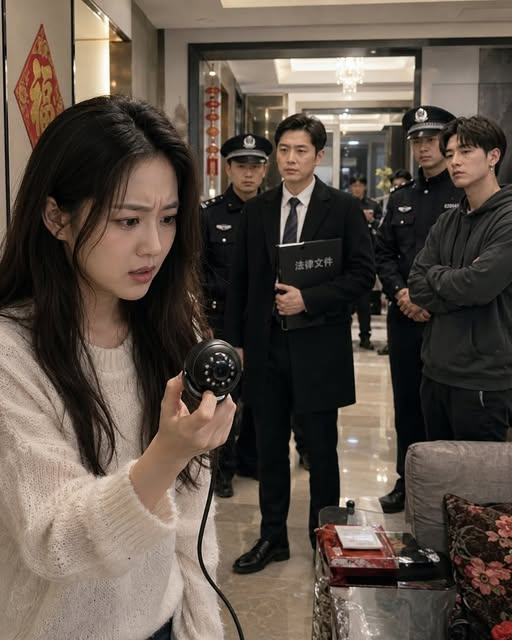
The living room was full.
But not with relatives.
Police officers.
Two lawyers.
Mr. Kim’s forensic team.
And on the dining table sat eleven sealed evidence bags.
Each containing one of the devices removed from my home.
Nobody spoke.
Li Li’s face turned white.
Chu Hao whispered:
“What is this?”
I removed my coat.
“My Tet gift.”
My mother-in-law rushed from the hallway.
“Ha Nhien! What have you done? These people came in and started questioning everyone!”
Ms. Pham stepped forward.
“Mrs. Vuong, officers are here regarding a complaint involving unauthorized surveillance and suspected misuse of private information.”
Li Li immediately shouted:
“I didn’t do anything!”
Nobody had accused her by name yet.
The room went silent.
I looked at her.
“That was fast.”
She realized her mistake.
Chu Hao grabbed my arm.
“Ha Nhien, come outside.”
I pulled free.
“No.”
“This is a family matter.”
I looked around the room.
“For months, your family made everything in this house a family matter.”
“So now we’ll handle it with witnesses.”
His face hardened.
“You called the police over a few cameras?”
“A few?”
I pointed to the evidence bags.
“Eleven.”
His mother snapped:
“We installed them for safety!”
“In my bathroom?”
Silence.
“In my bedroom?”
Nobody answered.
“In the room where I handle confidential financial documents?”
Chu Hao finally said:
“I was worried about you.”
I stared at him.
“Then why were the access records linked to Li Li?”
His sister stepped backward.
“And your mother?”
Vuong Que Phan’s mouth opened.
Nothing came out.
Mr. Kim placed a report on the table.
“The system logged remote access hundreds of times.”
Chu Hao’s confidence began to crack.
But he still tried.
“It’s my home too.”
“No.”
I walked to the table and picked up the deed.
“This is my home.”
I placed it in front of him.
“Bought before marriage.”
“Paid in full before marriage.”
“Registered solely in my name.”
His mother suddenly yelled:
“You married into the Chu family! Husband and wife share everything!”
My lawyer answered calmly:
“Marriage does not erase documented ownership.”
Vuong Que Phan pointed at me.
“She promised this apartment would belong to Hao eventually!”
I turned toward her.
“I never said that.”
Li Li blurted:
“But Brother said once you had a child, he would make you transfer half!”
Everything stopped.
Chu Hao closed his eyes.
His sister finally understood she had said too much.
I looked at him.
“You planned to make me transfer half?”
“No.”
Li Li tried to correct herself.
“I misunderstood—”
“Quiet!”
Chu Hao shouted at her.
That was when Ms. Pham opened another folder.
“We also recovered messages relevant to motive.”
His face changed.
“What messages?”
I had not seen them yet.
Ms. Pham handed me printed copies.
A family group chat.
Not including me.
Chu Li Li:
Once Sister-in-law signs over half, this apartment is basically ours.
Vuong Que Phan:
Hao is too soft. A wife should put property under both names without being asked.
Then Chu Hao:
Don’t rush her. I need something I can use if she refuses.
My heart stopped.
Another message.
Li Li:
The cameras will eventually catch something. Everyone has secrets.
And then my husband:
If she causes trouble in the divorce, evidence is useful.
I looked at him.
For the first time that night, he could not meet my eyes.
So that was the cage.
Not merely surveillance.
Leverage.
They had planned to watch long enough to find something embarrassing, private, or easily distorted.
Something that could frighten me into surrendering.
The police did not arrest the entire family in some theatrical sweep.
They separated the relevant people.
Collected devices.
Took statements.
Preserved the digital records.
My lawyers served Chu Hao with formal notice concerning the apartment and divorce proceedings.
The relatives left one by one.
Suddenly, the thirty-four people who had been treating my home like inherited property were very interested in hotels.
My mother-in-law stood at the door with her suitcase.
“You’re destroying this family.”
I looked at her.
“No.”
I opened the door wider.
“I’m simply removing your family from my house.”
She began crying.
“Hao loves you!”
I turned toward my husband.
He looked exhausted.
I asked:
“Is that true?”
He stepped closer.
“Ha Nhien, I made mistakes.”
“Mistakes?”
“I was under pressure.”
“From whom?”
He looked at his mother.
Then his sister.
I almost laughed.
“You are over thirty years old.”
“You installed cameras in your wife’s private rooms because your mother and sister pressured you?”
He lowered his voice.
“I was afraid you’d leave someday and take everything.”
There it was.
The truth.
I stared at him.
“Everything?”
“This apartment.”
“Your money.”
“Your connections.”
“You always had more than me.”
His eyes reddened.
“I never felt secure.”
I nodded slowly.
“So you decided to make me insecure instead.”
He had no answer.
The divorce took nearly a year.
The digital investigation confirmed that the surveillance system had been used without my informed consent and that multiple members of the Chu family had accessed footage.
Authorities handled the privacy violations according to the evidence against each person.
I did not need to exaggerate what would happen to them.
The truth was enough.
The apartment remained mine.
Completely.
Chu Hao tried to claim that years of marriage entitled him to part of it.
The documentation said otherwise.
What we had acquired jointly was divided according to the law.
What I owned before marriage remained separate.
Li Li never entered my house again.
Neither did Vuong Que Phan.
Six months after the divorce, Chu Hao asked to meet.
I agreed.
Public café.
Thirty minutes.
He looked thinner.
“I’m sorry.”
I stirred my coffee.
“For which part?”
He flinched.
“The cameras.”
“Only the cameras?”
He lowered his eyes.
“For allowing my family to treat your house like ours.”
I waited.
“For letting Mom speak to you like a servant.”
Still I said nothing.
“For believing that because you loved me, you would keep giving until eventually everything you owned became mine.”
That was finally close to the truth.
He looked at me.
“Did you ever really love me?”
“Yes.”
His eyes filled with hope.
I finished:
“That was why you got away with so much for so long.”
The hope disappeared.
I stood.
He whispered:
“If I had never installed those cameras…”
I looked at him.
“You still would have believed my boundaries were temporary obstacles.”
Then I left.
A year later, I renovated the apartment.
I removed the clock.
The speaker.
The diffuser.
Even the nightstand Li Li had once criticized.
But I kept my mother’s dressing table exactly where it had always been.
One evening, I sat in front of it and looked around the quiet bedroom.
No hidden lens.
No relatives opening drawers.
No husband reporting my private life to his family.
Just silence.
For years, I thought marriage meant making room for another person.
Chu Hao’s family taught me something different.
Making room for someone does not mean surrendering ownership of yourself.
They wanted my apartment.
My money.
My privacy.
Eventually, they even wanted evidence they could use against me if I refused.
They believed the cameras gave them control.
Instead, those cameras became the evidence that ended everything.
And the night Chu Hao walked into my home and found the living room full of police officers, lawyers, and eleven sealed devices, he finally understood what the deed had said from the beginning:
The house was mine.
But more importantly—
so was my life.
