Thirty days later, Adrian discovered that the divorce was real.
Not because I told him.
Because his lawyer called while he was choosing a second nursery for Sophie’s baby.
“Mr. Cole, the decree has been finalized.”
Adrian laughed.
“What decree?”
“Your divorce from Dr. Claire Bennett.”
Silence.
Then:
“That agreement was temporary.”
“No, sir.”
The lawyer’s voice became careful.
“Dr. Bennett submitted the signed agreement immediately. Both parties completed the required procedures. The marriage is legally dissolved.”
Adrian dropped the phone.
For the first time in ten years, he came looking for me.
He went to our house.
Half my wardrobe was empty.
My books were gone.
My medical journals.
My grandmother’s tea set.
Even the memorial box containing the tiny bracelet from our first child.
On the dresser was only the old photograph he had asked about.
I had taken it from the trash.
Not because I wanted it.
Because I had written something on the back.
Under his old sentence—
Adrian Cole will protect Claire Bennett forever.
I had added:
You protected me once. I spent ten years trying to repay a debt love never owed. We are even now.
Adrian drove straight to the hospital.
My office was empty.
The nameplate had already been removed.
He grabbed the department administrator.
“Where is Claire?”
The woman looked at him coldly.
“Dr. Bennett resigned.”
“When?”
“Three weeks ago.”
“Where did she go?”
“I don’t know.”
He didn’t believe her.
So he called everyone.
Colleagues.
Friends.
My mother.
My lawyer.
Nobody told him.
Then, in the hospital archive, he found the file that finally destroyed the story he had told himself for years.
Not my resignation.
Not the divorce.
The genetics report.
It was seven years old.
Two names appeared at the top:
CLAIRE BENNETT
ADRIAN COLE
Underneath was the conclusion from three separate specialists.
The problem had never been that I was incapable of having children.
The risk came from a rare inherited combination carried by both of us.
Together, the chances of a healthy pregnancy were dangerously low.
Separately, neither of us faced the same problem.
Adrian read the report once.
Then again.
He called the geneticist whose signature appeared at the bottom.
The doctor remembered us.
“Dr. Bennett understood the results very clearly.”
Adrian’s voice shook.
“And me?”
“You missed the final consultation.”
His face went white.
He remembered.
That day, Isabel—his third lover at the time—had called because she was upset.
He had sent me to the appointment alone.
The doctor continued:
“Dr. Bennett asked whether the problem was exclusively hers.”
“And?”
“I told her no.”
Adrian gripped the desk.
“She asked me not to describe herself as infertile in the family summary. But later, apparently, that became the explanation everyone used.”
He knew exactly why.
His mother had said it first.
Claire can’t give us heirs.
Adrian had never corrected her.
Because blaming me was easier than admitting the great Cole bloodline had contributed equally.
For years, I carried that shame alone.
And Adrian rewarded me by bringing seven other women into our marriage.
That night, he came to my lawyer’s office.
I was there.
He opened the door without knocking.
“Claire.”
I looked up.
He held the report.
His hands were trembling.
“You knew.”
“Yes.”
“You could have had children with someone else.”
My expression changed slightly.
“That is what you took from this?”
He stopped.
I stood.
“I lost three pregnancies trying to build a family with you.”
My voice stayed calm.
“And your first question is whether another man could give me a child?”
His eyes reddened.
“No. I…”
“You spent years telling me I should accept your lovers because I was defective.”
“I didn’t know.”
“You never wanted to know.”
That silenced him.
I pointed toward the report.
“You missed the appointment.”
His face collapsed.
“You forgot the name of our first son.”
“I remembered later.”
“Later.”
I repeated the word.
“Everything with you happened later.”
“You came later.”
“You understood later.”
“You regretted later.”
I looked directly at him.
“And now you love me later.”
Adrian stepped closer.
“Who are you marrying?”
So he had discovered the message too.
Maybe from the phone bill.
Maybe Sophie.
It didn’t matter.
“Julian Hart.”
He froze.
He knew the name.
Julian had been my medical-school classmate.
Years ago, before Adrian and I married, Julian had asked me out once.
I refused.
He never asked again.
We remained colleagues.
Nothing more.
When he returned from Europe the previous year, he found me exhausted, isolated and still fighting to save a marriage everyone else considered permission to humiliate me.
He never told me to leave Adrian.
He simply asked one question:
“If this were happening to one of your patients, what would you tell her she deserved?”
I had not been able to answer.
That was when I began answering it with my life instead.
Adrian whispered:
“You were seeing him while we were married?”
“No.”
“Then how can you marry him already?”
“I won’t.”
He looked confused.
“I accepted his proposal.”
I gathered my files.
“But we’re not marrying next week.”
“Then don’t.”
I looked at him.
His voice broke.
“Claire, give me one year.”
“No.”
“Six months.”
“No.”
“I’ll end everything with Sophie.”
“No.”
“I’ll apologize publicly.”
“No.”
“I’ll spend the rest of my life making up for it.”
I shook my head.
“You still think this is a negotiation.”
His eyes filled.
“It isn’t.”
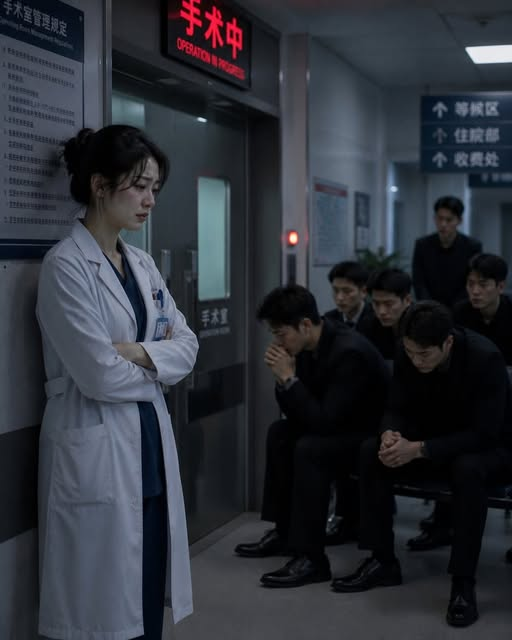
“What do you want from me?”
“Nothing.”
That answer frightened him most.
For ten years, I wanted everything from Adrian.
His attention.
His loyalty.
His protection.
His regret.
His love.
Now I wanted none of it.
Six months later, Sophie left him.
Not because of me.
Because she finally understood what Adrian had expected.
He did not actually want a new wife.
He wanted women willing to produce children while I remained Mrs. Cole, managing the family, receiving the heirs, swallowing the humiliation and protecting his reputation.
Sophie refused to become number eight in a system built around one man’s entitlement.
The other mothers began demanding clear financial and parenting arrangements too.
For the first time, Adrian was forced to stop treating children as proof of his family name and start treating them as people he was responsible for.
That may have been the only good thing to come from any of it.
He became present.
School fees.
Doctors.
Birthdays.
Schedules.
Not because that redeemed him.
Because his children deserved better than the man he had been.
As for me, I transferred to a maternal medicine research center in Seattle.
Julian moved there months later for an unrelated position.
We dated.
Properly.
Slowly.
The first time he asked whether I still wanted children, I was silent for a long time.
Then I answered:
“Yes.”
He nodded.
“That’s enough for today.”
No promises.
No talk about heirs.
No declarations that my worth depended on whether my body fulfilled a family expectation.
A year and a half after my divorce, Julian and I married.
Small ceremony.
No business partners.
No betting friends outside the door.
No lovers waiting for their turn.
My mother cried.
I laughed.
And Adrian did not attend.
He did, however, send one envelope.
Inside was the old photograph.
The one from when we were eighteen.
On the back, beneath both our sentences, he had written one final line:
Saving your life once never gave me the right to ruin the rest of it. I understand now.
I folded the photograph.
Then put it away.
Not because I loved him.
Because for the first time, Adrian had understood the truth without asking me to reward him for understanding it.
Two years later, I became pregnant.
I told almost nobody during the first months.
Not from shame.
Not from fear.
Because for once, my pregnancy belonged to me.
When our daughter was born, Julian stood beside me holding my hand.
Afterward, he looked at her and cried so openly that I laughed at him.
He didn’t care.
Neither did I.
Weeks later, Adrian heard about the baby through an old colleague.
He sent no flowers.
No dramatic message.
Only:
I’m glad you got the life you wanted.
I replied:
So am I.
That was our last conversation.
For ten years, Adrian believed the greatest act of love between us happened when he rescued me at eighteen.
He was wrong.
That rescue was brave.
But love is not one heroic moment.
It is what happens afterward.
It is remembering.
Choosing.
Listening.
Staying faithful when nobody is watching.
Respecting the person beside you when you have enough power to hurt them and decide not to.
Adrian saved my life once.
Then spent years acting as though I owed that life back to him.
I almost believed him.
Until the day he handed me a divorce agreement beside the seventh child he had conceived outside our marriage.
He thought I would tear it up.
Instead, I signed.
And that signature became the first decision in ten years that belonged entirely to me.
I was never incapable of building a family.
I had simply spent too long trying to build one with a man who believed love meant I would endure anything.
By the time Adrian understood the difference,
I had already chosen a life where endurance was no longer the price of being loved.
