At eight the next morning, Trieu Thien sent me the first list.
I read it while drinking coffee at the dining table where, only hours earlier, hundreds of roses had been arranged for our anniversary.
Three investments immediately stood out.
A luxury apartment purchased eighteen months earlier.
A private medical fund.
And a seven-percent interest in a new hospitality company called Violet Harbor Holdings.
None of them had ever been mentioned to me.
“Who owns Violet Harbor?” I asked.
Trieu Thien hesitated.
“Forty percent belongs to a trust.”
“Beneficiary?”
“We’re still checking.”
“Check faster.”
At 10:23, she called again.
Her voice had changed.
“The beneficiary is Lam Vi.”
I closed my eyes.
“How much did Dinh Tham contribute?”
“Almost twelve million over two years.”
“And the apartment?”
“Purchased through the same structure.”
I laughed quietly.
Of course.
He had not merely been having an affair.
He had been building her a life.
The fidelity agreement lay beside my hand.
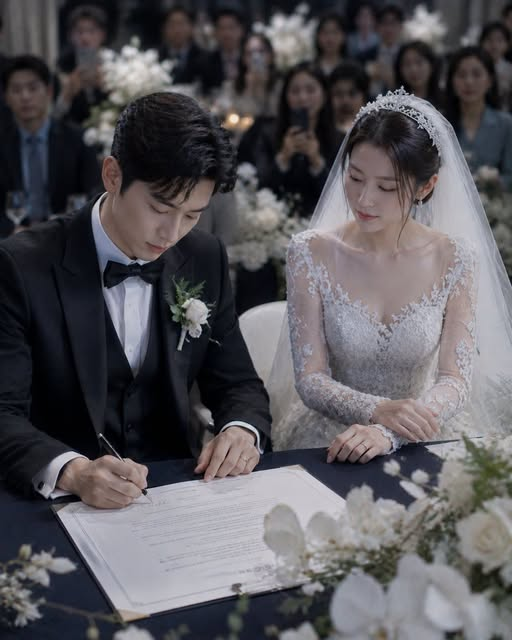
Five years earlier, on our wedding day, Bui Dinh Tham had signed it in front of witnesses.
He had insisted on independent lawyers.
Had it notarized.
Had even added a separate property clause himself:
If either spouse deliberately conceals substantial marital assets for the benefit of a romantic partner outside the marriage, the concealing party relinquishes any claim to the assets specified in Schedule A.
At the time, everyone had laughed.
My mother had not.
She was already ill then.
After the ceremony, she held my hand and whispered:
“Never throw that agreement away.”
I had been angry.
“Mom, you still don’t trust him?”
She looked toward Dinh Tham, who was laughing with guests across the ballroom.
“I trust patterns more than promises.”
She died four months later.
For years, I resented her for planting suspicion inside my happiest memory.
That morning, I finally understood.
At noon, Dinh Tham came home early.
He entered carrying a small velvet jewelry box.
The anniversary necklace.
Or rather, the empty replacement of it.
Because I had already seen the original resting against Lam Vi’s throat in the video.
He stopped in the living room.
No roses.
No flower arrangements.
Nothing.
His eyes narrowed.
“Where are the flowers?”
“I threw them away.”
He stared at me.
“Why?”
“I suddenly remembered I’m allergic.”
His face changed.
Just slightly.
Enough.
Then he smiled.
“You’re not allergic to roses.”
I looked directly at him.
“No.”
Silence.
“Lam Vi is.”
The box slipped slightly in his hand.
He recovered quickly.
“What are you talking about?”
I took my tablet from the table.
Hotel invoice.
Presidential suite.
Two breakfasts.
His name.
Her name.
Special note about flowers.
Then the video.
Dinh Tham fastening my necklace around Lam Vi’s neck.
I pressed play.
He watched three seconds.
Then reached out and shut the screen.
“Who sent you this?”
Not:
It isn’t true.
Not:
Let me explain.
Who sent you this?
I smiled.
“That was exactly the reaction I expected.”
His jaw tightened.
“It was business.”
“Was the necklace business too?”
“I can explain that.”
“Good.”
I leaned back.
“Explain Violet Harbor Holdings.”
His entire body became still.
That was the moment he understood I had not spent the night crying.
I had spent it auditing.
“Who told you about that?”
“Company records.”
“You had no right—”
“I’m a shareholder.”
He stopped.
“And I oversee two of the projects that supplied capital to the holding company.”
I slid a document toward him.
“Twelve million.”
“Apartment.”
“Medical fund.”
“Equity.”
“All connected to Lam Vi.”
His face hardened.
“It’s an investment.”
“Then why wasn’t it disclosed properly?”
“Because you would misunderstand.”
I almost laughed.
“Ah.”
“The classic defense.”
“I hid it because you might think I was hiding it.”
He rubbed his forehead.
“Listen to me.”
“I’m listening.”
“Lam Vi came back two years ago with nothing.”
“She had debts.”
“Family problems.”
“She needed help.”
“And you gave her twelve million?”
“Not personally.”
“Through structures.”
“That makes it better?”
His voice rose.
“You know how complicated business arrangements are!”
“I do.”
That was another thing he had forgotten.
For five years, he liked introducing himself as the visionary behind our investments.
He rarely mentioned who reviewed half the contracts before they reached him.
I pushed the fidelity agreement across the table.
His eyes dropped.
Then froze.
For the first time that morning, Bui Dinh Tham looked afraid.
“No.”
One word.
Very quiet.
I opened to the clause.
His signature.
Mine.
Two witnesses.
Notarial seal.
He stared at it.
“You’re really going to use this?”
“You signed it.”
“That was five years ago.”
“Yes.”
“We were newlyweds.”
“Yes.”
“It was symbolic.”
“No.”
I shook my head.
“You specifically told both lawyers it was not symbolic.”
His face darkened.
“You kept it all these years?”
“My mother told me to.”
That hit him.
He sat down.
For several seconds, neither of us spoke.
Then he said:
“Nothing happened with Lam Vi.”
I stared at him.
He continued too quickly.
“Not in the way you think.”
“The hotel?”
“She was sick.”
“The necklace?”
“She liked it.”
“The company?”
“I was helping.”
“The calls?”
“Complicated.”
I smiled.
“You’re doing something impressive.”
“What?”
“Turning adultery into project management.”
He stood abruptly.
“Fine.”
His voice became hard.
“Yes, I crossed a line.”
“How far?”
Silence.
“How far, Dinh Tham?”
His eyes finally met mine.
“Six months.”
My chest hurt.
Not because I was surprised.
Because hearing a betrayal measured in time makes it real in a different way.
Six months.
Half a year of phone calls before bed.
Half a year of him asking whether I had eaten.
Half a year of kissing my forehead before leaving.
Half a year of telling me:
Your things, would I ever forget them?
I asked:
“Did you love her?”
His answer took too long.
“I don’t know.”
That was worse than yes.
Then he added:
“But I love you.”
I laughed.
He looked wounded.
“What?”
“You want both sentences to exist without contradiction.”
“They can.”
“Not in my marriage.”
His face changed.
“You’re divorcing me?”
“Yes.”
He walked toward me.
I stepped back.
He stopped.
“You already decided?”
“Last night.”
“You didn’t even hear my explanation.”
“I did.”
I pointed toward the documents.
“It lasted six months.”
“You concealed money.”
“You lied about a business trip.”
“You gave her my anniversary gift.”
“And you remembered her allergy while telling me it was mine.”
I looked at him.
“What explanation could change those facts?”
His eyes reddened.
“We can fix this.”
“No.”
“I’ll end everything with her.”
“That decision belongs to you.”
“I’ll transfer the investments back.”
“That decision now belongs partly to lawyers.”
His face twisted.
“So that’s what this is?”
“Money?”
“No.”
I tapped the agreement.
“This is memory.”
He stared at me.
“You signed this because you wanted me to believe I was safe.”
“Now you’re angry because I believed you enough to preserve the evidence.”
The divorce became public three days later.
Not through me.
Through Lam Vi.
She posted a photograph of herself wearing the necklace.
Then deleted it twenty minutes later.
Too late.
Someone had already saved it.
That was when Dinh Tham discovered something else.
Lam Vi had sent the anonymous email.
He confronted her.
She admitted it.
She had been waiting six months for him to leave me.
He kept telling her:
“After the anniversary.”
Then:
“After the board meeting.”
Then:
“When the timing is cleaner.”
Finally she understood.
He had no intention of choosing.
He wanted a wife at home.
A lover elsewhere.
And both women quiet.
So Lam Vi sent me everything.
When Dinh Tham told me, he expected anger toward her.
I only said:
“She betrayed me once.”
“You did it every day you went back.”
He had no answer.
The legal negotiations lasted seven months.
The fidelity agreement did not magically hand me every object he had ever owned.
Life was not that simple.
But the clauses concerning specifically listed assets, concealed transfers, and designated marital holdings were enforceable enough to matter.
More importantly, the records showed that Dinh Tham had moved significant funds into structures benefiting Lam Vi without proper disclosure.
His own lawyers advised settlement.
I received the assets covered by the agreement.
My original shareholdings remained mine.
He retained what was outside those provisions.
Nobody became penniless.
But Dinh Tham lost far more than he had expected when he once proudly said:
If I betray you, I will leave empty-handed.
The sentence had sounded romantic when he believed it would never become expensive.
One afternoon, near the end of the divorce, he came to my office.
He looked exhausted.
“Can we talk without lawyers?”
“For ten minutes.”
He sat down.
Then placed the necklace on my desk.
The one from the video.
“I took it back.”
I didn’t touch it.
“It’s yours.”
“No.”
“I bought it for you.”
“You put it around her neck.”
His hand tightened.
“I made a mistake.”
“No.”
He looked up.
I continued:
“You made a gift.”
“You made a hotel reservation.”
“You made transfers.”
“You made lies.”
“You made six months of choices.”
I shook my head.
“Calling all of them one mistake is just another way to make them smaller.”
His eyes filled.
“I really did love you.”
“I know.”
He looked surprised.
“You believe me?”
“Yes.”
That was something I had learned during those seven months.
Love was not an alibi.
He could have loved me and still chosen selfishness.
Those facts did not cancel each other.
“I believe you loved me,” I said.
“You just believed my love would survive anything.”
His head dropped.
“My mother warned you.”
“Yes.”
“And I spent years trying to prove her wrong.”
His voice cracked.
“I hated that she thought I would become this man.”
I said quietly:
“Then you should have proved her wrong with your choices.”
Not roses.
Not contracts.
Not promises.
Choices.
Two years after the divorce, Bui Dinh Tham and I met again at a shareholder meeting.
He had rebuilt his finances.
I had expanded mine.
Lam Vi was no longer in his life.
I heard their relationship ended almost immediately after the affair became public.
Apparently once secrecy disappeared, so did much of the excitement.
After the meeting, Dinh Tham approached me.
“You look well.”
“So do you.”
He gave a tired smile.
“Do you still have the agreement?”
“Yes.”
“Why?”
“Because my mother signed as one of the witnesses.”
His expression softened.
Then he asked:
“Do you hate me?”
I thought about it.
“No.”
His eyes lifted.
“I don’t want you back either.”
The hope vanished just as quickly.
He nodded.
“I deserve that.”
“I’m not doing it because you deserve punishment.”
“Then why?”
“Because I deserve peace.”
He closed his eyes.
That was the last serious conversation we ever had.
Years earlier, on my wedding day, Bui Dinh Tham signed a fidelity agreement in front of everyone.
He smiled when he handed it to me.
He said:
“If I ever betray you, everything in my name will belong to you.”
I thought it was romantic.
My mother thought it was insurance.
Five years later, when the hotel invoice arrived, I finally understood the difference.
Promises sound strongest when nobody expects them to be tested.
The real measure comes later—
when keeping them becomes expensive.
Dinh Tham remembered Lam Vi’s allergy.
He remembered her hotel.
Her necklace.
Her company.
Her needs.
Then called me from beside her and confidently told me I was the woman allergic to roses.
That was when I realized something more important than the affair.
He had not merely forgotten a detail about me.
He had become so comfortable lying that he no longer knew which woman belonged to which truth.
So I cleared the roses from the house.
Opened the agreement.
And did exactly what he had promised me I could do if the day ever came.
I left.
Not because my mother had been right.
Not because Lam Vi had won.
But because, for the first time in five years—
I chose to believe the signature Bui Dinh Tham had once given me more than the excuses he gave afterward.
