Bui Tu Viet stared at me across the conference table.
“You want an audit?”
“Yes.”
“Do you understand what that could do to the listing?”
“I understand exactly.”
His jaw tightened.
“You’re willing to damage the company because you’re jealous of Hua Man?”
I looked at the woman standing behind him.
The bracelet on her wrist caught the light.
My grandmother’s bracelet.
The one I had sold when Bui Tu Viet could not afford the rent for his first office.
The one he had once promised to redeem for me.
I looked back at him.
“This stopped being about jealousy last night.”
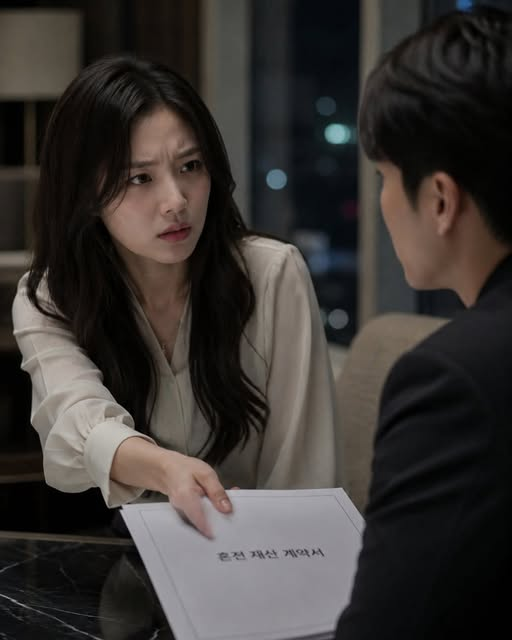
I tapped the prenup.
“You placed another woman’s name inside the agreement I was supposed to sign before marrying you.”
“You gave her an apartment.”
“You gave her something that belonged to my past.”
“And then you wrote a clause punishing me financially if I objected to your relationship with her.”
The room was completely silent.
Bui Tu Viet’s face darkened.
“That clause was recommended by legal.”
I turned toward Hua Man.
“Was it?”
She looked away.
Interesting.
I smiled.
“So let’s audit legal too.”
Bui Tu Viet slammed his palm against the table.
“On Hoa.”
The executives around us stiffened.
I did not.
“Twenty-five percent,” I said.
“That is my share.”
“I’m requesting the audit under my shareholder rights.”
“And if you refuse?”
I pushed the share-transfer notice toward him.
“Thinh Vien Capital already knows I’m considering a sale.”
That finally frightened him.
Thinh Vien was not merely a competitor.
They had spent three years trying to enter our market.
If they acquired my twenty-five percent before the public listing, Bui Tu Viet would lose the unquestioned control he had built his identity around.
He lowered his voice.
“You would really sell everything we built together to my enemy?”
I looked at him.
“No.”
“I’m offering you the first chance to buy it.”
“But apparently you only recognize something as ours when you’re about to lose it.”
His face changed.
For years, every success had gradually become his.
His company.
His clients.
His sacrifices.
His sleepless nights.
My work survived only in old spreadsheets and contracts nobody remembered I had written.
Now that my shares mattered, suddenly we had built it together.
Hua Man spoke softly.
“Miss On, perhaps everyone should calm down.”
I looked at her wrist.
“Take off the bracelet.”
She immediately covered it with her other hand.
“It was given to me.”
“By him.”
“Yes.”
“Then he can explain where he bought it.”
Bui Tu Viet interrupted.
“I bought it through a private collector.”
“When?”
“Last year.”
“Using which account?”
Silence.
That was the first crack.
I saw it.
So did the finance director.
I turned toward him.
“Mr. Tran, please include the purchase in the audit scope.”
Bui Tu Viet stood.
“This meeting is over.”
“No.”
I looked around the table.
“As a twenty-five-percent shareholder, I formally request that the board record my objection to undisclosed related-party benefits and begin an independent review.”
One director slowly nodded.
Then another.
Bui Tu Viet stared at them as if they had betrayed him.
But corporations are different from relationships.
Love might survive on excuses.
Boards prefer documents.
The audit began two days later.
And by the end of the first week, the apartment was no longer Bui Tu Viet’s biggest problem.
The company had paid Hua Man more than her salary.
Much more.
There were “legal consulting bonuses.”
Housing allowances.
Travel reimbursements.
A luxury apartment transferred through an affiliated company after being classified as an executive retention benefit.
None of those things were automatically illegal.
But they had not been properly disclosed to the board.
Then came the bracelet.
The receipt showed that it had been purchased through a company entertainment account.
I stared at the number.
Forty-six thousand.
Bui Tu Viet had used company money to redeem my grandmother’s bracelet.
Then given it to Hua Man.
I thought I would cry.
I didn’t.
Something about seeing the transaction in black and white made it too ugly for tears.
The audit team found something else.
Eight years earlier, the original receipt from the pawn shop still carried my name.
The item had never belonged to Bui Tu Viet.
He had known exactly what it was.
He had asked an assistant to track it down.
And when it was finally recovered, he did not return it to me.
He gave it to Hua Man as a “symbol of a new beginning.”
That phrase appeared in one of their messages.
I read the full conversation alone.
Hua Man:
Does she know what this bracelet means?
Bui Tu Viet:
No need for her to know.
Hua Man:
Then why give it to me?
A minute later:
Because the difficult years are over.
I stared at the sentence.
The difficult years.
Those were the years when I worked beside him.
The basement apartment.
The borrowed money.
The instant noodles.
The hospital nights.
The contracts we wrote on secondhand laptops.
Apparently, to him, those years were something to escape.
And I had become part of what he wanted to leave behind.
Three weeks later, the board held an emergency meeting.
Bui Tu Viet arrived with his own lawyer.
Hua Man did not attend.
She had been temporarily suspended pending review.
He sat across from me.
“You’ve proved your point.”
“No.”
I closed the audit report.
“The documents proved it.”
He looked exhausted.
“I’ll return the bracelet.”
I almost laughed.
“You still don’t understand.”
“What do you want?”
There it was.
The question powerful men ask when apology fails.
What do you want?
Money?
Control?
Revenge?
I answered:
“I want my name removed from the wedding registration appointment.”
His expression hardened.
“That has already been canceled.”
“I know.”
“I want the house sold.”
His eyes lifted.
“The house is yours.”
“Yes.”
“And I want my shares bought at independently appraised value.”
His jaw tightened.
“That would require enormous liquidity.”
“Then don’t buy them.”
He stared at me.
“Thinh Vien?”
“If they make the best compliant offer.”
He leaned forward.
“On Hoa, you know what they’ll do if they get that stake.”
“They’ll demand governance.”
“They’ll ask questions.”
“They’ll want board seats.”
“Yes.”
His voice rose.
“You’ll destroy everything!”
I looked directly at him.
“No.”
“You built a company that apparently cannot survive one shareholder asking where its money went.”
“That is your problem.”
He went silent.
The board ultimately chose a different solution.
A consortium of existing investors purchased most of my stake at audited market value.
I retained five percent.
Not because I wanted to remain tied to Bui Tu Viet.
Because those shares represented something he could no longer erase.
I had been there.
I had built part of it.
And history did not belong only to whoever became CEO.
The listing was delayed.
Not canceled.
The company strengthened its financial controls.
Several questionable benefits were reversed.
Hua Man resigned before the investigation concluded.
A week later, she asked to meet me.
I almost refused.
Then I agreed.
She arrived without the bracelet.
She placed a small velvet box on the table.
Inside was my grandmother’s gold.
For several seconds, I could not touch it.
Hua Man said quietly:
“I didn’t know he bought it with company money.”
“But you knew it was mine.”
Her face went pale.
“Yes.”
“Why wear it?”
She swallowed.
“Because I wanted to know whether he would choose my feelings over yours.”
At least she was honest.
“And?”
“He did.”
I looked at her.
“Did that make you happy?”
Her eyes reddened.
“For a while.”
Then she laughed bitterly.
“Until I realized a man who can erase eight years for one woman can eventually erase me too.”
I closed the box.
“I don’t hate you.”
She looked surprised.
“I should have walked away once I knew you existed,” she whispered.
“Yes.”
“But Bui Tu Viet owed me loyalty.”
She nodded.
That distinction mattered.
Months later, the final financial review cleared me of every accusation implied in the prenup.
I had never taken company money.
Never misused corporate accounts.
Never demanded assets that were not mine.
Ironically, the person most worried about me taking his wealth had been the one quietly using company resources to impress someone else.
Bui Tu Viet tried to contact me for almost a year.
At first, the messages were angry.
You overreacted.
Then defensive.
Nothing physical happened with Hua Man before we broke up.
Then nostalgic.
Do you remember the basement apartment?
Finally:
I understand now.
I never answered.
Until one afternoon, nearly eighteen months later, I saw him outside my office.
He did not block my path.
Did not grab my wrist.
Did not tell me I was emotional.
He simply stood there.
“On Hoa.”
I stopped.
He looked older.
Not ruined.
The company had recovered.
The listing eventually succeeded.
He was still wealthy.
Still respected.
But he no longer carried himself like the world would rearrange itself for him.
“I heard you opened your own advisory firm.”
“Yes.”
“Congratulations.”
“Thank you.”
His eyes moved toward my wrist.
I was wearing the bracelet.
My grandmother’s bracelet.
For the first time since I had recovered it.
His throat moved.
“It looks better on you.”
I smiled faintly.
“It always belonged to me.”
He lowered his eyes.
“I know.”
Silence.
Then he said:
“I thought giving you a house, a car, and cards meant I had repaid everything.”
“That was your first mistake.”
He nodded.
“I know.”
“I thought the years before success were humiliating.”
“So when Hua Man came along…”
He paused.
“She only knew the version of me who had already won.”
I looked at him.
“And I knew the version who was still becoming someone.”
“Yes.”
His eyes reddened.
“I started resenting that.”
That surprised me.
He continued:
“You remembered every failure.”
“Every debt.”
“Every night I couldn’t pay rent.”
“Hua Man looked at me and saw President Bui.”
He laughed quietly.
“You looked at me and still saw the idiot who once slept under a leaking ceiling.”
“I loved that idiot.”
He closed his eyes.
“I know.”
Then:
“I wish I had understood that before I treated the person who knew me best like evidence of a life I wanted to forget.”
That apology, finally, was real.
It still came too late.
He looked at me.
“Could we ever start again?”
I shook my head.
“No.”
He did not argue.
“Because of Hua Man?”
“No.”
“Because of the prenup?”
“No.”
He waited.
I looked down at the bracelet.
“Because when you finally had everything you once dreamed about, you became ashamed of the woman who helped you survive without it.”
His face crumpled.
That was the truth neither of us could undo.
Years earlier, I sold my grandmother’s bracelet for thirty-eight thousand.
I thought I was helping the man I loved rent his first office.
I never asked him to repay me.
Never asked for interest.
Never asked for recognition.
I believed we were building a future.
Eight years later, Bui Tu Viet redeemed that bracelet and placed it on another woman’s wrist.
For him, it represented a new beginning.
For me, it became an ending.
But eventually, I understood something.
The bracelet had never represented Bui Tu Viet.
It represented the girl I had been.
The girl who could sacrifice everything for someone she loved.
She had not been stupid.
She had simply trusted the wrong person with the meaning of her sacrifice.
The night before our wedding registration, Bui Tu Viet put a prenup in front of me because he was afraid I might take what belonged to him.
In the end, I signed nothing.
I took only what was already mine.
My shares.
My house.
My grandmother’s bracelet.
And the eight years of my life he had tried to rewrite as his success story.
He wanted a contract to make sure I could never take half of his future.
He never imagined that after reading it—
I would decide I no longer wanted any future with him at all.
