I did not return to the Luc family villa.
That evening, I checked into a small hotel near the airport.
At 11:43 p.m., I sent Luc Canh Tham one message.
I want to use the favor you owe me.
He called immediately.
“What do you want?”
His voice was colder than usual, but underneath it I heard tension.
I looked at the suitcase beside the bed.
“When you hear news about me later, don’t investigate.”
Silence.
“What news?”
“Whatever you hear.”
“Khuong Van.”
“You promised.”
His breathing changed.
“That favor cannot involve your safety.”
“I’m safe.”
“Then tell me where you’re going.”
“No.”
He was quiet for a long time.
Finally:
“How long?”
“I don’t know.”
“And if I refuse?”
I smiled.
“Then your word was worth less than five million after all.”
That hurt his pride exactly where I knew it would.
He answered through clenched teeth:
“Fine.”
I ended the call.
The following morning, I left Beijing.
Three days later, news spread among our old circle that Khuong Van had died.
There had been an accident on the southern coast.
My phone stopped working.
My luggage had disappeared.
Someone who knew me incorrectly identified a photograph circulating among the families involved.
I never corrected the rumor.
That was all.
I did not create a death certificate.
I did not steal an identity.
Legally, Khuong Van remained alive.
But socially—
I let myself die.
Because I had finally realized something.
As long as people believed I was alive somewhere nearby, they would continue expecting me to return.
My mother would call.
The Luc family would send people.
Friends would ask questions.
Luc Canh Tham might eventually decide that five million had been too little and send more.
I wanted none of it.
So when the rumor reached Beijing, I disappeared completely.
And Luc Canh Tham kept his promise.
He did not investigate.
At least—
not officially.
I learned what happened afterward years later.
The morning his secretary showed him the news, Luc Canh Tham allegedly stared at the screen for almost ten minutes.
Then he said:
“It’s false.”
No one dared answer.
He called my old number.
Disconnected.
Called my former landlord.
Nothing.
Called the hotel where I had stayed.
They said I had checked out.
His secretary cautiously asked:
“Should we investigate?”
Luc Canh Tham’s hand tightened around his phone.
Then he remembered my favor.
Whatever you hear, don’t investigate.
He said:
“No.”
That night, he drank alone until dawn.
To Van returned to Beijing two weeks later.
Everyone expected him to marry her immediately.
He did not.
One month passed.
Then six.
Then a year.
Whenever his mother mentioned marriage, he simply said:
“Later.”
Perhaps guilt needed time before it could admit its real name.
I spent those three years in Copenhagen.
Not because it was glamorous.
Because a former professor had offered me work there years earlier and I had once rejected it for marriage.
I joined a small urban-planning consultancy.
The first year was difficult.
New language.
New systems.
New weather.
The apartment was tiny and the radiator made noises all night.
But nobody there knew Mrs. Luc.
Nobody knew To Van.
Nobody knew the five-million settlement.
They knew only:
Khuong Van, project analyst.
That was enough.
I learned how strange freedom felt when nobody was watching to see whether you regretted it.
I did not.
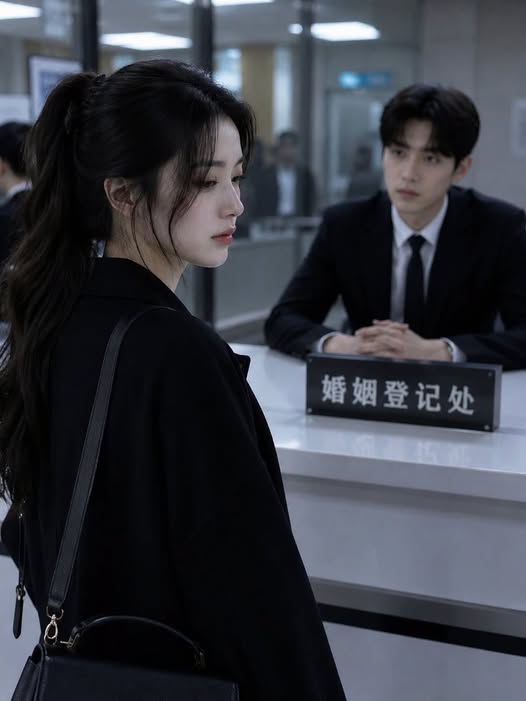
Three years later, Luc Canh Tham finally agreed to register his marriage with To Van.
The entire Beijing social circle knew before they reached the civil registry.
Someone even arranged flowers.
To Van wore cream.
Luc Canh Tham wore black.
Everything looked correct.
Until the clerk checked the system.
She frowned.
Then checked again.
“Miss To?”
To Van smiled.
“Yes?”
“There is a problem with your marital status.”
Luc Canh Tham slowly raised his eyes.
To Van’s smile stiffened.
“What problem?”
The clerk turned the screen slightly.
“Our domestic system shows an overseas marriage record that has not been legally dissolved.”
Silence.
Luc Canh Tham looked at her.
“Overseas marriage?”
To Van went pale.
“It’s complicated.”
The clerk continued professionally:
“Until the prior marriage is legally resolved, we cannot process a new registration.”
Luc Canh Tham did not speak.
He simply stared at the woman he had divorced me for.
Outside the registry, To Van finally explained.
While studying in Britain, she had married someone.
Not for romance at first.
Later, apparently, it became real.
Then it failed.
She returned to China before the divorce paperwork was completed.
She had planned to “handle it quietly.”
Luc Canh Tham asked only one question.
“When did you marry him?”
Her answer:
“Four years ago.”
Four years.
Meaning she had already been someone else’s wife during part of the period when Luc Canh Tham believed she was his great unfinished love.
He laughed.
Once.
Coldly.
Then walked away.
To Van followed.
“Canh Tham, listen to me.”
He stopped.
She grabbed his sleeve.
“I was afraid you wouldn’t wait for me if you knew.”
That sentence froze him.
Because someone else had once waited for him.
Three years.
In his house.
At his table.
Beside his grandmother’s hospital bed.
And he had rewarded that waiting by calculating her “depreciation.”
Fifty percent.
Five million.
At that moment, the past finally became arithmetic even he could understand.
He did not register the marriage that day.
They never did.
That same afternoon, Luc Canh Tham saw me alive.
Not in person.
On a screen.
His company was reviewing a European redevelopment project.
One presentation had been recorded in Copenhagen.
The video began.
A woman stepped to the podium.
Dark blue suit.
Hair cut shorter than before.
Calm voice.
“Good afternoon. I’m Khuong Van, regional project director.”
His secretary later told me Luc Canh Tham dropped the remote.
No one in the room moved.
He replayed the first fifteen seconds.
Then again.
I was alive.
Not hiding in some village.
Not suffering.
Not waiting.
Alive.
Working.
Standing in front of an international project team as though Mrs. Luc had never existed.
His first instinct was to ask for my address.
Then he stopped.
The favor.
Three years earlier.
Don’t investigate.
He did not.
Instead, he sent one email.
No private detective.
No secretary.
Just him.
I know you’re alive.
I read it that evening.
Then closed the laptop.
I did not answer.
Six months later, work brought me back to Beijing.
The city looked smaller.
Or perhaps I had changed.
Luc Canh Tham waited in the lobby after my presentation.
I recognized him immediately.
He looked almost the same.
Only quieter.
“Khuong Van.”
I stopped.
“Mr. Luc.”
That title hurt him.
I saw it.
He asked:
“Can we talk?”
“Ten minutes.”
We sat in an empty lounge.
For several seconds, he did nothing but look at me.
Then:
“Why did you pretend to die?”
I considered the question.
“Because leaving wasn’t enough.”
His brow tightened.
“My mother kept calling.”
“Your family kept asking where I was.”
“People told me I would regret the divorce.”
I looked directly at him.
“Death was the only boundary everyone respected.”
His face changed.
“And me?”
“You owed me a favor.”
He lowered his eyes.
“I kept it.”
“I know.”
“Do you know how difficult that was?”
I almost smiled.
“That was why I chose you.”
Silence.
He accepted that.
Then he asked:
“Did you hear about To Van?”
“Yes.”
“Of course.”
He laughed bitterly.
“It was everywhere for two days.”
“That sounds unpleasant.”
He looked at me sharply.
“You really don’t care?”
“No.”
That answer was the one he had feared most.
Anger could still mean attachment.
Indifference gave him nothing.
After a while, he said:
“Three years ago, you asked if you were To Van’s replacement.”
I remembered.
At the villa gate.
His strange expression.
Do you think the person you replaced is To Van?
“Yes.”
“You weren’t.”
I looked at him.
He continued:
“I chose you before Grandmother asked me to marry.”
That surprised me.
He smiled without humor.
“You probably don’t remember.”
“We met at a charity auction six months earlier.”
“You argued with a donor because he tried to inflate a bid after the hammer fell.”
I did remember.
Barely.
“You were there?”
“Yes.”
“You didn’t speak to me.”
“No.”
“I asked my grandmother about you afterward.”
My chest tightened.
Then irritation replaced surprise.
“Then why To Van?”
His eyes dropped.
“Because she was unfinished.”
Not love.
Not destiny.
Unfinished.
“She left without explanation.”
“When she came back, I thought I needed to know whether I had made the wrong choice.”
I laughed softly.
“And your method of finding out was divorcing your wife?”
His face tightened.
“Yes.”
“That was stupid.”
“Yes.”
“I mistook nostalgia for something more important than what I already had.”
He swallowed.
“By the time I understood, you were dead.”
I corrected him.
“No.”
His eyes lifted.
“I was gone.”
There was a difference.
His voice became rough.
“Could we start again?”
“No.”
Immediate.
Clean.
He closed his eyes.
“Because of To Van?”
“No.”
“Because I divorced you?”
“Partly.”
I leaned back.
“But mostly because you valued me only after absence made me expensive.”
He went still.
“You once calculated three years of marriage at five million.”
“Fifty percent depreciation.”
His face whitened.
I smiled faintly.
“I remember.”
“I regret saying that.”
“I know.”
“But I learned something useful from it.”
“What?”
“My value should never depend on whether a man thinks I’m new, old, useful, replaceable or depreciated.”
He had no answer.
The ten minutes were over.
I stood.
Luc Canh Tham called after me.
“Khuong Van.”
I turned.
He looked like he had one final question.
“Are you married?”
“No.”
Hope appeared too quickly.
I added:
“And I’m not waiting for anyone.”
It disappeared.
I walked away.
Years later, I heard Luc Canh Tham never married To Van.
Whether he married someone else later, I stopped asking.
That was his life.
Mine became full enough without knowing.
I stayed in Europe another four years.
Then returned to China as a partner in the firm that had once hired me as a junior analyst.
My mother and I slowly repaired our relationship.
Not perfectly.
Real families rarely repair themselves in one conversation.
But we learned new boundaries.
New ways to speak.
I bought my own apartment.
No Luc family furniture.
No gifts I was expected to return.
No room waiting for someone who might choose me later.
Sometimes people still asked why I “died.”
I usually smiled.
Because the truth sounded more dramatic than it felt.
I did not die.
I simply stopped being available to people who had already decided what my life was worth.
Luc Canh Tham gave me five million and called it compensation.
I gave it back untouched through the settlement account a year later.
Not because I was noble.
Because I wanted one clean ending.
But the favor?
I kept that.
It was worth more.
For three years, the most powerful man I knew had enough connections to find me almost anywhere.
And because he had given his word—
he didn’t.
That was the only promise from our marriage that truly helped me after it ended.
Three years later, he stood at the civil registry beside the woman he had once chosen over me.
The clerk looked strange because To Van already belonged to another unfinished story.
And in that moment, Luc Canh Tham finally learned what I had learned much earlier:
People are not waiting rooms.
You cannot leave someone sitting quietly while you go check whether the past still wants you.
Then return when the past disappoints you.
He once asked why I thought I had been To Van’s replacement.
In the end, the answer no longer mattered.
Because after I left—
I stopped being anyone’s replacement at all.
