The single room above Duong Phi’s studio was smaller than the dressing room in the Ha family house.
One bed.
One desk.
A narrow balcony facing south.
At six the next morning, I woke automatically.
My hand reached toward the nightstand.
For five years, that was the hour I started preparing breakfast.
Tieu Du liked his eggs firm.
Tieu Man hated milk unless it was slightly warm.
Ha Canh Hanh drank black coffee but complained if it sat longer than five minutes.
I lay there for almost a minute.
Then I remembered.
There was nobody downstairs waiting for me.
The silence hurt so badly I had to sit up.
My phone contained seven missed calls.
Three from the housekeeper.
Two from the kindergarten.
One from Canh Hanh’s lawyer.
One from Ha Canh Hanh himself.
I called the kindergarten first.
“Mrs. Ha?”
“My name is Lin Van.”
There was a pause.
“Yes, Ms. Lin. We wanted to confirm who should be contacted for Tieu Du and Tieu Man.”
“Their father has primary residence during the divorce process.”
“And Ms. Tham Lenh Nghi?”
I closed my eyes.
“She is not their legal guardian.”
This time, my voice did not shake.
“If there is an emergency, contact their father first. Then me.”
“Understood.”
When I hung up, Duong Phi was standing in the doorway holding two coffees.
“That looked painful.”
“It was.”
“Do you want to go back?”
I stared at the empty room.
“Yes.”
She said nothing.
I continued:
“And I still won’t.”
That was the difference.
Wanting my children did not mean returning to the place where I had been disappearing in front of them.
Duong Phi handed me coffee.
“Then come downstairs.”
“Why?”
“There’s something you need to see.”
On the second floor of the studio was a long table covered in old drawings.
I recognized them immediately.
The rehabilitation device project I had designed at twenty-three.
Adjustable lower-limb support.
Pressure-responsive joints.
A modular structure allowing children recovering from neurological injuries to use the same basic frame as they grew.
My handwriting covered the margins.
Duong Phi tapped one yellowed sketch.
“You remember this?”
“Of course.”
“You abandoned it when you got pregnant.”
“I paused it.”
“For five years.”
I glared at her.
She ignored me.
“Ha Medical commercialized only the basic brace system.”
“Yes.”
“They never developed this.”
She pointed to the adaptive joint.
“Because?”
“Because the prototype wasn’t stable.”
“Wrong.”
I looked at her.
“Because you weren’t there.”
I laughed.
“Phi.”
“I’m serious.”
She placed a new contract on the table.
A rehabilitation equipment manufacturer in Nam Thanh wanted to restart the project.
They had reviewed my published university work and the original design files.
They wanted me as product design director.
My first instinct was immediate.
“I can’t.”
Duong Phi stared.
There it was again.
The old answer.
I can’t.
Because of the twins.
Because of the house.
Because Canh Hanh travels.
Because Tieu Man needs me.
Because Tieu Du has a competition.
Because everyone else’s schedule is real and mine is optional.
I looked at the contract again.
“When do they need an answer?”
“Yesterday.”
I looked at her.
She grinned.
“So?”
I picked up the pen.
“Tell them today.”
Back at the Ha house, Ha Canh Hanh discovered on the first morning that five years of invisible labor had a schedule.
At 6:20, Tieu Man refused breakfast because the eggs were too oily.
At 6:45, Tieu Du could not find his robotics notebook.
At 7:10, the driver called because nobody had packed the children’s water bottles.
At 7:25, Tieu Man began crying because her hair was tangled.
Canh Hanh called the housekeeper.
She said carefully:
“Sir, Madam usually handled the children personally in the mornings.”
Then he called Lenh Nghi.
She arrived twenty minutes later.
Tieu Man ran toward her.
“Mother Lenh Nghi!”
Canh Hanh’s face changed slightly.
Perhaps for the first time, he heard the word without me standing nearby to absorb it.
Lenh Nghi laughed awkwardly.
“Don’t call me that.”
Tieu Man blinked.
“But Dad said it was only a name.”
The room went silent.
Canh Hanh looked away.
That evening, his lawyer brought him the revised divorce documents.
He flipped straight to the custody section.
“You’re accepting primary residence with me?”
“Yes,” the lawyer said. “Ms. Lin is requesting regular visitation and shared major decisions.”
Canh Hanh frowned.
“She really signed this?”
“Yes.”
“And the studio shares?”
“She wants an independent valuation.”
He gave a cold laugh.
“She hasn’t worked there in five years.”
The lawyer looked at him strangely.
“Mr. Ha, she is still one of the original shareholders.”
“I know.”
“And one of the inventors attached to the rehabilitation project that formed the studio’s first commercial agreement with Ha Medical.”
His hand stopped.
“What?”
The lawyer hesitated.
“You knew that, didn’t you?”
He didn’t.
Because during our marriage, Canh Hanh had learned to call everything I did before him “the little project.”
He had invested in me when I was twenty-three.
Then gradually remembered only that he had invested.
Not what he invested in.
Not who had designed it.
That night, he called.
I answered because the twins were with him.
“Lin Van.”
“What happened?”
“You started working again?”
“Yes.”
“At Duong Phi’s studio?”
“Yes.”
“You didn’t tell me.”
I almost laughed.
“We are divorcing.”
His voice hardened.
“What about the children?”
“They still have a mother.”
“You left.”
“I moved.”
“That’s the same thing to a five-year-old.”
“No.”
I took a breath.
“Leaving the marriage is not leaving the children.”
Silence.
Then:
“Tieu Man cried for you last night.”
My hand tightened around the phone.
That hurt exactly where he knew it would.
But I asked:
“Did you comfort her?”
He hesitated.
“Yes.”
“Good.”
“She wanted you.”
“I know.”
“Then come back.”
“No.”
His voice sharpened.
“You said you couldn’t bear it.”
I froze.
“How do you know that?”
“Duong Phi told my assistant you were struggling.”
I closed my eyes.
Of course.
Then I said quietly:
“I can miss my children and still refuse to live in a house where they are taught that I’m replaceable.”
He said nothing.
I continued:
“You wanted custody.”
“You said they preferred you.”
“You allowed another woman to be called their mother.”
“So now parent them.”
His breathing became heavy.
“You’re punishing me.”
“No.”
“I’m making you responsible for the arrangement you created.”
Then I hung up.
The robotics competition happened that weekend.
I did not attend.
Not because Tieu Du told me not to.
Because I had already told him I would respect his request.
That decision almost broke me.
At noon, my phone rang.
Tieu Du.
I answered immediately.
“Mom.”
His voice was small.
“What happened?”
“We got third.”
I smiled.
“That’s wonderful.”
“But the left sensor failed.”
“Did you check the calibration?”
Silence.
Then:
“How do you know?”
I laughed softly.
“Because I helped you build it.”
Another silence.
Children do not always understand the labor surrounding them until it disappears.
He whispered:
“Mother Lenh Nghi couldn’t fix it.”
I corrected gently:
“Aunt Lenh Nghi.”
He did not argue.
Then:
“Can you help me next time?”
My eyes burned.
“If you want me there, yes.”
“I want you.”
I closed my eyes.
“Then I’ll come.”
No lecture.
No “I told you so.”
He was five.
Children should be allowed to learn without being humiliated for what adults taught them.
That evening, Tieu Man called too.
“Mom, when are you coming home?”
I swallowed.
“I have a new home now.”
“Why?”
“Because Dad and I are going to live separately.”
“Because of Aunt Lenh Nghi?”
“No.”
That answer mattered.
“This is an adult decision.”
She was silent.
Then:
“Can I sleep at your new home?”
“Yes.”
“When?”
“Friday.”
“Both of us?”
“Both.”
She sounded relieved.
Before hanging up, she asked:
“Can I still love Dad?”
I nearly cried.
“Of course.”
“And Aunt Lenh Nghi?”
“Yes.”
“And you?”
“Always.”
That was the family I wanted my children to understand.
Love was not a competition with one chair.
Tham Lenh Nghi lasted less than a month as the imaginary replacement mother.
Not because she was cruel.
Because she had never actually asked to replace me.
She liked being welcomed.
Liked being admired by the children.
Liked Canh Hanh depending on her.
But breakfasts, fevers, parent meetings, forgotten gym clothes and midnight nightmares were different from appearing for the pleasant parts.
One evening, she finally told him:
“Canh Hanh, I can help sometimes.”
He looked at her.
“But I’m not their mother.”
The sentence stunned him.
Perhaps because I had been saying the same thing for years.
He asked:
“Then why did you let them call you that?”
Her face reddened.
“I liked it.”
At least she was honest.
“I thought…”
“What?”
She looked down.
“I thought it meant I was important to you.”
There it was.
Two adults had allowed two children to blur a boundary because the blur made them feel wanted.
Lenh Nghi gradually stepped back.
She remained a family friend.
Nothing more.
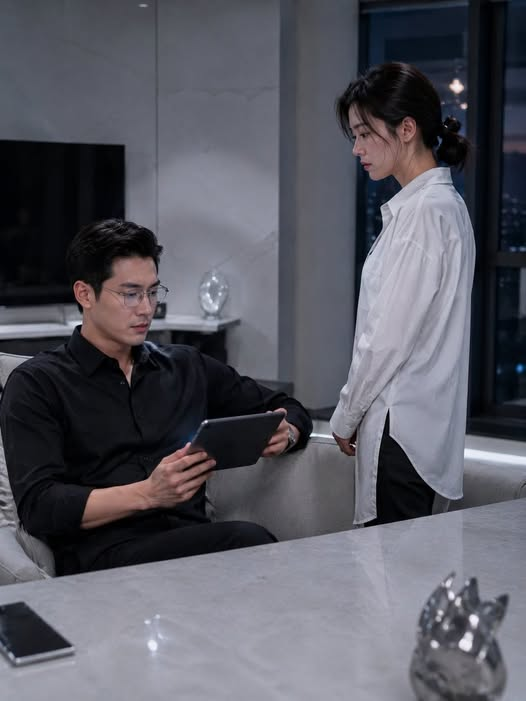
And without her filling every gap, Canh Hanh finally began to see how many gaps there were.
He learned the teacher’s names.
The pediatrician’s number.
Which child needed which medicine.
Why Tieu Du’s robotics box had three different screw sizes.
Why Tieu Man only slept after someone checked beneath the bed twice.
None of that made him heroic.
It made him their father.
Three months after I left, my rehabilitation project received prototype approval.
The first time I saw a child stand using the redesigned support frame, I had to turn away.
Duong Phi noticed.
“Crying?”
“No.”
“You’re terrible at lying.”
I laughed through tears.
For five years, I thought motherhood had erased this part of me.
It hadn’t.
It had only been waiting.
The divorce mediation happened the following week.
Canh Hanh arrived early.
He looked tired.
Not ruined.
Not broken.
Simply changed.
The lawyers discussed assets.
The studio shares were independently valued.
I kept my portion rather than forcing a sale.
Ha Medical retained its commercial agreements.
Nobody destroyed a company.
Nobody stole an empire.
Then we reached custody.
Canh Hanh surprised everyone.
“I want shared residence.”
I looked at him.
He continued:
“Alternate weeks eventually. Gradually at first.”
My lawyer looked at me.
I nodded.
That was what I had wanted from the beginning.
Two parents.
Not one parent and one visitor.
Outside the mediation room, Canh Hanh stopped me.
“Lin Van.”
I turned.
“I thought you gave them to me.”
“I never gave you our children.”
His face tightened.
“You wrote that they would live with me.”
“Because at that moment, their entire routine was built around your house.”
I looked at him.
“And because I needed to know whether you wanted to be their father or simply wanted to win custody.”
He lowered his eyes.
“I was angry when you left.”
“I know.”
“I told myself a mother who could leave like that didn’t care enough.”
I waited.
“Then Tieu Man woke up crying for you three nights in a row.”
His voice became quiet.
“And I realized I had spent years teaching them that you were always available.”
“That they could reject you.”
“Replace you.”
“And you would still be downstairs making breakfast the next morning.”
My throat tightened.
“Yes.”
He looked at me.
“I’m sorry.”
I believed him.
That did not mean I returned.
He asked:
“Was there really no chance?”
I thought about day 1,094.
His tablet.
My divorce request.
His calm:
As you wish.
Then day 1,095.
Breakfast.
Backpacks.
The final morning I performed the role of Mrs. Ha as perfectly as ever.
“No.”
He nodded slowly.
“I thought you wouldn’t leave because of the children.”
“I know.”
“That was arrogant.”
“Yes.”
A sad smile crossed his face.
“You could say something gentler.”
“I spent five years doing that.”
He laughed once.
Fair.
Two years later, Tieu Du entered another robotics competition.
This time, both parents were there.
Canh Hanh sat on one side.
I sat on the other.
No competition.
No substitute mother.
No child forced to decide which adult deserved the chair.
When Tieu Du’s robot crossed the final obstacle, he turned toward us.
Both of us stood.
Both clapped.
Tieu Man screamed louder than anyone.
Afterward, she ran toward me.
“Mom!”
Then toward Canh Hanh.
“Dad!”
Simple words.
Correct places.
Nobody had to lose a title for someone else to feel loved.
My rehabilitation device eventually entered clinical production.
I did not become famous overnight.
I became busy.
Useful.
Myself.
At conferences, people introduced me as:
Lin Van, industrial designer and rehabilitation product director.
The first few times, I still looked behind me.
I had spent so long being “Mrs. Ha” that hearing my own name felt unfamiliar.
Then it stopped feeling unfamiliar.
It became home.
On the 1,094th day of my marriage, I asked Ha Canh Hanh for a divorce.
He said:
“As you wish.”
He believed I would cool down.
Because mothers do not leave children.
Because wives like me do not walk away.
Because the woman who had surrendered her career, her name and her place little by little would surely surrender one more thing.
He was wrong.
I did not leave my children.
I left the version of motherhood that required me to disappear for them.
And when I returned to their lives from a place of my own—
something unexpected happened.
They did not lose a mother.
They finally learned who their mother was.
Not the woman who packed bags.
Not the woman who made breakfast.
Not the woman standing behind their father.
Lin Van.
A designer.
A mother.
A woman with a door of her own.
And this time, whenever my children walked through it—
they knew exactly whom they were coming home to.
