The woman at the door stopped breathing for a second.
I recognized her immediately.
Chloe.
My former best friend.
The woman who had once helped me choose wedding flowers.
The woman whose shoulder I had cried on whenever Ethan and I argued.
The same woman I later saw wrapped around him in a hotel photograph.
The little boy beside her looked about three.
Ethan stood so quickly that his chair scraped the floor.
“Chloe.”
She looked at him.
Then at me.
Her face lost all color.
“Maya…”
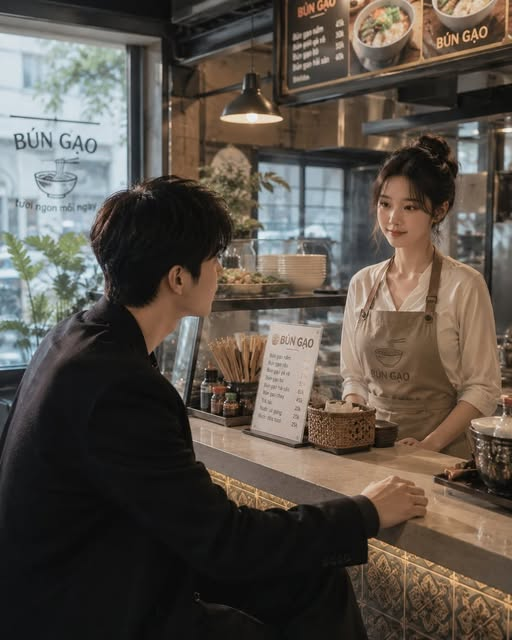
I wiped my hands on my apron.
“What would you like to order?”
Neither of them answered.
The child tugged at Chloe’s hand.
“Mom, I’m hungry.”
That one word was enough.
I looked at Ethan.
Then at the child.
The boy had Ethan’s dark hair.
His eyes too.
For a moment, something old moved inside me.
Not jealousy.
Not pain.
Just recognition of the life that might have destroyed me four years earlier.
Chloe immediately noticed where I was looking.
“Noah is Ethan’s son.”
There it was.
Ethan closed his eyes.
I nodded.
“Congratulations.”
Chloe flinched as if I had slapped her.
“Maya, don’t.”
“Don’t what?”
“Act like none of this affects you.”
I looked around my restaurant.
Two workers were cleaning tables.
The broth was simmering behind me.
An elderly regular was arguing with my cashier over whether he had already paid.
Life continued.
“I’m not acting.”
Ethan whispered:
“Maya…”
I raised one hand.
“I’m working.”
Then I looked at Chloe.
“If your son is hungry, sit down.”
She hesitated.
“Do you have anything that isn’t spicy?”
“Yes.”
I looked at Noah.
“Plain chicken congee?”
He nodded.
I prepared it myself.
No chili.
Less salt.
A boiled egg cut into small pieces.
I placed it in front of him.
“Careful. It’s hot.”
He smiled.
“Thank you.”
The child had done nothing to me.
Whatever his parents had destroyed years ago did not belong on his shoulders.
Chloe watched me for several seconds.
Then said quietly:
“You haven’t changed.”
I looked at her.
“Yes, I have.”
She lowered her eyes.
“You’re right.”
Ethan still had not touched his food.
The pickled chilies floated in the broth.
His face was slightly red from the first spoonful.
Apparently he had tried eating it anyway.
I almost laughed.
Four years ago, I would have removed every chili.
Now he was learning that the menu no longer revolved around him.
When Noah finished eating, Chloe took out her wallet.
“No charge for the child,” I said.
Her hand stopped.
“Maya…”
“For him.”
Not for her.
She understood.
Then she asked:
“Can we talk?”
“No.”
“Please.”
I looked at the clock.
“Five minutes.”
She glanced at Ethan.
“Without him.”
His head snapped up.
“Chloe.”
“No.”
For the first time, I heard anger in her voice.
“You’ve already controlled enough conversations.”
We stepped behind the restaurant into the narrow delivery courtyard.
Chloe folded her arms.
For a long time, she couldn’t look at me.
Then she said:
“I’m sorry.”
I waited.
“I know that means nothing.”
“It doesn’t mean nothing.”
She looked surprised.
“It just doesn’t undo anything.”
Her eyes reddened.
“I loved him.”
“I know.”
“I told myself you two were already unhappy.”
“We had problems.”
“I used that as permission.”
At least she was honest.
Then she laughed bitterly.
“Do you know what happened after you left?”
“No.”
“You never looked?”
“No.”
That answer hurt her.
After I discovered the affair, I had blocked them both.
Changed apartments.
Changed jobs.
Started selling breakfast congee from a borrowed food cart at five in the morning.
I had been too busy surviving to monitor the people who broke me.
Chloe continued:
“Ethan and I moved in together six months later.”
I said nothing.
“I got pregnant.”
She glanced toward the restaurant.
“Noah was born.”
“And?”
Her mouth twisted.
“For a while I thought I had won.”
That word almost made me laugh.
Won.
As though Ethan had been a trophy sitting between us.
“I kept thinking if he chose me over you, then what we did must have meant something.”
She looked down.
“But after Noah was born, Ethan started coming home later.”
My expression did not change.
“He didn’t cheat.”
She hurried to add it.
“At least I don’t think he did.”
“Then what happened?”
“He became dissatisfied.”
She laughed without humor.
“The apartment was too noisy.”
“The baby cried too much.”
“I stopped dressing the way I used to.”
“Dinner wasn’t ready.”
“I was tired.”
She finally looked at me.
“And then one night he said something.”
I waited.
“He said you would have handled everything better.”
Silence.
Chloe wiped her eyes.
“That was when I understood.”
“Understood what?”
“I had spent years believing he betrayed you because I was special.”
Her voice broke.
“But he didn’t.”
“He betrayed you because he was selfish.”
I said nothing.
“And eventually that selfishness turned toward me too.”
She and Ethan separated a year earlier.
They were still working out custody.
Noah lived primarily with Chloe.
Ethan saw him regularly.
That surprised me.
At least he had not abandoned his son.
Then Chloe said:
“He’s not here because of me.”
“I didn’t think he was.”
“He comes here because he heard about your second location.”
I frowned.
Ethan knew?
My second restaurant had not opened yet.
Only the permits had been approved.
Chloe smiled sadly.
“He follows everything about you.”
“That sounds unhealthy.”
“It probably is.”
I leaned against the wall.
“Why are you telling me this?”
“Because when I saw his car outside…”
She swallowed.
“I thought he might try to make you believe he’s changed because things between us failed.”
I stared at her.
“And has he?”
“Changed?”
“Yes.”
Chloe considered it.
“A little.”
Then she shook her head.
“But not enough to deserve you.”
That was perhaps the strangest sentence I had ever heard from her.
We returned inside.
Ethan stood near the counter.
Noah was drawing on a napkin.
Chloe took her son’s hand.
Before leaving, she stopped beside me.
“I know we’ll never be friends again.”
“No.”
She nodded.
“I know.”
Then she walked out.
Ethan remained.
He looked older than he had when he entered.
“I didn’t know she would come here.”
“I believe you.”
“Maya, I didn’t come because things failed with Chloe.”
I started stacking bowls.
“Okay.”
His voice sharpened.
“Can you stop doing that?”
“Doing what?”
“Acting like I’m a stranger.”
I looked at him.
“You are.”
He went silent.
Then:
“I think about you every day.”
“That sounds exhausting.”
His mouth twitched despite himself.
Then he became serious.
“I made the worst mistake of my life.”
“No.”
He frowned.
“You made a series of choices.”
“The messages.”
“The hotel.”
“The lies.”
“Letting my best friend comfort me while both of you knew the truth.”
I placed the bowls down.
“A mistake is forgetting an anniversary.”
“What you did required planning.”
His eyes reddened.
“I know.”
“Good.”
He looked around the restaurant.
“I heard you built this from nothing.”
“Not nothing.”
I pointed toward the kitchen.
“I had a rice cooker, forty dollars and a woman downstairs who let me borrow her cart.”
He smiled faintly.
“You always make things sound simple.”
“They weren’t.”
I worked fourteen-hour days.
Slept in the room above the first shop.
Burned three batches of broth before learning how to keep it clear overnight.
Nearly closed during my first winter.
Then one local nurse posted about my breakfast congee.
Hospital workers started coming.
Then taxi drivers.
Construction crews.
Families.
Three years later, I signed the lease for this restaurant.
Next month, my second location would open.
Nothing glamorous.
Nothing inherited.
Mine.
Ethan looked at my hands.
“I’m sorry you had to live so hard after me.”
That sentence irritated me more than I expected.
“I didn’t live hard because of you.”
He looked up.
“I lived.”
I pointed around us.
“This is not evidence that you ruined me.”
“This is evidence that I continued.”
He absorbed that quietly.
Then he asked the question he had probably traveled here to ask.
“Is there any chance for us?”
“No.”
His face fell.
“You didn’t even think.”
“I had four years.”
He looked down.
“I still love you.”
“I believe you.”
His eyes lifted hopefully.
I continued:
“But being loved by you once cost me my best friend, six years, and my ability to trust my own judgment.”
“I’m not paying that price twice.”
He sat silently for a long time.
Then picked up his bowl.
The broth had gone cold.
He took another spoonful anyway.
His eyes watered from the chilies.
I finally laughed.
He looked at me.
“What?”
“You really still can’t eat spicy food.”
“No.”
“Then why are you eating it?”
He looked down at the bowl.
“Because you made it.”
Years ago, that sentence would have destroyed me.
Now it only made me sad.
I took the bowl from him.
“Ethan.”
He looked up.
“You don’t have to suffer through something just because it came from me.”
His expression changed.
Maybe he understood the double meaning.
I brought him a fresh bowl without chili.
“Eat.”
He stared at it.
“You remembered.”
“Yes.”
“Then you do still care.”
I shook my head.
“Remembering someone is not the same as belonging to them.”
He closed his eyes.
When he finished, he paid.
No special treatment.
No discount.
At the door, he turned.
“Do you really not hate me?”
“No.”
“And Chloe?”
“No.”
“How?”
I thought about it.
Then answered:
“Because the restaurant opens at five.”
He almost smiled.
“What does that mean?”
“It means I have broth to prepare.”
“Employees to pay.”
“Rent.”
“Customers.”
“A second location.”
“A life.”
I looked directly at him.
“Hate requires time.”
“I stopped giving you mine.”
He left.
I did not see Ethan again for almost two years.
Occasionally, he brought Noah to the restaurant.
Never when I was there intentionally.
At least I don’t think so.
Chloe came once every few months.
We never became friends again.
But we learned how to occupy the same room without pretending the past had disappeared.
Noah liked my plain chicken congee.
So whenever I saw him, I made it.
Children should not inherit adult betrayals.
My second restaurant succeeded.
Then came a third.
I refused the fourth.
People kept telling me expansion was everything.
I disagreed.
I had spent enough of my life chasing more because someone else told me what success should look like.
Three restaurants were enough.
One quiet apartment was enough.
Friends I trusted were enough.
A life that belonged to me was enough.
Four years after betraying me, Ethan walked into my little restaurant and asked whether I still hated him.
He expected anger.
Maybe tears.
Maybe proof that he still occupied some enormous space inside me.
Instead, I asked what he wanted to order.
That hurt him.
But it was also the truth.
Once, I knew exactly how Ethan liked everything.
His coffee.
His shirts.
His eggs.
His congee.
I changed recipes for him.
Changed plans.
Changed myself.
Then he chose someone else.
So I stopped adjusting.
Years later, when he returned, the house specialty contained pickled chilies.
He still couldn’t tolerate them.
And for the first time in our history—
I didn’t change the recipe.
Not because I hated him.
Because the dish was no longer made for him.
Neither was my life.
