The slap echoed through the intensive care room.
Bui Van Dang stared at me.
“You are the main treating doctor,” I said. “You received an emergency call and still chose to stay with another woman.”
His face darkened.
“Chu A was in pain.”
“And my father was in cardiac distress.”
“I asked Director Vuong to handle it.”
“You did not ask whether he was available.”
He opened his mouth.
I did not let him interrupt.
“You didn’t transfer responsibility properly.”
“You simply left.”
My father moved weakly on the bed.
Then, through the oxygen mask, he repeated:
“Change… doctor.”
Van Dang froze.
“Dad…”
My father closed his eyes.
“Don’t call me that.”
That sentence hurt him more than the slap.
For years, my father had treated Bui Van Dang like a son.
He had recommended him.
Protected him when he was inexperienced.
Given him operating opportunities other young doctors could only dream of.
Now he turned his face toward the window.
“Find someone else.”
Van Dang looked at me.
“You told him about us?”
“No.”
“Then why—”
My father opened his eyes again.
“I’m sick.”
His voice was weak, but clear.
“Not stupid.”
The room went silent.
He had seen enough.
The emergency call.
Van Dang arriving late.
The perfume.
My face.
Sometimes parents do not need the whole truth.
They only need to see who did not come when it mattered.
Van Dang stepped toward the bed.
“I can explain.”
My father raised one hand.
“No.”
Then he looked at me.
“Call Thach An.”
My breath stopped.
“You remember Brother Luc?”
My father almost smiled.
“Of course I remember my best student.”
Not reborn.
Not remembering another life.
Just my father.
Alive.
For a moment, I almost cried from relief.
Then my phone rang.
Luc Thach An.
I answered immediately.
His voice was steady.
“I reviewed the records.”
My fingers tightened.
“And?”
“I can fly back tomorrow morning.”
I closed my eyes.
“Can you perform the surgery?”
“Yes.”
Then he added:
“But I want the hospital to repeat two tests before I arrive.”
“Done.”
When I hung up, Van Dang’s expression had changed completely.
“You asked Luc Thach An to come back?”
“Yes.”
“You don’t trust me?”
I looked at him.
“No.”
One word.
Nothing else.
The hospital replaced Bui Van Dang as my father’s primary surgeon that afternoon.
He objected.
The department director refused to argue.
“Your personal conflict has already affected clinical judgment.”
Van Dang’s face hardened.
“I did not harm the patient.”
The director looked at him coldly.
“You received an emergency notification concerning your own patient.”
“You chose another non-emergency matter.”
“That alone is enough for me to remove you from this case.”
Van Dang turned toward me.
“This is because of the divorce.”
“No.”
I answered calmly.
“The divorce is because of who you are.”
He flinched.
Then Chu A appeared at the end of the corridor.
Pale.
Red-eyed.
One hand resting protectively over her abdomen.
“Teacher Bui…”
His entire expression changed.
Immediately.
That gentleness again.
The same one that had cost my father his life in my previous existence.
Van Dang walked toward her.
I watched.
And this time—
I felt nothing.
Not jealousy.
Not rage.
Just certainty.
I turned away first.
Luc Thach An arrived the next morning.
He came straight from the airport.
Dark coat.
Tired eyes.
Medical records already marked with notes.
When he saw me outside the intensive care unit, he stopped.
“Khuong Au.”
For years, I had called him Brother Luc because my father’s students were almost family.
Now I suddenly could not speak.
He frowned.
“You haven’t slept.”
“I’m fine.”
“No.”
He handed me a cup of warm soy milk.
“You’re an obstetrician.”
“You know better than to say that.”
I laughed.
For the first time in days.
Then he went in to see my father.
The surgery was scheduled for Saturday.
Exactly as planned.
But this time Bui Van Dang would not be standing at the operating table.
That alone made me breathe easier.
The night before surgery, Van Dang came to find me.
He held divorce papers.
Already signed.
“You really want this?”
“Yes.”
His fingers tightened.
“What about nine years?”
“They happened.”
“That’s all?”
“What do you want me to do?”
I looked at him.
“Turn nine years into permission for the tenth?”
He said nothing.
I continued:
“You wanted the divorce because Chu A was pregnant.”
“You wanted me to keep living with you because you didn’t want to lose the benefits of having me.”
“You wanted her child to have a name.”
“You wanted me to keep your home.”
“You wanted my father to keep supporting your career.”
“And you call that gratitude?”
His jaw clenched.
“I never asked your father to help me this much.”
I smiled.
“No.”
“You simply accepted everything.”
His face changed.
Then I placed the agreement between us.
“Sign the final property schedule.”
He looked down.
“You really don’t want anything from me?”
“No.”
He laughed bitterly.
“Are you trying to humiliate me?”
“No.”
I leaned closer.
“I’m trying to separate my life from yours before the hospital starts examining your finances.”
His head snapped up.
“What?”
There it was.
Fear.
Very small.
But I saw it.
In my previous life, after my death, I learned something I had never known while alive.
Bui Van Dang’s reputation as the hospital’s golden surgeon had not been built only on skill.
There were envelopes.
Referral commissions.
Supplier kickbacks.
“Thank-you fees” hidden through relatives.
Money he always said came from investments.
I knew roughly where the evidence would surface.
This time I would not be standing beside him when it did.
Van Dang’s voice lowered.
“What are you talking about?”
I picked up my bag.
“Nothing.”
Then I left.
Let him wonder.
For once, fear belonged to him.
My father’s operation lasted nearly seven hours.
I sat outside the operating room the entire time.
No screaming.
No pacing.
Just waiting.
At 6:43 p.m., Luc Thach An came out.
He removed his mask.
“The surgery was successful.”
My knees nearly gave way.
I covered my face.
For a moment, I could not breathe.
In my previous life, that door had opened with death behind it.
This time—
my father was alive.
Thach An stood quietly beside me.
When I finally looked up, he said:
“Go see him when they transfer him.”
I nodded.
“Thank you.”
He shook his head.
“Your father trained me.”
“This is what I should do.”
No heroics.
No debt.
Just responsibility.
I suddenly understood why my father trusted him.
Three days later, the hospital compliance office contacted me.
Not because I had filed a revenge complaint.
Because a supplier audit had flagged unusual payments connected to Bui Van Dang’s department.
A medical device company had transferred money to an account controlled by his cousin.
Several “consulting fees” matched periods when Van Dang recommended their products.
The investigators asked whether I knew anything.
I answered honestly.
“I knew he had savings I couldn’t explain.”
“Did you benefit from them?”
“No.”
“Did he ever place them in joint accounts?”
“No.”
That was exactly why I had separated finances immediately.
The investigation widened.
Van Dang was temporarily removed from procurement decisions.
Then from administrative duties.
He continued clinical work under supervision while the hospital reviewed the evidence.
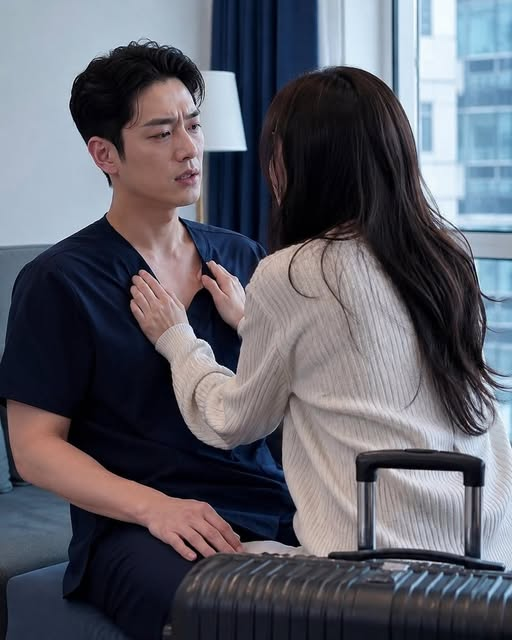
His reputation did not collapse overnight.
But the myth did.
The “number one heart surgeon” suddenly had to answer ordinary questions.
Where did this money come from?
Why was this supplier chosen?
Why were these envelopes accepted?
And for the first time, my father’s name could no longer protect him.
Because my father refused.
When Van Dang came to our room asking for help, my father simply said:
“I recommended a doctor.”
“I did not guarantee a man.”
Then closed his eyes.
Conversation over.
Chu A’s pregnancy continued.
She came to me once more.
Not as a patient.
As a woman who had finally realized the man she fought to obtain came with consequences.
She stood outside my office.
“Ms. Khuong.”
I looked at her.
“What?”
“Van Dang says you caused the investigation.”
“No.”
She hesitated.
“Then why did it start right after the divorce?”
“Because audits have calendars.”
Her face reddened.
She lowered her voice.
“He said you hated me.”
“In my previous life, maybe.”
Of course, I did not say the last part aloud.
Instead:
“I don’t hate you.”
She looked surprised.
I continued:
“You knew he was married.”
“That was your choice.”
“He betrayed me.”
“That was his.”
“I’m finished with both.”
She swallowed.
Then asked:
“Do you think he loves me?”
I almost laughed.
But I didn’t.
“That is no longer a question I need answered.”
She left.
Months later, I heard they did not marry immediately.
The financial investigation made everything complicated.
His mother opposed her.
His career slowed.
The romantic story became paperwork, childcare planning, hospital reviews and arguments over money.
Reality had finally arrived.
My divorce became final six weeks after my father’s surgery.
I walked out of the registry office alone.
No tears.
No anger.
Just sunlight.
Van Dang followed me outside.
“Khuong Au.”
I stopped.
He looked thinner.
His white coat no longer carried the same authority.
“The investigation may affect my vice-director appointment.”
“I know.”
“You really won’t ask your father to say something?”
“No.”
His eyes reddened.
“I spent nine years with you.”
I looked at him.
“And?”
He stared.
“You used to love me.”
“Yes.”
“Then how can you become this cold?”
I thought about my previous life.
My father dying while waiting for him.
The accident.
The unbearable knowledge that even after everything, he moved on as if our lives were disposable.
Then I looked at the man standing in front of me.
Alive.
Confused.
Still believing love should protect him from consequences.
“I’m not cold.”
I said quietly.
“I finally understand that loving someone does not require me to help them escape what they chose.”
He said nothing.
I walked away.
One year later, my father could walk forty minutes every morning.
He complained about hospital food.
Argued with nurses.
Returned to teaching part-time.
The first time I saw him scolding a resident over a badly written case note, I went into the bathroom and cried.
Alive.
He was alive.
That was enough to make this life worth everything.
Luc Thach An returned abroad after several months, then later accepted a joint teaching appointment and began spending part of each year in the country.
My father was delighted.
He kept inviting him home for dinner.
I accused him of trying to recruit free cardiac consultation.
My father answered:
“I’m recruiting a son-in-law.”
I nearly choked.
Thach An calmly continued eating.
“Professor Khuong, your daughter is holding chopsticks.”
My father immediately became quiet.
Smart man.
There was no instant romance.
I had just left nine years of one.
I needed my own life first.
Work.
My father.
Peace.
But over time, Thach An became someone I could trust.
Not because he saved my father.
Because he never used that fact to demand anything from me.
Two years later, when he asked me to dinner alone, I said yes.
Just dinner.
That was how something new began.
Slowly.
Normally.
Bui Van Dang eventually kept his medical license.
But he lost the vice-director promotion.
The hospital sanctioned him for undisclosed financial conflicts and removed him permanently from procurement-related authority.
He remained a surgeon.
A skilled one.
Just no longer protected by myth.
He and Chu A eventually separated.
They shared responsibility for their child.
I heard this through colleagues.
I never asked for details.
Her life was not my victory.
His loneliness was not my reward.
My reward was much simpler.
My father lived.
I lived.
And I did not waste this second chance trying to punish people who had already shown me who they were.
Years later, I sometimes remembered the first sentence of my second life.
Bui Van Dang lying beside me.
Cold.
Certain.
“Let’s get a divorce.”
In my previous life, those words destroyed me.
In this one, I answered:
“Okay.”
That single word changed everything.
I did not slap Chu A.
I did not destroy my career chasing humiliation.
I did not trust Van Dang with my father’s life simply because I once trusted him with mine.
I called Luc Thach An.
I changed the surgeon.
I separated the finances.
I walked away before Bui Van Dang’s choices could drag me down with him.
People think a second life would allow them to take revenge.
Maybe.
But when I was given mine—
I discovered revenge was too small.
I did not want to watch Bui Van Dang lose everything.
I wanted to make sure he never took everything from me again.
And this time—
my father came home.
