I had already reached the ground floor when I heard footsteps behind me.
“Giang Du.”
I stopped.
Cố Trường Cảnh stood several meters away.
For the first time since meeting him again, there was no arrogance in his face.
Only confusion.
“Can I see her again?”
I looked at Giang Tranh.
She was busy unwrapping the White Rabbit candy the nurse had given her.
“No.”
His expression stiffened.
“She is also my daughter.”
“You discovered that twenty minutes ago.”
“I can make up for the last three years.”
I almost laughed.
“You can’t.”
He went silent.
Then I continued:
“You can decide what kind of father you become from today onward.”
“But you cannot rewrite yesterday.”
That was the first boundary.
There would be many more.
He did not follow us home.
That surprised me.
The old Cố Trường Cảnh would have sent someone to investigate before I even reached the parking lot.
Instead, the following morning, my lawyer received a letter.
Not a threat.
Not a custody demand.
A request.
He wanted to establish paternity formally and obtain the medical history necessary to help with Giang Tranh’s follow-up treatment.
I agreed to one thing.
A medical genetic screening.
Nothing else.
Three days later, the hospital called.
There was a family history of valve abnormalities on Cố Trường Cảnh’s side.
A mild inherited condition had appeared in two relatives.
He had never known.
When the cardiologist explained it, Cố Trường Cảnh sat opposite me with his face drained of color.
“So it may have come from me?”
“It may have,” the doctor said. “There are several possibilities. The important thing is that your daughter is recovering well.”
Your daughter.
He looked toward Giang Tranh.
She was drawing a rabbit with purple ears.
For the first time, he did not talk about money.
He did not promise the best doctors.
He did not say he would cure her.
He simply asked:
“Will she need another surgery?”
“Not if her recovery continues like this.”
His shoulders dropped.
I realized he had been holding his breath.
When we walked out, he said:
“Thank you.”
“For what?”
“For taking care of her.”
I stopped.
Something inside me went cold.
“Don’t thank me for raising my own child.”
“I didn’t mean—”
“I know.”
I looked at him.
“But don’t turn my last three years into something noble you can admire from a distance.”
His face tightened.
“You weren’t there.”
“And I made sure you weren’t.”
“That’s true.”
His answer surprised me.
He did not argue.
He did not accuse me.
He only said:
“Because I gave you a reason to believe that hiding her was safer.”
For a moment, neither of us spoke.
Four years earlier, I would have given anything to hear Cố Trường Cảnh admit he had been wrong.
Now the sentence arrived too late to change anything.
But not too late to matter.
There is a difference.
That afternoon, Hương Noãn came downstairs from the maternity floor.
She was holding her newborn son.
Cố Trường Cảnh was standing near the elevator with us.
The moment she saw Giang Tranh, she stopped.
Her eyes moved from the little girl’s face—
to her husband’s.
She understood immediately.
“Trường Cảnh.”
He went pale.
“Hương Noãn…”
“Whose child is she?”
He did not answer.
I did.
“Mine.”
Hương Noãn looked at me.
Then back at him.
“And yours?”
After several seconds, he nodded.
“Yes.”
Her hand tightened around the baby blanket.
I expected anger.
Instead, she asked one question.
“How old?”
“Three.”
Hương Noãn looked away.
Their son had been alive for less than a week.
Everyone upstairs had been congratulating Cố Trường Cảnh on becoming a father for the first time.
He had accepted every word.
Now he knew it had never been true.
That evening, Hương Noãn asked to speak to me privately.
I almost refused.
Then she said:
“I’m not here to defend him.”
So I stayed.
She sat opposite me in the hospital café.
“You were his ex-wife.”
“Yes.”
“The one people said caused scenes at the company?”
I smiled faintly.
“That depends on who tells the story.”
Her expression changed.
“What actually happened?”
I looked at her for a long time.
Then I told her only what she needed to understand.
Our marriage had not ended because I was unstable.
It ended because for years Cố Trường Cảnh had treated another woman’s emotions as more important than my dignity.
Because every time Hương Noãn’s name appeared in our marriage, I became the problem.
And because during one of the darkest moments of our relationship, he had used his power over me in a way I could never forget.
I did not give her dramatic details.
I didn’t need to.
By the end, Hương Noãn’s face had turned white.
“He told me you hated me.”
“I did.”
She looked down.
“But you didn’t even know me.”
“No.”
I smiled bitterly.
“I hated what you represented.”
“And now?”
“Now?”
I looked toward the maternity elevators.
“You have a newborn child.”
“I have mine.”
“I don’t want your marriage.”
She swallowed.
“That isn’t what I’m afraid of.”
“What are you afraid of?”
She raised her eyes.
“That one day he will tell our son a beautiful version of himself too.”
That sentence stayed with me.
Cố Trường Cảnh came home that night to something he had never expected.
Questions.
Not from me.
From his wife.
Hương Noãn asked him about our marriage.
The rumors.
The divorce.
The decisions he had made.
And for once, he could not blame the “crazy ex-wife,” because the crazy ex-wife was no longer in the room.
He had to tell his story without me there to carry the shame for him.
Three days later, the hospital nurses who had gossiped about me received an internal correction from the administration.
Not because I complained.
Because Cố Trường Cảnh had personally contacted the hospital director.
The message was simple:
Statements describing Giang Du as violent, unstable or responsible for the breakdown of our marriage are false. I was responsible for many of the failures in that relationship. Please do not use my name to spread rumors about her again.
One nurse sent me an apology.
I deleted it.
I did not need everyone to like me.
I only needed to stop living inside a story other people had written.
Two weeks later, Cố Trường Cảnh asked to see Giang Tranh.
I gave him thirty minutes.
Public park.
I stayed nearby.
He arrived carrying an enormous pink dollhouse.
Giang Tranh stared at it.
Then looked at him.
“I don’t like dolls.”
Cố Trường Cảnh froze.
“What do you like?”
“Dinosaurs.”
He looked genuinely defeated.
I turned away so he would not see me laughing.
The next visit, he brought a small dinosaur book.
Not expensive.
Not imported.
Just a book.
Giang Tranh accepted it.
That was their beginning.
Not blood.
Not money.
A twenty-dollar dinosaur book.
At first she called him Uncle Cố.
He hated it.
He never corrected her.
Every Sunday he came.
Some weeks she ignored him.
Some weeks she asked twenty questions.
Once she refused to see him because she was building a cardboard castle.
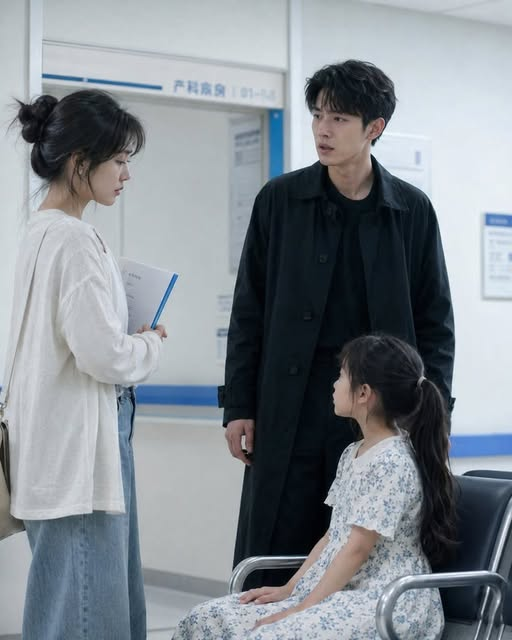
He waited outside for forty minutes before I finally said:
“You can leave.”
He looked toward the door.
“She said she might finish soon.”
I almost rolled my eyes.
But he stayed.
That was new.
The man I had once known expected everyone else to wait for him.
Now he was learning what waiting felt like.
Six months passed.
Then one evening, Giang Tranh asked me:
“Mommy, why does Uncle Cố look like me?”
I put down the laundry.
There was no perfect answer.
So I gave her the honest one.
“Because he is your biological father.”
Her eyes widened.
“My dad?”
“Yes.”
“Then why doesn’t he live with us?”
“Because Mommy and he stopped being a family before you were born.”
She thought carefully.
“Did he know about me?”
“No.”
“Why?”
I paused.
“Because Mommy was afraid.”
She climbed into my lap.
“Of him?”
Children sometimes ask the question adults spend years avoiding.
“Yes.”
I answered.
“I used to be.”
She became quiet.
Then asked:
“Are you afraid now?”
I looked toward the window.
“No.”
And that was when I realized I was telling the truth.
Cố Trường Cảnh did not ask me to remarry him.
That was perhaps the first truly respectful decision he made.
Once, nearly a year after meeting again, he said:
“If I had found you before you gave birth…”
I interrupted.
“Don’t.”
He looked at me.
“There is no version where you arrive earlier and suddenly become the man I needed.”
He lowered his eyes.
“I know.”
“Good.”
And we never discussed it again.
His regret belonged to him.
I no longer needed to live inside it.
His marriage to Hương Noãn survived.
Not easily.
She did something I had never done during my marriage.
She refused to rescue him from consequences.
When he forgot a promise, she told him.
When he tried to use work as an excuse, she walked away from the argument until he was ready to speak honestly.
And when his mother once complained that Giang Tranh would “complicate the inheritance,” Hương Noãn stood up from the table.
“She is his daughter.”
Then she looked directly at Cố Trường Cảnh.
“Say it.”
He did.
“Giang Tranh is my daughter.”
No hesitation.
No shame.
I heard about that conversation later.
It did not make me love him again.
But I was glad my child no longer had to exist as somebody’s secret.
Three years after our hospital reunion, Giang Tranh had another cardiac follow-up.
Everything was normal.
She ran out of the examination room waving the report.
“Mom! Dad!”
I stopped.
So did Cố Trường Cảnh.
It was the first time she had called him that.
He looked at her as though he had forgotten how to move.
Giang Tranh frowned.
“Why are you standing there?”
He crouched down.
“Nothing.”
His voice shook.
“Dad is listening.”
She handed him the report.
“The doctor says I can learn swimming.”
He smiled.
“Then we’ll learn.”
“No.”
She pointed at him seriously.
“You already know.”
“Then I’ll watch.”
“That’s boring.”
“I can be boring.”
She considered it.
“Okay.”
Then she grabbed his hand.
Not because he was rich.
Not because his surname was Cố.
Not because biology demanded it.
Because for three years, he had arrived when he said he would.
He had earned one word.
Dad.
Outside the hospital, Cố Trường Cảnh looked at me.
His eyes were red.
“Giang Du.”
“What?”
“Thank you for giving me the chance.”
I shook my head.
“I didn’t give you fatherhood.”
He went still.
“She did.”
I nodded toward Giang Tranh.
“You just finally learned how to deserve it.”
He smiled.
A tired, quiet smile.
Then he followed his daughter toward the parking lot.
Years earlier, I had loved Cố Trường Cảnh so desperately that I became someone I no longer recognized.
After our divorce, people called me crazy.
Difficult.
Ungrateful.
They said I had thrown away a perfect man.
I stopped correcting them.
Because eventually I understood something.
The rain had already stopped.
I no longer needed anyone to bring me an umbrella.
And when Cố Trường Cảnh finally discovered that he had a daughter, the biggest punishment was not that she carried my surname.
It was not that I no longer loved him.
It was that every time Giang Tranh slowly learned to trust him, he had to understand what I had learned years earlier:
Being related to someone gives you a place in their history.
Showing up is what earns you a place in their life.
