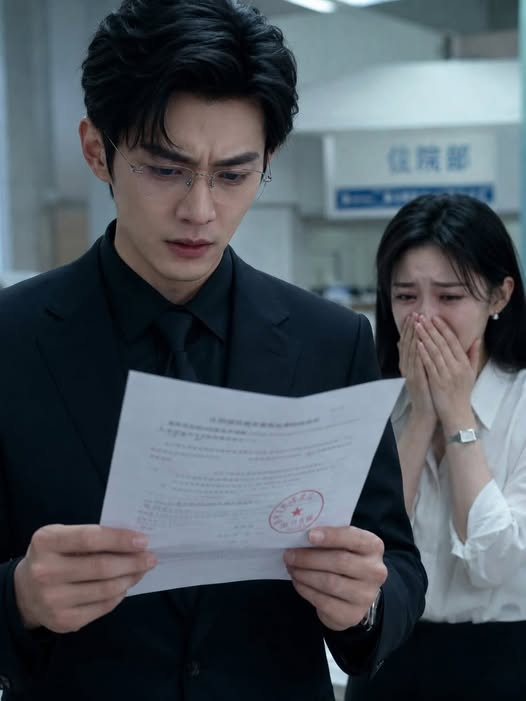
The divorce papers were not the worst thing Adrian carried out of the hospital basement.
The worst thing was a screenshot.
Seven calls.
All from Claire.
All rejected.
The first had come fourteen minutes after he left the operating floor.
The second, six minutes later.
The third while Olivia was asking whether the mark on her knee would remain.
The fourth when the deputy surgeon asked the nurses to locate him urgently.
The fifth when Claire was told her father’s condition had become critical.
The sixth came moments before the team lost him.
And the seventh—
after everything was already over.
Adrian stared at the list until the numbers blurred.
Marcus, his assistant, stood outside the medical director’s office.
Adrian walked toward him.
“Why did you reject Claire’s calls?”
Marcus immediately became pale.
“You told me not to interrupt you while you were with Nurse Moore.”
“I said not to interrupt me with administrative matters.”
“You said Mrs. Foster was probably calling because you two were arguing.”
Adrian stopped.
He remembered.
Seven days of cold war.
Seven days of telling everyone Claire was being dramatic.
So when her name appeared again and again on Marcus’s screen, he had assumed the same thing.
Not once had he asked:
What if she actually needs me?
His voice became almost inaudible.
“And the operating room?”
Marcus looked down.
“They called too.”
“How many times?”
Silence.
“Marcus.”
“Three.”
Adrian closed his eyes.
Ten attempts to reach him.
He had answered none.
The hospital investigation began that afternoon.
Claire did not request it.
She did not need to.
The operating-room records did.
The medical director placed the timeline in front of the review board.
Adrian had been assigned as lead surgeon.
He had left after the patient was prepared.
He had not completed a formal handoff.
He had not returned when recalled.
The reason recorded for his absence:
Assessment of non-critical staff injury in Emergency.
Olivia sat at the other end of the table.
Her eyes were swollen.
“I never asked him to abandon the surgery.”
The director looked at her.
“No one is saying you did.”
Adrian turned toward her.
She continued quietly:
“I told him I was scared.”
“You told me your chest hurt.”
“I was panicking.”
“You asked me to stay.”
Olivia’s face went white.
“Yes.”
Then she said the sentence Adrian would remember for years.
“But you were the surgeon.”
Not her husband.
Not her father.
Not her superior in that moment.
The surgeon.
The person who should have known which patient needed him more.
Adrian had spent days blaming Olivia in his head because blaming her was easier than saying the truth aloud:
She had asked.
He had chosen.
Marcus was removed from clinical scheduling duties for improperly screening urgent calls.
Olivia received a formal review regarding professional boundaries.
Adrian was suspended pending the full investigation.
But none of that brought Claire back.
She had already packed.
When Adrian returned to their house, her side of the closet was empty.
Her father’s photographs were gone.
The ceramic cup she always used for tea was gone.
Even the small plant from the kitchen window had disappeared.
Only one thing remained.
A cardboard box on the dining table.
Inside were Adrian’s belongings from her father’s house.
A watch.
Two books.
A spare key.
And an unopened birthday card.
The envelope said:
For Adrian.
His father-in-law’s handwriting.
Adrian sat down.
For ten minutes, he could not open it.
When he finally did, the card contained only a few lines.
You work too much. Claire worries, but she always defends you.
When I recover, bring her somewhere without phones for a few days.
She has spent too many years waiting for people she loves to finish being busy.
Adrian lowered the card.
The house was completely silent.
For the first time, there was nobody left waiting.
He found Claire three days later.
Not at her mother’s house.
Not at a hotel.
At a cemetery outside the city.
She was standing beside a newly placed urn niche with white flowers in her hands.
Adrian stopped several meters away.
Claire noticed him.
She did not look surprised.
“Why are you here?”
“I wanted to apologize.”
She looked back toward her father’s name.
“For which part?”
He had prepared a speech.
It vanished.
So he answered honestly.
“All of it.”
Claire said nothing.
“I shouldn’t have left the operating room.”
“No.”
“I shouldn’t have ignored your calls.”
“No.”
“I shouldn’t have let seven days of anger convince me everything you did was another argument.”
Her face finally changed.
That sentence mattered.
Because that had been their marriage long before her father died.
Every need became an argument.
Every fear became dramatizing.
Every request became pressure.
Adrian continued:
“I kept thinking if you were truly desperate, you would find another way to reach me.”
Claire looked at him.
“She did.”
He froze.
“My father asked the nurse to call you before they sedated him.”
Adrian’s face emptied.
Claire’s voice remained calm.
“He said, ‘Tell Adrian I trust him.’”
Adrian looked down.
The words almost broke him.
Claire continued:
“You want to know the worst part?”
He could barely answer.
“Yes.”
“My father did not die angry with you.”
Adrian looked up.
“He defended you.”
Her eyes finally filled.
“When the team couldn’t find you, he squeezed my hand and told me there must be an emergency.”
She laughed once, bitterly.
“He was lying there waiting for surgery, and he was still protecting you from my disappointment.”
Adrian’s eyes reddened.
“I’m sorry.”
“I know.”
“Claire…”
She shook her head.
“Don’t turn my father’s grave into the place where I have to comfort you.”
That stopped him.
He stepped back.
For once—
he listened.
The divorce became final two months later.
Adrian did not contest it.
He signed every page Claire’s lawyer sent.
He transferred nothing extra to her.
She refused anything beyond the legal division of property.
When his mother asked why Claire would not accept compensation, Adrian answered:
“Because this isn’t something money can repair.”
It was the first time anyone in his family heard him say that.
The hospital’s final review was harsher.
Adrian was not banned from medicine.
He was too skilled, and the board found no evidence that he intended harm.
But intention did not erase judgment.
He lost his surgical leadership position.
He was required to complete remediation before returning to independent high-risk cases.
The report used a phrase he once would have considered insulting:
Failure to prioritize clinical responsibility.
He did not appeal it.
Because it was true.
Olivia came to Claire once.
Claire almost refused to see her.
Then she agreed.
They met in a quiet café.
Olivia spoke first.
“I’m sorry about your father.”
Claire nodded.
“I know you didn’t cause his death.”
Olivia’s eyes immediately filled.
“But I was part of something inappropriate.”
“Yes.”
“I depended on Adrian too much.”
“Yes.”
Olivia looked down.
“He always came when I called.”
Claire gave a faint smile.
“I know.”
That was the entire wound.
Olivia had not possessed supernatural power.
She called.
Adrian came.
Claire called.
Adrian decided she could wait.
Olivia whispered:
“I thought that meant he cared about me.”
“Maybe he did.”
Claire stirred her coffee.
“But care that repeatedly costs somebody else is not innocent.”
Olivia nodded.
She resigned from Adrian’s service soon afterward and transferred to another hospital.
Claire never saw her again.
There was no dramatic revenge.
There did not need to be.
Six months after the divorce, Claire left the city.
Not because she was running away.
Because she finally accepted a position she had postponed twice.
Director of patient-family coordination at a large medical center in another state.
Adrian heard about it from a colleague.
The program specialized in communication during critical procedures.
Clear handoffs.
Family updates.
Escalation when physicians could not be reached.
The irony hurt.
But it also made sense.
Claire had spent one night learning exactly how devastating silence inside a hospital could become.
She turned that pain into a system designed to ensure another family would not stand in a corridor wondering where the doctor had gone.
A year later, Adrian attended a national surgical conference.
Claire was one of the speakers.
He sat near the back.
She stood at the podium discussing communication failures in high-risk medicine.
No mention of him.
No mention of her father.
No public humiliation.
Only data.
Protocols.
Lessons.
Then she said:
“A family should never have to become louder than the emergency in order to be heard.”
Adrian stopped breathing for a second.
After the lecture, he waited near the exit.
Claire saw him.
He did not approach until she nodded.
“You were good,” he said.
“Thank you.”
He looked different.
Less polished.
More careful.
“I’m operating independently again.”
“I heard.”
“I almost quit.”
“But you didn’t.”
“No.”
He looked down.
“I realized quitting would only make my guilt someone else’s burden.”
Claire studied him.
That was probably the first thing he had said in years that did not ask her for something.
Then Adrian asked:
“Are you happy?”
Claire thought about it.
“Yes.”
The answer hurt him.
But he smiled.
“I’m glad.”
And Claire believed him.
That was enough.
Before they separated, Adrian said one final thing.
“I used to think the worst moment of my life was when you handed me the divorce papers.”
Claire shook her head.
“No.”
He looked at her.
“The worst moment happened before that.”
She knew.
So did he.
It was not when her father died.
It was earlier.
When Adrian saw Claire’s name appear on a phone screen—
and decided she could wait.
That single assumption had been repeated through their entire marriage.
She will understand.
She will forgive.
She will wait.
Until one day she didn’t.
Adrian lost his wife in seven rejected calls.
But Claire had been losing him long before that.
And by the time he finally went looking for her at the hospital—
he found only a death certificate, divorce papers,
and the terrible truth that some people do not leave when love disappears.
They leave when they finally understand:
Love was never supposed to require begging someone to come back.
