I stared at the email until the elevator reached the ground floor.
Germany.
Six months.
The company had been discussing the overseas project for weeks, but I had never submitted my name.
Before today, I kept thinking about Ha Dinh.
Who would cook for him?
Who would pay the household bills?
Would his mother complain?
Would leaving for six months damage our marriage?
Now I looked at the ten-yuan transfer on my phone.
Then I pressed:
CONFIRM.
The response arrived almost immediately.
“Congratulations. Departure in four days. Salary adjustment and overseas allowance will take effect from the date of departure.”
I closed my eyes.
For the first time in years, I felt as if someone had opened a window.
That evening, I didn’t go home immediately.
I went to the bank.
Then to the property management office.
Then I contacted the electricity, water, gas, internet, and parking companies.
Every bill in our apartment had been automatically deducted from my account.
I canceled every authorization that belonged to Ha Dinh or his mother.
Not their electricity.
Not their water.
Only my automatic payments.
If Ha Dinh believed a wife should live on ten yuan, then surely a man earning thirty thousand yuan could learn how to pay his own bills.
When I returned home, Ma Thuy Phuong was sitting on the sofa eating imported cherries I had bought.
Ha Dinh looked at me coldly.
“You know how to come back?”
I took off my shoes.
“I live here.”
His mother snorted.
“A woman who leaves without cooking still knows this is her home?”
I ignored her.
Ha Dinh stood.
“Apologize to my mother.”
“No.”
His face changed.
I walked into the bedroom and pulled out a suitcase.
That finally frightened him.
“What are you doing?”
“Business trip.”
“Where?”
“Germany.”
Silence.
He laughed.
“You?”
“Yes.”
“For how long?”
“Six months.”
His smile disappeared.
“No.”
I turned.
“What?”
“I said no.”
He walked over and grabbed the suitcase handle.
“Who will take care of the house?”
There it was.
Not:
Will you be safe?
Not:
When did this happen?
Not even:
I’ll miss you.
Just—
Who will take care of the house?
I gently removed his hand.
“Your mother.”
Ma Thuy Phuong rushed inside.
“Absolutely not! I have arthritis. How can I cook three meals every day?”
I looked at her perfectly manicured hands.
Yesterday she had spent four hours playing mahjong.
Apparently arthritis had excellent timing.
Ha Dinh lowered his voice.
“Tham Lam, don’t act childish because of ten yuan.”
I smiled.
“Then give me your salary.”
His eyes widened.
“What?”
“You said we’re husband and wife. What’s the difference who spends the money?”
He couldn’t answer.
I continued.
“You give your mother thirty thousand. Give me thirty thousand next month.”
Ma Thuy Phuong immediately screamed.
“Impossible!”
I looked at Ha Dinh.
He said nothing.
That silence was my answer.
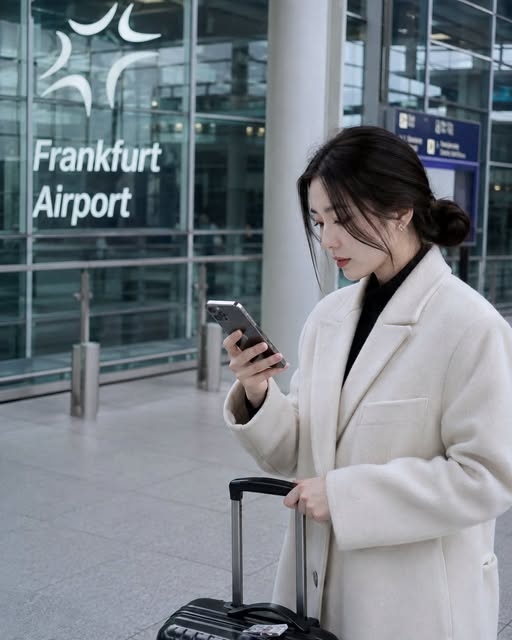
Four days later, I boarded the plane.
Ha Dinh didn’t take me to the airport.
He assumed I would change my mind.
At 7:40 that morning he even sent:
“Buy pork on your way home tonight.”
At 8:15:
“Mom wants steamed fish too.”
At 9:02:
“Why aren’t you answering?”
At 10:30, my flight took off.
When I landed in Germany and turned on my phone, there were ninety-nine missed calls.
One hundred and thirty messages.
The first was from Ma Thuy Phuong:
“Daughter-in-law, there’s no food in the house. When will you come home?”
The second:
“The management office says the property fee wasn’t paid!”
Then Ha Dinh:
“Why did the electricity bill fail?”
“Did you cancel the automatic payment?”
“Call me immediately.”
I read them all.
Then replied with one sentence:
“You gave me ten yuan for living expenses. I assumed the remaining thirty thousand was enough for you.”
He called instantly.
I answered.
“Tham Lam! Have you gone crazy?”
“No.”
“What are Mom and I supposed to eat?”
“Food.”
“With what money?”
I almost laughed.
“Your salary.”
Silence.
Then he lowered his voice.
“I already gave it to Mom.”
“Ask her.”
Ma Thuy Phuong’s voice exploded from the background.
“That money is savings! How can we touch it?”
I finally understood.
My salary had always been for living.
His salary had always been for saving.
And somehow, when those savings accumulated, they belonged to his mother.
I asked calmly,
“So my money can be spent, but yours cannot?”
Ha Dinh became impatient.
“Stop calculating everything between husband and wife.”
“Then tell your mother to transfer the thirty thousand back.”
Another silence.
His mother shouted:
“No way!”
I smiled.
“Problem solved.”
Then I hung up.
Germany changed my life faster than I expected.
My original salary was 18,000 yuan a month.
With the overseas allowance, project bonus, accommodation stipend, and daily allowance, my monthly income nearly doubled.
The company paid for my apartment.
Transportation was reimbursed.
For the first time since marriage, I was earning money without watching it disappear into groceries, utility bills, Ha Dinh’s clothes, his mother’s supplements, family dinners, gifts for relatives, and endless “temporary expenses.”
By the end of the first month, I had saved more than I usually saved in four.
Back home, disaster apparently continued.
Ha Dinh began eating takeout.
Ma Thuy Phuong complained it was unhealthy.
When he asked her to cook, she said her hands hurt.
When he asked her for money, she said he was unfilial.
Then the electricity company issued a late notice.
The property management office called him.
The parking space fee expired.
His mother finally transferred him 2,000 yuan.
Only 2,000.
From the thirty thousand he had given her.
That night he called me.
His voice was strangely gentle.
“Wife.”
I almost didn’t recognize him.
“Yes?”
“When are you coming home?”
“In five months.”
“Do you really need to stay that long?”
“Yes.”
He sighed.
“Mom has been tired lately.”
“So?”
“She misses the food you make.”
I understood.
Not me.
My labor.
“I’ll send her a recipe.”
He became angry immediately.
“Why are you behaving like this?”
“Like what?”
“Like we’re strangers.”
I looked through the window of my German apartment.
Snow was falling.
For once, the kitchen behind me was clean because nobody expected me to wash their dishes.
“Ha Dinh.”
“What?”
“You made us strangers when you gave your entire salary to your mother and gave your wife ten yuan.”
He hung up.
Two months later, I discovered something else.
Ha Dinh hadn’t been giving his mother thirty thousand only for “safekeeping.”
He had been doing it because Ma Thuy Phuong was buying an apartment.
In her name.
For Ha Dinh’s younger brother.
My husband had contributed nearly 600,000 yuan over several years.
Meanwhile, whenever I suggested we save toward a better home for ourselves, he told me:
“We don’t have enough money.”
I stared at the bank statements he had accidentally left logged into our shared tablet.
Then I stopped feeling angry.
There was only clarity.
When I returned to China six months later, Ha Dinh came to the airport carrying flowers.
Behind him stood his mother.
She looked exhausted.
The moment she saw me, she smiled.
“Daughter-in-law, you’re finally back.”
She reached for my suitcase.
“Let’s go home. I’ll make your favorite soup.”
I didn’t move.
Ha Dinh handed me the flowers.
“I’ve thought about everything.”
“So have I.”
He smiled cautiously.
“We should start over.”
I opened my handbag.
And handed him an envelope.
His smile disappeared.
Inside were divorce papers.
Ma Thuy Phuong screamed first.
“Divorce?”
Ha Dinh stared at me.
“For such a small matter?”
I nodded.
“Yes.”
His eyes brightened, thinking I agreed.
Then I finished:
“The ten yuan was a small matter.”
I looked directly at him.
“The fact that you believed I deserved only ten yuan was not.”
He grabbed my wrist.
“What about our apartment?”
I pulled away.
“The lease ends next month.”
He froze.
Our apartment had always been rented under my company’s housing subsidy.
He had never bothered to check because I handled everything.
“Where will Mom live?”
I looked at Ma Thuy Phuong.
“With the son whose apartment she bought.”
Her face turned white.
Ha Dinh slowly turned toward her.
“What apartment?”
For the first time, she couldn’t answer.
I walked past them.
Behind me, their argument exploded in the middle of the airport.
But I didn’t turn around.
Six months earlier, Ha Dinh had given me ten yuan because he believed I couldn’t survive without him.
He was wrong.
That ten yuan bought me two dumplings.
The remaining two yuan stayed in my wallet through the entire trip.
I never spent it.
After the divorce was finalized, I placed that coin beside my new apartment key.
Not because it was valuable.
But because whenever I looked at it, I remembered the most expensive lesson my marriage had ever taught me:
Sometimes the smallest amount of money reveals exactly how little someone values you.
And sometimes—
ten yuan is enough to buy your first step toward freedom.
