The veteran’s operation lasted four hours and seventeen minutes.
When I finally stepped out, his daughter was waiting in the hallway with both hands clasped so tightly that her fingers had gone white.
I removed my mask.
“The operation went well.”
Her knees almost gave way.
“Really?”
“Yes. He’s stable. The next twenty-four hours are important, but we’ve passed the most dangerous stage.”
She covered her face and cried.
Then she bowed to me.
Again.
And again.
“Thank you, Doctor Wen.”
I watched her and felt something inside me loosen.
In my previous life, I had abandoned this operation to save Serena.
The veteran had deteriorated while waiting.
Nobody had written articles about him.
Nobody had mobilized millions of fans.
His daughter had simply taken him home afterward with grief no camera recorded.
This time, he lived.
That alone was worth everything.
Then Clara approached me.
Her expression was strange.
“Doctor Wen…”
“What happened?”
“Serena Jiang is also out of surgery.”
I looked at her.
“Alive?”
“Yes.”
A surgeon from general surgery had taken the case immediately after I declined to be the primary surgeon.
The procedure had been difficult.
But successful.
I nodded.
“Good.”
Clara stared at me.
“That’s all?”
“What else?”
“I thought…”
She stopped.
I understood.
Everyone knew Adrian was my husband.
Everyone knew Serena was the woman he always seemed to appear beside.
They expected jealousy.
Anger.
Perhaps disappointment that she had survived.
Instead, I asked:
“Was the transfer documented?”
Clara blinked.
“Yes.”
“Consult time?”
“Yes.”
“Time she entered the operating room?”
“Yes.”
“Who signed the surgical handoff?”
“Dr. Chen.”
“Good.”
Then I walked toward my office.
Clara followed.
“Doctor Wen, why are you asking?”
I stopped.
Because in my first life, Serena had survived.
And survival had only been the beginning.
This time, I was not going to let anyone rewrite the hours before her surgery.
So I answered:
“Because memory belongs to people.”
“Records belong to time.”
At 7:20 that evening, I wrote my supplementary note.
Patient Serena Jiang presented with suspected major abdominal injury.
Immediate surgical intervention recommended.
Primary surgeon unavailable due to pre-existing critical operative commitment.
Alternative qualified surgical team contacted without delay.
Patient transferred to available surgeon.
No refusal of emergency treatment.
No intentional delay.
I signed it.
Time-stamped it.
Then sent a copy to medical administration.
Clara looked over my shoulder.
“You think somebody will make trouble?”
“I think important cases deserve complete documentation.”
That was true.
It was simply not the whole truth.
At 7:34, I received Adrian’s first message.
Where are you?
I ignored it.
Then:
Serena nearly died because of you.
I took a screenshot.
Third message:
You embarrassed me in front of everyone.
Screenshot.
Fourth:
Come to her room and apologize.
Screenshot.
I saved all four.
Then I opened another document.
Divorce petition.
In my first life, Adrian had filed first.
This time, I did.
He came to my office before midnight.
The door opened hard enough to hit the stopper.
“Valeria.”
I kept reading the medical chart.
“Close the door.”
He stared at me.
“You’re worried about the door?”
“Yes.”
“There are patient records in here.”
His expression became colder.
“You really have changed.”
I looked up.
“No.”
“I just stopped confusing marriage with permission to disrespect me.”
He stepped closer.
“Serena could have died.”
“But she didn’t.”
“That’s not the point.”
“Then what is?”
“You abandoned her.”
I closed the chart.
“No.”
“I assessed her.”
“I recommended urgent surgery.”
“I arranged an available qualified team.”
“And I continued treating the patient already under my operative responsibility.”
Adrian’s jaw tightened.
“You could have operated on Serena.”
“Yes.”
“And let the veteran wait again?”
“He had already waited three times.”
“That old man—”
I stood immediately.
“Finish that sentence carefully.”
Adrian stopped.
For years he had known me as the wife who backed down first.
The woman who apologized to end arguments.
The doctor who would take another shift rather than create conflict.
Tonight, something in my expression told him she was gone.
He changed direction.
“You’re doing this because you’re jealous.”
There it was.
The sentence that had destroyed me before.
I almost smiled.
“Thank you.”
He frowned.
“For what?”
I tapped my phone.
“For saying it again.”
His eyes narrowed.
“What are you talking about?”
“I’m documenting this conversation.”
His face changed.
“Are you recording me?”
“No.”
I lifted the screen.
“I’m writing down what you said while it’s fresh.”
He stared at me.
In my previous life, I had trusted truth to defend itself.
This time, I understood better.
Truth needs records.
Witnesses.
Dates.
People willing to preserve it.
Then I placed the divorce papers on the desk.
Adrian looked at them.
For the first time that day, genuine shock appeared.
“What is this?”
“You can read.”
“You’re divorcing me?”
“Yes.”
“Because of Serena?”
“No.”
That answer irritated him more.
“Then why?”
“Because when two critical patients needed treatment, my husband stood in a hospital hallway and told me one life mattered more because it belonged to the woman he cared about.”
His expression froze.
“I never said her life mattered more.”
“You didn’t need to.”
I looked directly at him.
“You said the veteran should wait because Serena asked specifically for me.”
“His daughter had already asked me too.”
He went silent.
“And outside the hospital?”
I continued.
“You’ve been choosing Serena for years.”
“Her calls.”
“Her events.”
“Her crises.”
“Her moods.”
“Every time I objected, you called me jealous.”
I slid the papers toward him.
“So I’m removing the conflict.”
“You can choose her as often as you want.”
“You simply won’t be doing it as my husband.”
Adrian laughed once in disbelief.
“You think I’ll sign this?”
“I don’t require your enthusiasm.”
His smile disappeared.
Serena’s public statement came two days later.
Exactly as I remembered.
Her agency posted:
Miss Jiang is grateful to the medical teams who fought tirelessly to save her life. She hopes no misunderstandings regarding personal relationships will distract from the professionalism of those involved.
Soft.
Elegant.
Dangerous.
Thousands of comments appeared within hours.
People began asking:
Why had the hospital’s famous thoracic surgeon refused her?
Was Dr. Wen jealous?
Had marital conflict affected medical judgment?
The old nightmare tried to rebuild itself.
Except this time, I was ready.
The hospital announced an internal review before the rumors could grow.
Adrian was furious.
“You asked them to investigate?”
“No.”
“The medical director did.”
“Why?”
“Because your representative threatened legal action in the emergency department.”
His face changed.
I continued:
“And because your messages to me accused me of abandoning a patient.”
He went quiet.
The review took seventy-two hours.
They examined triage notes.
Operating-room schedules.
Consult times.
Security footage.
Call logs.
Signed handoffs.
The conclusion was short:
Dr. Valeria Wen acted within professional standards and ensured immediate continuity of emergency surgical care while fulfilling an existing critical operative obligation. No inappropriate delay was identified.
The veteran had entered surgery first.
Serena’s alternate surgeon had accepted her case nine minutes after my assessment.
Nine minutes.
That number mattered.
In my first life, people said I had delayed Serena because I hated her.
In this life, nine documented minutes destroyed the lie before it could grow teeth.
Then the review found something else.
Adrian had entered a restricted clinical area without authorization.
He had pressured staff to reassign me.
Serena’s manager had repeatedly insisted that “Dr. Wen must personally operate” despite being told another qualified surgeon was available.
The hospital did not turn it into a scandal.
It simply issued warnings and tightened access protocols.
That was enough.
Because now the official story existed before Serena’s version could replace it.
Her agency deleted the vague statement.
No apology.
No explanation.
Just deletion.
I slept better that night than I had in years.
Serena came to see me after she recovered enough to walk.
She stood in the doorway of my office.
No cameras.
No manager.
No Adrian.
“Can I come in?”
I nodded.
She sat opposite me.
For a while, neither of us spoke.
Then she asked:
“You hate me?”
“No.”
Her expression flickered.
“You should.”
“That sounds convenient.”
She frowned.
“If I hate you, then everything becomes a love triangle.”
I leaned back.
“You become the beautiful actress.”
“I become the jealous wife.”
“Adrian becomes the man trapped between us.”
I smiled faintly.
“But I’m no longer interested in that story.”
Serena looked down.
“You knew he loved me.”
“I knew he chose you.”
“That’s not the same.”
“It was enough.”
Silence.
Then she asked:
“Why didn’t you operate on me?”
I answered honestly.
“Because another patient already depended on me, and you had another qualified surgeon available.”
“That’s all?”
“Yes.”
Her eyes searched mine.
Perhaps she wanted anger.
Perhaps guilt.
Perhaps proof she still occupied some enormous space in my life.
I gave her none.
Finally, she whispered:
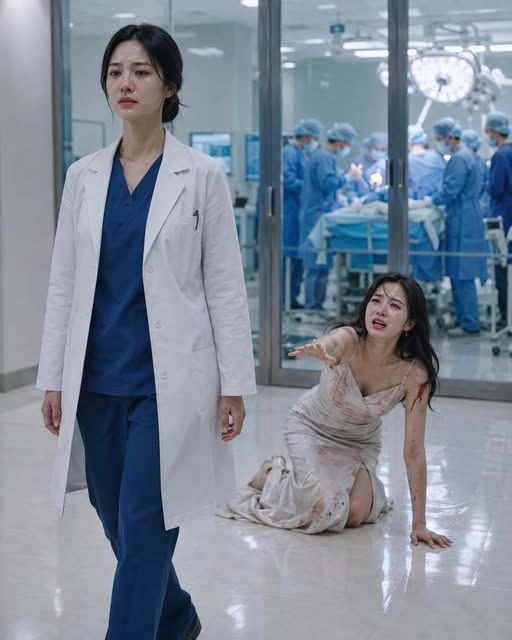
“I thought you would choose me.”
“I know.”
That was the problem.
Everyone had.
Then Serena surprised me.
“Adrian told me you would.”
I looked up.
“He said no matter how angry you were, you would never risk your reputation by refusing my case.”
There it was.
A different version of the same trap.
He had known exactly how to use my professional pride.
In my first life, he had been right.
This time, I had not refused care.
I had simply refused to abandon another patient to satisfy his demand.
Serena continued:
“He said afterward you’d be angry, but you would calm down.”
I almost laughed.
“How well he thought he knew me.”
She looked toward the floor.
“Are you really divorcing him?”
“Yes.”
“Because of me?”
“No.”
She looked up.
“Because of me.”
That answer seemed to unsettle her.
I continued:
“You were simply the situation that finally made the pattern impossible to ignore.”
Adrian signed the divorce papers one month later.
Not because he accepted my decision gracefully.
Because his lawyer told him delaying would not restore the marriage.
He came to the apartment to collect his belongings.
I had already packed them.
Three boxes.
He stared at them.
“Six years.”
“What?”
“Six years of marriage fits into three boxes.”
I looked around.
“No.”
“Your belongings do.”
He almost smiled.
Then his face collapsed again.
“Valeria, do you remember when we met?”
“Yes.”
“You were working thirty-hour shifts.”
“Yes.”
“You used to fall asleep in taxis.”
“Yes.”
“I brought you food.”
“You did.”
His voice softened.
“We weren’t always like this.”
“No.”
That was true.
People wanted betrayals to erase every good memory.
They didn’t.
Adrian had once been kind.
That was part of why staying had been so easy.
He whispered:
“Can we go back?”
I shook my head.
“No.”
“Why?”
“Because I know what happens when I keep hoping the old version of you will return.”
He stared.
Of course he couldn’t understand the full weight of that sentence.
Only I remembered the other life.
The years I had lost after saving Serena.
The way one accusation became ten thousand.
The way my own name stopped feeling like mine.
I would not live that story again.
The veteran recovered.
His name was Henry Zhao.
Three months after surgery, he walked into my outpatient clinic carrying oranges.
His daughter followed behind him.
“I told him gifts aren’t necessary,” she said helplessly.
Henry frowned.
“Fruit isn’t a gift.”
“It is absolutely a gift.”
He placed the bag on my desk anyway.
Then said:
“My daughter told me you almost left my surgery for a celebrity.”
I looked at her.
She raised both hands.
“I said almost.”
Henry laughed.
“Good thing you didn’t.”
I smiled.
“Good thing.”
He pointed at me.
“Never forget something, Doctor.”
“What?”
“A famous life isn’t heavier than an ordinary one.”
I stopped.
Then nodded.
“I know.”
This time, I really did.
A year later, I became deputy director of thoracic surgery.
Not because I saved an actress.
Not because I defeated a scandal.
Because my surgical outcomes, research and teaching record supported it.
Clara brought me coffee after the announcement.
“You know what everyone calls you now?”
“I’m afraid to ask.”
“The doctor who chose the veteran.”
I frowned.
“I chose my assigned patient.”
“I know.”
“Less dramatic.”
“Much less dramatic.”
We laughed.
That afternoon, I opened an old folder on my computer.
Inside were screenshots from the days after Serena’s accident.
Adrian’s messages.
The review conclusion.
The divorce documents.
For a long time, I stared at them.
Then moved everything into an archive.
Not deleted.
Archived.
Because I no longer needed to relive the story to prove it happened.
Years later, a young resident asked me a question after a difficult emergency shift.
“Dr. Wen, how do you keep people from blaming you when you can’t save everyone?”
I thought about Serena.
Henry.
Adrian.
Two lives.
Two versions of the same day.
Then I answered:
“You can’t control blame.”
“But you can control whether your decision was ethical.”
“Whether your documentation is complete.”
“Whether the next doctor knows exactly what you did.”
“And whether you made the choice because it was medically right, not because someone louder demanded it.”
She nodded thoughtfully.
Then left.
I remained alone in the operating-room corridor.
The same fluorescent lights.
The same disinfectant smell.
The same doors.
But I was no longer the same woman.
Once, I believed saving Serena Jiang would prove what kind of doctor I was.
Instead, I let everyone else decide what kind of person I had been.
This time, I understood something much simpler.
I did not need to sacrifice one patient for another.
I did not need Adrian’s approval.
I did not need Serena’s gratitude.
And I certainly did not need the internet to understand me.
I only needed to make the correct medical decision—
and refuse to let anyone rewrite it afterward.
In my first life, Serena survived and my life collapsed around the story she told.
In this one, she survived too.
But so did Henry.
So did my career.
So did my name.
And when the operating-room doors closed behind me that day, I finally understood:
I had not chosen who deserved to live.
I had chosen to stop abandoning my own duty just because someone powerful demanded it.
And in doing so—
I changed the ending before anyone else had the chance to write it for me.
