Adrián stood in the hallway staring at the two suitcases beside the bedroom door.
For several seconds, he said nothing.
Then he laughed.
Not because it was funny.
Because he still didn’t believe me.
“You’re actually packing?”
“Yes.”
The neighbor immediately understood that she had walked into something she shouldn’t witness.
She placed the plate of cakes on the table.
“Lucía, I’ll come back later.”
“No need. Thank you.”
She left.
Clara appeared behind Adrián.
Her eyes moved from the suitcases to me.
“Sister-in-law…”
“Don’t call me that.”
She froze.
Adrián frowned.
“Lucía.”
I zipped the second suitcase.
“There. Finished.”
He stepped into the bedroom.
“Where are you going?”
“Somewhere else.”
“For how long?”
I looked at him.
“Permanently.”
His face finally lost that careless expression.
“What does that mean?”
“It means exactly what you think.”
Clara immediately looked worried.
“Adrián, maybe I should leave.”
He didn’t even look at her.
“Stay.”
Then his eyes returned to me.
“So you’re seriously divorcing me?”
“Yes.”
“Because I took Clara on several assignments?”
“No.”
“Then what?”
I almost laughed.
Five years.
Five years of being left behind.
Five years of hearing that I was too fragile, too emotional, too civilian to understand his world.
And now he needed me to summarize all of it into one convenient reason.
I walked into the study.
I opened the bottom drawer and removed the document I had found months earlier.
The authorization for family members permitted to reside on base.
I placed it on the table.
His expression changed immediately.
My finger tapped the line.
CLARA SALAS.
“Five years ago, you filled this out.”
Adrián went silent.
Clara looked startled.
“You found that?”
I smiled faintly.
“So you knew about it.”
She lowered her eyes.
Adrián spoke quickly.
“It wasn’t what you think.”
“Of course.”
I nodded.
“Nothing ever is.”
“Clara’s brother died saving me.”
“I know.”
“She had nowhere stable to stay.”
“I know.”
“I promised him I would take care of her.”
“I know that too.”
My voice remained calm.
“What I don’t know is why taking care of her required removing your wife from the place reserved for family.”
He opened his mouth.
Nothing came out.
So I pulled out the photograph.
Clara beside him.
His handwriting on the back.
You are the only faith of my military life.
This time Clara’s face went white.
Adrián reached for it.
I pulled it away.
“Explain that.”
He stared at the photograph.
“It was taken out of context.”
“What context makes that sentence appropriate?”
“Lucía…”
“No. I’m genuinely curious.”
I looked at Clara.
“If your husband wrote that to another woman, would you call it brotherly affection?”
Clara’s eyes immediately filled with tears.
“I never wanted to hurt you.”
I almost smiled.
“I believe that you never wanted to deal with the consequences.”
That was different.
Adrián’s voice hardened.
“Enough.”
There it was.
The tone that had ended every argument for years.
I looked at him.
And something remarkable happened.
It no longer frightened me.
He continued:
“I’ve explained Clara’s situation countless times.”
“And I accepted it countless times.”
My eyes moved toward the diary.
“I accepted you traveling with her.”
“Teaching her things you refused to teach me.”
“Answering fifty-two frightened messages from her while leaving mine unanswered for three days.”
His expression changed.
I continued:
“I accepted her name on your documents.”
“Her photographs in our study.”
“Her memories in the diary I made for us.”
“And every time I asked whether I still had a place in your life, you told me to be more understanding.”
I looked directly into his eyes.
“I finally understand.”
Adrián’s jaw tightened.
“Understand what?”
“That you built a life where Clara receives the best parts of you…”
I paused.
“…and I receive whatever is left when you come home.”
Silence.
Clara began crying.
“I’ll leave the base.”
Adrián immediately turned.
“You don’t have to.”
That one sentence settled everything.
I smiled.
“Thank you.”
He looked back at me.
“For what?”
“For making this easy.”
Then I carried my suitcase toward the door.
Adrián grabbed the handle.
“You’re not going anywhere tonight.”
I released it.
“Then keep the suitcase.”
And walked toward the door without it.
That frightened him more.
He stepped in front of me.
“Lucía, stop.”
“Move.”
“You’re emotional.”
“No.”
“You’ll regret making a permanent decision because you’re jealous.”
“Adrián.”
My voice became very quiet.
“I stopped being jealous months ago.”
His face changed.
“Do you know what jealousy requires?”
He stared at me.
“Hope.”
I smiled sadly.
“I don’t have any left.”
I moved into my friend Elena’s apartment that night.
My lawyer filed the formal separation request the following morning.
Adrián did not sign.
Instead, he called seventeen times.
Then twenty-three.
Then he appeared outside my workplace.
I had recently returned to the architectural firm I left after our marriage.
He waited by the entrance wearing his uniform.
Everyone noticed him.
Before, seeing him there would have made my heart race.
Now I only felt tired.
“Why aren’t you answering?”
“I’m working.”
“We need to talk.”
“My lawyer can talk to yours.”
His face darkened.
“I’m not discussing my marriage with lawyers.”
“Our marriage?”
I almost laughed.
“You remembered it exists?”
“Don’t do that.”
“Do what?”
“Turn everything into an accusation.”
I stared at him.
Then he said the one thing I never expected.
“I removed Clara from the authorized-family list.”
I remained silent.
He seemed to think I hadn’t heard.
“I changed it this morning.”
“Congratulations.”
His expression froze.
“That’s all?”
“What do you want me to do?”
“I fixed the problem.”
“No.”
I shook my head.
“You changed a name on a form.”
“The problem was never the form.”
His eyes reddened with frustration.
“Then tell me how to fix this!”
People were beginning to look over.
I lowered my voice.
“You can’t.”
He stared at me.
For a man accustomed to solving crises, commands, schedules and operations, those two words seemed impossible.
He finally asked:
“Do you love someone else?”
I laughed.
“No.”
“Then why can’t we start over?”
“Because I learned to live without you while I was still married to you.”
He stopped breathing.
That was the truth he couldn’t argue with.
Three weeks later, the divorce review began.
That was when everything became worse.
Not for me.
For Adrián.
The military housing office contacted my attorney about the disputed family-member authorization.
I hadn’t complained.
I hadn’t reported him.
But my lawyer had requested records needed for property and residency matters.
During the review, something strange appeared.
Clara had not merely been listed as an authorized family member.
For nearly four years, she had received housing benefits registered under a category normally reserved for dependents.
I stared at the document.
“That can’t be right.”
My lawyer adjusted her glasses.
“Did you know about this?”
“No.”
“Did you ever receive housing support under your marriage?”
I shook my head.
Adrián had always told me there was no suitable accommodation for spouses at his postings.
So I had remained in the city.
Paying rent.
Waiting.
My lawyer continued:
“There’s another issue.”
She turned the page.
Emergency-contact forms.
Medical notifications.
Travel permissions.
Over and over, Clara appeared.
Sometimes above me.
Sometimes instead of me.
My chest tightened.
For five years, I had believed I was excluded because military life was complicated.
The truth was simpler.
There had been room.
Just not for me.
Adrián came to my apartment that evening.
He looked furious.
“You requested my personnel records?”
“My lawyer requested documents relevant to the divorce.”
“You had no right to involve my career.”
“I didn’t.”
I placed the copies on the table.
“Explain these.”
His anger vanished.
His eyes moved across each page.
Then stopped.
“I can explain.”
“That sentence should be engraved on your gravestone.”
“Lucía.”
“Why was Clara receiving dependent housing support?”
“She had no family!”
“That isn’t what I asked.”
He ran a hand over his face.
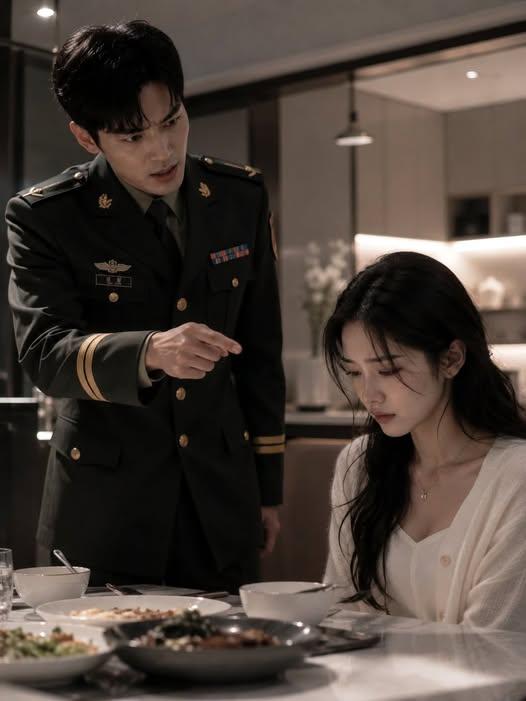
“After her brother died, the unit made temporary arrangements.”
“For four years?”
Silence.
“And why was I told there was no accommodation for me?”
His jaw tightened.
“Because the locations were difficult.”
I looked at him.
“Still protecting me?”
“Yes.”
I laughed.
That seemed to hurt him.
“You really believe that.”
“Because it’s true.”
“No, Adrián.”
I pushed the training diary toward him.
“You weren’t protecting me from difficult places.”
I opened it.
Kunlun.
Pamir.
Northern Archipelago.
Every page filled with Clara.
“You were protecting your life with her from having a wife inside it.”
His face went completely still.
For the first time, he had no answer.
Then my phone rang.
My attorney.
I answered.
“Lucía, we found something else.”
I closed my eyes.
“What?”
“The housing application wasn’t originally submitted with Clara Salas’s name.”
I looked at Adrián.
His eyebrows tightened.
“What do you mean?”
My lawyer continued:
“The original archived version lists you.”
My heartbeat changed.
“Me?”
“Yes.”
“There was an amendment eighteen days later.”
I stared at my husband.
“Who changed it?”
A pause.
Then:
“Brigadier General Adrián Fuentes personally authorized the replacement.”
I slowly lowered the phone.
Adrián’s face had turned pale.
So he knew exactly what I had just heard.
“You originally wrote my name.”
He said nothing.
“You were going to take me.”
“Lucía…”
“And then you replaced me with Clara.”
His voice finally cracked.
“She called me.”
I stared at him.
“What?”
“Her brother’s death anniversary was approaching. She was having nightmares. She said she couldn’t stay alone.”
For several seconds, I could only look at him.
Then I laughed.
Quietly.
Painfully.
“So there was room.”
He stepped toward me.
“Lucía.”
I moved back.
“There was always room.”
My eyes burned.
“You just gave mine away.”
The divorce was finalized two months later.
Adrián resisted until the last week.
Then something happened that finally made him sign.
Clara came to see me.
Alone.
She placed a box on the table.
Inside were letters.
Photographs.
Souvenirs.
Things Adrián had sent her from different assignments.
“I’m leaving,” she said.
“Where?”
“Another city.”
I didn’t ask why.
Then she whispered:
“I owe you an apology.”
“You owe yourself honesty first.”
Her face tightened.
“I loved him.”
There it was.
Finally.
“Did he love you?”
She shook her head.
“I thought he did.”
A bitter smile crossed her face.
“He gave me everything except the one thing I actually wanted.”
“What?”
“A choice.”
I looked at her.
“He always treated me like his dead friend’s responsibility.”
She wiped her eyes.
“When I tried to talk about feelings, he reminded me about my brother.”
That surprised me.
Then she said:
“But I accepted it because being important to him felt better than being alone.”
I understood that more than I wanted to.
Clara pushed the box toward me.
“I’m sorry I took your place.”
I shook my head.
“No.”
She looked up.
“Adrián gave it to you.”
That distinction mattered.
I never became her friend.
But I stopped hating her.
Adrián signed the papers the next morning.
When we left the office, he called my name.
I stopped.
He stood several feet away.
For once, he wasn’t wearing his uniform.
Just a dark sweater and ordinary trousers.
He looked less like Brigadier General Fuentes.
More like the man I had married.
“I finally understand,” he said.
I waited.
“I thought fulfilling my promise to her brother made me honorable.”
His eyes lowered.
“But somewhere along the way, I used that promise as permission to fail every promise I made to you.”
I said nothing.
He continued:
“Clara left.”
“I know.”
His face showed surprise.
“She visited me.”
Adrián nodded.
Then he looked at me.
“I didn’t love her the way you thought.”
I believed him.
And that was almost sadder.
Because if he had loved Clara desperately, perhaps there would have been an explanation.
Instead, he had destroyed our marriage for something he never even wanted enough to name.
“I know.”
His eyes brightened.
“Then maybe someday—”
“No.”
Hope disappeared.
I smiled gently.
“The problem was never whether you loved Clara.”
I stepped closer.
“The problem was that every time life asked you to choose who mattered, you trained me to expect that it wouldn’t be me.”
He closed his eyes.
This time, he didn’t defend himself.
A year later, I received an invitation to a military-family architecture project.
My firm had won the contract to redesign residential facilities near several remote postings.
During the first site visit, someone handed me a map.
I recognized the names immediately.
Kunlun Pass.
The northern region.
Places I had once begged Adrián to describe to me.
I smiled.
The young engineer beside me asked:
“Have you been here before?”
“No.”
I folded the map.
“But I’ve wanted to come for a long time.”
That winter, I finally saw the snow-covered mountains I had once watched through television reports while waiting for a husband who answered only:
Busy.
They were beautiful.
Far more beautiful than his diary had made them sound.
I took photographs.
Not for Adrián.
Not to prove anything.
For myself.
Months later, I heard he had turned down a promotion that would have sent him farther away.
Someone said he had changed.
Someone else said he had become quieter.
I hoped both were true.
But his growth was no longer my reward.
And my happiness was no longer his second chance.
For five years, I believed being a good military wife meant waiting.
Waiting outside barracks.
Waiting beside the phone.
Waiting for leave.
Waiting for him to remember I existed outside the space between his assignments.
I had been wrong.
Love may ask for patience.
It should never ask you to disappear.
The last time Adrián returned from training, nobody was waiting at the gate.
And for the first time, he finally understood what those empty hours had cost me.
But by then—
I was already traveling toward all the places he had once told me I would never understand.
