For the first time in my life, I was afraid of Elena.
Not because she raised her voice.
She never did.
Because while I had spent twenty-six years believing I was deceiving her, she had apparently spent twenty-six years recording every deception.
The doctor looked from Elena to Verónica.
“The patient’s condition is urgent. If no authorized relative is willing or legally able to consent and delaying treatment creates an immediate threat, the medical team will proceed under emergency protocols.”
Relief passed through me.
For one ridiculous second, I had believed Elena intended to stand there and watch me die.
She saw it on my face.
“I’m divorcing you, Gabriel,” she said quietly. “I’m not killing you.”
Then she stepped away.
That sentence hurt more than hatred would have.
Verónica moved toward her.
“What did you mean when you said the factory isn’t his?”
Elena looked at her.
“Exactly what I said.”
Verónica laughed nervously.
“That factory belongs to Gabriel.”
“No.”
Elena opened the folder.
“It belonged to his father.”
I knew where this was going before she continued.
My father had founded the workshop.
But when he became seriously ill, creditors had nearly taken everything.
I remembered the crisis.
What I had forgotten—or chosen to forget—was where the rescue money came from.
Elena’s father.
He had sold two pieces of farmland and invested the money into the workshop shortly after our wedding.
At the time I had called it a family loan.
Elena had called it an investment.
I hadn’t cared about the wording.
I had been twenty-six and certain I would control everything eventually.
Elena placed another document on the table.
“Forty-nine percent of the original company belonged to my family.”
I forced out:
“That was decades ago.”
“Yes.”
She looked directly at me.
“And every time you needed expansion capital, you asked me to sign another agreement.”
My mouth went dry.
I remembered papers.
Too many papers.
Elena had always handled the boring things.
Taxes.
Supplier contracts.
Property registrations.
Insurance.
I signed wherever she placed a tab.
Because I thought she knew nothing about business.
Because I thought the person who cooked my dinner could never understand my company better than I did.
“What did you do?” I whispered.
“Nothing illegal.”
Her answer came immediately.
“I simply kept every agreement you signed.”
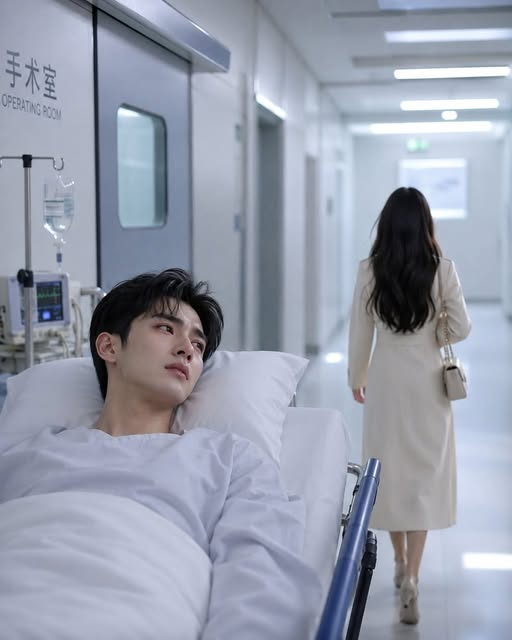
The doctor began pushing my stretcher toward the operating room.
I reached toward her.
“Elena!”
She didn’t follow.
The last thing I saw before the doors closed was Verónica grabbing her arm.
“What happens to my house?”
Elena looked down at her hand until Verónica released her.
Then she answered:
“You mean the house purchased by a company you never owned?”
The doors closed.
When I woke hours later, my abdomen hurt and my mouth was dry.
But I was alive.
Daniel was sitting beside the window.
My eldest son with Verónica.
For twenty-two years, I had paid his tuition, bought his cars, funded his business attempts.
Yet when he noticed I was awake, there was no affection in his face.
“Dad.”
“Where’s Elena?”
He looked away.
“Gone.”
“And your mother?”
“Talking to lawyers.”
I tried to sit higher.
“The factory?”
Daniel laughed bitterly.
“You really didn’t know?”
“Know what?”
He put his phone in front of me.
An internal company announcement filled the screen.
TEMPORARY EXECUTIVE RESTRUCTURING.
Below it:
Majority voting representative: Elena Suárez.
I stared at the name.
“That’s impossible.”
“No.”
Daniel’s voice was cold.
“Apparently Grandma’s investment was converted into shares years ago.”
“My mother?”
“Elena’s mother.”
He looked disgusted.
“You don’t even remember where the money came from.”
I said nothing.
Daniel continued.
“When you expanded the factory eighteen years ago, you pledged additional voting rights as collateral.”
I remembered needing cash desperately.
A new production line.
A supplier threatening to leave.
Elena had found money.
I had kissed her forehead and told her she was useful after all.
“Then twelve years ago,” Daniel continued, “you did it again.”
Another expansion.
Another agreement.
“Eight years ago, again.”
My heartbeat accelerated.
“With the last refinancing, Elena’s family trust crossed fifty percent.”
“How much?”
Daniel looked at me.
“Fifty-three.”
I closed my eyes.
Fifty-three percent.
She hadn’t stolen my company.
I had signed it over piece by piece.
Every time I was too busy visiting Verónica to read what my wife put in front of me.
“But she never exercised control.”
“No.”
Daniel’s expression hardened.
“Until three months ago.”
The divorce.
I looked at him.
“What happened three months ago?”
He hesitated.
Then handed me another document.
A corporate audit.
For years, I had used company money to support Verónica’s household.
Private school tuition.
Cars.
International trips.
Property expenses.
I had labeled them executive benefits, consulting expenses, client entertainment.
I had assumed Elena didn’t know.
She knew everything.
The audit calculated more than six million dollars in questionable personal expenditures.
My hands began trembling.
“Where is Elena?”
“I told you. She left.”
“I need to speak to her.”
Daniel stared at me for several seconds.
“Why?”
“Because she’s my wife.”
He actually laughed.
“No, Dad.”
Then he showed me the divorce decree.
“You really need to stop saying that.”
The following week destroyed everything I had believed belonged to me.
The house where Verónica lived was legally owned by a subsidiary of the factory.
The cars were company assets.
Several investment accounts were frozen pending litigation.
My personal shares were subject to claims connected to unauthorized withdrawals.
And my four children?
They suddenly discovered that being my children was very different from being heirs to an empire.
Verónica came to my hospital room on the fourth day.
She didn’t bring flowers.
She brought documents.
“We need to talk.”
I almost smiled at the irony.
“What?”
“The house.”
Of course.
“The lawyers say Elena can force us out.”
“Our children live there.”
“They’re adults, Gabriel.”
Her voice rose.
“Sofia and Sara are twenty-two!”
I stared at her.
For twenty-six years, I had imagined Verónica loved me because she was passionate where Elena was quiet.
Now I noticed something horrifying.
She hadn’t asked how I felt after surgery.
Not once.
“What if there’s no house?” I asked.
She froze.
“What?”
“No factory. No cars. No monthly allowance.”
Her expression changed.
“What are you saying?”
“I’m asking whether you would still stay.”
Silence.
Twenty-six years deserved more than five seconds.
She couldn’t even give me that.
Verónica grabbed her bag.
“This isn’t the time for stupid questions.”
She left.
I never saw her look back.
Two weeks later, Elena agreed to meet me.
Not at our home.
Her lawyer’s office.
She walked in wearing a cream suit I had never seen.
Her hair was shorter.
For the first time, I noticed she looked younger without me.
That hurt.
I had expected anger.
Instead, she sat opposite me calmly.
“Why did you wait twenty-six years?” I asked.
She considered the question.
“At first, I loved you.”
I lowered my eyes.
“Then why didn’t you leave?”
“Because your father’s company was drowning in debt. My family’s money was inside it. I couldn’t leave without protecting what my parents had sacrificed.”
She paused.
“Then I discovered Verónica.”
My throat tightened.
“When?”
“Before Daniel was born.”
Twenty-two years.
She had known almost the entire time.
“And you said nothing?”
“I confronted you once.”
I frowned.
“When?”
“The night you came home with milk on your shirt.”
I remembered.
She had asked where I had been.
I lied.
Elena smiled sadly.
“I gave you one opportunity to tell me the truth.”
“You only asked one question.”
“One should have been enough.”
I couldn’t answer.
She continued.
“After that, I stopped asking questions and started collecting answers.”
Bank statements.
Company records.
Property registrations.
Birth certificates.
Hotel receipts.
Photographs.
Messages.
Twenty-six years of my life organized into folders.
I felt sick.
“Was all of this revenge?”
Elena shook her head.
“No.”
“Then what?”
“Protection.”
She leaned forward.
“You spent twenty-six years taking from our marriage to build another family. I spent those years making sure that when I finally left, you could only take what truly belonged to you.”
“And what belongs to me?”
For the first time, Elena’s eyes softened.
Not with love.
With something worse.
Pity.
“The consequences.”
She stood.
I panicked.
“Elena.”
She stopped.
“Was any of it real?”
Her back remained toward me.
“Our marriage?”
“Yes.”
She was silent for a long time.
Then she turned.
“The first four years were.”
Twenty-six years together.
Four real.
Twenty-two spent beside a woman who had already buried her love for me.
I whispered:
“Can we start again?”
Elena smiled.
It wasn’t cruel.
That made it unbearable.
“Gabriel, I already started again three months ago.”
She walked away.
The divorce settlement was completed six months later.
Elena retained controlling ownership of the factory through the family trust and agreements I had willingly signed.
A court determined which company expenditures had been improper and what I personally owed.
Verónica eventually moved out of the company-owned house.
Our children remained my children, but the fortune I had promised them was never automatically theirs.
And me?
I moved into a two-bedroom apartment.
For the first time since my twenties, nobody prepared dinner for me.
Nobody ironed my shirts.
Nobody waited when I came home.
One evening, I found an old photograph while opening a box.
Elena and me on our wedding day.
She was twenty-four.
White dress.
No jewelry.
Hope in her eyes.
On the back she had written:
“For the family we will build together.”
I sat alone at the kitchen table holding that photograph for a long time.
For twenty-six years, I believed Elena’s silence meant I had won.
I thought a woman who tolerated everything must be weak.
I was wrong.
Her silence had never been forgiveness.
It was simply the time she needed to stop loving me, protect everything I was destroying, and prepare a life in which she would never need me again.
