Adrián entered Sofía’s room and closed the wardrobe.
I remained in the hallway, staring at the red bracelet on his wrist.
Something was wrong.
Not emotionally wrong.
Mathematically wrong.
Sofía had asked me to make that bracelet four months ago.
Yet I had seen what appeared to be the same bracelet in a photograph of Adrián taken almost a year earlier.
Same knot.
Same dark-red thread.
Even the tiny uneven loop beside the silver bead.
I had always made that mistake.
I walked into Sofía’s room.
Adrián turned.
“What?”
“Where did you get that bracelet?”
His eyes immediately dropped to his wrist.
The reaction was small.
But I caught it.
“Why?”
“Answer me.”
He studied me.
Then said:
“Paula gave it to me.”
My heart stopped.
“When?”
“Almost three years ago.”
Three years.
Before I disappeared.
Before Sofía became my roommate.
Before she supposedly made him a handmade gift.
I stared at him.
“Paula didn’t make that.”
“I know.”
His voice became quieter.
“She told me one of her friends did.”
Something moved through my memory.
College.
A rainy afternoon.
Paula sitting on my bed.
A roll of red thread in her hand.
Can you make one for my cousin?
He’s impossible to shop for.
I had made it without asking who the cousin was.
My hands went cold.
“You’ve had that bracelet for three years?”
“Yes.”
“Then why did Sofía tell me she gave it to you last week?”
Adrián’s expression changed completely.
“What?”
We stared at each other.
Then I walked toward Sofía’s desk.
I opened the first drawer.
Nothing.
Second.
Receipts.
Medication.
A notebook.
Third.
There was a small white box.
My handwriting appeared on the label.
For Sofía — finished.
I opened it.
Inside lay the bracelet I had made four months earlier.
Untouched.
Never given to anyone.
The room went silent.
Adrián looked at the bracelet in the box.
Then at the one around his wrist.
“What exactly did Sofía tell you?”
I slowly raised my eyes.
“That you were her boyfriend.”
His face became blank.
“What?”
“She said her boyfriend was wealthy, that ordinary gifts meant nothing to him, and she wanted something handmade.”
Adrián’s expression darkened.
“I’m not her boyfriend.”
I almost laughed.
It came out bitter.
“You drove through the night when she was hospitalized.”
“Her brother is in Canada. He asked me to look after her.”
“You came for her clothes.”
“She asked me.”
“You wear the bracelet she claimed she gave you.”
“That bracelet has nothing to do with Sofía.”
My chest tightened.
“Then what does it have to do with?”
He didn’t answer immediately.
And suddenly I was twenty-four again.
Standing in that room two years earlier.
Trying not to cry after telling him I liked him.
Hearing him say:
There is someone I like. I’ve been waiting for her for a long time.
I stepped backward.
“No.”
Adrián looked at me.
“What?”
I pointed toward the bracelet.
“The woman you were waiting for…”
His expression changed.
Before he could answer, the apartment door opened.
Sofía’s voice came from outside.
“I’m home!”
Neither of us moved.
She entered the bedroom.
Saw me.
Saw Adrián.
Then saw the open white box in my hand.
All color disappeared from her face.
“Sofía.”
My voice was unusually calm.
“Explain.”
Her lips moved.
Nothing came out.
Adrián held up his wrist.
“Why did you tell her you gave me this?”
She immediately began crying.
“I didn’t mean—”
“Don’t.”
I interrupted her.
For once, tears were not enough.
“Did you tell me Adrián was your boyfriend?”
Silence.
“Sofía.”
“Yes.”
Adrián stared at her.
“Why?”
She wiped her face.
“Because I liked you!”
There it was.
Not complicated.
Not innocent.
She looked at him.
“For almost a year.”
Adrián’s jaw hardened.
“I told you I wasn’t interested.”
“I know!”
“Then why involve her?”
Sofía turned toward me.
Her tears fell faster.
“Because I found out who you were.”
I froze.
“What?”
“Paula visited once.”
Her voice shook.
“She saw your photograph on my desk.”
“She asked where you were.”
“Then she called Adrián.”
My eyes moved toward him.
He said nothing.
Sofía continued:
“That was when I realized you were the woman he had been looking for.”
My breathing slowed.
“Looking for?”
Adrián finally spoke.
“After you left.”
I looked at him.
“Why?”
His eyes lowered.
“Because three days after that morning, Paula told me who made the bracelet.”
Silence.
My gaze dropped to the red string again.
Adrián continued:
“I had been trying to find that girl since university.”
I stared at him.
“That makes no sense.”
“It does.”
He sat down slowly.
“Three years before you and I…”
He paused.
“…before that night, Paula gave me the bracelet.”
“She said a friend had made it.”
“I asked who.”
“She refused to tell me because she thought I would make fun of her.”
That sounded exactly like Paula.
He continued:
“Later I saw a sketchbook left in her car.”
“There was a small drawing of the same knot.”
“Your initials were beneath it.”
“M.M.”
Martin.
My surname.
“I knew the surname.”
“But not your first name.”
My throat tightened.
That explained his strange question that night.
I know your last name is Martin.
But what exactly is your name?
He had not been mocking me.
He had been trying to confirm something.
“But the next morning…”
My voice hardened.
“You rejected me.”
“Yes.”
“And told me you were waiting for someone else.”
“Yes.”
“Who?”
Adrián looked at the bracelet.
“The person who made this.”
I simply stared.
He gave a bitter laugh.
“I didn’t know it was you.”
For several seconds, nobody spoke.
Then anger arrived.
Not romantic confusion.
Anger.
I threw the white box onto the bed.
“So you humiliated me because you were in love with an imaginary woman whose name you didn’t even know?”
Adrián closed his eyes.
“When you say it like that—”
“How else should I say it?”
He had no answer.
I continued:
“You barely knew me.”
“You spent a night with me.”
“And the next morning, instead of treating me like a human being, you made sure I understood how ridiculous you thought my feelings were.”
His face tightened.
“I know.”
“No.”
I shook my head.
“You know now.”
That silenced him.
Sofía whispered:
“I’m sorry.”
I turned toward her.
She shrank back.
“You knew all this?”
“Not at first.”
“When?”
“About six months ago.”
“And four months ago you asked me to make the bracelet.”
Her face collapsed.
I finally understood.
“You wanted a copy.”
She said nothing.
“You thought if you gave him the same bracelet, you could make him believe you were connected to the original one.”
“I was desperate.”
I laughed.
“Desperate?”
“You let me sit beside you every night while you talked about your mysterious boyfriend.”
“You watched me make this with my own hands.”
“And you knew the entire time that Adrián had spent two years searching for me?”
Sofía began crying harder.
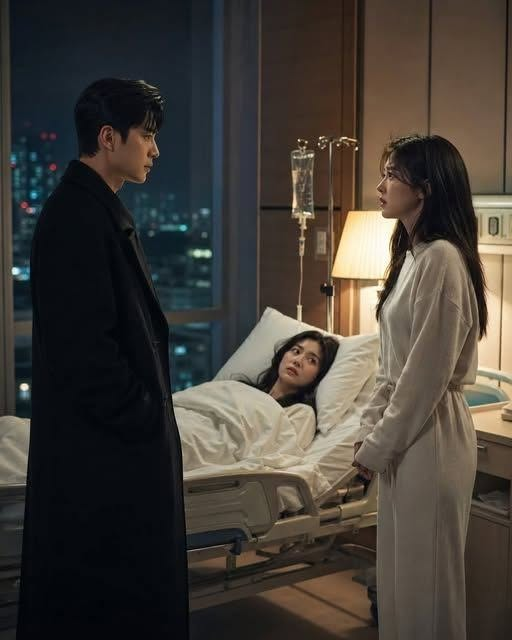
“I was afraid that if you met again, he would never look at me.”
Adrián’s voice became cold.
“I never looked at you that way.”
She flinched.
Then he added:
“And after this, I never will.”
I almost felt sorry for her.
Almost.
But betrayal does not become smaller simply because the person committing it is insecure.
I placed the apartment key on the desk.
Sofía stared.
“What are you doing?”
“Moving.”
Her face changed.
“Please.”
“No.”
“We’ve been friends—”
“Friends don’t turn each other’s lives into secret competitions.”
I walked toward my bedroom.
Behind me, Adrián called my name.
My full name.
“Marina Martin.”
I stopped.
It was the first time I had ever heard him say it.
Two years too late.
I turned.
“Don’t follow me.”
He nodded.
And he didn’t.
That mattered more than I expected.
I moved out the following week.
I ended my friendship with Sofía.
Not dramatically.
No public humiliation.
No revenge.
I simply stopped allowing her access to my life.
Adrián tried to contact me twice.
The first message said:
I owe you an apology without asking for anything in return.
The second:
What I said that morning was cruel. Even if I had been confused about my feelings, you didn’t deserve it.
I did not answer.
For almost three months.
This time, disappearing wasn’t about shame.
I worked.
Found another apartment.
Made new friends.
Started making bracelets again.
Small things.
Ordinary things.
Things that belonged only to me.
Then Paula invited me to dinner.
Adrián was not there.
I almost laughed when she immediately said:
“I swear I didn’t invite him.”
“Good.”
She looked uncomfortable.
Then pushed an envelope across the table.
Inside were copies of emails.
Dozens.
All from Adrián.
Sent during the two years I had disappeared.
Questions to old classmates.
Requests to forwarding addresses.
Messages to Paula.
One repeated sentence appeared over and over.
I don’t need her to forgive me. I only need to know she’s okay.
I closed the folder.
“That doesn’t erase what happened.”
“No.”
Paula nodded.
“But I thought you deserved to know he wasn’t indifferent.”
That was all.
No destiny.
No magical forgiveness.
Just information.
Six months after the hospital, I agreed to have coffee with Adrián.
Public place.
One hour.
No promises.
He arrived early.
The red bracelet was no longer on his wrist.
I noticed immediately.
“Where is it?”
He reached into his pocket.
Placed it on the table.
“I realized I had turned this into something it never was.”
I looked at him.
“What was it?”
“A bracelet.”
He smiled faintly.
“Made by a woman I should have gotten to know instead of inventing a version of her in my head.”
For once, Adrian Liang said exactly the right thing.
Not because it won me back.
It didn’t.
But because it proved he finally understood.
We started again slowly.
Not from that night.
Not from my confession.
From two people meeting properly.
He learned my favorite food.
I learned he hated thunderstorms.
He stopped speaking in orders.
I stopped mistaking silence for strength.
A year later, Paula asked me whether I regretted leaving the city after being rejected.
I thought about it.
Then shook my head.
“No.”
Because leaving had hurt.
But staying as the woman who thought she had to beg to be chosen would have hurt much more.
As for the red bracelet?
I never wore it.
Neither did Adrián.
I framed it inside a small glass box in my studio.
Below it, I wrote one sentence:
Some things are not proof of destiny.
They are proof that people can meet twice—and only the second time finally see each other clearly.
