Adrian found the divorce papers exactly where I had left them.
On my side of the bed.
According to Rosa, he stood there for almost ten minutes without moving.
Then he picked up the second envelope.
Inside was the photograph of Isabella leaving the hotel in Paris wearing his coat.
On the back, my handwriting:
This time don’t come back with roses. Come back with a lawyer.
Adrian called me immediately.
Once.
Twice.
Seventeen times.
I watched his name light up my phone while my daughter slept against my chest.
I didn’t answer.
Then came the messages.
Clara, where are you?
What is this nonsense?
Pick up the phone.
Then:
You took my daughter without telling me.
That one made me laugh.
Our daughter.
Interesting how quickly he remembered she existed once she was no longer waiting inside his house.
I finally replied:
My attorney will contact you tomorrow.
His answer arrived immediately.
I don’t want to talk to your attorney. I want to talk to my wife.
I stared at the word.
Wife.
For fifteen days in Paris, he had apparently forgotten it.
Now that my closet was empty, he remembered.
I typed:
Then perhaps you should have come home to her.
I blocked him.
The next morning, Adrian appeared at my parents’ old house.
He assumed I had gone there.
He was wrong.
I had sold it two years earlier after my mother died.
Then he went to my former office.
I had already resigned.
By noon, he finally called my lawyer.
Rebecca Stone.
She told me afterward that Adrian began the conversation with:
“My wife is emotionally unstable after childbirth.”
Rebecca interrupted him.
“Mrs. Moreau has submitted a medical evaluation confirming she is capable of making her own decisions.”
Silence.
Then he changed strategy.
“She cannot remove my child from the marital residence.”
“She has not removed the child from the jurisdiction.”
“Where are they?”
“Your parenting counsel will receive the appropriate information.”
“I’m her husband.”
Rebecca reportedly paused.
Then said:
“For the moment.”
I wished I had been there to see his face.
Three days later, we met in Rebecca’s office.
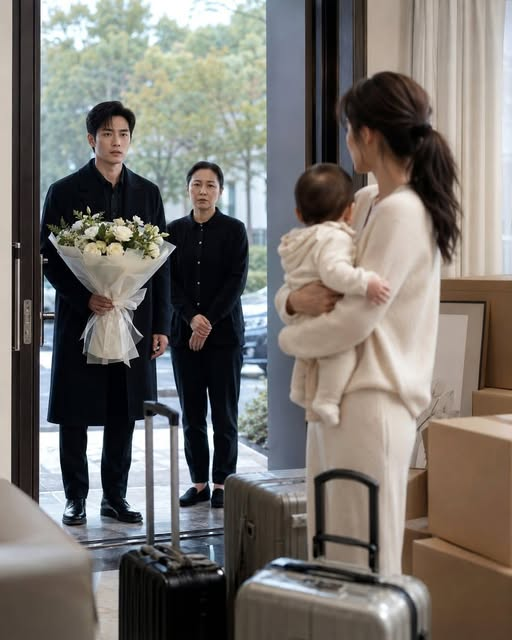
Adrian arrived carrying no roses.
At least he had understood one instruction.
He looked exhausted.
I looked different too.
Not glamorous.
Not triumphant.
I still had dark circles beneath my eyes.
My body was still recovering.
But for the first time in years, I wasn’t waiting for him to decide how the day would go.
The moment he saw me, he stood.
“Clara.”
I sat across from him.
“Adrian.”
He stared at me as though trying to find the woman who used to melt whenever he softened his voice.
“She looks well?”
He meant the baby.
“Yes.”
“I want to see her.”
“You will.”
His shoulders relaxed slightly.
“Today?”
“After we agree on a temporary parenting schedule.”
His expression hardened.
“I don’t need a schedule to see my own daughter.”
Rebecca spoke.
“Until the parties reach an agreement, structure is advisable.”
Adrian looked at me.
“You planned all this.”
“Yes.”
“For how long?”
“Since Paris.”
“That’s fifteen days.”
“No.”
I met his eyes.
“Since the hospital.”
His face changed.
He knew exactly which hospital visit I meant.
Seven days after giving birth, our daughter developed a fever.
Nothing catastrophic.
But I was terrified.
I called Adrian nine times.
No answer.
Then I called Isabella.
Because I knew they were together.
She answered on the fifth attempt.
Her voice was annoyed.
“Clara, Adrian is in an important meeting.”
I could hear music behind her.
Then laughter.
Not a meeting.
A restaurant.
I said:
“The baby is sick.”
There was a pause.
Then Isabella replied:
“I’ll tell him.”
He never called.
At 2:13 in the morning, he finally sent:
How is she? Isabella says you got nervous.
Got nervous.
That was how he described the night I sat beside our newborn daughter in an emergency department.
I told him:
“You knew she was in the hospital.”
Adrian looked down.
“I thought Isabella said the fever was already coming down.”
“That’s not what I asked.”
He rubbed his forehead.
“Clara, I was working.”
“In Paris?”
“Yes.”
“With Isabella?”
He hesitated.
That hesitation contained six years of marriage.
Finally:
“Yes.”
“Did you sleep with her?”
Rebecca glanced toward me, but I raised a hand.
I needed this answer once.
Adrian looked at me.
“It’s complicated.”
I laughed.
“Then it’s simple enough.”
I opened my bag and placed several documents on the table.
Hotel reservations.
Restaurant charges.
The necklace.
Two airline tickets.
And a transfer from our joint account.
380,000 yuan.
Adrian stared at it.
“That money wasn’t for her.”
“The necklace receipt says otherwise.”
He went silent.
I continued.
“You bought her a diamond necklace while I was buying formula.”
“That’s unfair.”
“Unfair?”
My voice remained calm.
“You left me alone thirteen days after giving birth.”
“You used marital money to entertain the woman you had been lying about for years.”
“And when our daughter went to the hospital, you let Isabella decide whether the situation was important enough to interrupt you.”
His jaw tightened.
“I came back.”
“Fifteen days later.”
“I was always coming back.”
There it was.
The sentence that explained our entire marriage.
He always came back.
Therefore everything was supposed to be forgiven.
The dinners.
The lies.
The silences.
Isabella.
Because eventually Adrian walked through the door again and expected home to still exist.
I looked at him.
“That was your mistake.”
“What?”
“You thought coming back meant nobody was allowed to leave while you were gone.”
The financial review became ugly very quickly.
Not because I wanted half his company.
I didn’t.
Adrian had founded Moreau Development before we married.
Much of it was separate property.
But over six years, marital funds had flowed through dozens of accounts.
And Paris was not the first time money had gone toward Isabella.
There were transfers labeled:
Consulting.
Design research.
Hospitality.
Brand strategy.
Some were legitimate.
Others were not.
Rebecca’s forensic accountant found that Adrian had paid the rent on Isabella’s apartment for fourteen months.
He bought her a car.
Covered several vacations.
And financed a small design studio in her name.
In total, more than 4.6 million yuan had left accounts containing marital funds.
When Rebecca presented the figure, Adrian’s attorney requested a private break.
Adrian stared at me.
“You’re auditing me?”
“Yes.”
“You lived in my house, used my cards, never lacked anything.”
I almost smiled.
“My house?”
“You know what I mean.”
“No.”
I leaned forward.
“For years, whenever I asked where money went, you told me not to worry because you handled finances.”
“So I didn’t.”
“I trusted you.”
I pointed to the spreadsheet.
“That was expensive.”
His face hardened.
“Is this revenge?”
“No.”
“Then what do you want?”
“Accuracy.”
He looked genuinely confused.
Adrian understood passion.
Anger.
Jealousy.
He did not understand a woman who simply wanted the numbers corrected before she left.
Isabella contacted me two days later.
Of course she did.
Her message began:
Clara, I think you misunderstand my relationship with Adrian.
I almost deleted it.
Then another arrived.
He told me you two were already separated emotionally.
Classic.
Then:
I never wanted to take your place.
I finally replied:
You accepted a necklace bought from our joint account.
She stopped typing.
A minute later:
He said it was his money.
I answered:
Then send the invoice to his lawyer.
She blocked me.
Three days later, however, she called Adrian.
Not to defend their love.
To demand reassurance that the apartment and studio were legally hers.
I know because Adrian’s own attorney produced their messages during financial negotiations after Isabella threatened to claim that several payments were business investments.
For the first time, Adrian had to examine the relationship he had spent years protecting.
It did not look quite as romantic when translated into invoices.
The temporary parenting arrangement began that week.
Adrian saw our daughter three times under agreed conditions.
The first visit lasted one hour.
He arrived with a designer baby blanket.
The baby slept through almost all of it.
Adrian sat beside the crib looking awkward.
At one point he asked:
“What does she like?”
I stared at him.
“She’s five weeks old.”
He looked embarrassed.
“What calms her?”
I showed him.
How she liked being held.
The song she responded to.
The way she clenched one tiny hand around a finger while falling asleep.
Adrian listened.
Really listened.
When she woke and started crying, he panicked.
“Claire.”
I didn’t take her.
“Try.”
He hesitated.
Then picked her up.
Wrong angle.
Too stiff.
I corrected his arms.
For several minutes, she continued crying.
Then she stopped.
Adrian looked down.
Something changed in his face.
“She knows me?”
“No.”
That answer hurt him.
I could see it.
“She’ll learn.”
“If you show up.”
He looked at me.
I didn’t soften the sentence.
Because it was true.
Two months later, the divorce negotiations were almost complete.
Adrian agreed to reimburse the marital funds used for Isabella.
I kept the property I had purchased in my own name.
He kept the mansion.
Custody was shared gradually, according to our daughter’s age and needs.
Then came the question everyone thought would destroy him.
Isabella.
She left.
Not immediately.
First she stayed through the scandal.
Then she complained that Adrian had become “obsessed” with the divorce.
He stopped traveling.
Stopped paying for spontaneous trips.
His accounts were being reviewed.
Every gift now had attorneys asking whether it came from marital money.
The fantasy became accounting.
Apparently romance did not survive spreadsheets.
The final break came when Adrian refused to buy Isabella another apartment.
She accused him of choosing his daughter over her.
He finally answered correctly.
“Yes.”
She left the next day.
When Adrian told me, I said nothing.
He stared at me.
“You don’t look happy.”
“Why would I?”
“You hated her.”
“No.”
That surprised him.
“I hated who I became around her.”
“The woman checking messages.”
“Looking for receipts.”
“Wondering whether every business trip was real.”
I shook my head.
“I don’t want to spend enough energy on Isabella to hate her.”
He was quiet.
Then he asked:
“And me?”
I thought about it.
“I don’t hate you either.”
Hope appeared immediately.
I saw it.
And I hated that I had to destroy it.
“But I don’t trust you.”
The hope vanished.
“Can trust come back?”
“Sometimes.”
He leaned closer.
“Then give me time.”
I looked at him.
“Adrian, time is what I already gave you.”
Our divorce became final seven months after Paris.
We walked out of the courthouse separately.
Adrian stopped me on the steps.
“Claire.”
I turned.
He held something behind his back.
My stomach tightened.
Then he revealed it.
No roses.
Just a small paper bag.
“What is that?”
“Formula.”
I blinked.
He looked embarrassed.
“She’s almost out at my place.”
For some reason, that nearly made me cry.
Not because I wanted him back.
Because seven months earlier, Adrian had not known which formula our daughter drank.
Now he knew the brand.
The amount.
The exact day he needed more.
That was the man our daughter deserved.
Even if he had become that man too late to remain my husband.
I smiled faintly.
“You bought the correct one.”
He laughed.
“I checked three times.”
“Progress.”
He became serious.
“Claire.”
“Yes?”
“If I had come back when she was in the hospital…”
I shook my head.
“Don’t.”
“If I had ended Paris early…”
“Adrian.”
He stopped.
“You’re still looking for the single moment that destroyed us.”
His eyes lowered.
“There wasn’t one.”
“The hospital mattered.”
“Paris mattered.”
“Isabella mattered.”
“But none of them happened alone.”
I looked at him.
“Our marriage ended because every time you made me feel unimportant, you expected my love to erase the evidence.”
He swallowed.
“I know.”
And for once, he didn’t add an excuse.
A year passed.
Then another.
Our daughter grew.
First steps.
First words.
Her first terrible haircut after she found child-safe scissors.
Adrian was there for more of it than I expected.
Not everything.
But enough.
He stopped buying apologies.
Stopped sending flowers.
Stopped asking me when we might try again.
Instead, he learned how to be a father.
And I learned how to build a life where peace did not depend on another person behaving correctly.
My new house became home.
The fireplace gained scratches from toys.
The perfect white rug did not survive toddlerhood.
I eventually replaced it with something washable.
It was the happiest piece of furniture I ever bought.
One Sunday, Adrian came to pick up our daughter.
She ran toward him shouting:
“Daddy!”
He crouched and caught her.
Then she turned.
“Mommy coming?”
“No, sweetheart.”
She pouted.
Adrian glanced at me.
“We’re going to the aquarium.”
I smiled.
“You’ll have fun.”
Our daughter thought about it.
Then grabbed Adrian’s face with both hands.
“Daddy, no Paris.”
The world stopped.
Adrian looked at me.
I had never taught her that.
She had apparently heard Rosa mention the story months earlier.
Adrian’s eyes reddened.
He hugged her.
“No Paris.”
She seemed satisfied.
Then they left.
Later that evening, Adrian sent me a photograph of our daughter asleep in the car holding a stuffed dolphin.
Below it he wrote:
Thank you for still allowing me to become her father.
I stared at the message for a long time.
Then replied:
You’re her father because you chose to become one.
Not because of biology.
Not because of marriage.
Because he finally showed up.
Three years after Paris, Adrian and I attended our daughter’s school performance.
We sat beside each other.
No tension.
No longing.
Just two parents arguing quietly over whether we had remembered the extra sweater.
Afterward, he walked us to my car.
“Claire.”
“Yes?”
“You look happy.”
“I am.”
He smiled.
“That used to hurt.”
“And now?”
“Now I’m glad.”
I believed him.
He hesitated.
“Do you remember the champagne roses?”
I laughed.
“How could I forget?”
“I haven’t bought them since.”
“I noticed.”
“They always reminded me of you.”
“No.”
I shook my head.
“They reminded you of being forgiven.”
He stared at me.
Then laughed softly.
“You’re right.”
“I know.”
Our daughter called from the car.
“MOM!”
I opened the door.
Before getting in, I looked back.
Adrian was still standing there.
For fifteen days in Paris, he had believed he could leave his wife recovering with a newborn, return with flowers and step back into the exact life he had abandoned.
He was wrong.
But in the end, he learned something more valuable than how to save a marriage that was already dead.
He learned that love was not coming back after disappearing.
Love was being there before the person you loved had to wonder whether you would come at all.
I learned something too.
The day I left the mansion, I thought I was taking my daughter away from a broken marriage.
Years later, I understood that I was also giving her something.
A mother who would never teach her that waiting quietly while someone repeatedly chooses another life is proof of love.
And that became the only inheritance from my marriage that I was determined to keep:
the knowledge that being abandoned once can hurt you—
but staying where you are abandoned again and again can teach you to abandon yourself.
