Richard Whitmore opened the envelope in front of five hundred guests.
At first, he frowned.
Then he stopped breathing.
The master of ceremonies was still holding the microphone.
“Mr. Whitmore?”
Richard didn’t answer.
His hands began to shake.
Alexander stepped down from the wedding platform.
“Dad?”
Richard lifted the first report.
Then the second.
Then the third.
His face went from confusion to disbelief.
Finally he looked at Bianca.
“What is this?”
The entire ballroom fell silent.
Bianca’s smile disappeared.
“What?”
Richard’s voice exploded.
“Alexander is not the father of those children.”
Someone gasped.
Then another.
The three little boys beside Bianca’s parents began crying because of the sudden noise.
Alexander took the reports from his father.
He read the first page.
Probability of paternity:
0.00%.
Second child:
0.00%.
Third:
0.00%.
His face emptied.
“Bianca.”
She took one step backward.
“No.”
Alexander looked at her.
“What do you mean, no?”
“This is fake.”
His hands tightened around the papers.
“Three separate accredited tests.”
“Emma forged them!”
That was when Richard reached the final page.
The photograph.
Four toddlers sitting together on a lawn in Long Island.
Three girls.
One boy.
All with dark hair.
All around two years old.
Richard’s eyes fixed on the little boy.
The resemblance to Alexander was almost cruel.
Same eyebrows.
Same expression.
Even the small indentation in the chin that appeared in almost every Whitmore family photograph.
Under the image I had written:
The children you paid me to disappear with are doing very well.
Richard’s knees seemed to weaken.
“Four?”
Alexander snatched the photograph from him.
For several seconds, he simply stared.
Then he flipped it over as if expecting another explanation.
There wasn’t one.
“Emma was pregnant?”
His mother covered her mouth.
“No…”
Alexander looked at her.
“You knew?”
“No!”
Then he turned to his father.
Richard had gone completely pale.
“You gave her one hundred sixty million dollars.”
It wasn’t a question.
Richard said nothing.
Alexander grabbed his father’s arm.
“You paid my pregnant wife to leave?”
“I didn’t know she was pregnant!”
The answer echoed through the ballroom.
And just like that, every guest knew exactly what had happened two years earlier.
Bianca tried to retreat toward the side entrance.
Alexander saw her.
“Don’t move.”
She froze.
“Who is their father?”
Her lips trembled.
“Alexander, please…”
“WHO?”
The three boys began crying harder.
One of Bianca’s relatives rushed to take them away.
For perhaps the first time that day, Alexander remembered they were children before they were evidence.
He lowered his voice.
“Take them somewhere quiet.”
Only after they were gone did he turn back to Bianca.
“Tell me the truth.”
She cried.
“I thought they were yours.”
Alexander laughed once.
A terrible sound.
“Triplets?”
“Yes.”
“All three?”
“Yes!”
Richard slammed a hand against a table.
“The reports say otherwise!”
Bianca pointed at the envelope.
“Emma hates me. Of course she would send something like this on my wedding day!”
Then another voice came from the rear of the ballroom.
“The reports are real.”
Everyone turned.
A man in his early thirties had entered through the side doors.
Marcus Bell.
Bianca’s former boyfriend.
The man she had told everyone she stopped seeing months before becoming Alexander’s assistant.
Alexander recognized him immediately.
So did Bianca.
Her face collapsed.
“You…”
Marcus did not look at her.
He looked at Alexander.
“I was contacted three months ago by an attorney in New York after Bianca filed a private financial claim against me.”
Alexander’s expression darkened.
“What claim?”
“Child support.”
The ballroom erupted.
Bianca shouted:
“You promised this would stay confidential!”
Marcus laughed bitterly.
“So did you.”
Alexander stared at her.
“You demanded support from him while preparing to marry me?”
Bianca began shaking.
Marcus continued.
“I agreed to testing because Bianca told me there was a possibility the boys were mine.”
“And?”
“Two are biologically mine.”
Silence.
Alexander looked at the third report.
“And the third?”
Marcus looked toward Bianca.
“I don’t know.”
Even Richard seemed too shocked to speak.
Triplets.
Two fathers.
Neither Alexander.
The wedding platform suddenly looked absurd behind them.
White flowers.
Gold initials.
A seven-tier cake.
Three tiny embroidered jackets prepared for the “Whitmore heirs.”
And not one of those boys carried Whitmore blood.
Alexander slowly removed his boutonnière.
Then looked at Bianca.
“Wedding’s over.”
She rushed toward him.
“Alexander!”
He stepped back.
“No.”
“You said babies were innocent!”
“They are.”
His voice turned cold.
“That is exactly why I’m not going to punish three children for what you did.”
Then he looked toward the doors where they had been taken.
“But I’m also not going to marry their mother because she lied about who their father was.”
Bianca slapped him.
The sound echoed through the ballroom.
Nobody moved.
She screamed:
“You were willing to abandon Emma for me!”
Alexander stared at her.
And somehow that accusation seemed to strike deeper than the slap.
Because she was right.
He had done exactly that.
I watched none of it live.
I switched off the broadcast before Richard reached the final page.
I was sitting at my kitchen table in Long Island while four toddlers destroyed what had once been a perfectly organized breakfast.
Mia was throwing blueberries.
Sophie was trying to feed oatmeal to the dog.
Grace had somehow removed one sock.
And Lucas was banging his spoon against the table like a judge demanding order.
My phone began vibrating.
First Richard.
Then Alexander.
Then my former mother-in-law.
I turned it face down.
My attorney, Rachel Morris, called ten minutes later.
I answered hers.
“It happened.”
“I assumed.”
“Bianca challenged the reports publicly.”
“They’re certified.”
“I know.”
Rachel paused.
“Alexander has seen the photograph.”
My hand tightened slightly around the phone.
“And?”
“He wants to know whether the children are his.”
I looked at Lucas.
He had oatmeal in his hair.
“Tell him he can request lawful paternity testing through counsel.”
“You don’t want to speak to him?”
“No.”
“Emma…”
I closed my eyes.
For two years, I had imagined what I would feel when Alexander learned.
Triumph?
Relief?
Vindication?
Instead, I felt tired.
“He had three years to speak to me when I was his wife.”
I watched Grace steal her brother’s spoon.
“He can speak through lawyers now.”
Alexander arrived in New York eight days later.
He did not tell me.
Rachel did.
“He’s retained family counsel here.”
“Good.”
“He’s requesting DNA testing.”
“Agree.”
She sounded surprised.
“That easily?”
“They’re his children.”
“You’re certain?”
“Yes.”
“And if testing confirms it?”
I looked through the window.
“That makes him their biological father.”
Rachel waited.
“And?”
“Nothing else automatically.”
That distinction mattered.
Alexander had not changed diapers.
He had not sat beside four incubators after they were born prematurely.
He had not learned which baby needed to be held upright longer after feeding.
He had not stayed awake through respiratory infections.
He didn’t know Mia hated bananas.
Or that Lucas needed the hallway light left on.
Or that Grace slept only if Sophie’s crib was close enough to touch.
DNA could give him a truth.
It could not give him two years of memories.
The tests came back three weeks later.
All four.
Probability of paternity:
99.99%.
Alexander asked to see me.
This time, I agreed.
We met in Rachel’s office.
The moment he entered, I almost failed to recognize him.
He was thinner.
No tailored arrogance.
No assistant.
No Whitmore family entourage.
Just Alexander.
He looked at me for a long time.
Then said:
“Four.”
“Yes.”
His eyes immediately filled.
“Three daughters?”
“And a son.”
“What are their names?”
“Mia. Sophie. Grace. Lucas.”
He repeated each one quietly.
As though committing them to memory.
Then he looked at me.
“Why didn’t you tell me?”
I had prepared for that question.
Yet hearing it still made anger rise in my chest.
“I was going to.”
He went still.
“When?”
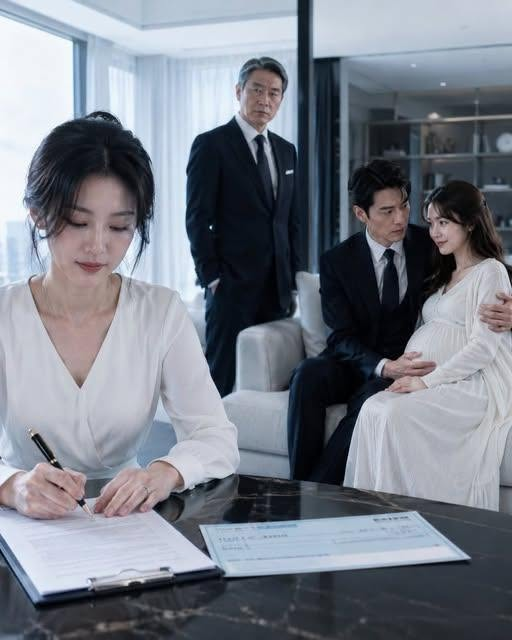
“The night your father gave me the check.”
His face changed.
I continued:
“I had a positive test that morning.”
“I hadn’t seen the doctor yet.”
“I didn’t know there were four.”
“But I was going to tell you after dinner.”
I laughed softly.
“Then Bianca walked in carrying your triplets.”
He lowered his eyes.
“I didn’t know they weren’t mine.”
“That changes what?”
His head lifted.
“You slept with her.”
“You let your parents humiliate me.”
“You stood there while your father threatened to destroy my reputation.”
“And when he offered me money to disappear, you didn’t stop him.”
Alexander whispered:
“I thought you would refuse.”
That almost made me laugh.
“What?”
“I thought you’d tear up the check.”
“Why?”
“Because you loved me.”
There it was.
The most selfish sentence of our marriage.
I stared at him.
“So you allowed your family to throw me away because you expected me to prove my love by refusing to leave.”
He closed his eyes.
“I was a coward.”
“Yes.”
“I thought if you fought, I could tell my father that separating us was impossible.”
My anger disappeared.
Not because I forgave him.
Because finally I understood.
Alexander had wanted me to save our marriage for him.
He had wanted me to scream.
Beg.
Fight Bianca.
Defy Richard.
Then he could remain passive and later tell himself love had won.
Instead, I signed.
And his entire strategy collapsed in under a minute.
“You were my husband,” I said.
“You were supposed to choose me before asking whether I would fight for you.”
“I know.”
“Do you?”
His eyes reddened.
“I do now.”
Too late.
But perhaps true.
Richard requested a meeting next.
I refused twice.
On the third request, he sent only one sentence:
I owe you an apology that should not be delegated to a lawyer.
So I let him come.
The great Richard Whitmore entered my home without security and stared at four high chairs lined beside the kitchen island.
For once, the man who could silence a boardroom with one look had nothing to say.
Lucas saw him first.
He pointed.
“Who?”
Richard’s face crumpled.
I answered calmly:
“This is your grandfather.”
The old man had tears in his eyes.
“May I…”
He looked at me.
“May I come closer?”
That mattered.
Two years earlier he had ordered me from his family like removing an employee.
Now he asked permission to take three steps toward his grandchildren.
“Yes.”
He crouched.
Mia immediately hid behind my leg.
Sophie stared at his expensive watch.
Lucas handed him a toy dinosaur.
Richard accepted it with both hands.
“Thank you.”
Then he cried.
Quietly.
I let him.
After the children went upstairs with the nanny, we sat down.
Richard placed the original canceled check on the table.
I frowned.
“What is that?”
“The bank retained the image.”
He looked at me.
“One hundred sixty million.”
“Yes.”
“I thought it was enough to remove you from Alexander’s life.”
“It was.”
He flinched.
I continued:
“But not for the reason you think.”
Richard lowered his eyes.
“I investigated what happened after you left.”
“That sounds like you.”
“I learned how much work you did for Alexander before the divorce.”
He listed things I had never expected him to notice.
Contracts I revised.
Introductions I arranged.
Negotiations I salvaged.
The crisis plan that helped Alexander earn his vice presidency.
Richard rubbed his hands together.
“I treated you like someone who came to consume Whitmore resources.”
“In reality…”
He stopped.
I finished for him.
“I was useful enough when nobody had to acknowledge it.”
He nodded.
“Yes.”
Then he said:
“The money is legally yours. I will not ask for it back.”
“I know.”
“I also established trusts for the children.”
“No.”
He looked surprised.
“I don’t want them.”
“They’re Whitmore heirs.”
I stared at him.
And Richard immediately realized his mistake.
He corrected himself.
“They’re my grandchildren.”
Better.
Still:
“No.”
“Emma—”
“If you want a relationship with them, build one.”
“If someday you want to give them birthday gifts, education funds, or help with something that actually serves them, we can discuss it.”
“But you will not purchase access.”
Richard sat silently.
Then nodded.
“Fair.”
For the first time, perhaps, he understood that money could not close every transaction.
The scandal destroyed Bianca’s wedding.
It did not destroy her children.
That was important.
The two boys proven to be Marcus’s eventually began spending time with him after family proceedings.
The third child’s biological father was later identified as another man Bianca had dated during the same period.
Alexander withdrew from all parental claims once the truth was established.
But he made one decision I did not expect.
He kept paying for the medical insurance of all three boys for one year while their arrangements were sorted out.
When Richard complained, Alexander replied:
“They spent two years believing I was their father.”
“None of this is their fault.”
When Rachel told me, I said nothing.
But something shifted slightly inside me.
Not love.
Respect, perhaps.
The first seed of it.
Alexander’s relationship with our four children began slowly.
Supervised visits.
Then afternoons.
Then full days.
He learned.
Badly at first.
The first time he changed Mia’s diaper, he used the back of the diaper as the front.
Lucas refused to eat the expensive organic lunch Alexander ordered and demanded peanut-butter toast.
Sophie threw up on his five-thousand-dollar coat.
I laughed so hard I had to leave the room.
Alexander looked at the stain.
Then at me.
“You’re enjoying this.”
“Immensely.”
For the first time in years, he laughed too.
Not everything between us was poisoned.
That was almost harder to accept.
But I never confused a peaceful afternoon with a repaired marriage.
When he asked once whether there was a chance, I answered:
“You’re becoming a good father.”
His expression softened.
I continued:
“That does not mean you automatically become my husband again.”
He nodded.
“I know.”
And crucially, he did not ask again.
Two years later, Alexander moved part of his work to New York.
Not into my house.
Into an apartment twenty minutes away.
He attended preschool events.
Doctor appointments.
Birthdays.
He learned to braid three different kinds of hair badly enough that our daughters complained every time.
Lucas became obsessed with basketball.
Alexander built a hoop in his backyard.
Richard visited every two months.
He never arrived with enormous checks.
The first Christmas, he brought four books.
Mia ignored hers and played with the wrapping paper.
Richard told me afterward:
“I think I finally understand why gifts are not investment instruments.”
“Progress.”
He smiled.
The one hundred sixty million dollars remained invested.
I used part of the returns to establish a maternal health fund supporting women facing medically complex pregnancies without financial security.
When Richard learned, he asked:
“Why that?”
I looked at my children playing nearby.
“Because I was lucky enough to be paid to disappear.”
“Most women who have to leave don’t receive a check.”
He had no response.
Alexander later donated separately.
Without using my name.
That mattered too.
Five years after the day I walked out of the Whitmore mansion, we attended our children’s school festival together.
Four children ran toward us.
“Mom!”
“Dad!”
They collided with our legs.
Alexander lifted Grace.
I took Sophie’s hand.
For a moment, from the outside, we probably looked like a married couple.
We weren’t.
But we were a family of a different kind.
One built after the marriage failed.
One that required boundaries instead of vows.
After the children ran toward the playground, Alexander stood beside me.
“Do you ever regret taking the money?”
I looked at him.
“No.”
He laughed.
“That was fast.”
“Do you regret letting me?”
His smile disappeared.
“Every day.”
Then he added:
“But not because of the money.”
I waited.
“Because you signed so quickly.”
“I spent years thinking that meant you never loved me.”
“And now?”
“Now I understand you signed quickly because I had already given you the answer.”
My throat tightened slightly.
Alexander looked toward our children.
“I chose silence while my family pushed you out.”
“You chose yourself.”
“You did the only thing left.”
“You chose yourself too.”
For once, I didn’t need to correct him.
“Yes.”
We stood there quietly.
Then Mia shouted from across the playground:
“DAD! LUCAS TOOK MY JUICE!”
Alexander sighed.
“Duty calls.”
I smiled.
“Your heirs await.”
He gave me a warning look.
“Don’t call them that.”
I laughed.
That might have been the clearest proof he had changed.
Years ago, three unborn boys had been enough for the Whitmore family to remove a wife from their home.
Now Alexander could not hear his children reduced to bloodlines without objecting.
He ran toward them.
I remained where I was.
Five years earlier, Richard Whitmore believed one hundred sixty million dollars could purchase my disappearance.
Bianca believed three pregnancies could purchase a surname.
Alexander believed my love was guaranteed enough that he could stand silent while other people chose my fate.
Every one of us had been wrong about something.
But the greatest mistake belonged to the Whitmores.
They believed the most valuable thing I carried out of their mansion was the check.
It wasn’t.
I carried four lives they had never bothered to ask about.
And something even more important.
The knowledge that being rejected by a powerful family did not make me powerless.
The check paid for doctors.
A new home.
A new beginning.
But it never bought my silence.
It simply gave me enough distance to discover that the woman they had paid to disappear was perfectly capable of building a life where none of them had the authority to tell her to leave again.
