Su Mian was silent until we reached the first traffic light.
Then she turned toward me.
“You’re right.”
I glanced at her.
“They didn’t bring Nhu Nhu because they couldn’t find childcare.”
“They brought her because they wanted you to see her.”
“And feel guilty.”
Su Mian nodded.
“More importantly, they wanted the court to see her.”
That made me tighten my grip on the steering wheel.
A five-year-old child.
Two pigtails.
An empty stomach.
Placed outside a courthouse like evidence.
My parents hadn’t changed.
They had simply found a smaller person to use.
Three days later, Su Mian called me.
“Trieu Khe, I found something.”
Her voice sounded different.
“What?”
“Your father isn’t unemployed.”
I stopped typing.
“He registered a consulting company eighteen months ago under someone else’s name. It receives payments from three businesses.”
“How much?”
“Approximately forty thousand yuan a month.”
I slowly leaned back.
“And my mother?”
“She has income too. The apartment she owns is being rented.”
“So they lied in court.”
“Yes.”
But Su Mian wasn’t finished.
“There’s something stranger.”
She sent me a bank statement.
Every month, shortly after my father received money, large amounts were transferred to an account belonging to a man named Chen Wei.
I didn’t recognize him.
“Who is he?”
“That’s what I’m investigating.”
Two days later, we had the answer.
Chen Wei ran a private investment club.
My parents had lost almost 1.8 million yuan through speculative investments.
Suddenly everything became clear.
The Audi.
The vacations.
The apartment.
They weren’t poor.
They were drowning in debt because they refused to give up the appearance of being rich.
And twenty thousand yuan a month from me wouldn’t primarily support Nhu Nhu.
It would help cover their losses.
I laughed when Su Mian explained it.
Twenty-two years without giving me a single yuan.
Now they wanted me to become their permanent ATM.
Then my phone rang.
My mother.
I answered.
“Trieu Khe, your sister has a fever.”
I said nothing.
“She keeps asking for you.”
“That’s interesting. She met me once.”
My mother’s voice hardened.
“Why are you so cruel?”
There it was again.
Not concern.
A weapon.
“Take her to the hospital.”
“We don’t have money.”
“You own an Audi.”
Silence.
“You investigated us?”
“No. You sued me.”
I paused.
“You invited investigation.”
She started screaming.
“You think having a company makes you powerful? I gave birth to you!”
I closed my eyes.
“I know.”
“Then support your family!”
“Which family?”
She went silent.
I continued.
“The family that left an eight-year-old at a train station?”
Her breathing became heavy.
“Your father and I were young.”
“You were thirty-two.”
“We had problems!”
“And I was eight.”
This time I hung up first.
The judgment came the following week.
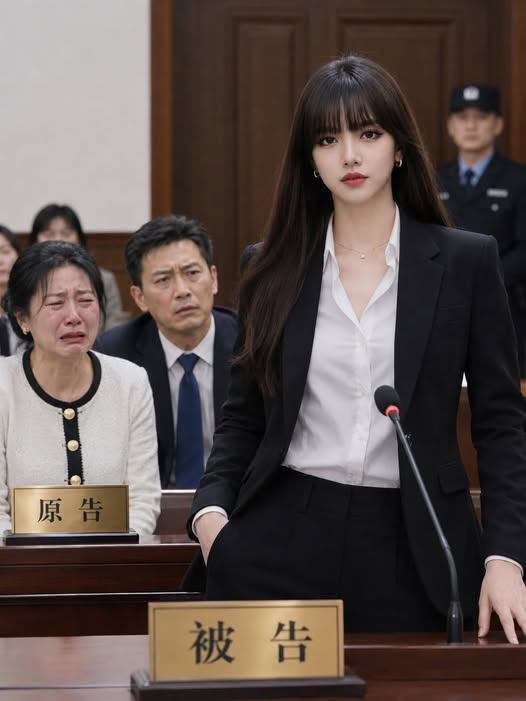
The courtroom was crowded again.
My mother wore a conservative gray dress.
My father looked exhausted.
Nhu Nhu wasn’t there.
The judge began reviewing the evidence.
Then came the conclusion.
My parents had sufficient assets and demonstrated earning capacity.
Their claim that they were incapable of supporting their minor child was inconsistent with their financial records.
Their request that I pay twenty thousand yuan per month was rejected.
My mother’s face collapsed.
But my father suddenly stood.
“Judge, even if the legal claim is rejected, she is still her sister!”
The judge looked at him coldly.
“That is a moral argument, Mr. Lam, not the claim before this court.”
My father sat down.
I thought it was over.
Then Su Mian stood.
“Your Honor, before concluding, the defendant would like the court to note that several financial documents submitted by the plaintiffs appear materially inconsistent with verified income records.”
My father turned white.
His lawyer immediately whispered to him.
The judge frowned.
“Counsel, are you alleging false evidence?”
“We are requesting that the relevant material be referred for further review.”
My mother shot to her feet.
“You planned this!”
She pointed at me.
“You want to destroy us!”
I looked at her calmly.
“No.”
“I wanted you to leave me alone.”
Outside the courthouse, my father caught my arm.
“You’ve won. Are you satisfied?”
I pulled free.
“This was never a game.”
“Nhu Nhu is innocent!”
“I know.”
“Then give us something for her!”
There it was.
Even after losing, his first instinct was still money.
I looked directly at him.
“If Nhu Nhu needs school fees, medical care, food, or clothing, you can send the bills to my lawyer.”
His face changed.
“I will consider paying necessary expenses directly.”
My mother stared at me.
“Why directly?”
“Because I will never transfer money to either of you.”
Her expression twisted.
“So you don’t trust your own parents?”
I smiled.
“You abandoned me at a station.”
“What exactly should I trust?”
Neither answered.
A month passed.
Then one rainy evening, my office receptionist called upstairs.
“Ms. Lam, there’s a child here.”
I went downstairs.
Nhu Nhu stood in the lobby.
Her clothes were wet.
Beside her was the nanny from the courthouse, visibly anxious.
“What happened?”
The woman lowered her voice.
“Your parents disappeared.”
My stomach dropped.
“What do you mean?”
“They left yesterday morning. Mr. Lam said they were dealing with a debt problem and would return by evening.”
“They didn’t?”
She shook her head.
“Their phones are off.”
Nhu Nhu looked at me.
“Older sister, did Mom go somewhere because I was bad?”
For a moment, I was eight years old again.
A railway station.
People passing.
My small suitcase beside me.
Waiting for parents who had already decided not to return.
I crouched immediately.
“No.”
My voice came out firmer than I felt.
“Adults make their own mistakes. None of this is because of you.”
Her eyes filled with tears.
I took off my coat and wrapped it around her.
That night, through Su Mian, I contacted the police and child welfare authorities.
My parents were located two days later.
They hadn’t been kidnapped.
They had run away from creditors.
And they had left their five-year-old daughter behind.
History had repeated itself.
Except this time there was one difference.
Nhu Nhu wasn’t alone.
My parents eventually returned and faced the consequences of their financial misconduct. Their apartment had to be sold to cover part of their debts.
The Audi disappeared.
So did the luxury vacations.
And after an evaluation of the home environment, Nhu Nhu temporarily came to live with me.
I never asked her to call me Mom.
I was her sister.
That was enough.
One evening, while eating noodles, she suddenly asked:
“Did Mom leave you too?”
My chopsticks stopped.
“Yes.”
“How old were you?”
“Eight.”
She thought about that.
“Were you scared?”
I looked at her small face.
“Very.”
“What did you do?”
“Grandma found me.”
Nhu Nhu nodded seriously.
Then she reached across the table and put her tiny hand over mine.
“Now I found you.”
I couldn’t speak for several seconds.
When our parents eventually asked to see us, I didn’t refuse forever.
But I set conditions.
Therapy.
Stable employment.
Debt disclosure.
Supervised visits for Nhu Nhu at first.
No asking me for money.
No using either daughter as a weapon.
My father called me heartless.
My mother said family shouldn’t have conditions.
I answered:
“Family shouldn’t abandon children either.”
After that, they stopped arguing.
Years ago, my grandmother told me not to hate my parents.
I kept that promise.
I don’t hate them.
Hatred requires too much space.
But forgiveness did not mean giving them access to my bank account, my peace, or my future.
And when they tried to use the law to force me back into the role of the abandoned daughter begging to be accepted, they discovered something they had never expected.
I wasn’t that eight-year-old girl anymore.
I had a home.
A career.
A family I chose.
And now a little sister who knew one thing I had desperately needed someone to tell me at her age:
When adults abandon you, it is never proof that you were unworthy of being kept.
