To Van Duong stopped when she saw the suitcases beside the bed.
Her hand instinctively covered her stomach.
“Thu Y, are you going somewhere?”
I closed the suitcase.
“Business trip.”
“For how long?”
“Eighteen months.”
Her face changed.
“Eighteen months?”
I nodded.
“Denmark.”
She stared at me as if trying to determine how much I knew.
Behind her, Luong Tu Ngon entered carrying medicine.
When he heard Denmark, he immediately frowned.
“What Denmark?”
“My company’s offshore wind project.”
“You rejected that position.”
“I changed my mind.”
His expression darkened.
“Why didn’t you discuss it with me?”
I almost laughed.
Seven years without a legal marriage.
Another woman pregnant with his child.
A fake certificate locked in my safe.
And suddenly he cared about consultation between spouses.
“I’m informing you now.”
“That’s not the same thing.”
“No.”
I looked at him.
“It isn’t.”
Perhaps something in my voice frightened him, because he stared at me for a long time.
Then Van Duong spoke softly.
“Thu Y, if you’re leaving because I’m staying here, I can move out.”
Luong Tu Ngon immediately turned toward her.
“You’re pregnant. Where would you go?”
Silence fell.
He realized what he had said.
I pretended not to.
“Exactly.”
I zipped the second suitcase.
“She should stay somewhere comfortable.”
Then I walked past both of them.
For the next five days, nobody realized I was saying goodbye.
My brother called twice.
Both times, he asked about Van Duong.
“Did she eat?”
“Remember she can’t tolerate greasy food.”
“Tu Ngon is busy. Help her with the prenatal appointment.”
The last time, I answered:
“Du Sam.”
“What?”
“You’ve always said I’m stronger than Van Duong.”
He laughed.
“Because you are.”
“Then you don’t need to worry about me anymore.”
He paused.
“What nonsense are you talking about?”
“Nothing.”
I hung up.
That night, I removed him as my emergency contact.
For more than twenty years, I had been the person expected to give way because I was capable of surviving the loss.
So this time I decided to make their belief come true.
I would survive.
Just not beside them.
On the morning of my flight, Luong Tu Ngon was not home.
Van Duong had another examination.
He had driven her there.
Of course.
I placed one envelope on the dining table.
Inside were three things.
A copy of the official marriage-record search.
A photograph of the two fake certificates.
And a notice from my lawyer requiring Luong Tu Ngon to remove his belongings from my house within thirty days.
There was no divorce agreement.
There could not be.
We had never been married.
At the bottom I wrote only one sentence:
You waited seven years for her. You don’t need me to delay you anymore.
Then I left.
No confrontation.
No broken dishes.
No begging for an explanation I had already heard through a hospital door.
At the airport, I turned off my old phone before boarding.
When the plane rose above the clouds, I looked down at the city where I had spent seven years believing I was someone’s wife.
I felt no relief at first.
Only emptiness.
But emptiness, I discovered, is still better than living inside a lie.
Luong Tu Ngon returned home at four that afternoon.
He called my name twice.
No answer.
Then he saw the envelope.
According to my lawyer, he called me twenty-three times in the first hour.
Then my brother called.
Then Van Duong.
Then again.
And again.
I saw none of them.
By the time my plane landed in Copenhagen, Luong Tu Ngon had finally opened the safe.
The fake marriage certificates were still there.
He understood immediately.
I had known.
Worse—
I had known and said nothing.
For the first time, he experienced what he had given me for seven years:
A truth discovered too late.
My brother sent an email that night.
Why didn’t you confront us?
I replied the next morning.
What would confrontation change?
He responded almost immediately.
I could have explained.
I stared at those words.
Then typed:
You already explained at the hospital.
No answer came for ten minutes.
Then:
You heard everything?
Yes.
Another long silence.
Finally:
Thu Y, Van Duong had no one.
I laughed when I read it.
Even now.
Even after everything.
His first instinct was still to explain her need.
So I replied:
And now she has you, Tu Ngon, and the father of her child.
She has enough people.
You no longer need me.
I blocked him.
Life on the west coast of Jutland was not romantic.
The wind was brutal.
The mornings were dark.
The work was exhausting.
For the first two months, I came home too tired to think.
It saved me.
I learned new systems.
Led field teams.
Spent hours offshore surrounded by gray water and enormous turbines.
Nobody there knew me as Luong Tu Ngon’s wife.
Nobody knew Van Duong.
Nobody knew the fake certificates.
They knew only Engineer Khuong Thu Y.
And that became enough.
Six months later, I was promoted to deputy technical lead.
Nine months later, the European division offered me a permanent position.
This time, I did not ask anyone whether I should accept.
I signed.
Luong Tu Ngon came to Denmark eleven months after I left.
He waited outside my office.
When I saw him, I almost failed to recognize him.
He looked thinner.
Older.
“Thu Y.”
I stopped.
“How did you find me?”
“Your company website.”
Of course.
My promotion announcement had been public.
He looked at me for several seconds.
Then said:
“Van Duong and I didn’t get married.”
I felt nothing.
“That has nothing to do with me.”
“She had the baby.”
“I hope they’re healthy.”
“They are.”
He swallowed.
“She moved out.”
I finally understood.
He had expected those facts to matter.
They didn’t.
“Why are you here, Tu Ngon?”
His eyes reddened.
“To bring you home.”
I almost smiled.
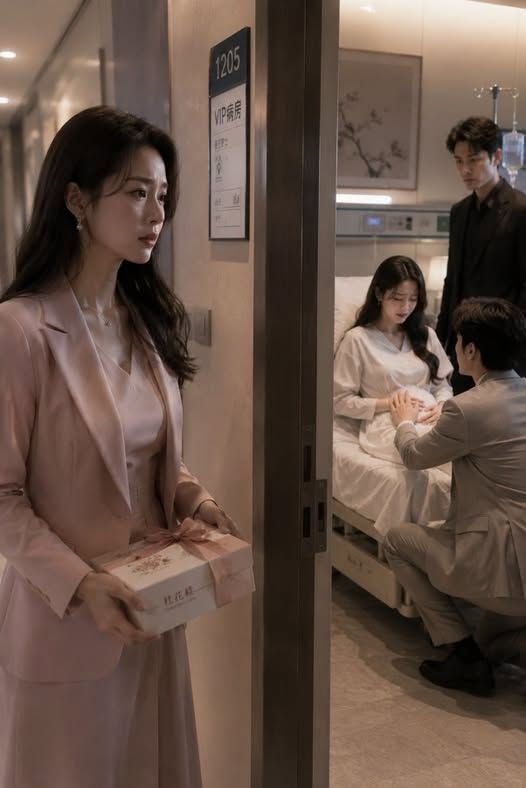
“Home?”
“The house—”
“My house.”
He stopped.
“Yes.”
Then:
“I moved out.”
“I know.”
My lawyer had informed me months earlier.
He lowered his head.
“I thought once you calmed down, we could register properly.”
I stared at him.
“Properly?”
“This time for real.”
That sentence was almost cruel in its absurdity.
“You lied to me for seven years.”
“I was waiting for Van Duong to return.”
“And she did.”
He flinched.
“I thought I loved her.”
“You told her you did.”
“I was confused.”
“No.”
My voice remained quiet.
“You were very clear.”
I stepped closer.
“You were clear when you forged the certificate.”
“Clear when you let me live as your wife.”
“Clear when you planned a future with her while asking me to take care of her pregnancy.”
He had no answer.
Then I asked:
“Do you know what hurt most?”
His lips trembled.
“That you loved her?”
I shook my head.
“That you believed my strength made deceiving me acceptable.”
He closed his eyes.
For the first time, he had nothing to defend himself with.
My brother apologized a year later.
Not by asking me to understand Van Duong.
Not by saying family should forgive.
He simply wrote:
I kept asking the stronger child to lose because I thought she would survive it. I never asked what surviving cost you. I was wrong.
That apology I kept.
Forgiveness came slowly.
Distance remained.
Both could exist.
As for Van Duong, she sent me one message after giving birth.
I’m sorry. You treated me like a sister, and I accepted something I knew belonged inside your life.
I replied:
Take care of your child.
Nothing more.
She had made her choices.
So had I.
Two years after leaving, I bought a small apartment near the Danish coast.
The first thing I placed inside was not a wedding photograph.
Not a family portrait.
Not even one of the old red certificates.
I framed my permanent employment contract.
A real document.
Real signature.
Real registration number.
Everything verifiable.
Sometimes I still thought about those seven years.
But I no longer called them a marriage.
They were simply seven years in which I loved someone honestly while he loved me conditionally.
Luong Tu Ngon believed the cruelest thing he could eventually tell me was:
Our marriage was never real.
He was wrong.
The cruelest part was that my devotion had been completely real.
But there was one advantage to discovering that no legal marriage had ever existed.
I did not need his signature to end it.
I did not need my brother’s permission.
I did not need Van Duong to return what everyone had decided belonged to her.
I only needed a plane ticket.
They had spent seven years deciding that I was the strong one—
the one who could survive losing everything.
In the end, they were right.
I survived them.
