“Leave empty-handed?”
Tran Thuy’s voice cracked.
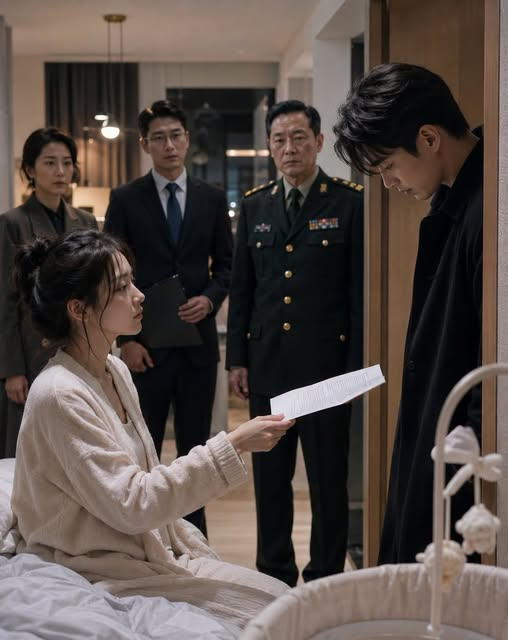
He looked from the divorce agreement to me, then toward Lawyer Chau.
“What kind of joke is this?”
Lawyer Chau adjusted his glasses.
“It isn’t a joke.”
Thuy slammed the paper onto the table.
“A prenuptial agreement can’t just take everything from me because my wife is throwing a tantrum!”
I almost laughed.
There it was.
Even now, he thought I was angry because of one video.
I looked at him.
“Did you forget what you signed before our wedding?”
His expression stiffened.
Of course he remembered.
Three years earlier, my father had insisted on a marital property agreement.
At the time, Thuy had laughed.
He had squeezed my hand and said:
“Dao Dao, I’m marrying you, not your money. I’ll sign anything.”
So he did.
Without reading carefully.
The agreement did not magically deprive him of everything.
It did something much simpler.
Everything I owned before marriage remained mine.
Any capital contributed by my family remained separate property unless formally converted.
And if either spouse concealed an affair while transferring marital funds to the third party, those transfers could be challenged during the property settlement.
Lawyer Chau opened another folder.
“Mr. Tran, the apartment you currently live in was purchased primarily with Ms. Tong Dao’s premarital funds.”
Thuy frowned.
“What?”
My mother-in-law shot to her feet.
“Nonsense! My son bought this house!”
Ms. Vuong, the financial advisor, turned her laptop around.
Bank statements filled the screen.
Down payment.
Renovation.
Furniture.
Mortgage prepayment.
Nearly eighty percent had come from an account opened in my name before marriage.
My father had transferred the funds to me years earlier.
Thuy stared at the numbers.
Then at me.
“You told me that was investment income.”
“It was.”
“From where?”
My father finally spoke.
“From me.”
The room went silent.
Tran Thuy had always known my family was comfortable.
What he did not know was that my father, Tong Weiguo, was the controlling shareholder of Weiguo Industrial Investment.
The same investment group that had quietly financed Thuy’s company during its expansion two years earlier.
My father had stayed out of our marriage because I begged him to.
I wanted to prove I could build my own family.
So he never introduced himself publicly.
Never interfered.
Never reminded Thuy who was standing behind me.
Until now.
My mother-in-law’s face changed.
“Chairman Tong?”
Dad looked at her.
“So you do recognize me.”
Her mouth opened.
Nothing came out.
Tran Thuy’s face became even paler.
“You invested in my company?”
My father didn’t answer immediately.
Ms. Vuong did.
“Through three funds.”
She clicked another document.
“And all three are currently reviewing whether to continue financing after discovering substantial personal expenditures made through company-linked accounts.”
Thuy’s eyes widened.
“What personal expenditures?”
I took out my phone.
The video of him feeding Van Le grilled meat played silently.
Then came hotel receipts.
Luxury purchases.
A lease deposit.
And several transfers.
All to Van Le.
Some came from his personal account.
Others did not.
Thuy looked at me.
“Where did you get these?”
“Three days.”
I smiled faintly.
“You gave me three days alone with a financial advisor.”
His face collapsed.
My mother-in-law immediately stepped between us.
“Dao Dao, men make mistakes.”
I turned toward her.
“Yesterday you told me your son was working hard for this family.”
She swallowed.
“I didn’t know.”
“You didn’t want to know.”
She changed tactics immediately.
“Think about the baby.”
I looked toward the crib.
“I am.”
My voice became colder.
“That’s exactly why I’m leaving.”
Thuy suddenly grabbed the agreement again.
“I won’t sign.”
Lawyer Chau nodded calmly.
“That is your right.”
Thuy seemed relieved.
Then the lawyer continued:
“Mrs. Tong can still file. The court will determine the divorce and custody arrangements. Your signature only makes the process faster.”
The relief disappeared.
I walked to the crib and touched my baby’s tiny hand.
“You disappeared for three days while I was recovering from childbirth.”
“You ignored my calls.”
“You were with another woman.”
“And you came back smelling like her perfume.”
I looked at him.
“Do you really think refusing to sign makes me your wife again?”
His eyes reddened.
“Dao Dao, listen.”
“No.”
He moved closer.
“I was under pressure.”
“So you slept with your intern?”
“It wasn’t like that.”
“What was it like?”
He stopped.
The room became painfully quiet.
Then his mother whispered:
“Thuy…”
He finally admitted it.
“Van Le made me feel relaxed.”
I nodded.
“And I made you feel what?”
His eyes shifted.
“Responsible.”
That answer almost made me laugh.
For five years, I had supported him.
Three years of marriage.
A pregnancy.
A newborn.
And somehow, responsibility had become my flaw.
I said:
“Then congratulations.”
He frowned.
“You’re free of that responsibility now.”
That evening, Thuy left the apartment.
Not because I threw him out physically.
Because Lawyer Chau handed him formal notice that the residence was disputed property and advised both sides to live separately until arrangements were settled.
My mother-in-law followed him.
For the first time, she didn’t shout.
She looked frightened.
Van Le called me that night.
I answered.
She cried immediately.
“Sister Dao, I never wanted to destroy your family.”
“Then why were you sleeping with my husband?”
Silence.
She whispered:
“He told me you two had no feelings anymore.”
“That made him single?”
No answer.
Then she said something almost funny.
“He said the company would be his soon.”
I stopped.
“What?”
“He said once the next investment round closed, your family would no longer matter.”
I looked at my father.
He had heard everything through speakerphone.
His expression became cold.
So that was Thuy’s plan.
He knew my father’s funds were behind the company.
He simply believed that once the financing converted and the business stabilized, he could reduce our influence.
He had not known my father had retained protective rights.
The next morning, the investors suspended the new funding round pending audit.
Not because of adultery.
Because company money appeared to have been used improperly and management disclosures contained inconsistencies.
Within a week, the board temporarily removed Thuy from financial authority.
His lover disappeared almost immediately.
Van Le resigned.
She had apparently been far more interested in the future president of a rapidly growing company than in an unemployed husband facing an audit.
Two months later, Thuy finally signed the divorce settlement.
The court process concerning our child proceeded separately.
He received visitation under an agreed schedule once the necessary arrangements were made.
I never tried to erase him as a father.
But being a father no longer entitled him to control me as a wife.
At mediation, he looked exhausted.
“You called your father the moment you saw the video?”
“Yes.”
“Why?”
I thought about that question.
Then answered:
“Because for years I kept trying to prove I didn’t need my family.”
I looked at him.
“And then I realized accepting help from people who love me is very different from depending on someone who betrays me.”
His eyes reddened.
“Do you still love me?”
I remained silent for several seconds.
“Probably some part of me does.”
Hope appeared on his face.
Then I finished:
“But love is no longer enough.”
The divorce became final six months later.
The apartment remained mine after the financial settlement.
The disputed company transfers were repaid.
Thuy lost his executive position, though he eventually found work elsewhere.
My father never destroyed him.
He simply stopped protecting him.
That difference mattered.
One evening, while I was holding my baby, Dad asked:
“Do you regret calling me?”
I looked at him.
“No.”
He smiled.
“You spent too many years trying to prove you could stand alone.”
I shook my head.
“I can stand alone.”
Then I looked at my sleeping child.
“I just finally learned I don’t have to.”
Tran Thuy had left home for three days believing I would still be waiting when he returned.
Instead, he came back to a lawyer, a financial advisor, and the father whose power he had underestimated.
But the thing that frightened him most was never my father.
It was realizing that the wife he had taken for granted had finally stopped protecting him from the consequences of his own choices.
