I stayed outside Maya’s bedroom door.
My hand was still on the wall.
The words kept repeating in my head.
The house is no longer his.
I almost walked in immediately.
Instead, I waited.
Ethan said something I couldn’t hear.
Maya laughed again.
—No, I’m not throwing him into the street tonight.
A pause.
—Noah is still adjusting.
My stomach tightened.
Then she added:
—Besides, Andrés still thinks the divorce agreement gave him the company and left everything else basically unchanged.
I pushed the door open.
Maya turned.
The smile vanished.
Her phone remained in her hand.
—How long have you been listening?
I ignored the question.
—What did you mean?
She looked strangely calm.
—Which part?
—The house.
I stepped inside.
—You said it isn’t mine.
Maya glanced at the phone.
—Ethan, I’ll call you tomorrow.
She hung up.
That irritated me more than it should have.
—Who is Ethan?
—My attorney.
I froze.
—Your attorney makes you laugh like that at eleven at night?
Maya raised an eyebrow.
—You divorced me because you wanted freedom.
She sat down.
—Surely that freedom included me talking to whoever I want.
I hated hearing my own logic returned to me.
—The house, Maya.
She opened a drawer and pulled out a folder.
—Read.
I took it.
The first page was the final divorce settlement.
I had seen it before.
Or thought I had.
The clause concerning the house was simple:
The marital residence shall remain available for the primary residence of the minor child until otherwise agreed or until the custodial parent elects to relocate.
I looked up.
—So?
Maya turned another page.
Attached behind it was the title history.
The house had originally belonged to my father.
Three years before the divorce, during a refinancing arrangement, ownership had been transferred into a family trust.
Beneficiary:
Noah Dawson.
Trustee until Noah turned twenty-five:
Maya Dawson.
My mouth went dry.
—When did this happen?
—Your father arranged it.
—Why?
—Because your company needed collateral and you refused to risk the house.
I remembered.
Barely.
My father had told me he would “handle the structure.”
I had signed whatever the lawyers placed in front of me.
I had assumed the house remained effectively mine.
Maya continued:
—After your father died, the trust remained unchanged.
I stared at her.
—And you knew?
—Of course.
—Why didn’t you tell me?
She actually laughed.
—You had the same documents.
That answer infuriated me because it was true.
For years, Maya had handled the paperwork.
Insurance renewals.
Taxes.
School documents.
Household accounts.
I signed things without reading because I knew she would make sure they were right.
Exactly the same way I had assumed breakfast would appear every morning.
—So you’re planning to throw me out?
—Not immediately.
That surprised me.
—Why not?
—Because Noah still needs stability.
Then she looked directly at me.
—But the arrangement is ending.
My chest tightened.
—What arrangement?
—Me being your unpaid wife after the divorce.
The sentence landed harder than I expected.
She began listing things calmly.
—Starting Monday, you do your own laundry.
—You prepare your own breakfast.
—You pay your share of household expenses.
—You handle Noah’s school transportation on your custody days.
—And when I move, you arrange somewhere else to live.
I stared at her.
—Move where?
—Ethan helped me negotiate a lease near my new office.
There it was again.
Ethan.
—You have an office?
She nodded.
—Starting next month.
—Doing what?
For the first time that night, Maya looked amused.
—The same thing I did before Noah was born.
I had forgotten.
Maya had been an interior architect.
Not a hobby.
A career.
She had worked for a respected firm before pregnancy.
After Noah was born, I told everyone she had “chosen family.”
Maybe she had.
Or maybe we had made the choice feel inevitable.
—You haven’t worked in seven years.
—Six years and eight months.
She corrected me instantly.
—And for the last four months, I’ve been doing contract work remotely.
Four months.
That meant before the divorce.
I suddenly understood why she had stopped arguing.
Why she had become so calm.
She hadn’t surrendered.
She had been preparing.
The following week was humiliating.
Not publicly.
Domestic humiliation is quieter.
On Monday morning, I opened the closet and discovered no clean shirts.
I called out:
—Maya?
She was helping Noah with his shoes.
—What?
—Where are my shirts?
—Wherever you left them.
I stared.
—You didn’t wash them?
—No.
Noah looked between us.
Maya kissed his forehead.
—Have a good day.
Then she left.
That evening there was no dinner for me.
There was food for Noah.
Maya had already eaten.
I ordered delivery.
Two days later, I missed a client call because Noah’s school called to say I had forgotten pickup.
I called Maya furiously.
—Why didn’t you remind me?
Her voice remained calm.
—Because it was your day.
That sentence became the theme of my new life.
Your laundry.
Your meals.
Your schedule.
Your son.
Your responsibility.
For the first time, I began to understand what Maya had been carrying.
And worse, I began noticing her.
Not the exhausted woman in old pants.
The woman after she stopped serving me.
She started dressing differently.
Sleeping better.
Going to meetings.
Laughing again.
Noah noticed too.
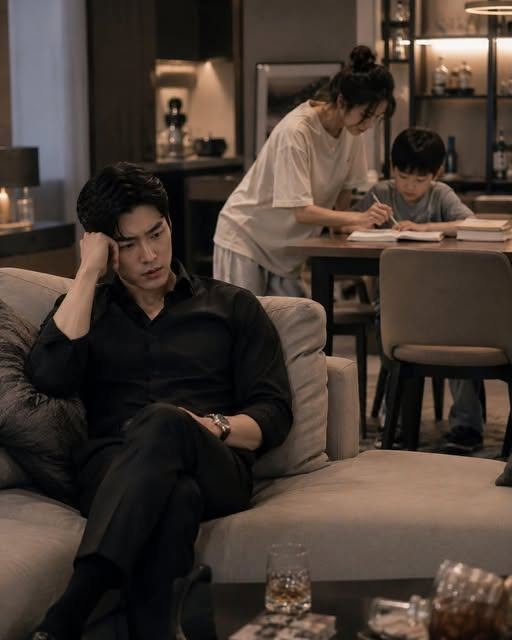
One Saturday, he asked:
—Mom, why are you happier now?
I was in the kitchen.
Maya was silent for a moment.
Then she answered:
—Because sometimes grown-ups need to change their lives when something isn’t healthy anymore.
Noah nodded like that made perfect sense.
Children are frighteningly good at accepting truths adults fight for years.
A month later, Maya moved out.
Not alone.
With Noah.
Because she remained the primary residential parent.
I had scheduled custody three days a week.
The evening before she left, I stood in the living room surrounded by boxes.
—What about the house?
—The trust’s property manager will contact you.
—So I really have to leave?
—Within sixty days.
I laughed bitterly.
—After everything I put into this house?
Maya looked at me.
—Do you hear yourself?
I stopped.
She continued:
—For months after our divorce, you thought I should cook, clean and raise your child because letting me remain here was some kind of generosity.
Her voice stayed soft.
—Now you’re upset because the same house isn’t yours.
I had no answer.
She picked up one of Noah’s boxes.
Before leaving, I finally asked:
—Is Ethan your boyfriend?
Maya stopped.
Then smiled.
—No.
The relief that hit me was embarrassing.
She noticed.
—But Andrés?
—What?
—One day, I might have one.
That relief disappeared.
—And when I do, it won’t be something you get a vote on.
She left.
The house became unbearable after that.
Silent.
No breakfast smell.
No toys in the hallway except during my custody days.
No Maya humming while folding laundry.
For years, I had believed she made the house dull.
Without her, I discovered she had been the only thing making it feel alive.
I sold most of the furniture before moving into an apartment.
My mother was horrified.
—How could Maya do this to you?
For once, I didn’t agree.
—She didn’t.
My mother stared at me.
I looked around the empty living room.
—I did this to myself.
It took me another year to fully understand.
Maya’s career recovered quickly.
She became a partner at a small design studio.
Ethan remained her lawyer and, eventually, a close family friend.
Nothing more.
At least not while I cared enough to notice.
We became better parents after we stopped pretending we could still function as a family under one roof.
I learned Noah’s teachers’ names.
I learned what he liked in his lunch.
I learned to clean a bathroom properly at thirty-nine years old.
Pathetic, perhaps.
Necessary, definitely.
One evening, two years after the divorce, Noah fell asleep on my sofa after we built a model airplane.
I took a photo and sent it to Maya.
She replied:
He looks happy. Thank you for taking care of him.
I stared at those words.
Once, I had thought caring for my own son was something Maya naturally owed me.
Now her thanks felt undeserved.
I typed:
I should have done more before.
She responded several minutes later.
Yes. But you’re doing it now.
That was all.
No reconciliation.
No dramatic second chance.
Just truth.
I once told my friends that I had won the divorce because I kept the company, the house, my freedom—and somehow even kept my ex-wife doing everything she had done before.
I had been wrong about every part of it.
The house belonged to my son.
Maya belonged to herself.
And freedom turned out to include washing my own shirts and showing up for the people I claimed to love.
The night I heard Maya laughing behind that door, I thought another man was taking something that belonged to me.
But nothing was being taken.
She had simply stopped allowing me to mistake her presence for my property.