The message from Tham Ky Minh contained only one sentence.
“Don’t meet Co Hoai alone on Saturday.”
I stared at the screen.
Then replied:
“The exhibition has twelve people attending.”
He answered almost instantly.
“Then don’t sit beside him.”
I laughed.
Manh Thu, who was sitting across from me sorting student files, raised her head.
“What’s so funny?”
“My husband suddenly remembered he has a wife.”
She almost dropped her pen.
“President Tham?”
“Yes.”
“The same President Tham whose assistant used to call you to say he wouldn’t come home for three consecutive nights?”
“The very one.”
Manh Thu looked impressed.
“Miracles really happen.”
I put my phone face down.
Eight years ago, I would have been delighted by his jealousy.
Five years ago, I would have interpreted it as proof that he cared.
Now?
I only found it exhausting.
That afternoon, another message arrived.
“Pick So Ngon up early. We’ll have dinner together.”
I replied:
“He has piano class.”
“I’ll take him.”
I stared at that sentence longer than I should have.
Tham Ky Minh had never taken our son to piano class.
Not once.
At six, I arrived at the school gate.
His black car was already there.
So Ngon sat inside eating a steamed bun while his father held the child’s backpack with an expression suggesting that carrying a seven-year-old’s dinosaur bag was more difficult than negotiating a billion-yuan contract.
When he saw me, So Ngon waved happily.
“Mom! Dad knows where my classroom is now!”
Tham Ky Minh’s expression stiffened.
I pretended not to notice.
At dinner, he kept putting food into my bowl.
Fish without bones.
Vegetables.
The mushrooms I liked.
After the third time, I finally asked:
“Did you do something wrong?”
His chopsticks stopped.
“No.”
“Then why are you acting like this?”
So Ngon looked between us.
Tham Ky Minh lowered his voice.
“I can’t have dinner with my wife?”
“You can.”
I took a sip of tea.
“You simply haven’t wanted to for years.”
Silence.
So Ngon suddenly announced:
“I want ice cream.”
Smart child.
He disappeared toward the dessert counter.
Tham Ky Minh looked at me.
“Are you still angry about Ms. Duong?”
I shook my head.
“I’m not angry.”
That seemed to bother him more.
“Then why have you changed?”
“Have I?”
“Yes.”
He leaned forward.
“You don’t ask where I’m going.”
“You don’t call when I’m late.”
“You stopped sending me reminders about meals.”
“You don’t even complain anymore.”
I listened quietly.
Then I smiled.
“So you noticed.”
His face darkened.
“What does that mean?”
“It means I got tired.”
For years, Tham Ky Minh had believed my complaints were annoying.
Now that they were gone, he finally discovered what they had represented.
Expectation.
I used to complain because I still hoped he would change.
I stopped when I no longer cared.
Saturday came.
I went to the exhibition with Manh Thu and several university colleagues.
Co Hoai arrived late.
He handed everyone coffee and gave me the sugar-free one without making a ceremony of it.
Halfway through the exhibition, I saw Tham Ky Minh.
Standing twenty meters away.
In a dark coat.
Looking ridiculous among a group of graduate students and independent filmmakers.
I walked over.
“Why are you here?”
“Business nearby.”
I looked around.
“At an experimental film exhibition?”
He remained expressionless.
“Yes.”
I almost laughed.
Co Hoai approached.
“Thoi Nghi, the next screening is starting.”
Tham Ky Minh’s eyes fell on him.
Co Hoai nodded politely.
“President Tham.”
“Professor Co.”
The atmosphere became strange.
Then Tham Ky Minh asked:
“How long have you known my wife?”
Co Hoai answered calmly:
“Fifteen years.”
His jaw tightened.
“Longer than me.”
“Yes.”
I rubbed my forehead.
“Are you two finished?”
Tham Ky Minh ignored me.
“Did you like her in university?”
Co Hoai looked surprised.
Then smiled.
“Yes.”
I froze.
Tham Ky Minh’s face became terrifying.
But Co Hoai continued:
“She rejected me.”
He looked at me.
“Very decisively.”
I remembered.
A confession under the library stairs.
I had rejected him because, at twenty-two, I had already met Tham Ky Minh.
For eight years of marriage, I never mentioned it.
Not because it was a secret.
Because it no longer mattered.
Tham Ky Minh looked at me.
“You never told me.”
“You never asked about my university life.”
That silenced him.
Co Hoai excused himself.
For several seconds, my husband and I stood facing each other among strangers.
Then he asked:
“Do you regret rejecting him?”
I genuinely thought about it.
“No.”
His shoulders loosened.
“But I regret many things after that.”
His expression froze again.
That night, after So Ngon fell asleep, I placed a folder on the dining table.
Tham Ky Minh opened it.
The first page made him stop breathing.
Divorce agreement.
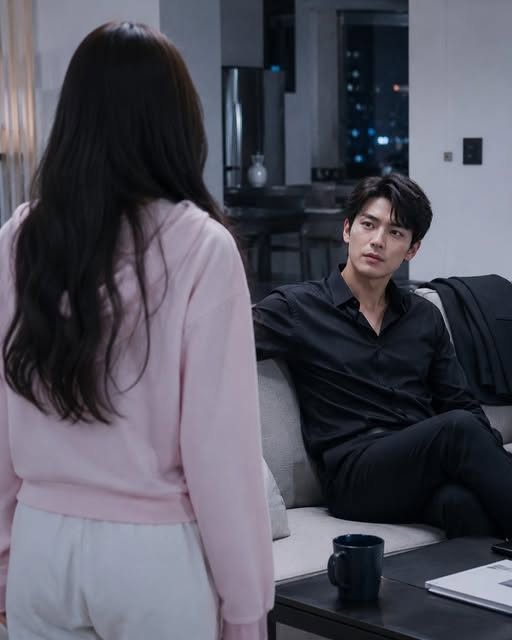
He looked up.
“No.”
“I haven’t even said anything.”
“No.”
His voice was firm.
“I’m not signing.”
I sat across from him.
“You can read it first.”
“I don’t need to.”
“Ky Minh.”
He suddenly stood.
“Because of Co Hoai?”
I laughed.
There it was again.
A man had to exist.
Otherwise he couldn’t understand why a woman might leave him simply because she was tired of being lonely while married.
“No.”
“Then because of Ms. Duong?”
“No.”
“Then what?”
I looked at him.
“Because I have spent eight years living around your availability.”
His face changed.
“I raised So Ngon mostly alone.”
“I attended family events alone.”
“I explained your absence until even your parents stopped asking.”
“I waited for you on anniversaries.”
“I waited when I was sick.”
“I waited when our son had a fever.”
“And every time I complained, you called me unreasonable.”
He sat down slowly.
I continued:
“The problem isn’t that you came home at three in the morning.”
“The problem is that after eight years of doing whatever you wanted, you suddenly decided I needed permission to attend a class reunion.”
He lowered his eyes.
“And Ms. Duong?”
I finally asked the question he seemed desperate for me to ask.
He was silent.
Then:
“She liked me.”
“I know.”
“I never slept with her.”
“I believe you.”
That surprised him.
“But I enjoyed being needed.”
I said nothing.
“She called, and I went.”
“She complained, and I listened.”
“I knew it bothered you.”
He swallowed.
“I just thought you would always be there.”
I smiled sadly.
“That was your mistake.”
For the first time in eight years, Tham Ky Minh cried in front of me.
Quietly.
No dramatic begging.
He simply stared at the divorce papers and asked:
“Is there really no chance?”
I looked toward So Ngon’s bedroom.
“There’s a chance for you to become a better father.”
“And us?”
“I don’t know.”
It was the most honest answer I had.
We separated first.
Not because Co Hoai appeared.
Not because Ms. Duong disappeared from his contacts.
Because I needed to discover whether I missed my husband or merely missed the version of marriage I had spent years imagining.
Six months later, I had my answer.
I didn’t miss him.
The divorce became final.
Tham Ky Minh changed afterward.
He began picking So Ngon up every Wednesday.
He learned the piano teacher’s name.
He stopped treating parent-teacher meetings as optional.
And strangely, once he was no longer my husband, he finally became the father our son deserved.
One evening, he returned So Ngon and stood outside my door.
“Thoi Nghi.”
“Yes?”
“Co Hoai is still single.”
I burst out laughing.
“So?”
His mouth tightened.
“Nothing.”
He turned to leave.
I called after him.
“Ky Minh.”
He looked back.
“I didn’t divorce you to choose another man.”
His expression softened.
“I know that now.”
I nodded.
“Good.”
Then I closed the door.
For eight years, Tham Ky Minh believed my love was so stable that he could neglect it indefinitely.
He only became afraid when I stopped asking where he was.
But by then, the question was no longer whether he would come home.
It was whether the woman waiting inside still considered that place his home.
And by the time he finally learned to return on time, I had already learned how peaceful life could be without waiting for anyone.
