“Why didn’t you ever come to look for me?”
Noah’s question hit harder than anything Adrian could have said.
I crouched slowly in front of him.
My knees almost gave way.
“I…”
My throat closed.
How could I explain a five-year absence to a child who had spent those same five years wondering whether his mother had simply chosen not to exist?
“I didn’t know where you were.”
Noah frowned.
“But Dad knew where you were.”
I looked up sharply.
Adrian’s face changed.
Only slightly.
But I saw it.
“You knew?”
He exhaled.
“Yes.”
I stood.
“How long?”
“Two years.”
I felt as if someone had opened the old wound all over again.
“You knew where I was for two years and never contacted me?”
Noah looked between us.
Adrian lowered his voice.
“Not in front of him.”
“No.”
I stepped aside and opened the door wider.
“You brought him here. You told him I was his mother. We’re not doing half-truths anymore.”
Adrian stared at me.
Then he entered.
Noah sat on my couch, looking around my tiny apartment with solemn curiosity.
Adrian remained standing.
“I recognized you the moment you entered my office this morning.”
I laughed bitterly.
“You hid it well.”
“I had to.”
“Why?”
“Because my mother still controls part of the Blake trust.”
The answer made my stomach tighten.
Eleanor Blake.
Five years ago, she had controlled everything.
The house.
The doctors.
The contract.
Me.
Adrian continued.
“When I came back from treatment, you were gone.”
“I had just given birth.”
“I know that now.”
His jaw tightened.
“But back then, my mother told me you had taken the money and left before Noah was discharged.”
My face went cold.
“She told you that?”
“She showed me the contract.”
I remembered signing dozens of pages after childbirth.
I had barely been able to keep my eyes open.
“They told me I was giving up parental rights.”
“You were.”
His voice became bitter.
“But she didn’t show me the rest.”
“What rest?”
Adrian pulled a folded document from inside his coat.
There were clauses I had never seen.
Any attempt to contact the Blake heir would trigger financial penalties.
Any public claim of motherhood could be treated as extortion.
And one line was underlined.
THE BIRTH MOTHER HAS VOLUNTARILY DECLINED ALL FUTURE CONTACT.
“I never agreed to that.”
“I know.”
“How?”
“Because Noah found your letters.”
I stopped breathing.
“My what?”
Adrian looked toward our son.
Noah was hugging one of the cushions.
“You wrote letters after you left.”
“Yes.”
For nearly a year.
Every month.
I mailed them to the Blake estate.
I never received an answer.
Eventually, I understood the message.
Or thought I did.
“They never reached you?”
“No.”
Adrian’s expression hardened.
“My mother kept them.”
He placed a photograph on the table.
A wooden box filled with envelopes.
My handwriting.
My name.
Five years of grief suddenly changed shape.
I had thought Adrian knew I wanted to see Noah and had chosen to ignore me.
Adrian had thought I took the money and disappeared willingly.
And somewhere between us, Eleanor Blake had built a wall out of signatures and lies.
Noah whispered:
“Grandma said you didn’t want children.”
I closed my eyes.
Then I moved beside him.
“Look at me.”
He did.
“I wanted you.”
My voice shook.
“I wanted to hold you longer.”
His eyes filled with tears.
“I asked them where you were.”
I swallowed.
“I wrote letters.”
“Then why didn’t you come?”
Because I had been twenty-two.
Broke.
My mother was recovering from surgery.
The Blake family had lawyers, security, influence and a contract I barely understood.
Because I had been terrified.
But Noah didn’t need every ugly detail.
So I told him the simplest truth.
“Because adults made decisions that should never have been made for us.”
He stared at me.
Then he asked:
“Can I hug you?”
That broke me.
I opened my arms.
Noah threw himself against me.
For the first time in five years, I held my son without someone standing nearby waiting to take him away.
I cried into his hair.
Adrian turned his face toward the window.
The next month changed everything.
I did not move into Adrian’s house.
I did not suddenly become “Mom” every day.
We started slowly.
Lunch.
The park.
Homework.
Saturday mornings.
Noah loved astronomy, hated tomatoes, and asked questions with terrifying persistence.
Then Eleanor found out.
She arrived at my workplace without an appointment.
Even at seventy, she had the same ability to make a room feel smaller.
“You should have stayed gone.”
I looked at her.
“Good afternoon to you too.”
Her mouth tightened.
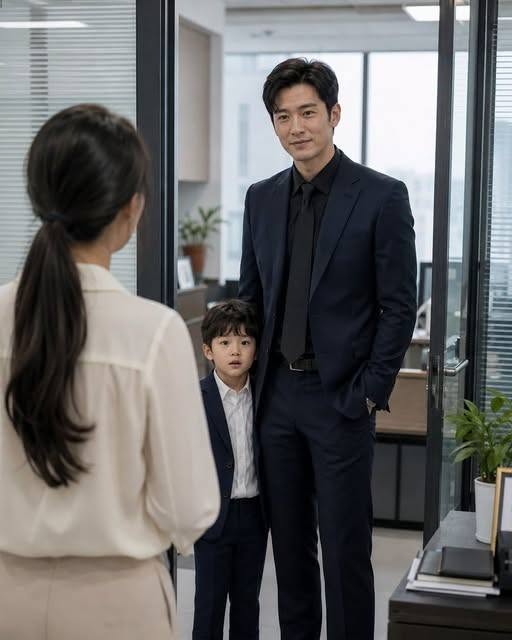
“Noah is a Blake.”
“He’s also my son.”
“You signed him away.”
“You altered what I signed.”
For the first time, she lost some color.
I continued.
“Adrian has the letters.”
Silence.
“And the original hospital records.”
Her eyes sharpened.
“What do you want?”
That question told me everything about her.
She still believed every human relationship was a transaction.
“I want nothing from you.”
“That’s impossible.”
“No.”
I smiled faintly.
“That’s why you never understood me.”
Eleanor threatened court action.
So we went to court.
The proceedings exposed more than she expected.
The concealed letters.
The altered consent documentation.
Payments made to intermediaries who had monitored me after I left.
Even instructions sent to hospital staff preventing me from receiving information about Noah.
Adrian testified against his own mother.
When her attorney asked why, he answered:
“Because protecting my family name is no longer more important than telling my son the truth.”
Eleanor lost control of Noah’s guardianship trust.
My legal parental status was restored gradually under court supervision.
And Adrian removed his mother from every position that allowed her influence over Noah.
But our relationship was another matter.
One evening, after Noah fell asleep on my couch during a movie, Adrian stood near the door.
“I owe you an apology.”
I looked at him.
“For what part?”
His smile was painful.
“For believing my mother.”
“For not searching harder.”
“For seeing you at the company and deciding secrecy was safer than honesty.”
I nodded.
“Yes.”
He looked surprised.
“You’re not going to tell me it wasn’t my fault?”
“No.”
Because some of it was.
He could have questioned the story.
He could have looked for me sooner.
He could have refused to let fear make decisions again.
Adrian lowered his eyes.
“Fair.”
That was the first moment I thought he had truly changed.
Not because he apologized.
Because he accepted that forgiveness did not require me to erase his responsibility.
A year passed.
Noah began spending half his time with me.
The first time he called me Mom without thinking, I locked myself in the bathroom afterward and cried.
Adrian never mentioned it.
He simply left tea outside the door.
Eventually, Noah asked the question both of us had been avoiding.
“Are you and Dad going to get married?”
Adrian nearly choked on his coffee.
I laughed.
“Noah.”
“What? Other parents do.”
I looked at Adrian.
He did not answer for me.
He had finally learned that lesson.
“We’re learning how to be a family first,” I said.
Noah considered that.
“Okay.”
Then he returned to his cereal.
Two years later, Adrian asked me to dinner.
No lawyers.
No Noah.
No family business.
Just us.
“I’m not asking you to forget what happened,” he said.
“Good.”
“I’m not asking because we have a child.”
“Better.”
He looked nervous.
Adrian Blake.
The man who could silence an entire boardroom.
Nervous because of me.
“I’m asking whether I can court you properly.”
I smiled.
“Five years late.”
“Yes.”
“Very late.”
“I know.”
I let him suffer another second.
Then I said:
“One dinner.”
His smile appeared slowly.
“One dinner.”
Five years earlier, I had entered the Blake family because desperation had placed a price on something that should never have been reduced to money.
When I left, I believed the price had included my child.
I was wrong.
Noah had never forgotten the absence of a mother he had never met.
And I had never stopped being his mother simply because someone put different words into a contract.
Years later, when Noah asked me what happened when he was born, I told him the only part that mattered.
“People tried to decide our story for us.”
He frowned.
“And then?”
I smiled.
“Then we found each other.”
And this time, no amount of money, power, or family pride was strong enough to separate us again.
