My hands trembled as I unfolded Carmen’s letter.
The first line immediately stopped me.
“Diego, if you are reading this, then I’m sorry I never paid you.”
I swallowed hard.
That was exactly what I had expected—an apology.
But the next sentence changed everything.
“The truth is, I could have paid you every single week.”
I stared at the page.
What?
Carmen had lived with an almost empty refrigerator. She wore the same old clothes. She counted coins at the market.
Why would she pretend she had no money?
I kept reading.
She explained that years earlier, after her husband died, her three children began fighting over what she owned.
They visited less often.
Called only when they needed something.
One son tried to convince her to sell her house. Her daughter repeatedly asked about savings. Eventually, Carmen stopped telling anyone what she had.
Then came the sentence that made my chest tighten.
“When you first arrived, I thought you would be like them.”
She admitted that delaying my payment had started accidentally.
The first week, she genuinely didn’t have cash available.
But when I returned anyway, she became curious.
Then another week passed.
I still came.
I cleaned.
I cooked.
I took her to medical appointments when she needed help.
Eventually, she stopped mentioning the money because she wanted to know something.
Would I continue treating her like a person when there was nothing to gain?
I felt anger rise inside me.
So this had been some kind of test?
But then I reached the next paragraph.
Carmen apologized.
She wrote that what began as suspicion eventually became fear.
Not fear of me leaving because she needed someone to clean.
Fear of losing the only person who visited her without asking what she owned.
At the bottom of the letter was an address.
And a name.
Lic. Alejandro Serrano.
Her attorney.
I almost threw the letter away.
Then the man who had handed it to me approached.
“Diego?”
“Yes?”
“My name is Alejandro Serrano.”
I froze.
He was Carmen’s lawyer.
“I need you to come to my office tomorrow.”
“Why?”
He looked toward Carmen’s grave.
“Because Mrs. Carmen left instructions concerning you.”
The next morning, I arrived wearing the only formal shirt I owned.
Alejandro wasn’t alone.
Three people were already sitting inside his office.
Two men.
One woman.
I recognized them immediately from Carmen’s photographs.
Her children.
The oldest man looked me up and down.
“So you’re Diego.”
The woman laughed bitterly.
“The cleaner.”
I sat quietly.
Alejandro opened a folder.
Carmen’s daughter immediately interrupted.
“Let’s stop wasting time. Read the will.”
The lawyer looked at her.
“I intend to.”
He began with several ordinary possessions.
Jewelry.
Furniture.
Family photographs.
Then he reached the house.
Carmen’s oldest son leaned forward.
Finally.
Alejandro adjusted his glasses.
“The property located near central Guadalajara…”
He paused.
“…is left to Diego Ramírez.”
The room exploded.
“What?!”
Her daughter stood so quickly her chair nearly fell backward.
“He isn’t family!”
The oldest son pointed at me.
“He manipulated her!”
I couldn’t even speak.
The house?
That tiny, deteriorating house?
I didn’t want it.
I hadn’t helped Carmen for that.
Alejandro raised his hand.
“There is more.”
Everyone became quiet.
He placed another document on the table.
“The house itself represents only a small portion of Mrs. Carmen’s estate.”
Her children stopped moving.
I looked at Alejandro.
“What estate?”
He turned toward me.
“Diego, Carmen was not poor.”
My stomach dropped.
He explained that decades earlier, Carmen and her late husband had purchased several small properties around Guadalajara.
Over time, the city expanded.
Those properties became extremely valuable.
After her husband died, Carmen sold some and placed the proceeds into investments and trusts.
She had millions of pesos.
Millions.
Yet she had lived in that tiny house with an empty refrigerator.
“Why?” I whispered.
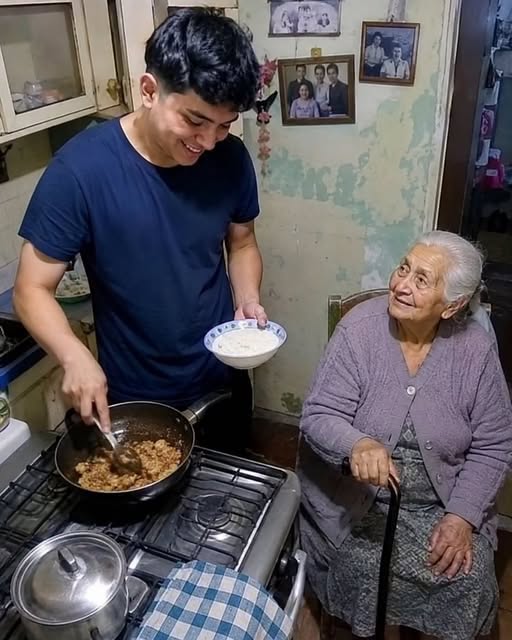
Alejandro looked toward her children.
“Because she stopped trusting the people around her.”
Her daughter suddenly shouted:
“This is ridiculous! She wasn’t mentally competent!”
Alejandro calmly opened another folder.
“She anticipated that argument.”
Medical evaluations.
Witness statements.
Recorded meetings.
Everything had been prepared.
Then Alejandro looked directly at me.
“Carmen didn’t leave you her entire fortune.”
For some strange reason, I felt relieved.
“She established a scholarship foundation.”
I stared at him.
“For students who work while attending university and are at risk of dropping out because of financial hardship.”
My throat tightened.
“She named it after her youngest son.”
I remembered Carmen squeezing my hand outside the hospital.
You remind me so much of my youngest son.
“What happened to him?” I asked.
For the first time, her children stopped arguing.
Alejandro lowered his voice.
“He died when he was twenty-one.”
My age.
“He was studying at university while working nights. One evening, exhausted after a double shift, he was involved in an accident.”
The room became completely silent.
Suddenly I understood why Carmen had looked at me that way.
Why she always asked whether I had eaten.
Why she became upset when I arrived exhausted.
Why she sometimes insisted I sit down instead of cleaning.
I looked back at the letter.
There was one final section I hadn’t read.
“Diego, I couldn’t save my son. Maybe helping you finish the life he never got to finish will allow this old mother to leave peacefully.”
My vision blurred.
But Alejandro wasn’t finished.
“Carmen left one additional instruction.”
He slid an envelope toward me.
Inside was a bank document.
I stared at the number.
It wasn’t payment for cleaning.
It was enough to cover the rest of my university education, housing, and living expenses.
I couldn’t speak.
Then I noticed something written by hand at the bottom.
Debt owed to Diego: 4,800 pesos.
Underneath Carmen had added:
“Everything else is not payment. It is a thank-you.”
I started crying.
Not because of the money.
Because even at the end, Carmen had remembered exactly how many weeks she owed me.
Her children left furious.
I remained sitting there long after they were gone.
Before I left, Alejandro handed me one last photograph.
Carmen was much younger.
Beside her stood a smiling university student.
Her youngest son.
I stared at his face.
Then turned the photograph over.
There was another handwritten message.
But this one wasn’t from Carmen.
It had been written decades earlier by her son.
Only one sentence:
“Mom, if anything ever happens to me, please help someone finish what I couldn’t.”
And suddenly I understood.
I hadn’t walked into Carmen’s house because she needed a cleaner.
I had walked into a promise she’d been waiting years to keep.
