I stayed outside that kitchen window until Hannah finished every bite.
Not because she was hungry enough to enjoy it.
Because she had learned not to waste food.
Food I had paid for.
Food my mother had deliberately kept from her.
When Hannah washed the bowl and wiped the counter, I walked around the building and entered through the front door.
My mother looked up from the television.
“You’re back.”
“Yeah.”
Hannah appeared from the kitchen.
When she saw me, she smiled automatically.
“You went out?”
I looked at her face.
Six months.
How had I missed how thin she had become?
“Come downstairs with me.”
She blinked.
“Now?”
“Please.”
Something in my voice made her follow without arguing.
We sat on the bench where I had been hiding.
I placed the cherries between us.
Hannah stared at them.
“You bought these?”
“For you.”
She smiled faintly.
“They’re expensive.”
That sentence nearly broke me.
“Hannah, what did you eat tonight?”
Her fingers stopped on the box.
“Dinner.”
“What?”
She looked away.
“Green beans. Eggs. Rice.”
“Anything else?”
“No.”
“Yesterday?”
Silence.
“Hannah.”
She exhaled.
“Ethan, don’t start a fight.”
That answer told me everything.
“How long?”
She stared at the pavement.
“Since your family moved in.”
Six months.
“Why didn’t you tell me?”
“I tried.”
My chest tightened.
“When?”
“The second week.”
Then I remembered.
Hannah had once said, “Maybe we should buy groceries separately.”
I laughed and told her not to be ridiculous.
We’re family.
Another time she asked whether we could eat dinner later.
I told her Dad’s stomach couldn’t handle waiting.
Another time she suggested moving out.
I accused her of disliking my parents.
She had told me.
I simply hadn’t listened.
“I thought you were complaining about little things.”
“I know.”
That quiet answer hurt more than anger would have.
“Why did you stop telling me?”
Hannah looked directly at me.
“Because every time I said something about your mother, you explained why she was right.”
I had no defense.
I reached for her hand.
She let me hold it, but she didn’t squeeze back.
That frightened me.
“What else has happened?”
Hannah hesitated.
Then the truth came out piece by piece.
My mother had stopped letting her use the washing machine on certain days because Chloe “needed it.”
Hannah had been buying her own toiletries because my sister kept using hers.
My father complained whenever Hannah worked late because opening the front door disturbed him.
My mother had even asked Hannah to contribute more money for groceries.
“More?”
I stared at her.
“I transfer Mom money every month.”
“I know.”
“How much are you giving her?”
Hannah told me.
I felt sick.
Between the two of us, my mother had been receiving almost twice what the household actually needed.
And Hannah was still eating leftovers.
“Show me the transfers.”
“Ethan—”
“Please.”
She opened her banking app.
There they were.
Month after month.
I stood.
“Come upstairs.”
Her face changed.
“Don’t.”
“I’m not going to shout.”
“That makes me more nervous.”
For the first time that evening, I almost smiled.
But when we entered the apartment, I was calm.
My mother glanced at us.
“Why are you two wandering around so late?”
“Mom, where’s the pork?”
She froze.
“What?”
“The pork from dinner.”
“Finished.”
“No.”
I walked into the kitchen and took the container from behind the pot.
Chloe immediately said:
“Hey, that’s my lunch.”
I placed it on the dining table.
Then I opened the refrigerator.
Fruit.
Yogurt.
Leftover shrimp.
Half the steamed fish.
My mother had lied.
There had been plenty of food.
She simply hadn’t intended Hannah to eat it.
My father turned off the television.
“Ethan, what’s going on?”
I looked at my mother.
“How long have you been doing this?”
“Doing what?”
“Feeding my wife scraps while saving the good food for everyone else.”
My mother’s face hardened.
“Don’t exaggerate.”
“I watched her eat tonight.”
Silence.
“I watched you hide this container from her.”
Her expression changed.
Then came the defense I should have expected.
“She comes home late.”
“So?”
“We can’t reorganize the entire household around her.”
“I didn’t ask you to.”
I pointed at the refrigerator.
“I asked why she isn’t allowed to eat food that I pay for.”
My mother stood.
“You’re talking to me like I’m a servant.”
“No. I’m talking to you like someone who has been mistreating my wife in her own home.”
Chloe rolled her eyes.
“Oh, please. Hannah isn’t starving.”
I turned toward my sister.
“Starting next month, you pay for your own food.”
Her mouth fell open.
“What?”
“And your phone bill.”
“Ethan!”
“And Dad.”
My father looked up.
“I’ll continue helping with your medical expenses. But household costs change tomorrow.”
My mother stared at me.
“You’re choosing your wife over your family?”
Hannah flinched.
Six months earlier, that sentence might have controlled me.
Not anymore.
“No.”
I took Hannah’s hand.
“She is my family.”
My mother laughed bitterly.
“So we’re outsiders now?”
“You became guests the moment you moved into the home Hannah and I built.”
The room went silent.
I continued.
“You were supposed to stay three months.”
It had become six.
Tomorrow, I told them, we would begin arranging somewhere else for them to live.
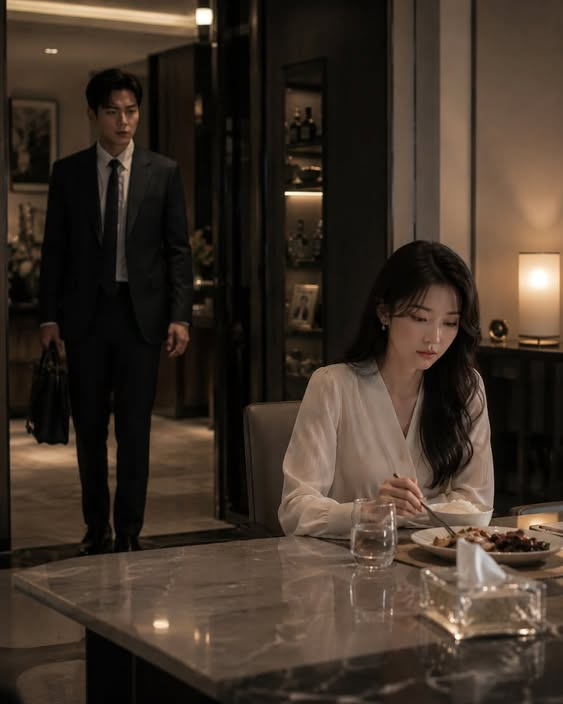
My mother started crying.
My father accused me of being ungrateful.
Chloe stormed into her room.
Hannah said nothing.
And that was the part I remembered most.
She didn’t look victorious.
She looked exhausted.
That night, when we entered our bedroom, I expected Hannah to thank me.
Instead she opened the closet and pulled out a suitcase.
My stomach dropped.
“What are you doing?”
“I’m staying with Mia for a while.”
“Hannah, I handled it.”
She stopped folding clothes.
“No, Ethan.”
Her voice was gentle.
“You handled tonight.”
I couldn’t speak.
She looked at me.
“Your mother was cruel to me. But you’re my husband.”
Those words landed harder than anything my mother had said.
“I needed you to notice.”
“I know.”
“You lived beside me every day.”
Her eyes filled.
“You ate the meals she cooked. You sent her money. You listened when she complained about me.”
She wiped her cheek.
“And you never once asked why your wife kept getting thinner.”
I sat on the edge of the bed.
There was nothing I could say to make that untrue.
“So what happens now?”
“I don’t know.”
She closed the suitcase.
And for once, I didn’t stop her.
“I’ll drive you.”
“No.”
“Hannah—”
“I need to do one thing without your family deciding how it happens.”
So I let her go.
The following month was the loneliest of my marriage.
My parents moved into a nearby rental.
Chloe went with them.
I paid the first month’s deposit because I had originally invited them into our home.
After that, expenses were divided among the adults.
My mother called relatives and told them Hannah had thrown her out.
For the first time, I didn’t ask Hannah to defend herself.
I corrected the story myself.
“Hannah didn’t throw anyone out. I did.”
Some relatives stopped calling.
That was fine.
I began therapy.
Not because Hannah demanded it.
Because I finally understood that apologizing without changing the behavior that caused the damage was simply another way of asking her to carry the burden.
I learned how often I had used “family” to mean my parents.
How often I expected Hannah to compromise because she was quieter.
How often I confused avoiding conflict with keeping peace.
Two months later, Hannah agreed to have dinner with me.
At a restaurant.
Neutral ground.
When she arrived, she looked healthier.
That made me happy and ashamed at the same time.
We talked for almost three hours.
I didn’t ask her to come home.
I told her what had changed.
Separate finances from my parents.
Clear boundaries.
No relatives moving into our home without both of us agreeing.
No dismissing concerns simply because they involved my mother.
Then I said:
“I don’t expect you to trust me because I finally did what I should have done six months ago.”
Hannah studied me.
“What do you expect?”
“Nothing.”
I swallowed.
“But I hope someday I can earn it again.”
She didn’t answer immediately.
Then she reached across the table and took one cherry from the small box I had brought.
“You remembered.”
“I’ll probably remember cherries until I’m ninety.”
She smiled.
It wasn’t forgiveness.
But it was something.
Hannah came home gradually.
First for weekends.
Then permanently.
We rebuilt slowly.
My relationship with my mother changed too.
For several months, she refused to admit she had done anything wrong.
Then one afternoon she appeared at our door carrying a container.
Hannah and I looked at each other.
My mother placed it on the table.
Rib soup.
“I made too much,” she muttered.
Hannah lifted the lid.
There were two full portions.
Not scraps.
Not bones.
Not what remained after everyone else had eaten.
Two portions prepared specifically for us.
My mother looked uncomfortable.
“I shouldn’t have treated you that way.”
Hannah remained quiet.
Mom continued.
“I thought because Ethan was my son, his home was automatically mine.”
She looked down.
“And I treated you like someone who had joined my family instead of understanding that Ethan had built a family with you.”
Hannah nodded slowly.
“Thank you for saying that.”
There was no dramatic hug.
No instant reconciliation.
Real damage doesn’t disappear because someone finally apologizes.
But it was a beginning.
A year later, I came home early again.
The apartment smelled like braised pork.
For one terrible second, the memory returned.
Then I entered the kitchen.
Hannah was sitting at the table eating cherries while waiting for me.
Two bowls of rice.
Two sets of chopsticks.
Dinner untouched between them.
She looked up.
“You’re early.”
I smiled.
“So are you.”
I sat across from her.
That table looked ordinary.
But I understood its meaning now.
For six months, I thought providing money made me a good husband.
I paid rent.
I bought groceries.
I worked late.
I believed those things proved I was taking care of my wife.
I was wrong.
The person you love can be sitting under your own roof, quietly learning to survive without you noticing.
And sometimes the cruelest thing isn’t that someone gave her leftovers.
It’s that her husband needed six months and one unexpected afternoon to finally see she deserved a place at the table.
