They said that in the past I had been like a flower grown in a greenhouse—beautiful, quiet, but without much life.
I laughed when I heard that.
Because the truth was exactly the opposite.
Before marrying Chu Ngat An, I had been full of life.
I studied architectural design.
I stayed up until three in the morning drawing plans because I loved watching an empty sheet of paper slowly become a place where someone might someday live.
My graduation project had even won a provincial award.
My professor once told me:
—Thu Thu, if you continue, you’ll have your own studio before you’re thirty.
Then I married Ngat An.
At first, I thought marriage and dreams could coexist.
Later, his mother became ill.
Then his company expanded.
Then his sister needed help.
There was always something more urgent than me.
And somehow, eight years disappeared.
On the fourth afternoon after returning to Van Thanh, I opened an old wooden cabinet in my bedroom.
Inside were my university sketchbooks.
I sat on the floor for almost an hour, turning the pages.
Hotels.
Libraries.
Small houses.
Restaurants.
Some designs were immature.
Some were surprisingly good.
At the bottom of the cabinet was my old portfolio.
I photographed several pages and sent them to my former classmate, Minh Chau, who now ran a design company.
Her reply arrived ten minutes later.
“Are you finally coming back?”
I stared at those words.
Finally.
As if everyone had been waiting for me except myself.
I typed:
“Would you still hire someone who hasn’t worked professionally in eight years?”
She called immediately.
—Hire you?
She laughed.
—Thu Thu, I tried to recruit you three times after graduation. You rejected me three times because your husband needed you.
I remained silent.
Then she asked:
—Do you still want to design?
I looked at the sunlight falling across my old drawings.
—Yes.
My voice came out softer than expected.
But it was the most certain answer I had given in years.
—Then come tomorrow.
That evening, I turned my phone on for the first time in five days.
It vibrated so violently that I almost dropped it.
Forty-seven missed calls.
Most were from Aunt Vuong, the maid.
Seven from my mother-in-law.
Four from Chu Tu Ham.
And only three from my husband.
Three.
After leaving his wife at an airport for five days, Chu Ngat An had called three times.
I wasn’t disappointed.
That was the strange part.
Five days earlier, seeing that number might have made my heart ache.
Now I simply looked at it.
Like an old receipt.
Proof of something I had already paid for.
Then Aunt Vuong called again.
I answered.
—Madam!
Her relieved voice almost burst through the phone.
—Where are you?
—At my parents’ house.
—Sir has been looking for you.
I smiled faintly.
—For how long?
She went quiet.
I already knew.
—Since this afternoon, —she admitted.
I looked at the date.
Five days.
It had taken him five days to notice his wife hadn’t returned home.
—What happened?
Aunt Vuong hesitated.
—Sir came home and asked why dinner wasn’t ready. I told him you hadn’t returned from the business trip.
My fingers tightened around the phone.
—Then?
—He asked which business trip.
I almost laughed.
Of course.
He hadn’t even remembered where we were supposedly going.
Aunt Vuong lowered her voice.
—Then he asked me why you hadn’t come home yet.
I closed my eyes.
I could imagine his expression.
That slight frown.
That impatient tone.
As if my absence were a household malfunction.
—Did you tell him?
—I said I couldn’t contact you.
A pause.
—Madam, Sir looked frightened.
Frightened.
For eight years, I had imagined hundreds of ways to make Chu Ngat An care.
I cooked his favorite meals.
Waited awake when he worked late.
Remembered every medicine.
Every anniversary.
Every preference.
Apparently, all I needed to do was disappear.
—Don’t worry, Aunt Vuong. I’m safe.
—Will you come back?
I looked at my old portfolio.
—Not yet.
I ended the call.
Thirty seconds later, my husband’s name appeared.
Chu Ngat An.
I watched it ring until the screen went dark.
He called again.
And again.
On the fourth call, I answered.
Neither of us spoke.
Finally, his hoarse voice came through.
—Where are you?
No greeting.
No apology.
Just a question.
—Van Thanh.
—Why did you go there?
I almost thought I had misheard.
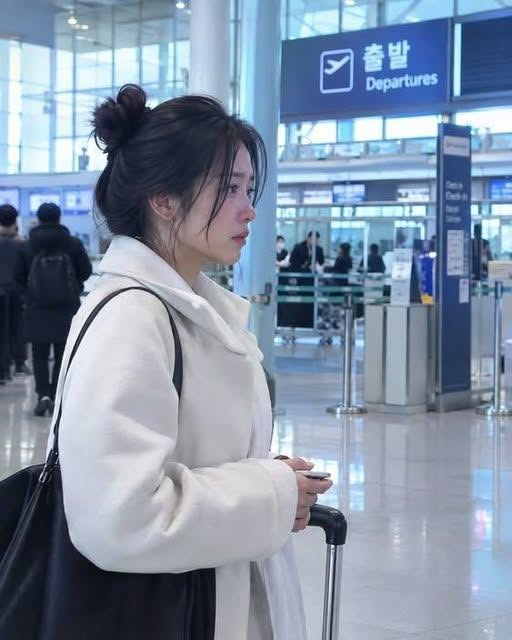
—You left me at the airport.
Silence.
Then:
—I had an emergency.
—For five days?
His breathing changed.
—Why didn’t you call me?
I laughed.
Actually laughed.
—Ngat An, I called you twice.
Silence.
—I messaged you twice.
Still silence.
—I waited two hours.
He finally said:
—I didn’t see it.
—That’s okay.
My calmness seemed to unsettle him more than anger would have.
—What do you mean, okay?
—It means it doesn’t matter anymore.
His voice hardened.
—Come home tomorrow.
There it was.
Not “Can we talk?”
Not “I’m sorry.”
An order.
Eight years ago, I would have obeyed.
I sat beside the window and watched my father watering his plants downstairs.
—No.
The line became completely silent.
—What did you say?
—I said no.
—Thu Thu, stop being childish.
Something inside me became extraordinarily peaceful.
—I’m starting work tomorrow.
—Work?
He sounded genuinely confused.
As though I had announced I was moving to the moon.
—What work?
—Architectural design.
He paused.
Then he said the sentence that finally killed whatever remained of my marriage.
—Why would you need to work?
I closed my eyes.
Of course.
To him, eight years of my life hadn’t been sacrifice.
It had simply become my natural function.
Cook.
Wait.
Care.
Obey.
—Because I want to.
—You haven’t worked in years. Don’t create trouble because you’re angry.
I said nothing.
His tone softened slightly.
—Come back. We’ll discuss the airport incident when I have time.
When he had time.
Even my heartbreak needed an appointment.
—Goodnight, Ngat An.
—Thu Thu—
I hung up.
The next morning, I walked into Minh Chau’s studio at nine.
She threw a stack of documents in front of me.
—Small hotel renovation. The client hates everything we’ve proposed.
I raised an eyebrow.
—And you’re giving it to someone who hasn’t worked in eight years?
She smiled.
—I’m giving it to the most stubborn designer I ever knew.
For the next six hours, I forgot I was someone’s wife.
I forgot the Chu family.
I forgot the airport.
I only remembered lines, light, space and proportion.
When I finished my first concept sketch, Minh Chau stood behind me for a long time.
Then she said:
—You weren’t gone.
I looked at her.
—You were just buried.
That night, my mother finally asked the question she had been avoiding.
—Did Ngat An hurt you?
I wanted to lie again.
Instead, I whispered:
—Mom, I think I want a divorce.
Her hand stopped over the bowl she was washing.
My father looked up from the newspaper.
Nobody shouted.
Nobody told me marriage required patience.
My mother simply dried her hands and hugged me.
And that nearly made me cry harder than anything Ngat An had ever done.
Three days later, the doorbell rang during dinner.
My mother opened the door.
Chu Ngat An stood outside.
His normally immaculate shirt was wrinkled.
His eyes were bloodshot.
Behind him was the black Range Rover.
The same car that had disappeared from the airport.
My father stood.
—Why are you here?
Ngat An didn’t answer him.
He looked directly at me.
—Pack your things.
I put down my chopsticks.
—I’m not going.
His expression darkened.
—We’ve been married eight years. How long are you going to continue this?
I stared at him.
—You still think I’m throwing a tantrum?
—What else is this?
I stood.
—It’s me leaving you.
For the first time, real panic appeared in his eyes.
—Because I left the airport?
—No.
I shook my head.
—The airport only made me understand something I should have understood years ago.
He stepped closer.
—What?
—That if I disappeared from your life, you wouldn’t notice until you needed something.
His lips parted.
No words came.
Then a woman’s voice sounded from behind him.
—Ngat An.
My body stiffened.
A woman had stepped out of the Range Rover.
Elegant.
Pale coat.
Long dark hair.
I recognized her immediately from the photographs I had seen years ago.
Bach Nguyet.
His first love.
His “white moonlight.”
The woman who had called him that morning.
My mother looked from her to him.
Ngat An’s face changed.
—Why did you get out of the car?
Bach Nguyet ignored him.
Instead, she looked at me.
—Mrs. Chu, I think there’s something you should know.
Ngat An snapped:
—Get back in the car.
She didn’t move.
Then she opened her handbag and took out a hospital envelope.
My stomach tightened.
—Nguyet.
His voice carried a warning now.
She handed the envelope to me.
—The emergency at the airport was because of me.
I didn’t take it.
—That doesn’t matter anymore.
—It will.
Her eyes were strangely apologetic.
—Because he didn’t leave you there just because I called.
Ngat An grabbed her wrist.
—Enough.
My father immediately stepped forward.
—Take your hand off her.
Ngat An released her.
Bach Nguyet looked at me again.
—Eight years ago, before your wedding, something happened that neither you nor he knew the full truth about.
My heartbeat slowed.
—What are you talking about?
She pulled a document from the envelope.
At the top was the name of a hospital.
Below it was a date.
Eight years earlier.
Three days before my wedding.
I looked at Ngat An.
His face had gone pale.
Then I noticed another name on the document.
Not Bach Nguyet’s.
Mine.
—Why is my name on this?
Nobody answered.
I unfolded the second page.
My hands began to tremble.
It was a medical consent form.
And at the bottom was a signature that looked almost exactly like mine.
Except I had never signed it.
I looked up slowly.
—What is this?
Bach Nguyet’s eyes filled with tears.
—That’s why I came back.
Ngat An whispered:
—Don’t.
But she continued.
—Your marriage didn’t begin the way you think it did.
Then she pointed at the forged signature.
—And the person who signed your name is still living in the Chu family house.
