Sofía’s report contained eighty-seven pages.
I only needed the first twelve to understand that my marriage had been over long before Valeria’s pregnancy.
The €150,000 wasn’t the beginning.
Álvaro had been moving money for almost three years.
Small transfers at first.
€4,800.
€7,200.
€9,500.
Amounts ordinary enough to disappear among taxes, renovations, investments and household expenses.
Then they grew.
Sofía highlighted the total.
€436,000.
I stared at the number.
—Where did it go?
Sofía called immediately.
—That’s the interesting part. Valeria received less than a third.
—Then where is the rest?
—A company called Rivas Patrimonial Norte.
I frowned.
—Álvaro doesn’t own that company.
—Correct.
Sofía paused.
—His mother does.
My mother-in-law, Carmen Rivas.
The woman who spent years telling me that Álvaro had sacrificed his financial future by marrying someone “too focused on work.”
Apparently, while criticizing me, she had been receiving money from our accounts.
But there was more.
Rivas Patrimonial Norte had recently signed an option to purchase an apartment.
My apartment.
The one beside the school.
I laughed when Sofía told me.
—They can’t buy something that isn’t for sale.
—Marta, they think it is.
She sent me a document.
My father’s supposed authorization to sell.
The signature was false.
Under it was another signature.
Mine.
Also false.
Álvaro wasn’t planning to ask me for the apartment.
He was preparing paperwork to make it appear that I’d already agreed.
I called my father.
—Dad, Álvaro may contact you.
—About the apartment?
—Yes.
—What do you want me to do?
—Let him talk.
My father’s voice hardened.
—And then?
—Send everything to Sofía.
I returned to Madrid two days earlier than planned.
I didn’t tell Álvaro.
I checked into a hotel.
That evening, the investigator photographed him entering Valeria’s building carrying baby furniture.
At 9:14, he texted me:
“Long day at the office. Going to sleep early. Miss you.”
I stared at the message.
Then typed:
“Me too.”
It was surprisingly easy to lie once I’d learned from an expert.
The following morning, my father called.
Álvaro had contacted him.
He said we wanted to sell the apartment because we were planning to buy a larger family home.
My father played along.
—He also said something strange.
—What?
—He said after what happened with your first pregnancy, you didn’t want children anymore.
I went silent.
—He said that?
—Yes.
That wasn’t true.
After the miscarriage, I’d wanted to try again.
Álvaro was the one who kept delaying.
First because work was stressful.
Then because we needed more savings.
Then because our marriage “wasn’t emotionally ready.”
All those years, he’d allowed me to believe my body had been the reason we never became parents.
I closed my eyes.
—Dad, don’t confront him.
That afternoon, Sofía found something else.
My old medical insurance records showed several fertility-related reimbursements.
But they weren’t mine.
The patient identifier belonged to Álvaro.
I met Sofía at her office.
She pushed a file toward me.
—Your husband had fertility testing four years ago.
—And?
She hesitated.
—The records indicate he was told conception could be difficult for him.
I stared at her.
For years, Álvaro had referred to my miscarriage as if my body had failed us.
Yet he’d known there were medical questions on his side too.
I felt something colder than anger.
—Does Valeria know?
—That’s what we’re finding out.
Two days later, we had the answer.
Valeria believed Álvaro had undergone treatment and that the baby was his.
She had posted private messages in a restricted social-media group months earlier.
One line stood out:
“After everything A went through medically, this baby feels like a miracle.”
So Álvaro had told her something.
Just not the truth he’d hidden from me.
I decided to meet her.
Sofía hated the idea until I agreed she’d be nearby.
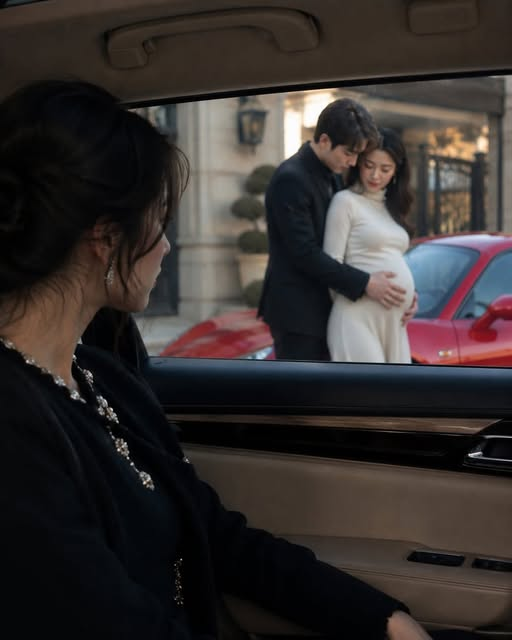
Valeria arrived at a café wearing an oversized cream sweater.
When she saw me, she froze.
—Marta?
—Sit down.
—Álvaro said you were in Milan.
—I was.
She looked toward the door.
—Does he know you’re here?
—No.
I placed photographs on the table.
My car.
The clinic.
The apartment.
Bank transfers.
Valeria’s face slowly lost color.
—I didn’t know the money was yours.
—Did you know he was married?
She looked down.
That was enough.
—He said you were separated.
I almost laughed.
Of course.
—Did he tell you why?
—He said you refused to divorce him because of money.
I pushed the apartment records toward her.
—That luxury apartment you’re living in was partly paid for using money from an account containing my earnings.
She began crying.
I felt no satisfaction.
Then I asked:
—When is the baby due?
She told me.
I calculated backward.
Something didn’t fit.
According to Sofía’s report, Álvaro had been abroad for almost three weeks during the likely conception window.
Valeria saw my expression.
—What?
—Nothing.
I wasn’t going to make accusations from a calendar.
—Get independent advice. And don’t sign anything Álvaro gives you.
I stood.
Valeria grabbed my sleeve.
—Wait.
She opened her phone.
—There’s something you should see.
Álvaro had sent her photographs of a large house outside Madrid.
“He said we’d move here after the baby was born.”
I recognized it immediately.
My parents’ old country house.
It belonged to a family company my father and I controlled.
Álvaro had no legal claim to it.
Yet somehow he had photographs of the interior.
Including rooms renovated only two months earlier.
—Who gave him these?
—He said the house would soon belong to him.
That night, I finally went home.
Álvaro opened the door.
His smile vanished.
—Marta?
—Surprise.
He recovered quickly.
He hugged me.
I remained still.
—Why didn’t you tell me?
—I wanted to see my husband.
He kissed my forehead.
—You should have called. I would’ve picked you up.
That almost made me laugh.
I walked into the living room.
Everything looked exactly as I’d left it.
Except now I could see the lies sitting between the furniture.
Álvaro poured wine.
I declined.
Then I asked casually:
—Do you still think we should sell the apartment near the school?
His hand stopped.
Only for a second.
—Maybe eventually.
—Dad said you called him.
Silence.
Then:
—I was exploring options.
—Using my forged signature?
The glass slipped from his fingers onto the carpet.
He stared at me.
I placed Sofía’s report on the table.
—Don’t bother inventing another story.
His face changed completely.
—Marta, listen—
—No.
I removed my wedding ring.
—You listened to yourself for years. Now you’ll listen to my lawyer.
—Valeria means nothing.
—Don’t insult her too.
He froze.
—You met her?
—Yes.
For the first time, Álvaro looked frightened.
Not ashamed.
Frightened.
—What did she tell you?
That question interested me.
—What are you afraid she told me?
He said nothing.
I walked toward the bedroom.
Álvaro followed.
—Marta, please.
I turned.
—Did you know about your fertility results when you blamed me for our miscarriage?
His face collapsed.
That was my answer.
I felt tears come.
But I refused to let him turn them into an invitation to comfort me.
—You watched me blame myself.
—The doctors never said it was impossible for me—
—That’s irrelevant.
My voice stayed calm.
—You let me carry shame because it was easier than carrying your own fear.
I packed one suitcase.
Álvaro didn’t stop me.
At the door, he finally whispered:
—The money wasn’t for Valeria.
I looked back.
—Four hundred thousand euros disappeared.
—Some of it was moved because my mother told me your father was hiding assets from us.
“Us.”
There it was.
—Why would my father’s assets belong to you?
Álvaro looked away.
—Because your father promised something before we married.
I stopped.
—What?
He wouldn’t answer.
So I left.
The divorce filing went in the next morning.
My father came to Sofía’s office that afternoon.
He looked twenty years older.
—Marta, there’s something I should have told you before you married Álvaro.
I stared at him.
—Apparently everyone has something they should have told me.
He placed an old contract on the table.
Twenty-nine years earlier, my father and Álvaro’s father had founded a property-development company.
RIVAS-ORTEGA DESARROLLOS.
My father provided most of the capital.
Álvaro’s father managed operations.
When Álvaro’s father died, the company was dissolved.
Or so I’d been told.
It wasn’t.
The valuable properties had been transferred into separate holding companies.
Including my apartment.
Including the country house.
And seven other properties I’d never known existed.
—Who owns them?
My father answered quietly.
—You do.
I stared at him.
—Then why does Carmen think they’re hers?
His jaw tightened.
—Because she believes I stole her husband’s half.
Sofía turned several pages.
—Did you?
—No.
My father hesitated.
—But I let her believe it.
That made no sense.
Until he showed us the original shareholder agreement.
Álvaro’s father had secretly borrowed against company assets.
When the debts surfaced, my father paid them personally.
In exchange, Álvaro’s father transferred most of his ownership.
But Carmen had never accepted that agreement.
For decades, she’d believed the Ortega family had taken everything.
And then her son married me.
Suddenly I understood.
—She encouraged Álvaro to marry me.
My father looked away.
That was enough.
My marriage had started with a family dispute I hadn’t even known existed.
But Álvaro had still made his own choices.
Nobody forced him to lie.
Nobody forced him to steal.
Nobody forced him to humiliate me over the miscarriage.
Two weeks later, Carmen requested a meeting.
I refused.
Then she sent Sofía a copy of a document that changed everything.
It was an amendment to the old shareholder agreement.
Signed by my father.
It stated that if a direct Ortega heir married a direct Rivas heir, several disputed properties would return to joint ownership.
My marriage to Álvaro had activated it.
Sofía examined the signature.
—This looks authentic.
I looked at my father.
He went pale.
—I never signed that amendment.
We ordered an independent review.
The signature itself appeared genuine.
But the document had been printed years after the date written on it.
Someone had taken my father’s real signature from another paper and constructed a false agreement around it.
Then Sofía found the source document.
A school enrollment authorization.
Mine.
Signed when I was seventeen.
Someone had kept it for nearly twenty years.
Only a handful of people could have accessed it.
My father.
My late mother.
Our former family attorney.
And Carmen Rivas.
We thought we’d found our answer.
Then Valeria called me.
I almost didn’t answer.
Her voice was shaking.
—Marta, Álvaro disappeared.
—Call his lawyer.
—It’s not about him.
Pause.
—It’s about the baby.
I sat down.
—What happened?
—Nothing. The baby is fine.
Relief came before I could stop it.
Whatever Valeria had done, the child was innocent.
Then she continued:
—I had the paternity test.
I waited.
—Álvaro isn’t the father.
I closed my eyes.
—Does he know?
—Yes.
—Then talk to him.
—Marta, you don’t understand.
Her voice dropped.
—Álvaro already knew.
I opened my eyes.
—What?
—He knew before he ever took me to that clinic.
Silence filled my office.
—Then why was he pretending the baby was his?
Valeria began crying.
—Because Carmen paid him.
My hand tightened around the phone.
—Paid him to do what?
—To make you discover us.
I stopped breathing.
Valeria continued:
—The clinic parking charge wasn’t an accident. Álvaro knew your car sent notifications.
The room seemed to tilt.
—He wanted me to see you?
—Yes.
—Why?
—Because his mother needed you to divorce him before your next wedding anniversary.
I looked at the calendar.
Our tenth anniversary was six weeks away.
I immediately called Sofía.
Within hours, she was reviewing every old corporate agreement again.
At 11:20 that night, she found it.
A second clause.
Hidden in the original Rivas-Ortega settlement.
If descendants of both families remained legally married for ten consecutive years, every disputed property would cease being disputed.
Ownership would consolidate permanently.
Not under Álvaro.
Under me.
Because I was the descendant of the partner who had repaid the company’s debts.
I stared at the document.
Carmen hadn’t wanted her son to keep me.
She’d wanted him to marry me long enough to create a claim.
Then leave me before the tenth anniversary made my ownership permanent.
But one question remained.
Why would Álvaro cooperate if the plan ultimately benefited his mother more than him?
The answer arrived the next morning.
My father brought me a sealed letter from Álvaro’s father.
He’d been instructed to open it only if the old company dispute ever resurfaced.
Inside was a single handwritten page.
“Marta must never be told why the Rivas-Ortega properties were placed in her name. They were not repayment for debt. They were compensation.”
I looked at my father.
—Compensation for what?
He sat down slowly.
Then he said something I had never heard before.
—Your mother didn’t die in an ordinary accident, Marta.
I went completely still.
He continued carefully.
—She discovered what Álvaro’s father was doing with company money. She was preparing to expose him.
I stared at the letter.
My father pointed to the final paragraph.
There was one more sentence:
“Carmen knows what happened that night.”
My phone vibrated.
A message from Álvaro.
The first since he’d disappeared.
It contained a photograph.
Carmen standing outside an airport.
Beside her was an older man.
My father’s former attorney.
The only other person who had possessed my seventeen-year-old signature.
Under the photograph, Álvaro had written:
“I finally know why my mother needed our divorce before year ten.”
A second message appeared.
“It was never about the properties.”
Then a third.
“Your mother left you something they can’t access while we’re married.”
I called immediately.
Álvaro answered.
—What did she leave me?
He was silent for several seconds.
Then:
—Evidence.
—Of what?
His voice dropped.
—Of what really happened the night she died.
And suddenly my husband’s pregnant mistress, the stolen money and the forged property agreement looked like pieces of a much older plan.
Carmen hadn’t spent years trying to take my apartments.
She had been trying to make sure I never discovered what my mother had hidden inside them.
