I stood outside the study door with one hand over my stomach.
“We have to do it before Clara finds out.”
Daniel’s voice was barely above a whisper.
“If not, we’ll lose the children… and she’ll never forgive me.”
Children.
Not babies.
Children.
The word struck me strangely.
I pushed the door open.
Daniel spun around so quickly that the phone nearly slipped from his hand.
“Clara?”
His face lost all color.
“Who are you talking to?”
He ended the call.
“No one.”
I stared at him.
“After twenty years of marriage, that’s the best lie you have?”
He stepped toward me.
“You should be sleeping.”
“And you should be telling me why you begged my doctor to hide my own medical results.”
Daniel stopped.
For several seconds, neither of us spoke.
Then something appeared in his eyes.
Not anger.
Fear.
Real fear.
“You heard that?”
“Enough.”
I held out my hand.
“Give me the results.”
“Clara—”
“Now.”
He lowered his head.
“I can’t.”
That answer broke something inside me.
The next morning, I went to the hospital alone.
Dr. Miller looked surprised when I entered her office.
Then she looked relieved.
“Mrs. Bennett, I was hoping you would come back.”
My heart sank.
“Tell me everything.”
She closed the door.
“First, your babies appear healthy.”
I released a breath I hadn’t realized I was holding.
“Then what is Daniel hiding?”
Dr. Miller hesitated.
“The additional blood screening produced an unexpected finding.”
She turned her computer toward me.
“At first we thought there might have been a laboratory error, so we repeated the analysis.”
I stared at numbers I couldn’t understand.
“What finding?”
Her voice softened.
“The blood-type markers we have for you and your husband are inconsistent with what we would expect from the fetuses.”
I blinked.
“I don’t understand.”
“In simple terms, Mrs. Bennett, the results raised a question about biological paternity.”
The room tilted.
I almost laughed.
“That’s impossible.”
“I understand.”
“No, you don’t.”
My voice sharpened.
“Daniel is the only man I’ve been with.”
Dr. Miller didn’t accuse me.
She simply nodded.
“That is why I refused your husband’s request to conceal the result.”
I stared at her.
“What exactly did Daniel say?”
“He asked whether the test could be removed from your patient portal until he had time to ‘fix the situation.’”
Fix it.
I suddenly remembered his midnight phone call.
We have to do it before Clara finds out.
“Doctor… are these babies Daniel’s?”
“We cannot make a definitive conclusion from this screening alone. A specialized test would be needed.”
“Do it.”
She hesitated.
“Clara, there’s something else.”
My fingers went cold.
“What?”
“Your husband apparently knew this possibility existed before yesterday.”
I stared at her.
“How?”
“He asked a very specific question before I explained the result.”
She paused.
“He asked whether fertility-clinic records from twenty years ago could affect the interpretation.”
My blood ran cold.
Twenty years ago.
Our treatments.
The injections.
The procedures.
The clinic where Daniel had always handled the paperwork because I had been too exhausted and heartbroken to care.
I left the hospital without calling him.
Instead, I drove home and opened the locked cabinet in Daniel’s study.
I had never touched it before.
He kept financial documents there.
Insurance.
Old contracts.
At least, that was what he had told me.
Behind a stack of tax folders, I found a thin envelope yellowed with age.
The name of our old fertility clinic was printed across the top.
Inside were consent forms.
Laboratory reports.
And one document that made my knees buckle.
SPERM CRYOPRESERVATION RECORD.
Patient: Daniel Bennett.
Status: Sample unsuitable for clinical use.
I read the sentence three times.
Then I found a second report.
Daniel had undergone additional testing shortly after our first failed treatment.
The conclusion was written in cold medical language.
His chance of biological conception was extremely low.
My husband had known.
For nearly twenty years, he had let me believe my body was the reason we had no children.
I remembered every vitamin I swallowed.
Every injection.
Every night I cried in the bathroom so he wouldn’t hear me.
Every time Daniel hugged me and whispered:
“It’s okay, Clara. Some things simply aren’t meant to be.”
He knew.
The front door opened downstairs.
“Clara?”
Daniel.
I put the documents on the desk.
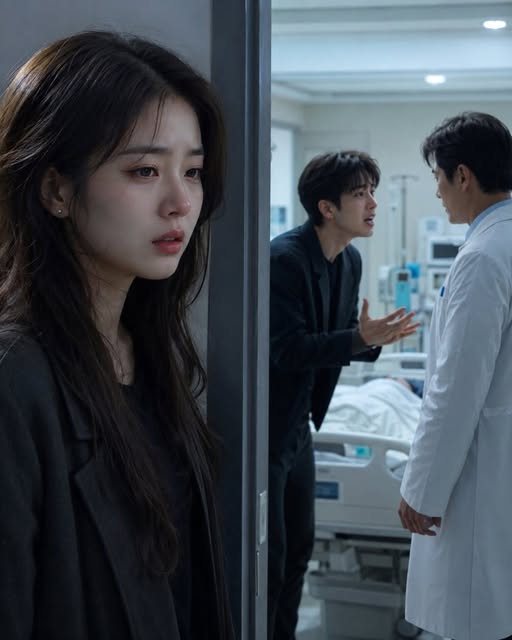
He appeared in the doorway and immediately saw them.
His shoulders dropped.
“So you found them.”
“You knew.”
He said nothing.
“You let me blame myself for twenty years.”
“It wasn’t that simple.”
“Then make it simple.”
Daniel closed the door.
“When the doctors told me, I was ashamed.”
I stared at him.
“So you let me carry the shame instead?”
His eyes filled with tears.
“I was afraid you’d leave.”
“And the babies?”
He looked toward my stomach.
That hesitation frightened me more than anything else.
“Daniel.”
He sat down.
“After our last treatment failed, the clinic contacted me.”
“When?”
“Nineteen years ago.”
My breathing became shallow.
“They told me there had been a storage irregularity.”
“What kind of irregularity?”
“A sample had been incorrectly labeled.”
I stared at him.
“And?”
Daniel covered his face.
“They couldn’t determine whether one of our embryos had been created using my sample.”
For a moment, I couldn’t process his words.
“What embryos?”
His hands dropped.
“We had two viable embryos left.”
“No.”
I shook my head.
“The doctor told us none survived.”
“I told you that.”
The room went silent.
I felt as if someone had reached backward through twenty years of my life and rewritten everything.
“Where were they?”
“Stored.”
“For twenty years?”
Daniel nodded.
My stomach twisted.
“Then how am I pregnant naturally?”
He looked away.
That was when I understood.
I wasn’t.
“Daniel.”
My voice came out almost soundless.
“What did you do to me?”
“Clara, please understand why first.”
“What did you do?”
His face crumpled.
“Three months ago, when you had that procedure for the uterine polyp…”
I stopped breathing.
I remembered the outpatient clinic.
The sedation.
Daniel holding my hand.
The doctor saying everything had gone perfectly.
“You were under anesthesia,” Daniel whispered.
“No.”
“I thought it was our last chance.”
“No.”
“I arranged the transfer.”
My hand flew to my stomach.
“You implanted embryos without telling me?”
“I wanted to give us the family we always dreamed about.”
“You used my body without my consent!”
“I was going to tell you!”
“When? After I gave birth?”
He began crying.
But I felt nothing for his tears.
Then another thought struck me.
“If those embryos might not have been created with your sample…”
Daniel closed his eyes.
“Whose was it?”
“I don’t know.”
“Who were you talking to last night?”
He remained silent.
I grabbed his phone from the desk.
He tried to stop me.
Too late.
The last call was saved under one name.
Michael.
Daniel’s younger brother.
My hands began shaking.
I looked at him.
“No.”
“Clara—”
“No.”
Twenty years earlier, Michael had lived with us for six months while recovering from an accident.
He had driven me to fertility appointments whenever Daniel worked late.
He had even accompanied Daniel to the clinic more than once.
I remembered something else.
Michael had suddenly moved across the country after our final failed treatment.
He and Daniel barely spoke afterward.
“Why Michael?”
Daniel sank into the chair.
“The mislabeled sample belonged to him.”
I could hear my heartbeat.
“So these babies…”
“I don’t know,” Daniel insisted. “That’s what the new test suggests. But I don’t know for certain.”
My phone rang.
Dr. Miller.
I answered immediately.
“Clara, the expedited genetic comparison you authorized came back.”
I put the call on speaker.
Daniel stood frozen.
The doctor continued.
“The fetuses are genetically related to you.”
I closed my eyes.
“And Daniel?”
A pause.
“Mr. Bennett is not their biological father.”
Daniel made a broken sound.
My fingers tightened around the phone.
“And Michael?”
“We compared the archived family sample you authorized us to request.”
Another pause.
“The probability of a close paternal relationship is extremely high.”
Daniel began shaking his head.
But Dr. Miller wasn’t finished.
“Clara, there is another finding you need to know.”
I swallowed.
“What?”
“The twins do not have the same biological father.”
I stared at Daniel.
“What did you say?”
“One fetus is consistent with Michael Bennett’s genetic line.”
My hand moved protectively over my stomach.
“And the other?”
Dr. Miller took a breath.
“We don’t know yet.”
Then Daniel whispered something.
So quietly I almost missed it.
But I heard him.
“Oh God.”
I turned toward him.
He wasn’t looking at me.
He was looking at the old fertility-clinic envelope.
And suddenly I understood.
Daniel knew exactly whose sample the second one might be.
