Tran Huc stared at the message on his phone.
Around him, the hospital corridor was still filled with congratulations.
His mother, Trieu Lan, held the newborn proudly, repeatedly calling him the eldest grandson of the Tran family, while Luu Yen’s family celebrated beside her.
Only Tran Huc didn’t smile.
He entered the confirmation code.
The report loaded.
For several seconds, he didn’t move.
Then all the color drained from his face.
The conclusion was brutally simple.
The child was not biologically related to him.
—Huc?
His mother noticed first.
—What’s wrong?
Tran Huc slowly raised his eyes toward Luu Yen.
—Who is the father?
The room went silent.
Luu Yen froze.
—What are you talking about?
He placed the phone in front of her.
The moment she saw the report, her expression betrayed her.
Trieu Lan snatched the phone away.
—Impossible!
She read it again.
Then again.
Minutes earlier, she’d been celebrating the arrival of the Tran family’s successor.
Now nobody spoke.
Luu Yen began crying.
—Huc, listen to me.
—Who is he?
—I can explain.
—Then explain.
But she couldn’t.
And suddenly Tran Huc remembered the note I’d left behind:
“But that baby… you’d better check it out carefully.”
“The DNA assessment is the last gift I give you.”
He turned and walked away.
Not because Luu Yen’s betrayal didn’t matter.
But because another realization had struck harder.
I had known.
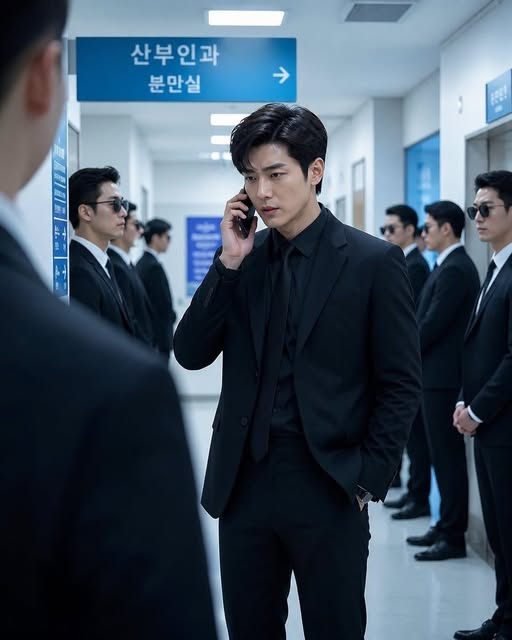
And while he had stationed twenty bodyguards outside the delivery room specifically to stop me from causing trouble, I hadn’t even been in the country.
I was already in Zurich.
Free.
His first call went unanswered.
The second too.
By the twentieth, my number had been disconnected.
Then the company called.
The sale of my shares had shaken investor confidence.
Partners wanted explanations.
Major clients wanted to know whether I had permanently left Huc Nhat Technology.
Only then did Tran Huc begin understanding exactly what he’d lost.
Five years earlier, we had built that company together.
He understood technology.
I understood people.
Investors.
Clients.
Negotiations.
Relationships.
The business network he’d taken for granted had largely been maintained by me.
But I didn’t use that knowledge to destroy him.
In Switzerland, I hired lawyers.
Everything legally belonging to Huc Nhat Technology remained theirs.
Everything legally mine came with me.
I didn’t want revenge.
I wanted separation.
Three months later, I founded a small technology investment firm in Zurich.
Seven employees.
One rented office.
No husband.
No mother-in-law.
No mistress waiting to replace me.
For the first time in years, I could hear my own thoughts.
Meanwhile, Tran Huc discovered the identity of the child’s biological father.
It was someone from Luu Yen’s past.
I never asked for details.
Her story had stopped being mine the moment my plane left the runway.
Six months later, Tran Huc finally signed our divorce agreement.
But he requested one meeting.
I accepted.
He arrived in Zurich alone.
He looked thinner.
Older.
Nothing like the man who had once believed twenty bodyguards were necessary to protect another woman from his wife.
We sat across from each other beside the lake.
—Why didn’t you confront me? he asked.
—Would you have believed me?
He opened his mouth.
Then stopped.
We both knew the answer.
—I thought you’d come to the hospital and cause trouble.
—I know.
His eyes lowered.
—I’m sorry.
I smiled faintly.
—That’s exactly why our marriage ended.
He looked up.
—Because of Luu Yen?
—No.
That surprised him.
—Because after five years, when everything collapsed, your first instinct wasn’t to ask whether I was hurt.
I looked directly at him.
—It was to protect yourself from what you imagined I might do.
Silence stretched between us.
Finally he whispered:
—I loved you.
—I believe you.
His eyes immediately changed.
—Then—
—Love wasn’t the problem.
I placed the signed divorce agreement between us.
—Respect was.
He stared at my signature.
—Can we start again?
—No.
—I’ve ended everything with her.
—Good.
—I’ve corrected what I could.
—Good.
His voice broke.
—Then why isn’t that enough?
I looked through the window.
White swans moved slowly across the lake.
—Because fixing yourself doesn’t obligate the person you hurt to return.
He remained silent.
Before leaving, he asked one final question.
—Did you really plan all of this before the baby was born?
—Yes.
—Selling the shares?
—Yes.
—Leaving?
—Yes.
—The DNA report too?
I paused.
—I’d been preparing to learn the truth long before you realized I had stopped believing your lies.
He closed his eyes.
That was our goodbye.
Four years later, Huc Nhat Technology still existed.
Smaller, but stable.
Tran Huc remained its CEO.
My company grew too.
We invested across Europe and Asia, and eventually became large enough that financial magazines began interviewing me.
One reporter asked:
—What was the best investment decision of your life?
She expected a company name.
Instead, I remembered the airport.
The champagne.
The plane waiting outside.
The moment my broker asked how many shares I wanted to sell.
“All.”
I smiled.
—Knowing when to stop investing in something that has already lost its value.
The reporter laughed.
She thought I was talking about business.
I wasn’t.
Years later, Tran Huc and I met once more at an international technology conference.
He stood across the hall surrounded by executives.
I was surrounded by mine.
Our eyes met.
He nodded.
I nodded back.
Nothing more.
There was no hatred left.
But there was no love waiting to be recovered either.
He had once believed I would always remain beside him because I had helped build everything he owned.
He was wrong.
Building something with another person doesn’t mean surrendering yourself to it forever.
The day Luu Yen gave birth, Tran Huc believed twenty bodyguards could stop me from entering his new life.
What he never understood was that I wasn’t trying to enter.
While he guarded that hospital door—
I had already walked through another one.
And this time, I never looked back.
