I stared at the stranger.
“My daughter?”
The older man’s eyes filled with tears.
“My name is Richard Lancaster.”
Of course I knew that name.
Everyone did.
Chairman of Lancaster Holdings.
A man whose photograph appeared on financial magazines and hospital charity walls.
But right then, he didn’t look powerful.
He looked like a father who had been searching for something for far too long.
“There must be a mistake.”
Richard shook his head.
“Twenty-seven years ago, my wife gave birth to a daughter in another hospital owned by this medical network.”
His voice trembled.
“There was an emergency evacuation that night. Records were damaged. Several infants were transferred.”
Dr. Hale placed the folder on the table.
“Mr. Lancaster’s daughter disappeared during that confusion.”
I instinctively stepped backward.
“A blood marker doesn’t prove I’m his daughter.”
“No,” Dr. Hale agreed.
“That is why we’re requesting a DNA test.”
I looked at Richard.
He didn’t approach me.
Didn’t try to hug me.
He simply said:
“If you’re not my daughter, I’ll apologize for frightening you.”
Then his voice broke.
“But if you are…”
He couldn’t finish.
I agreed to the test.
Not because I believed him.
Because I needed certainty.
The results came forty-eight hours later.
Richard Lancaster was my biological father.
And his wife, Eleanor Lancaster, was my biological mother.
I read the report until the letters blurred.
For twenty-seven years, I’d been Emma Collins.
The adopted daughter of two ordinary people who had loved me completely until their deaths.
That truth hadn’t changed.
But another truth now existed beside it.
Emma Collins was also Emma Lancaster.
When Eleanor arrived at the hospital, she stopped three steps from me.
She covered her mouth.
“You have my mother’s eyes.”
Then she began crying.
I didn’t run into her arms.
Life wasn’t a movie.
She was my biological mother.
But she was still a stranger.
Perhaps Eleanor understood.
She didn’t touch me.
She only whispered:
“May I sit beside you?”
I nodded.
That was how we began.
Slowly.
One conversation.
One photograph.
One unanswered question at a time.
Then Adrian found out about the pregnancy.
Olivia told him.
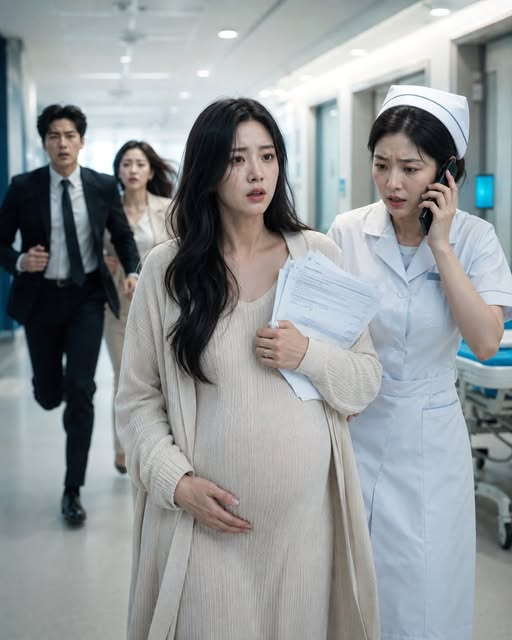
He appeared at the hospital before my next appointment.
“Emma!”
I turned.
He marched toward me.
“Why didn’t you tell me?”
“Tell you what?”
“Don’t play games.”
His eyes dropped toward my stomach.
“The baby.”
So Olivia had indeed read the medical report.
I felt strangely calm.
“It’s none of Olivia’s business.”
“It’s mine.”
“Biologically, yes.”
His jaw tightened.
“We’re getting divorced.”
“I remember.”
“Then why keep it?”
I stared at him.
For a second, I wondered how I’d spent ten years loving this man.
He lowered his voice.
“Olivia and I are beginning our life together. A child complicates everything.”
There it was.
Not concern.
Not surprise.
Inconvenience.
He continued.
“We can arrange a medical consultation and discuss your options.”
“No.”
“Emma, think rationally.”
“I have.”
“You’re living in a rented room. You don’t have enough savings to raise a child comfortably.”
“I’ll manage.”
He exhaled sharply.
“Don’t use this pregnancy to stay connected to me.”
That hurt.
But only for a moment.
Then a voice sounded behind him.
“My daughter doesn’t need you to support her.”
Adrian turned.
Richard Lancaster stood at the end of the corridor.
Beside him were Eleanor and Dr. Hale.
Adrian recognized him instantly.
Everyone in Westbridge’s business community did.
“Mr. Lancaster?”
Richard walked toward us.
His expression was cold.
Adrian immediately changed tone.
“I didn’t realize you were here.”
“You also don’t seem to realize you’re speaking to my daughter.”
Silence.
Olivia, who had just arrived behind Adrian, stopped completely.
Adrian looked at Richard.
Then at me.
“What?”
I said nothing.
Richard did.
“Emma is our daughter.”
Adrian actually laughed.
Not because he found it funny.
Because his mind refused to accept it.
“Emma Collins?”
Eleanor stepped beside me.
“Emma Lancaster Collins, if she chooses.”
Olivia’s face turned white.
I should have felt victorious.
I didn’t.
My value hadn’t changed because my biological family had money.
If I had still been Emma Collins from a tiny rented room, Adrian’s words would have been just as wrong.
So I looked at him calmly.
“My answer hasn’t changed.”
He swallowed.
“Emma, I didn’t know—”
“Exactly.”
He stopped.
“You didn’t know I was a Lancaster.”
My voice remained quiet.
“But you knew I was your wife.”
That silenced him.
“You knew I’d spent ten years loving you.”
“You knew I left our marriage with almost nothing.”
“And five minutes ago, you believed I was still that same woman.”
I looked directly into his eyes.
“That was the woman you thought deserved to be discarded.”
Adrian had no answer.
Olivia grabbed his arm.
“Adrian, let’s go.”
He pulled away from her.
That tiny movement told me everything.
Suddenly, Olivia was no longer the center of his future.
Suddenly, I wasn’t the inconvenient ex-wife.
I was a Lancaster.
And that was precisely why I would never take him back.
The divorce became final on schedule.
Adrian tried to postpone it.
My lawyer refused.
He requested meetings.
I declined.
He sent flowers.
I donated them to the hospital.
Then he asked for another chance.
I answered once.
“You don’t regret losing me. You regret discovering my value after you decided I had none.”
After that, I blocked him.
My relationship with the Lancasters developed much more carefully.
Richard wanted me to move immediately into the family estate.
I refused.
Eleanor wanted to buy me an apartment.
I refused that too.
Instead, I moved somewhere modest but comfortable using my own savings.
Richard looked confused.
“You don’t have to prove anything.”
“I’m not proving anything.”
I smiled.
“I need time to understand who I am before everyone else starts deciding for me again.”
He accepted that.
That was the first reason I began trusting him.
The Lancasters never asked me to stop loving my adoptive parents.
In fact, Eleanor visited their graves with me.
She placed flowers beside mine.
Then she whispered:
“Thank you for raising our daughter.”
That was the day I finally hugged her.
Months passed.
My pregnancy progressed safely.
Then another surprise arrived.
Twins.
When Dr. Hale told me, I laughed so hard that Eleanor started crying.
Richard immediately began planning two nurseries.
I stopped him.
“One.”
He frowned.
“There are two babies.”
“They can share.”
“But—”
“Dad.”
He froze.
It was the first time I’d called him that.
His eyes instantly filled with tears.
I pretended not to notice.
“Fine,” he said hoarsely.
“One nursery.”
Adrian learned about the twins through the legal process concerning parental responsibilities.
For the first time, his messages weren’t about Olivia.
They were about the children.
He wanted involvement.
I didn’t deny him appropriate contact.
The children weren’t weapons.
But I established boundaries through lawyers.
No surprise visits.
No decisions made without consultation.
No using money to control access.
If Adrian wanted to become a father, he would have to do it through consistency rather than authority.
Olivia didn’t accept that new reality.
Their engagement ended three months later.
I heard about it from someone else.
I never asked why.
It no longer mattered.
When my twins were born, Richard waited outside the room.
Eleanor stayed with me.
Hours later, I held my son and daughter against me.
For the first time since Adrian had placed those divorce papers before me, I cried without feeling broken.
I named them Noah and Grace.
Not Lancaster.
Not Blake.
Collins.
The surname of the parents who had raised me.
Richard didn’t object.
Instead, he smiled.
“Then Collins stays in the family.”
Two years later, I joined the Lancaster Foundation’s biomedical research division.
Not as a decorative heiress.
I insisted on qualifications, responsibilities and independent oversight.
Richard complained that I was making everything unnecessarily difficult.
I told him:
“Second chances should come with standards.”
He laughed.
“You definitely inherited that from your mother.”
Eleanor shouted from the next room:
“She certainly didn’t get it from you.”
For the first time in my life, family felt noisy.
Imperfect.
Warm.
Adrian eventually became part of the twins’ lives in a limited but genuine way.
He never became my husband again.
That door remained closed.
One afternoon, years later, he came to pick up the children.
Noah and Grace ran toward him.
Adrian knelt and hugged them.
Then he looked at me.
“Do you ever think about what would’ve happened if I’d never asked for the divorce?”
I considered it.
“Yes.”
His eyes held a trace of hope.
Then I continued.
“I probably would have spent years trying to become someone you could choose.”
The hope disappeared.
“And now?”
“Now I know being chosen by someone else isn’t the same as knowing your own worth.”
He nodded slowly.
Before leaving, he said:
“I was wrong about you.”
I shook my head.
“No.”
He looked confused.
“You were wrong about what gives a person value.”
That difference mattered.
I wasn’t valuable because Richard Lancaster was my father.
I wasn’t valuable because I suddenly had access to wealth.
I wasn’t valuable because Adrian eventually regretted leaving.
I had been the same woman in the ten-square-meter rented room.
The same woman holding a cheap pregnancy test.
The same woman Adrian looked at and decided was disposable.
Discovering my biological family changed my circumstances.
It didn’t create my worth.
Years later, Richard asked me to officially change my surname to Lancaster.
I thought about it for a long time.
Eventually, I added it.
Not replaced.
Added.
Emma Collins Lancaster.
Collins for the parents who chose me.
Lancaster for the parents who never stopped searching.
And Emma for the woman who finally learned that neither name had to define her completely.
The day Adrian demanded that I give up the future growing inside me, he believed I had nothing.
No husband.
No house.
No powerful family.
No idea where my life was going.
He was right about one thing.
I didn’t know where my life was going.
But losing him didn’t turn out to be the end of it.
It was simply the day I stopped building my future around a man who had already decided to leave—
and began building one that belonged entirely to me.
