I didn’t confront Adrian.
Not in the apartment.
Not in the elevator.
Not even when Isabella sat in the front passenger seat while Adrian and I sat behind her.
I simply watched.
And once you stop trying to convince yourself that someone loves you, the truth becomes surprisingly easy to see.
Isabella knew which calls Adrian would answer.
She knew which coffee he wanted at the airport.
She knew he’d forgotten his second phone charger.
Most revealing of all, Adrian never had to explain himself to her.
They moved around each other with the unconscious familiarity of two people who had shared countless ordinary moments.
Seven years together, and somehow I had become the outsider.
Our first three days were beautiful.
Painfully beautiful.
Adrian took photographs of me beside the sea.
He remembered my favorite dessert.
When the wind became cold, he placed his jacket around my shoulders.
At night we talked about college, our first apartment, the terrible restaurant where we’d celebrated our first anniversary.
Once, I almost forgot.
Then his phone lit up.
ISABELLA.
Adrian immediately turned it facedown.
“Work?”
“Yes.”
I smiled.
“Answer it.”
“It can wait.”
How considerate.
The man preparing to leave me was determined to make my final memories pleasant.
On the fourth night, Adrian fell asleep early.
I stood on the balcony overlooking the ocean.
Then I opened the screenshots I’d saved weeks earlier.
His conversation with Isabella contained no dramatic declarations.
That almost made it worse.
No “I love you.”
No secret promises.
Just intimacy disguised as practicality.
She asked whether he had told me yet.
He replied:
“After the trip.”
Another message:
“Camila deserves a good ending.”
Isabella answered:
“And after that?”
His response had remained in my mind ever since.
“Then I’ll finally make the decision I should’ve made years ago.”
I didn’t need to ask what decision.
The message beneath it said enough.
Isabella:
“I’ll wait.”
On the fifth morning, Adrian found me watching the sunrise.
He wrapped a blanket around my shoulders.
“You’re awake early.”
“So are you.”
He sat beside me.
For several minutes, we watched the horizon.
Then I asked:
“Adrian, if you knew something was ending, would you prefer a beautiful ending or an honest one?”
His body stiffened.
“Why are you asking?”
“Curious.”
He studied my face.
“Honest.”
I nearly laughed.
Instead, I nodded.
“Me too.”
He said nothing.
That afternoon, while Adrian showered, I changed our return reservation.
One ticket.
Mine.
For the following morning.
Then I called my wedding planner.
“Cancel everything.”
There was a long silence.
“Miss Hayes?”
“The wedding.”
“All of it?”
“All of it.”
“The cancellation fees—”
“I understand.”
Next came the venue.
Photographer.
Florist.
Caterer.
Then both families.
My mother cried.
Adrian’s father demanded an explanation.
I gave everyone the same answer.
“The wedding isn’t happening.”
Finally, I emailed my attorney regarding the apartment Adrian and I jointly owned and the financial arrangements we’d made before marriage.
I wasn’t going to destroy him.
I wasn’t going to take what wasn’t mine.
But I also wasn’t leaving behind anything that legally belonged to me.
At 6:10 the next morning, I left the hotel.
Adrian was still sleeping.
On the table beside him, I placed my engagement ring.
Under it was a note.
Only one sentence:
“You wanted a countdown to finish; I decided ten days was unnecessary.”
He called before my plane took off.
Once.
Five times.
Seventeen.
I turned off my phone.
When I landed, there were forty-three missed calls.
Then came his message:
“You read them.”
Not a question.
I replied:
“Yes.”
Three dots appeared.
Disappeared.
Returned.
Finally:
“Camila, please let me explain.”
I blocked him.
The strange thing was that ending a seven-year relationship didn’t feel dramatic afterward.
It felt administrative.
Boxes.
Keys.
Documents.
Canceled invitations.
Returned gifts.
Friends choosing which version of the story to believe.
Isabella never contacted me.
Adrian did.
Letters.
Emails.
Messages through mutual friends.
I ignored all of them.
Until two months later, he appeared outside my new apartment.
He looked exhausted.
“You owe me ten minutes.”
“No.”
His face changed.
“Fine.”
I started closing the door.
He put his hand against it, then immediately withdrew when he saw my expression.
“I owe you ten minutes.”
That stopped me.
Better wording.
I stepped outside and closed the door behind me.
“Talk.”
“Nothing happened between Isabella and me while we were together.”
I looked at him.
“You think that’s the important part?”
“No.”
For once, Adrian didn’t defend himself.
“I fell in love with her emotionally before I admitted it.”
There it was.
Ugly.
Simple.
True.
“I kept telling myself loyalty meant staying with you.”
He swallowed.
“But staying while wanting someone else wasn’t loyalty.”
“No.”
“I proposed because everyone expected it.”
“I know.”
His eyes lifted sharply.
“I didn’t know then.”
“I did eventually.”
He looked devastated.
“I planned the trip because I wanted to give you something good before ending things.”
“That wasn’t kindness.”
“I know that now.”
“You wanted to manage my heartbreak.”
He closed his eyes.
“Yes.”
“As if you could choose the hotel, the sunset and the exact moment I was allowed to discover my relationship was over.”
“Yes.”
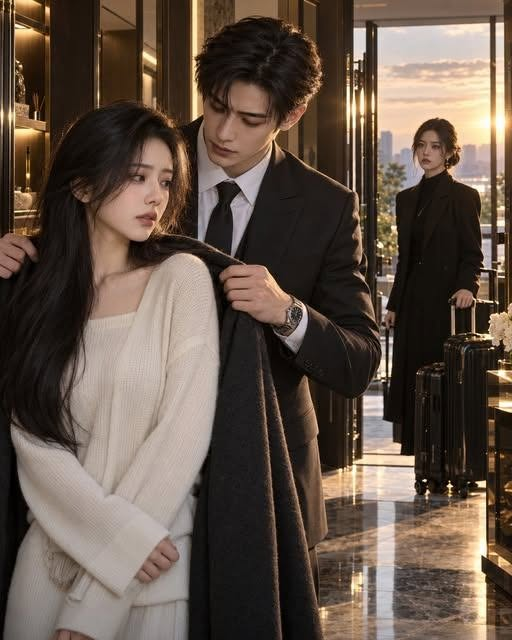
His voice barely carried.
“I was a coward.”
Then I asked the question I’d avoided.
“Are you with Isabella?”
“No.”
That surprised me.
“Why?”
“Because after you left, I realized something.”
He laughed bitterly.
“I’d spent months imagining that choosing her would solve everything.”
“And?”
“When you disappeared from that hotel, I didn’t feel free.”
He looked at me.
“I felt like I’d destroyed the person who trusted me most.”
“That sounds like guilt.”
“It is.”
“Guilt isn’t love.”
“I know.”
Those three words were the first sign that perhaps Adrian had finally stopped trying to turn every emotion into an argument.
We didn’t reconcile.
I didn’t return the ring.
I didn’t agree to another trip.
Adrian moved out of our apartment, and after the property settlement, I sold my share.
Six months later, I heard Isabella had resigned.
Not because Adrian fired her.
Because she was tired of waiting for a man who still couldn’t decide what he wanted.
I almost felt sorry for her.
Almost.
A year passed.
I changed jobs.
Moved cities.
Bought an apartment entirely in my own name.
For the first time since my twenties, I made decisions without mentally adding Adrian to every equation.
Then one afternoon, Isabella requested to meet me.
I nearly refused.
Curiosity won.
She arrived carrying a folder.
“I owe you something.”
“I don’t want an apology.”
“Good.”
She pushed the folder toward me.
“Because that’s not why I’m here.”
Inside were printed emails.
Not between her and Adrian.
Between Adrian and his mother.
My stomach tightened.
The earliest was dated almost two years before our planned wedding.
His mother had written:
“Sterling Holdings needs the Hayes partnership stabilized. If marriage is what makes her father sign the expansion agreement, stop hesitating.”
I looked up.
Isabella’s expression was grim.
“Keep reading.”
Another email.
Adrian:
“Camila doesn’t know the business arrangement depends on us.”
His mother:
“She doesn’t need to.”
My fingers went cold.
The wedding hadn’t simply been comfortable.
It had been useful.
But the final email changed everything.
It was sent three months before Adrian proposed.
His father had instructed him to marry me before the end of the fiscal year.
Adrian refused.
Repeatedly.
Then my father suffered a major business loss.
Suddenly, the merger could rescue his company.
And Adrian proposed weeks later.
I stared at Isabella.
“Why are you giving me this?”
“Because I thought Adrian stayed with you because he couldn’t let you go.”
She gave a humorless smile.
“I was wrong.”
“What happened?”
“I discovered his parents had been pressuring him to marry you for business reasons.”
“And he agreed.”
“Eventually.”
My chest tightened.
Seven years.
Had any of it been real?
I confronted Adrian once more.
This time in his office.
I placed the emails on his desk.
He read the first page.
His face changed.
“Where did you get these?”
“Does it matter?”
“No.”
He sat down.
For once, Adrian Sterling looked completely defeated.
“Was our engagement a business transaction?”
“No.”
“Don’t lie.”
“It became tangled with one.”
“That’s not an answer.”
He looked at me.
“I loved you.”
“Then why did you hide this?”
“Because your father’s company was collapsing.”
I froze.
“What?”
Adrian opened a locked drawer.
He removed another file.
Financial reports.
Loan notices.
Letters.
My father’s signature appeared everywhere.
“Your father came to me six months before I proposed.”
My hands shook.
“He asked you to marry me?”
“No.”
Adrian’s voice softened.
“He asked me to keep you from discovering he was about to lose everything.”
I stared at him.
“Why?”
“Because your mother was ill then. He thought the stress would destroy the family.”
The expansion agreement saved my father’s company.
Adrian’s family benefited too.
Everyone had made decisions supposedly to protect me.
My father.
Adrian.
His parents.
Everyone except me.
Again.
“Did you propose because of the deal?”
Adrian looked directly at me.
“It influenced when I proposed.”
My heart sank.
“But not why.”
I waited.
“I’d bought your ring eight months earlier.”
He opened another drawer.
Inside was a receipt.
Dated long before my father’s financial crisis.
“I kept waiting for the perfect moment.”
His voice broke slightly.
“Then everything became complicated, and instead of separating love from obligation, I let them become the same thing.”
I finally understood.
Our relationship had not been entirely fake.
That would have been easier.
It had been real.
Then fear, family expectations, business and cowardice had slowly poisoned it.
And somewhere along the way, Isabella had become the person with whom Adrian could imagine escaping all of that.
“Do you still love her?” I asked.
He thought carefully.
“No.”
“Do you love me?”
His answer came immediately.
“Yes.”
Years earlier, that would’ve been enough.
Now I smiled sadly.
“Then learn something from loving me.”
“What?”
“Sometimes loving someone means accepting that you don’t get them back.”
His eyes reddened.
But he nodded.
Three years later, I received a wedding invitation.
Isabella Frost.
She was marrying someone I’d never met.
I sent flowers.
Adrian never married her.
He didn’t remain single dramatically waiting for me either.
He went to therapy.
Left his family’s company.
Built a smaller business of his own.
We occasionally heard about each other through mutual friends.
Nothing more.
As for me, I eventually met someone too.
Not at a wedding.
Not through family.
Not through business.
At an airport, when he accidentally took my suitcase because we owned identical luggage.
It took us twenty minutes to discover the mistake.
Two years later, when he proposed, there were no contracts waiting behind the question.
No parents arranging the timing.
No secretary waiting quietly for my place.
He simply held my hand and asked:
“Do you want to build a life with me?”
And for the first time, marriage didn’t feel like the next logical step.
It felt like a choice.
Mine.
On the morning of my wedding, I found Adrian’s old itinerary while clearing the last boxes from storage.
Ten days.
Ten beautiful destinations.
Ten carefully scheduled memories designed to soften an ending I wasn’t supposed to know was coming.
I looked at the final page.
Day Ten.
Sunset dinner.
Return home.
There was nothing written after that.
Years ago, that blank space had terrified me.
Now I understood it differently.
Adrian had planned the end of our relationship down to the hour.
But he had never been able to plan what came after.
Neither had I.
That turned out to be the best part.
I tore the itinerary in half, dropped it into the recycling bin, and went downstairs.
Someone was waiting for me there.
Not because our families expected it.
Not because a company needed it.
Not because seven years together made marriage convenient.
He was waiting because I had chosen him.
And when I walked toward him, I finally understood what Adrian’s ten-day farewell had accidentally given me.
The courage to stop asking whether someone still cared enough to keep me.
And to start asking whether the life in front of me was one I freely chose.
This time, the answer was yes.
