At 8:55 the next morning, I entered my lawyer’s office.
Adrian was already there.
Alone.
No Claire.
No Noah.
He looked as if he hadn’t slept.
My lawyer placed the documents between us.
“Since both parties have agreed on the major terms, this can be relatively straightforward.”
I picked up the pen.
Adrian didn’t.
“Before we sign, I need ten minutes.”
“No.”
“Emma.”
“Four years gave you plenty.”
His jaw tightened.
Then he placed something on the table.
A death certificate.
I stopped.
The name printed across the top was:
MICHAEL LAWSON.
I looked at Adrian.
“Who is this?”
“My cousin.”
Then he said quietly:
“Noah’s father.”
I didn’t touch the document.
Adrian continued.
“Michael died before Noah was born.”
My fingers tightened around the pen.
“Claire was pregnant and alone. Her parents had cut contact with her. Michael asked me to look after them if anything happened.”
“So she moved into our house?”
“Not immediately.”
“When?”
“Two years ago.”
That matched what Claire had said about the remodeling.
“Why?”
“Claire lost her apartment after changing jobs. It was supposed to be temporary.”
“And Noah calls you Dad.”
Adrian lowered his eyes.
“He started doing it about eight months ago.”
“You allowed it.”
“Yes.”
That answer hurt strangely.
Not because Noah was Adrian’s child.
Because Adrian had become someone’s family while our marriage remained frozen in another country.
“Are you and Claire together?”
“No.”
His answer came instantly.
“Have you ever been?”
“No.”
“Do you love her?”
“As family.”
I studied his face.
Four years earlier, I would have searched desperately for proof he was lying.
Now I only felt tired.
“So there was no affair.”
“No.”
I nodded.
“Then that makes things simpler.”
Hope flashed across his face.
I finished:
“We can divorce without infidelity accusations.”
His hope disappeared.
“Emma, that’s it?”
“What were you expecting?”
“That you’d understand.”
“I do understand.”
I placed the pen down.
“You took care of your cousin’s widow and child. That’s decent.”
“Then why are you still leaving?”
I almost laughed.
“Because Claire was never the reason.”
Silence.
“Our marriage was broken before Singapore.”
He looked away.
I continued.
“We spent months sleeping in separate rooms. We stopped speaking. When I said I might leave for four years, you didn’t ask me to stay.”
“You’d already decided.”
“And you let me.”
“You wanted freedom!”
“I wanted you to care enough to object.”
The words escaped before I could stop them.
Adrian stared at me.
There it was.
The truth we’d avoided for four years.
He leaned back.
“I emailed you forty-three times.”
“I know.”
“You read them?”
“Every one.”
His expression changed.
I had never answered.
But I had read them all.
The first emails were angry.
Then practical.
Then softer.
By the second year, Adrian stopped talking about bills and documents.
He told me about his mother’s surgery.
About Michael.
About Noah being born.
About the first time the baby smiled.
I had assumed Noah was another relative’s child.
I had never asked.
The final email arrived eight months ago.
It contained only one sentence:
If you still want the divorce when you return, I’ll sign it. I just wish we’d spoken before becoming strangers.
I had cried that night.
Then closed the laptop.
“Why didn’t you answer?” he asked.
“Pride.”
He nodded slowly.
“Mine too.”
That was perhaps the first honest description of our marriage either of us had given.
We signed.
Adrian’s hand shook slightly.
Mine didn’t.
When it was finished, he looked at the documents.
“Four years.”
“No.”
He raised his eyes.
“It ended before those four years.”
Neither of us argued.
Then came the house.
Legally, it belonged to both of us.
Adrian offered to buy my share.
I accepted after an independent valuation.
No emotional discount.
No punishment either.
My belongings were delivered to my new apartment within a week.
Everything was there.
Even my plants.
Or what remained of them.
Claire had somehow kept one alive.
Attached to it was a note.
I didn’t know whether you’d want this. Adrian couldn’t throw it away.
I stared at the small green leaves for a long time.
Then placed the pot beside my window.
Two weeks later, Claire called.
“I owe you an apology.”
“For what?”
“For living in your house.”
“It was Adrian’s house too.”
“I still should’ve understood how it looked.”
I thought about her apron.
The slippers.
The effortless way she’d moved through my old kitchen.
“Did you know we were still married?”
“Yes.”
At least she didn’t lie.
“Did you ever want him?”
Claire was silent.
Then she answered carefully.
“I was grateful to him.”
“That isn’t what I asked.”
“No.”
Her voice softened.
“And I think Adrian always remained emotionally stuck somewhere between waiting for you and being angry that he was waiting.”
I closed my eyes.
That sounded exactly like him.
Three months passed.
I started consulting for an international logistics firm.
I bought furniture that nobody else had chosen.
I ate dinner at ridiculous hours.
I learned that loneliness and peace could look remarkably similar from the outside.
Then one Saturday, I saw Noah again.
He was in a bookstore.
Adrian stood beside him.
Noah recognized me.
“The lady!”
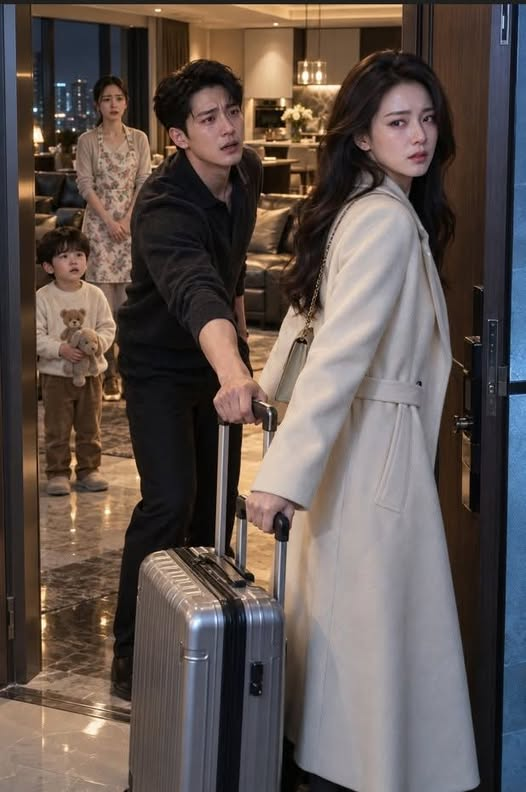
I laughed.
Apparently my title remained unchanged.
Adrian looked embarrassed.
“Her name is Emma.”
Noah considered this.
“Aunt Emma?”
I nearly choked.
Adrian covered his face.
“Noah.”
“What?”
I laughed harder than I had in years.
Claire arrived a moment later.
She had been buying coffee.
Seeing the four of us together should have hurt.
Instead, something unexpected happened.
I understood.
This wasn’t the family that had replaced me.
It was a family formed after I’d already left.
There was a difference.
And admitting that difference freed me from anger I hadn’t realized I was carrying.
Adrian and I began speaking occasionally after that.
Not as husband and wife.
Not even as friends at first.
Just two people finally discussing the marriage they’d failed to discuss while living inside it.
He admitted he’d thought giving me space was respect.
I admitted I’d interpreted his silence as indifference.
He’d waited for me to ask him to fight.
I’d waited for him to fight without being asked.
So neither of us did.
Four years passed.
Sometimes marriages don’t collapse because someone is cruel.
Sometimes two people simply become experts at saying nothing.
A year after our divorce, Adrian invited me to Noah’s fifth birthday.
I almost refused.
Then I went.
Claire opened the door.
No apron this time.
“Emma!”
Noah ran toward me.
“Aunt Emma!”
Apparently he’d won that argument.
I handed him his present.
Adrian appeared behind him.
Our eyes met.
There was no awkwardness anymore.
Just history.
Later that evening, Adrian and I stood outside.
“Are you happy?” he asked.
I considered it.
“Yes.”
He nodded.
“Good.”
“And you?”
“Better.”
I glanced through the window.
Claire was helping Noah build a toy train.
“Are you two…?”
“No.”
He smiled.
“She started dating someone six months ago.”
I raised an eyebrow.
“Does Noah approve?”
“Unfortunately, yes.”
We both laughed.
Then Adrian became serious.
“Emma.”
“Yes?”
“If I asked you out someday, would that be ridiculous?”
I stared at him.
“Your ex-wife?”
“Yes.”
“The woman you divorced?”
“Technically, you divorced me too.”
“Convenient argument.”
“I’ve had a year to prepare it.”
I smiled.
But I didn’t answer immediately.
Because this time, neither of us was going to mistake silence for an answer.
Finally I said:
“Coffee.”
His eyes widened slightly.
“One coffee.”
“That’s more than I expected.”
“Don’t ruin it.”
“I’ll try.”
Coffee didn’t magically repair us.
There were months of conversations.
Counseling.
Uncomfortable truths.
And moments when both of us considered walking away again.
But this time, we spoke.
That changed everything.
Two years after our divorce, Adrian and I began dating seriously again.
We didn’t move in together.
We didn’t rush.
We learned who the other person had become.
Not who we remembered.
Three years after the divorce, Adrian proposed.
I stared at the ring.
Then at him.
“You realize our success rate with marriage isn’t impressive.”
“I’ve reviewed the data.”
“And?”
“Terrible historical performance.”
I laughed.
“But improved communication metrics.”
“Adrian.”
“Sorry.”
He became serious.
“If you say no, I’ll still be grateful we found our way back to being people who can speak honestly.”
That was why I said yes.
Not because four years apart hadn’t happened.
Because they had.
Not because divorce had been a mistake.
It wasn’t.
We needed the ending before we could decide whether anything new deserved to begin.
At our second wedding, Noah carried the rings.
Before walking down the aisle, he whispered loudly:
“Dad, don’t mess it up again.”
Everyone heard.
Claire laughed.
I laughed.
Even Adrian did.
“I’ll do my best.”
Noah nodded solemnly.
“Good.”
Years earlier, I’d opened the door to my old house and found another woman cooking while a little boy called my husband Dad.
I thought I was witnessing proof that I’d been replaced.
I was wrong.
Noah wasn’t Adrian’s secret son.
Claire wasn’t his lover.
But that didn’t mean our problems had been imaginary.
The real third person in our marriage had always been silence.
It slept between us.
Ate dinner with us.
Followed me to Singapore.
Waited with Adrian in that empty house.
And almost succeeded in making two people who once loved each other remain strangers forever.
The first time Adrian and I married, we believed love meant the other person should simply know.
The second time, we knew better.
Love didn’t eliminate difficult conversations.
It required them.
And whenever silence began settling between us again, one of us would finally ask the question we’d wasted four years avoiding:
“What are you really trying to tell me?”
This time, we stayed long enough to hear the answer.
