After dinner, I stopped looking at Canh Dien.
Not deliberately.
There was simply no reason anymore.
For three years, every small movement of his had been enough to affect my mood.
If he looked at me, I could secretly be happy all afternoon.
If he ignored me, I would lie awake wondering what I had done wrong.
If he treated Co Han Lam gently, I would spend hours persuading myself that they were only friends.
How exhausting.
Now that I had decided to give up, I suddenly discovered the amusement park was actually beautiful.
Bui Chieu Yen bought me ice cream.
My classmates dragged me toward the haunted house.
Someone placed a ridiculous birthday crown on my head.
I laughed until my stomach hurt.
And for the first time that evening, I forgot Canh Dien existed.
That was when he began following me with his eyes.
“Co Ly.”
I had just stepped away from the group when his voice came from behind me.
I turned around.
Canh Dien stood beneath a streetlamp.
“What?”
He seemed unprepared for my calmness.
His lips moved.
Finally, he asked:
“Are you going home with Bui Chieu Yen?”
“Yes.”
His eyebrows immediately tightened.
“It’s late.”
“He lives near my house.”
“I can take you.”
“No need.”
I smiled.
“You should take Han Lam home. You brought her here, so you’re responsible for her.”
Canh Dien’s expression stiffened.
“She can call a taxi.”
I almost laughed.
Three hours earlier, he had insisted she couldn’t be left alone because she didn’t know anyone.
Now she could suddenly take a taxi?
“It’s okay.”
I waved.
“Good night.”
I turned around.
“Co Ly.”
Again.
This time, his voice sounded strangely tense.
I stopped.
“What now?”
Canh Dien stared at me for several seconds.
“Your necklace…”
My hand touched the blue stone Bui Chieu Yen had given me.
“What about it?”
“Don’t wear it for too long. I told you the material might irritate your skin.”
“Oh.”
I nodded.
“I’ll have it tested tomorrow.”
His shoulders seemed to relax.
“If it’s fake, throw it away.”
“No.”
His expression immediately darkened again.
“Why?”
“Because it was a birthday gift.”
I smiled.
“The value isn’t in the stone.”
Canh Dien went completely silent.
Perhaps neither of us realized then how cruel those words were.
Because somewhere in his room was probably another gift.
One he had never given me.
The next morning, my future changed again.
Not through glowing comments.
Through a message.
Bui Chieu Yen sent me a photograph.
It showed the black jade pendant Canh Dien had given Co Han Lam.
Underneath was another photograph.
An enlarged image of the golden clasp.
There wasn’t an L engraved inside.
There were two letters.
CL.
My initials.
Co Ly.
I stared at the screen.
Bui Chieu Yen immediately called.
“Tell me I’m seeing things.”
I couldn’t speak.
“That guy gave your sister a pendant engraved with your initials?”
“I don’t know.”
“Want me to ask him?”
“No.”
My answer came surprisingly quickly.
Bui Chieu Yen became quiet.
“You really don’t want to know?”
I looked out the window.
Three days ago, I would have done anything for an explanation.
Today?
“No.”
Because if Canh Dien had bought it for me and then given it to Han Lam, that was his decision.
If he had bought it for Han Lam and the initials meant something else, that was also his business.
Love shouldn’t require detective work.
At school on Monday, I changed seats.
Not because of Canh Dien.
At least that was what I told myself.
I simply moved closer to Bui Chieu Yen because we had been assigned to the same competition team.
Canh Dien entered the classroom and stopped.
His eyes landed on my empty chair.
Then on me.
Then on Bui Chieu Yen.
He said nothing.
Of course.
Canh Dien’s greatest talent had always been saying nothing.
Days passed.
I stopped waiting for him after class.
Stopped bringing an extra breakfast.
Stopped sending him photographs of interesting stones.
Stopped saving him a seat in the library.
Only after I stopped did I realize how many small ways I’d been loving him.
And apparently, only after I stopped did Canh Dien notice them too.
One morning, he stood beside my desk.
“Why didn’t you buy soy milk today?”
I blinked.
“Why would I?”
“You always buy two.”
“I was thirsty enough for one.”
His expression became strange.
Another afternoon:
“Are you going to the library?”
“No.”
“Why?”
“Chieu Yen and I are preparing for the competition.”
Again that silence.
Then:
“You spend a lot of time with him lately.”
I finally looked up.
“Canh Dien.”
He stiffened.
“You don’t need to report where you go with Han Lam.”
His face changed.
“So I don’t need to report where I go with Chieu Yen.”
For once, he had absolutely nothing to say.
Two weeks later, Co Han Lam returned the jade pendant.
In front of me.
She placed the box on Canh Dien’s desk.
“I think this belongs to my sister.”
The classroom became silent.
Canh Dien immediately looked at me.
I kept reading.
Han Lam bit her lip.
“I noticed the initials.”
His fingers tightened around his pen.
“I gave it to you.”
“But you didn’t buy it for me.”
She was right.
Eventually, the truth came out.
Canh Dien had ordered the pendant months earlier.
For my eighteenth birthday.
He had chosen the stone because he remembered my obsession with minerals.
He had personally designed the clasp.
He had even engraved my initials.
Then three days before my birthday, something happened.
He saw me laughing with Bui Chieu Yen.
And heard someone joking that we looked like a couple.
Canh Dien, who had secretly liked me for years, became convinced that I liked someone else.
So he did what only Canh Dien could do.
Nothing.
He changed his mind.
At the birthday dinner, when his mother asked about the gift, he panicked and gave it to Han Lam instead.
Then allowed everyone to misunderstand.
I stared at him.
“So you liked me.”
His ears turned red.
“Yes.”
“For how long?”
He looked away.
“A long time.”
“And your solution was to treat me as if you disliked me?”
Silence.
I almost wanted to laugh.
The future comments had been completely right.
Wooden-headed.
Hopelessly wooden-headed.
“Co Ly.”
Canh Dien stepped toward me.
“I can explain.”
“I understand perfectly.”
His face brightened slightly.
Then I finished:
“But understanding doesn’t mean I’m going to continue liking you.”
He froze.
Perhaps that was the first moment Canh Dien realized the future wasn’t guaranteed.
Knowing someone loved you did not create an obligation to wait for them.
And seeing a possible future did not mean I had to walk toward it.
Winter arrived.
Bui Chieu Yen and I won second place in the academic competition.
Canh Dien began doing something he’d apparently never learned before.
Trying.
He waited after class.
He asked whether I wanted breakfast.
He brought me a geology magazine after seeing an article about rare minerals.
When I declined something, he didn’t become cold.
He simply tried again another day.
Slowly.
Awkwardly.
Without demanding an answer.
And strangely, that was when I began seeing the boy behind all that silence.
Not the perfect childhood friend I’d imagined.
Just Canh Dien.
Stubborn.
Jealous.
Terrible at communication.
But learning.
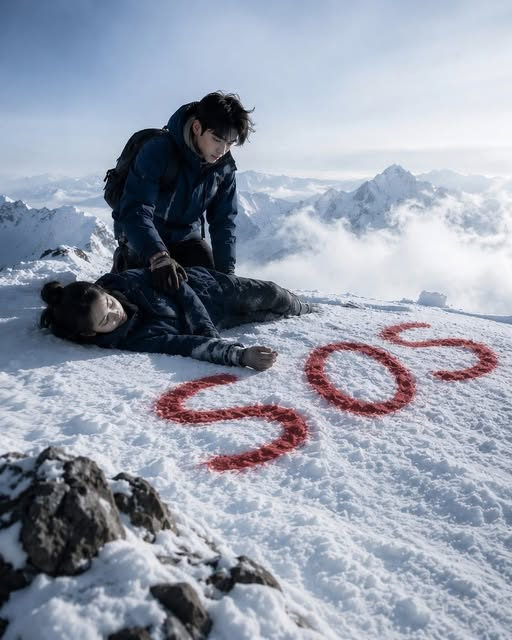
The future vision returned only once that winter.
Snow.
A mountain.
Canh Dien reaching toward me.
Then the image vanished before I could understand more.
I remembered the first vision.
The comments had shown us together years later.
Once, that would have made me ecstatic.
Now it frightened me.
Because I finally understood something.
A future wasn’t a promise.
It was only one possible road.
On graduation day, Canh Dien found me beneath the old ginkgo tree.
This time, he didn’t look away.
“I like you.”
No hesitation.
No excuses.
No Co Han Lam.
No silence.
Just four words he’d spent years refusing to say.
I smiled.
His eyes immediately brightened.
Then I said:
“But I’m not ready to date you.”
His face fell.
“Okay.”
“You’re not going to ask why?”
“I know why.”
That answer surprised me.
He looked down.
“I spent years making you guess.”
Then he raised his eyes again.
“I don’t have the right to ask you to trust me immediately just because I finally learned to speak.”
For the first time, Canh Dien said exactly the right thing.
We went to different universities.
He kept in touch.
So did Bui Chieu Yen.
Life became larger than childhood love.
I studied.
Traveled.
Made new friends.
Collected stones from every city I visited.
And Canh Dien remained somewhere in that growing world.
Not chasing.
Not disappearing.
Simply present.
Three years later, during winter break, our old classmates organized a trip to the mountains.
Standing beneath falling snow, I suddenly remembered the vision.
The mountain.
Canh Dien.
Blood.
Fear.
My heart tightened.
Then the weather changed.
A storm arrived faster than predicted.
Our group became separated during evacuation.
For the first time, the future I’d seen stopped feeling like fiction.
“Co Ly!”
Canh Dien’s voice came through the snow.
He found me near the trail marker.
The rescue team reached us not long afterward, and everyone returned safely.
Nothing happened exactly as the vision had shown.
No destiny demanded a sacrifice.
No tragedy was required to prove love.
Later, wrapped in blankets inside the rescue station, I looked at him.
Canh Dien caught me staring.
“What?”
I suddenly started crying.
He panicked.
“Are you hurt?”
I shook my head.
Then laughed through my tears.
“No.”
I finally understood.
The future had changed.
Maybe because I changed.
Maybe because he did.
Or perhaps those visions had never been commands.
They had only shown what might happen if two stubborn people continued making the same choices.
Canh Dien sat beside me.
I reached out and took his hand.
He stopped breathing.
“Canh Dien.”
“Yes?”
“I think I’m ready now.”
His fingers trembled around mine.
“For what?”
I smiled.
“For you to ask me properly.”
His eyes reddened.
Then, after years of silence, the boy who had once been too afraid even to give me a birthday present finally asked the simplest question in the world.
“Co Ly, will you be my girlfriend?”
This time, I didn’t need the future to tell me my answer.
“Yes.”
And perhaps that was why our ending became different from the one I’d seen at eighteen.
I didn’t confess because fate pushed me into his arms.
Canh Dien didn’t earn me through suffering.
We reached each other because he learned to speak, and I learned not to wait.
Years later, when he proposed, he did it first.
No hesitation.
No misunderstanding.
No future comments required.
And hanging beside my wedding photograph was an old blue stone on a silver string.
Cheap.
Possibly dyed.
Still one of my favorite birthday gifts.
Because Canh Dien had eventually learned what I’d understood long before him:
The value of a gift was never in the stone.
It was in whether someone had the courage to give their heart honestly.
