I thought hanging up would end it.
It didn’t.
Leo called again.
Then Central Hospital.
Then a number I recognized immediately.
Professor Daniel Hart.
My former mentor.
I stared at his name for ten seconds before answering.
“Clara.”
He didn’t call me Mrs. Cole.
That mattered.
“I’ve reviewed Adrian’s scans.”
I closed my eyes.
“How bad?”
“Very.”
The surgeon in me answered before the wife could stop her.
“Brainstem involvement?”
“The fragment shifted approximately three millimeters. There’s edema and intermittent compression. His neurological responses are deteriorating.”
My fingers tightened around the phone.
“Who is operating?”
Silence.
Then Daniel said:
“Nobody.”
“You have Chen. Martinez is in Boston.”
“Both refused.”
I understood why.
Three years earlier, when Adrian had been brought into my operating room after an explosion at one of Cole Industries’ factories, I had spent eleven hours inside his skull.
I knew every millimeter of that injury.
I knew where the fragment rested.
I knew which artery curved behind it.
I knew the tiny movement that could turn surgery into death.
And I was the one who had developed the surgical plan for removing it if it ever shifted.
Daniel’s voice softened.
“I know what he did tonight.”
Of course he knew.
Half the city probably did.
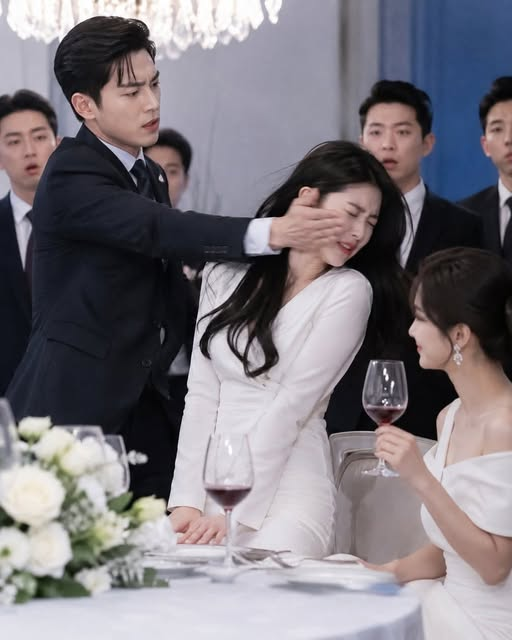
Someone had already uploaded the slap.
“Then you know why I’m not coming.”
“I do.”
That answer surprised me.
He continued:
“And if you tell me no, I will never say you were wrong.”
I looked at myself in the mirror.
The mark on my face was turning purple.
“But?”
“But I’m not calling his wife.”
Daniel paused.
“I’m calling Dr. Clara Hayes.”
That hurt.
Because I had buried her.
I had buried her for Adrian.
For three years, my surgical hands had held champagne glasses instead of instruments.
My medical journals gathered dust while I organized charity dinners.
Adrian once told me that he hated coming home to an exhausted surgeon.
So I stopped being one.
And now everyone suddenly remembered exactly who I was.
“When does the window close?” I asked.
“Possibly hours.”
I ended the call.
Twenty minutes later, I was driving toward Central Hospital.
Not for Adrian.
I repeated that to myself.
Not for my marriage.
Not because he deserved forgiveness.
I went because a patient was dying and I possessed knowledge that might save him.
Those were separate things.
They had to be.
When the elevator doors opened, Leo was waiting.
So was Valeria.
She was still wearing the red dress.
Her mascara had run.
When she saw my face, she looked away.
“Clara…”
I walked past her.
She grabbed my arm.
“Please save him.”
I looked at her hand until she released me.
“You don’t get to ask me for anything tonight.”
Her face went white.
Inside the consultation room, five specialists were studying Adrian’s scans.
I forgot the banquet immediately.
I became Dr. Hayes.
“Show me the latest imaging.”
Daniel looked at me.
Then smiled.
Not happily.
Proudly.
For the next forty minutes, we planned.
The fragment had moved exactly where I’d always feared it would.
Operating could kill him.
Waiting probably would.
Before entering surgery, I was handed the consent documents.
Leo signed as Adrian’s authorized representative.
Then he whispered:
“If he wakes up…”
“Don’t.”
I looked at him.
“I don’t want apologies delivered through assistants.”
I entered the operating room.
The surgery lasted thirteen hours.
At hour six, Adrian’s blood pressure crashed.
At hour nine, we nearly lost motor response.
At hour twelve, I finally saw the fragment.
Tiny.
Jagged.
Almost ridiculous.
Something smaller than my fingernail had controlled three years of our lives.
I steadied my hand.
“Forceps.”
Nobody breathed.
One movement.
Then another.
I removed it.
The monitor remained stable.
Only then did I realize tears were running behind my surgical mask.
Not because I loved Adrian.
Maybe part of me still did.
But because after three years, my hands remembered who they were.
Adrian woke thirty-one hours later.
I wasn’t there.
I had already gone home.
Two days later, divorce papers were delivered to his hospital room.
He refused to sign.
Not because he disputed the settlement.
Because he wanted to see me.
I refused.
Then Daniel called.
“Your patient is being difficult.”
“He’s your patient now.”
“He says he won’t sign until you answer one question.”
I sighed.
“What question?”
“Why did you save him?”
So I went.
Adrian looked smaller in the hospital bed.
A surgical dressing covered part of his head.
His movements were slow.
When he saw me, his eyes immediately went to my cheek.
The bruise was yellow now.
His face collapsed.
“Clara.”
I remained near the door.
“Ask your question.”
His eyes filled with tears.
“Why?”
“Because I’m a doctor.”
“That can’t be all.”
“It has to be.”
He looked down.
“I remember hitting you.”
“Good.”
“I remember what I said.”
“Even better.”
“Valeria told me the truth.”
I said nothing.
“She told me she was the one who approached you three years ago.”
I frowned.
Adrian swallowed.
“She asked you to stay away from me.”
The memory returned immediately.
Valeria crying outside my hospital office after Adrian’s first surgery.
Telling me they belonged together.
Telling me Adrian would always love her.
I had walked away.
Months later, Adrian pursued me.
He proposed.
I had believed he’d chosen me.
“She also admitted,” he continued, “that there was never a relationship between us when you and I met.”
My eyes narrowed.
“Then why did you call me the mistress?”
His voice broke.
“Because she told me you knew we were planning to reconcile.”
“I didn’t.”
“I know.”
“Now.”
He closed his eyes.
“She showed me messages. They were edited.”
I almost laughed.
“So you humiliated your wife in front of a hundred people without asking her a single question.”
“Yes.”
“You slapped a woman based on screenshots.”
“Yes.”
“And now that you’ve discovered you were wrong, I’m supposed to feel better?”
“No.”
He looked at me.
“You’re supposed to divorce me.”
That silenced me.
Adrian pushed the signed papers toward me.
“I signed everything.”
I didn’t move.
“I spent three years believing that because you gave up surgery for me, it proved you loved me.”
His eyes filled again.
“I never asked what it cost you.”
I took the papers.
“That’s the first true thing you’ve said to me in a long time.”
He nodded.
Then he whispered:
“Did you ever love me?”
“Yes.”
That seemed to hurt him more than no would have.
“Do you still?”
I looked at the man whose life I had saved twice.
Once with a scalpel.
Once by leaving before we destroyed whatever remained of ourselves.
“Enough to want you alive.”
He waited.
“But not enough to remain your wife.”
I walked out.
I returned to medicine three months later.
At first, nobody trusted me with complicated cases.
Three years away mattered.
So I retrained.
Observed.
Studied.
Assisted.
Started again.
It was humbling.
And wonderful.
My first independent surgery after returning lasted four hours.
When I removed my gloves, my hands were trembling.
Daniel was waiting outside.
“Welcome back, Dr. Hayes.”
I cried in the locker room.
Not for Adrian.
For myself.
The video of his slap had followed me for months.
Then something unexpected happened.
Adrian publicly addressed it.
No excuses.
No edited story.
No blaming medication, stress or Valeria.
At a press conference, he said:
“I assaulted and publicly humiliated my wife. Whatever I believed at the time does not excuse what I did.”
Then he stepped down temporarily from several public roles.
I watched thirty seconds of the clip.
Then turned it off.
Accountability didn’t require my applause.
Valeria disappeared from our lives.
Adrian and I divorced quietly.
Two years later, I saw him again.
I was leaving an international neurosurgery conference when someone called:
“Dr. Hayes.”
I turned.
Adrian stood several feet away.
He looked healthy.
There was a thin scar near his hairline.
“Congratulations,” he said.
“For?”
“I heard you’re heading the new neurological trauma center.”
I smiled.
“I am.”
For a moment, neither of us spoke.
Then Adrian touched the scar.
“I think about that night sometimes.”
“So do I.”
“You could have let me die.”
“No.”
I shook my head.
“I couldn’t.”
Hope flickered in his eyes.
I extinguished it gently.
“But don’t confuse that with wanting you back.”
He nodded.
“I don’t anymore.”
That surprised me.
“I finally understood something.”
“What?”
“You saved me because of who you are.”
His voice became quiet.
“And I lost you because of who I was.”
For the first time, Adrian Cole had nothing else to ask from me.
I walked away.
Years later, people still remembered the banquet.
Some remembered the slap.
Others remembered the emergency surgery the following morning.
They liked telling the story as if it were romantic.
The cruel husband humiliates his brilliant wife.
His life suddenly falls into her hands.
She saves him.
He regrets everything.
Love wins.
But they always got the ending wrong.
I didn’t save Adrian because love won.
I saved him because I refused to let his cruelty decide what kind of person I became.
And I didn’t leave because I hated him.
I left because saving someone’s life does not mean giving them the rest of yours.
Adrian’s slap ended our marriage.
But strangely, his surgery gave something back to me.
My hands.
My name.
My profession.
Myself.
That night, in front of a hundred people, Adrian Cole called me a mistress and made me feel smaller than I had ever felt.
The next morning, unconscious beneath surgical lights, his entire future rested between the fingers of the woman he’d humiliated.
I saved his life.
Then I signed my old name beneath the surgical report.
Dr. Clara Hayes.
And for the first time in three years, I finally saved mine.
