Julian’s hand slowly fell from my shoulder.
For the first time since I had known him, he looked frightened.
Not angry.
Not irritated.
Frightened.
“What did you just say?”
I leaned back against the passenger seat.
“You heard me.”
“Clara, you’re drunk.”
“Not drunk enough to forget three nights ago.”
His face changed.
I continued calmly.
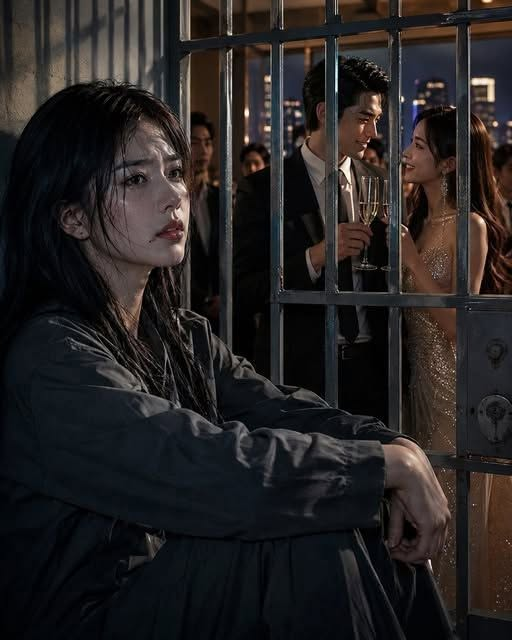
“I heard you outside the police station.”
Silence.
“Nina asked if you were afraid I’d discover you were pretending to have amnesia.”
His fingers tightened around the steering wheel.
“And you told her locking me up gave you our anniversary weekend together.”
“Clara—”
“Seven years.”
My voice cracked for the first time.
“Seven years I learned your medication schedule. I attended therapy with you. I practiced those stupid memory exercises until I could do them in my sleep.”
I laughed.
“And there was nothing wrong with you.”
“It started as a real condition.”
I stared at him.
Interesting.
Not denial.
Explanation.
“It was real after the accident,” he continued quickly. “But I recovered gradually.”
“When?”
He looked away.
“When, Julian?”
“About two years ago.”
Two years.
My stomach turned.
For two years, every episode had been theater.
Every time he stared through me as if I were nobody.
Every time I cried in the bathroom afterward.
Every time I introduced myself to my own husband.
Every time Nina somehow remained the only person he “remembered.”
A performance.
“Take me home.”
“Clara, listen—”
“Take me home.”
He slammed his palm against the steering wheel.
“I never meant for you to spend three days in jail!”
I looked at him.
“You told the police you didn’t know me.”
“I thought they would hold you for a few hours!”
That sentence ended whatever remained.
Not because he wanted me imprisoned for three days.
Because apparently a few hours had been acceptable.
I opened the car door.
He grabbed my wrist.
“Where are you going?”
“Home.”
“I’ll drive.”
“No.”
“Clara.”
I turned back.
“You spent two years pretending you couldn’t recognize my face.”
I pulled my wrist free.
“From now on, you can practice for real.”
The next morning, I contacted a lawyer.
Not for divorce alone.
For evidence preservation.
The first thing she asked was whether Julian had ever received treatment for his supposed condition.
“Yes.”
“Doctors?”
“Several.”
“Therapists?”
“Yes.”
“Insurance records?”
“Everything.”
She became quiet.
“Good.”
“Why good?”
“Because either he was sick or he wasn’t. And if he recovered while continuing to represent himself as severely impaired, there may be records establishing when that changed.”
Then I remembered something.
The police station.
Nina’s voice.
Julian’s answer.
“Would security cameras have audio?”
My lawyer paused.
“Possibly.”
Within forty-eight hours, a formal preservation request was submitted.
I moved out before Julian understood what was happening.
He returned from work and found half the closet empty.
My wedding ring was on the table.
Beside it was a note containing four words:
I remember everything now.
He called seventy-three times.
I answered none.
Then Nina called.
I answered her.
“Clara, you’re taking this too far.”
I almost admired her confidence.
“Which part?”
“Julian made a stupid joke.”
“A joke?”
“He never wanted you arrested.”
“Then why did he tell the police I was a stranger?”
Silence.
Finally she said:
“You were suffocating him.”
There it was.
The justification.
“You monitored him constantly. You followed him everywhere. You wouldn’t let him breathe.”
I smiled.
“Nina, do you know why I monitored him?”
No answer.
“Because your boyfriend told me he had a neurological condition that could leave him disoriented and vulnerable.”
“He’s not my boyfriend.”
“Excellent. Tell that to my lawyer.”
She hung up.
The divorce petition was served the following week.
That was when Julian stopped being arrogant.
He appeared outside my temporary apartment.
“Clara, open the door.”
I didn’t.
“I ended things with Nina.”
Silence.
“I know I hurt you.”
Silence.
“I’ll go back to therapy.”
That almost made me laugh.
Then he said the one thing that proved he still understood nothing.
“If you come home, we can forget all this.”
I walked to the other side of the door.
“No, Julian.”
He became quiet.
“You can forget.”
My hand rested against the wood.
“That was always your specialty.”
Then the evidence arrived.
His medical records showed that specialists had documented substantial recovery nearly twenty-two months earlier.
But there was more.
Messages recovered from a shared tablet I had legally retained contained conversations between Julian and Nina.
At first, they joked about his “episodes.”
Then they planned them.
One message from Nina read:
“Pretend not to remember her at dinner. I want to see her face.”
Julian had replied:
“You’re evil.”
Then:
“Fine.”
Another conversation was worse.
Three days before our anniversary, Nina wrote:
“I want the whole weekend.”
Julian answered:
“I’ll handle Clara.”
And on the morning I was arrested:
“If she comes home early, I’ll do the amnesia thing again.”
My lawyer looked at me across her desk.
“Do you want to proceed aggressively?”
“Yes.”
Julian had believed forgetting me was a game.
Now dates mattered.
Messages mattered.
Medical documentation mattered.
Statements mattered.
And his sworn claim to the police mattered most of all.
The consequences arrived one after another.
The false report was investigated.
The divorce became impossible for him to control privately.
His company’s board learned about the situation after legal proceedings exposed inconsistencies in representations he had made concerning his health.
Nina disappeared the moment being with Julian stopped feeling glamorous.
She released a statement claiming she had believed his marriage was “already effectively over.”
Julian blamed her.
She blamed Julian.
I blamed neither.
I simply handed over evidence.
Six months later, our divorce was finalized.
Julian waited outside the courthouse.
He looked terrible.
“Clara.”
I kept walking.
“Please.”
I stopped.
He approached slowly.
“Nina is gone.”
“That has nothing to do with me.”
“I know.”
He swallowed.
“I lost my position.”
I said nothing.
“My parents barely speak to me.”
Still nothing.
“I know you probably think I deserve it.”
“No.”
He looked surprised.
“I don’t spend time deciding what you deserve anymore.”
That hurt him.
Good or bad, judgment would still have made him important.
Indifference did not.
His eyes filled.
“Was I really that terrible to you?”
I stared at him.
Then I raised my right hand.
Crossed my fingers.
And placed them over my heart.
Our memory anchor.
His face collapsed.
“Clara…”
“Do you remember this?”
“Of course.”
His voice broke.
“I remember everything.”
“So do I.”
He began crying.
“I loved you.”
“Maybe you did.”
“I still do.”
“That doesn’t change what you did.”
He reached toward me but stopped before touching me.
“I wish I could go back.”
“To which part?”
He looked confused.
“To before everything.”
“Before Nina?”
“Yes.”
“Before the fake episodes?”
“Yes.”
“Before the police?”
“Yes.”
I shook my head.
“That’s the problem, Julian. You want to go back to when I didn’t know.”
His eyes closed.
“You don’t want to become the man who wouldn’t hurt me.”
I stepped away.
“You want me to become the woman who hadn’t discovered that you already had.”
I never saw him privately again.
Two years later, I moved to another city.
I changed jobs.
Changed apartments.
Cut my hair shorter than Julian ever liked.
For months, I still woke up sometimes with my fingers crossed over my heart.
Muscle memory.
Seven years of loving someone leaves strange ghosts behind.
Eventually, even that stopped.
One evening, while clearing old files from my phone, I found a video from our fifth anniversary.
Julian was behind the camera.
I was laughing.
Then he called my name.
I turned immediately.
No hesitation.
Because I always recognized his voice.
I watched that moment twice.
Then deleted it.
For years, I had been terrified that Julian’s illness would make him forget me.
That fear controlled everything.
I loved harder.
Forgave faster.
Asked for less.
Accepted more.
In the end, Julian’s cruelest trick wasn’t pretending that he had forgotten who I was.
It was convincing me that remembering me was something I had to earn.
I know better now.
The night he had me arrested, Julian wanted three days without his wife.
He got them.
Then he got the rest of his life.
And I finally gave myself the same thing:
A life without him.
