Daniel called again twenty minutes later.
I declined it.
Then Margaret called.
I declined that too.
By lunchtime, I had seventeen missed calls.
At 1:08 p.m., a message appeared.
Elena, Mom is having a panic attack. Please call me.
I stared at it.
For five years, those words would have been enough.
Mom is upset.
Mom is afraid.
Mom can’t sleep.
Mom’s blood pressure is high.
And every time, Daniel and I rearranged our lives around Margaret’s emotions.
I used to call it filial responsibility.
Now I understood what it had become.
A leash.
I replied:
Contact her doctor if it’s a medical emergency.
Daniel called immediately.
This time I answered.
“Elena, what happened to you?”
“Nothing.”
“You know Mom can’t handle stress.”
“And yet she handled forcing her son to divorce remarkably well.”
Silence.
“That’s unfair.”
“No, Daniel. What was unfair was expecting me to sacrifice the biggest appointment of my career so neither of you had to confront her fear.”
“This isn’t only about her.”
“Then why didn’t you come with me?”
He said nothing.
I waited.
Finally:
“I was scared too.”
That surprised me.
Not because he was scared.
Because it was the first honest sentence he had spoken since I received the transfer order.
“My father went west,” he continued. “Then he never came home.”
My anger softened.
But only slightly.
“You could have told me that.”
“I didn’t know how.”
“So you asked me to give up my position instead.”
“I thought there would be another opportunity.”
I closed my eyes.
“Of course you did.”
“What does that mean?”
“It means opportunities are always replaceable when they belong to me.”
He went quiet.
I continued.
“Do you know how many engineers were considered for this appointment?”
“No.”
“Forty-three.”
Silence.
“Do you know how many women?”
“No.
“Six.”
I looked at the red seal on my desk.
“I spent ten years becoming qualified enough that when the country needed someone for this project, my name was on that list.”
“And your solution was: send someone else.”
His voice became small.
“I’m sorry.”
I believed he was.
That didn’t mean I was going back.
“Elena, about the house…”
There it was.
I almost laughed.
“We genuinely didn’t know.”
“I know.”
“Can you ask Housing Administration for an extension?”
“No.”
“Just thirty days.”
“No.”
“Where is Mom supposed to go?”
I leaned back.
“Where did she live before our marriage?”
Silence.
“She still owns that apartment, doesn’t she?”
“It’s rented.”
“Then she has rental income.”
“It’s a small place.”
“So?”
He exhaled sharply.
“You’re enjoying this.”
That erased the last trace of sympathy.
“No, Daniel.”
My voice went cold.
“I’m preparing to leave for one of the most important assignments of my life. I don’t have time to enjoy your housing problem.”
Then I hung up.
Two days later, I flew to Xinjiang.
Nobody came to the airport with me.
I thought that would hurt.
Instead, when the plane rose through the clouds, I felt lighter than I had in years.
The Tianshu Project was harder than anything I had imagined.
Long days.
Dry air.
Equipment failures.
Meetings that lasted until midnight.
Temperatures that punished both machines and people.
But nobody there asked me whose wife I was.
Nobody asked whether Daniel approved of my schedule.
Nobody told me ambition was unbecoming in a married woman.
They called me:
“Director Shaw.”
The first time, I almost turned around to see who they meant.
Three weeks later, Daniel appeared at the project base.
I found him waiting outside the administrative building with a suitcase.
“What are you doing here?”
“I requested leave.”
“Why?”
“To see you.”
I stared at him.
He looked exhausted.
“Mom moved back to her apartment.”
“Good.”
“She’s furious.”
“That sounds normal.”
Despite himself, he almost smiled.
Then his expression became serious.
“I found Dad’s letters.”
I froze.
“What letters?”
“My mother kept them.”
He opened his bag.
Inside was a bundle of old envelopes.
“My father wrote them during his final assignment.”
Daniel handed me one.
I read silently.
His father had written about the mountains.
The work.
The cold.
About missing his wife and son.
But there was no regret.
One sentence stood out:
If Daniel grows up, don’t teach him to fear the road that took me away. Teach him to choose his own road and walk it well.
I looked up.
Daniel’s eyes were red.
“My mother never showed me.”
He laughed bitterly.
“She spent twenty years telling me Dad regretted leaving.”
“He didn’t?”
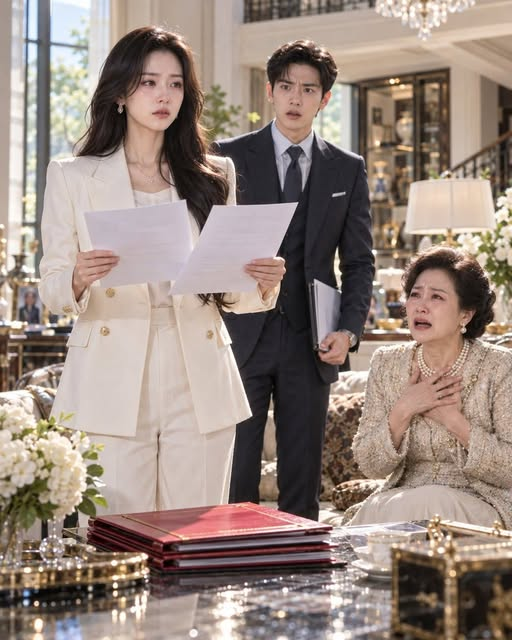
“No.”
Daniel shook his head.
“He believed in what he was doing.”
For the first time, I understood Margaret a little better.
She hadn’t only lost her husband.
She had rewritten him into a warning because anger was easier to live with than grief.
But understanding someone’s wound does not require living inside it.
Daniel looked toward the distant project buildings.
“I used her fear as an excuse.”
“Yes.”
“I let her make decisions for us.”
“Yes.”
“And whenever you refused, I made you feel selfish.”
I said nothing.
“I thought keeping Mom calm meant keeping the family together.”
He looked at me.
“I didn’t realize I was destroying my own.”
The old Elena would have stepped forward.
She would have comforted him.
Maybe even forgiven him before he finished apologizing.
I stayed where I was.
“What do you want, Daniel?”
“You.”
“No.”
The answer came easily.
His face fell.
“I love you.”
“I believe you.”
“Then why can’t we try?”
“Because love wasn’t the problem.”
I stepped closer.
“You loved me as long as loving me didn’t require disappointing your mother.”
He closed his eyes.
“And when you finally had to choose?”
“You asked me to become smaller.”
That evening Daniel flew home alone.
I thought that was the end.
It wasn’t.
But what came afterward happened slowly.
Margaret wrote me a letter six months later.
Not an apology.
Not really.
She explained herself.
Her husband’s death.
Her fear.
Her loneliness.
At the end, she wrote:
I thought if my son stayed close, I would never lose another person. I didn’t understand that holding him so tightly was another way of losing him.
I kept the letter.
I didn’t answer.
Some understanding arrives too late to restore intimacy.
Two years passed.
The Tianshu Project reached its first major milestone.
I was promoted to technical director.
At the ceremony, I stood beside engineers who had become closer than family.
My father’s old colleague attended.
So did several officials.
And in the last row, unexpectedly, sat Daniel.
Alone.
Afterward, he approached.
“Congratulations, Director Shaw.”
I smiled.
“Thank you.”
He had changed.
Not dramatically.
There was no grand speech.
No flowers.
No promise that he had become another person.
He simply looked steadier.
“Mom started therapy,” he said.
“That’s good.”
“I moved out.”
“Also good.”
“And I transferred to the western division last year.”
That surprised me.
“You did?”
He nodded.
“I needed to learn whether I was afraid of Xinjiang or afraid of disobeying her.”
“And?”
A faint smile.
“Mostly the second.”
We stood quietly.
Then he held out his hand.
“I’m not asking you to come back.”
I looked at it.
“I know.”
“I just wanted to congratulate you.”
I shook his hand.
For the first time since our divorce, touching him didn’t hurt.
It also didn’t feel like coming home.
And that was enough.
Years later, people still occasionally told the story as if I had chosen a career over my marriage.
They were wrong.
I had wanted both.
A career I had spent ten years earning.
And a husband willing to stand beside me while I pursued it.
Daniel was the one who believed only one could survive.
So I let him choose.
And when he chose his mother’s fear over our future, I finally chose myself.
As for the institutional house Margaret once thought belonged to her son?
Seven days after I left, she handed over the keys.
Another engineer’s family moved in soon afterward.
That felt appropriate.
Because the house had never been a reward for being Daniel Reed’s wife.
It had been entrusted to Engineer Elena Shaw.
And once I understood the difference, I stopped apologizing for everything else I had earned too.
