When the car stopped in front of my apartment, Adrian got out first.
He came around to my side and reached for me.
“I’ll carry you.”
“No need.”
“Clara, your leg—”
“I have crutches.”
I opened the door myself.
His hand remained suspended in the air.
For some reason, that seemed to hurt him.
Two years ago, I would have wrapped my arms around his neck without hesitation.
Now I carefully placed one crutch on the pavement.
Then the other.
I stood.
Slowly.
Painfully.
Alone.
Adrian followed me upstairs carrying my hospital bag.
The moment he entered the apartment, he stopped.
There was a wheelchair beside the sofa.
A shower chair in the bathroom.
Medicine organized in labeled boxes.
Frozen meals stacked in the refrigerator.
A neighbor had moved the rug so I wouldn’t slip.
My colleague had installed a temporary handrail.
Everything had been arranged.
Without him.
“Who did all this?”
“My friends.”
“You asked them?”
“Yes.”
His expression changed.
“You could ask them but not me?”
I looked at him.
“They never told me I was a problem.”
Silence.
I immediately regretted how cruel it sounded.
Then I realized something.
It wasn’t cruel.
It was true.
Adrian put my bag down.
“I said that because I was tired.”
“You said it many times.”
“I didn’t mean literally never call me when you need help.”
“How was I supposed to know which version you meant?”
He opened his mouth.
Nothing came out.
I moved toward the bedroom.
He followed.
“Let me stay tonight.”
“No.”
“You were discharged after surgery.”
“I’ll manage.”
“Clara, I’m a doctor.”
I turned around.
“Yes.”
That stopped him.
“You are.”
I looked directly at him.
“And somehow that made it worse.”
His face tightened.
“I don’t understand.”
“When Victoria said her back hurt, you crossed the city.”
I continued.
“When I had a fever of almost forty degrees, you told me you weren’t an internist.”
His eyes dropped.
“When she twisted her waist because she saw an insect, you went after working all day.”
“When I couldn’t sleep after my grandmother died, you said you had surgery the next morning and went home.”
“Clara…”
“And when I broke my leg?”
My voice became quieter.
“You didn’t even know.”
He looked devastated.
But I wasn’t finished.
“The strange thing is, Adrian, I don’t blame you for not knowing.”
He looked up.
“I didn’t tell you.”
I smiled faintly.
“That’s what scares me.”
Because somewhere during those two years, I had stopped believing my pain was information he needed.
Adrian sat down.
For once, the city’s best orthopedic surgeon looked completely helpless.
“I can change.”
I looked at him.
“Maybe.”
His head lifted.
“But I’m tired of being the reason you practice.”
That night, I asked him to leave.
He did.
The next morning, Victoria Quinn called me.
I almost didn’t answer.
Then curiosity won.
“Clara?”
“Yes.”
“This is Victoria.”
“I know.”
There was an awkward pause.
“I heard about your accident.”
“From Adrian?”
“Yes.”
“Of course.”
She ignored that.
“I wanted to explain something.”
I laughed softly.
“Everybody wants to explain things after they’re discovered.”
“Nothing happened between Adrian and me.”
I became quiet.
“I never said it did.”
That seemed to surprise her.
“We’re friends.”
“I know.”
“He’s helped me for years because I have recurring back problems.”
“I know that too.”
“Then why are you angry with me?”
“I’m not.”
She stopped.
That was the truth.
Victoria wasn’t my girlfriend.
She had never promised to prioritize me.
Adrian had.
“You called,” I said.
“He came.”
“You needed something.”
“He provided it.”
“My problem isn’t that you asked.”
I looked down at my immobilized leg.
“My problem is that I spent two years asking the same man and being taught that asking was wrong.”
Victoria said nothing.
Then, unexpectedly:
“I didn’t know.”
“Know what?”
“That he treated you that way.”
I smiled sadly.
“Why would you?”
She hesitated.
Then said:
“There’s something else.”
I waited.
“The anniversary night wasn’t an emergency.”
I already knew that in my heart.
Hearing it still hurt.
“What happened?”
“My back hurt a little after the event.”
Her voice became uncomfortable.
“I mentioned it.”
“And Adrian?”
“He insisted on coming.”
I closed my eyes.
“He said he had a patient.”
“I know.”
“He didn’t.”
Victoria swallowed.
“I thought you should know.”
After we hung up, I sat quietly for a long time.
Then I laughed.
The laugh became crying.
Not because Victoria had won.
Because finally there was nothing left to rationalize.
Adrian hadn’t been dragged away from me.
He had wanted to go.
Three days later, he arrived with groceries.
“I thought you might need—”
“Victoria called me.”
His hand froze on the bag.
I watched his face.
“She told me.”
He slowly put the groceries down.
“Clara…”
“You lied.”
“Yes.”
At least he didn’t insult me with another denial.
“Why?”
He rubbed his face.
“I don’t know.”
“Yes, you do.”
Silence.
“Why?”
He finally sat down.
“Victoria needed me.”
“So did I.”
“I know.”
“No. Why did her needing you matter more?”
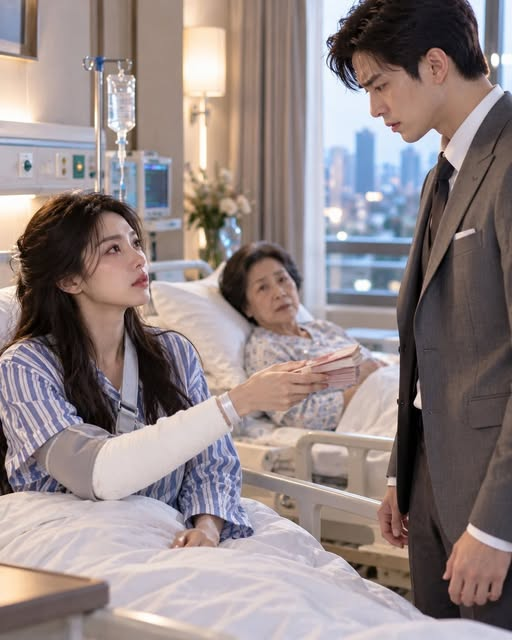
His answer took a long time.
“Because with Victoria…”
He stopped.
“Say it.”
“With Victoria, I felt important.”
That hurt.
But I understood immediately.
“And with me?”
His eyes reddened.
“Safe.”
There it was.
The entire relationship in two words.
Victoria made him feel needed.
I made him feel secure.
So he ran toward the person whose approval remained uncertain and neglected the woman he assumed would always be waiting.
“I knew you’d understand,” he whispered.
I smiled through tears.
“You mean you knew I’d forgive you.”
He closed his eyes.
“Yes.”
“Again.”
“Yes.”
“And again.”
His voice cracked.
“Yes.”
I nodded.
“Thank you.”
He looked confused.
“For what?”
“For finally telling the truth.”
I reached into the drawer beside me.
I took out his apartment key.
Then I placed it on the table.
“We’re done.”
His face emptied.
“No.”
“Yes.”
“Clara, wait.”
“I’ve been waiting for two years.”
“I can fix this.”
“No.”
“I’ll stop seeing Victoria.”
“That isn’t what I’m asking.”
“I’ll block her.”
“Adrian.”
“I’ll transfer hospitals if that’s what—”
“Stop.”
He stared at me.
“This isn’t about eliminating Victoria.”
I pushed the key toward him.
“If she disappeared tomorrow, I’d still remember every time you taught me that needing you was embarrassing.”
His eyes filled with tears.
“Please.”
It was the first time Adrian Blake had ever begged me for anything.
Once, that would have been enough.
Now it was only sad.
“I love you.”
“I know.”
“Then don’t do this.”
I shook my head.
“Love isn’t the only thing a relationship needs.”
He looked at me.
“It also needs to feel safe to say, ‘I need you.’”
He left without the groceries.
I kept them.
Breaking up did not magically make recovery easy.
Some mornings my leg hurt so badly that getting to the bathroom made me cry.
Physical therapy was worse.
I hated the exercises.
I hated depending on people.
I hated stairs.
But slowly, I healed.
The first day I walked without crutches, my physiotherapist clapped.
I cried.
Not because of Adrian.
Because my body had carried me through something my heart had not expected to survive either.
Meanwhile, Adrian changed.
I heard about it from mutual friends.
He stopped leaving appointments for Victoria.
He set boundaries.
He started therapy.
He reduced some of his impossible workload.
Victoria eventually moved to another city for a film project.
Apparently Adrian didn’t follow.
Six months after our breakup, he sent me one message.
No flowers.
No gifts.
No dramatic declaration.
Just:
“I finally understand that I kept calling you demanding whenever your needs interfered with what I wanted. I’m sorry.”
I read it.
Then I wrote:
“Thank you for understanding.”
Nothing more.
A year passed.
My leg healed almost completely.
The metal hardware remained.
So did a thin scar.
My life changed too.
I started traveling again.
Actual business trips this time.
I accepted a promotion.
I moved apartments.
I stopped treating solitude like evidence that nobody loved me.
And then, eighteen months after our breakup, I saw Adrian again.
Ironically, in a hospital.
Not because I was injured.
My colleague’s daughter had broken her wrist, and I had accompanied them to the emergency department.
I was standing beside the vending machines when I heard:
“Clara?”
I turned.
Adrian.
White coat.
Same serious eyes.
But something about him was different.
Perhaps because I no longer saw him through the desperate hope that he would become who I needed.
His gaze dropped immediately to my leg.
“You’re walking normally.”
“Yes.”
“Any pain?”
“When it rains.”
His doctor expression appeared automatically.
Then disappeared.
“Sorry.”
I smiled.
“You’re allowed to ask.”
He nodded.
“How are you?”
“Good.”
“I heard you were promoted.”
“I was.”
“Congratulations.”
“Thank you.”
A nurse appeared.
“Dr. Blake, Room Seven is asking for you.”
“I’ll be there.”
He didn’t immediately leave.
The old Adrian might have made the patient wait.
The new one looked toward the room.
Then back at me.
“I should go.”
“Yes.”
He hesitated.
“Clara…”
I waited.
“I really did love you.”
I believed him.
That was perhaps the saddest thing.
“I know.”
“I just wasn’t good at loving you.”
I smiled.
“No.”
He smiled too.
Then he went to his patient.
I watched him disappear through the doors.
And I felt nothing break.
Two years after the accident, I returned to the restaurant where we’d celebrated—or failed to celebrate—our anniversary.
I didn’t go there because of Adrian.
My friends had chosen it for my birthday.
When the waiter brought dessert, someone asked about the scar on my leg.
I told them I’d fallen from a pedestrian bridge.
“Were you alone?”
I thought about the question.
“Yes.”
Then I reconsidered.
“No.”
They looked confused.
I smiled.
“I had myself.”
That night, walking home, it started raining.
My leg ached slightly.
I slowed down.
Then my phone rang.
For one second, memory transported me back to that hospital room.
Adrian standing in the doorway.
Where are you?
On a business trip.
Clara. Raise your head.
At the time, I’d thought he had finally understood because he’d seen my broken leg.
He hadn’t.
The fracture only forced him to look at something much more serious.
By the time I was willing to undergo surgery without telling my surgeon boyfriend, our relationship had already been broken for a long time.
I had simply become so accustomed to the pain that I hadn’t named it.
Adrian wasn’t a monster.
He was a man who believed the person who loved him most would require the least care.
And I wasn’t punishing him when I stopped asking.
I had simply learned his lesson too well.
Don’t bother me.
Don’t need me.
Handle it yourself.
So I did.
I learned to eat alone.
Sleep alone.
Go to doctors alone.
Recover alone.
And eventually—
I learned to be happy without him too.
My leg took months to heal.
My heart took longer.
But there was one difference.
The surgeon could repair the bone.
The relationship required two people willing to repair what had broken.
Adrian finally became willing.
I simply wasn’t waiting anymore.
