The silence lasted only a few seconds.
Then every reporter started talking at once.
“Dr. Moore, are you saying you operated on your own husband?”
“Mr. Whitmore, was Vanessa Lane with you during the accident?”
“Were you married at the time?”
“Is Dr. Moore referring to your former lover?”
I handed the microphone back.
“I came here to talk about San Aurelio.”
Then I turned toward the departure gate.
“Amelia.”
Elliot’s voice stopped me.
I looked back.
He had wheeled himself forward.
His face was pale.
“Five minutes.”
“No.”
“Please.”
That word almost made me laugh.
Elliot Whitmore rarely asked.
He instructed.
Expected.
Waited for everyone else to adjust.
“Our flight leaves soon.”
“Then give me two.”
The cameras were still watching.
I walked toward a quieter corridor.
Elliot followed.
The moment we were alone, he asked:
“Did you really believe Vanessa was my lover?”
I stared at him.
“That’s your defense?”
“She wasn’t.”
“Not physically?”
His silence answered.
I nodded.
“Thank you for clarifying the technicality.”
“Amelia.”
“You protected her with your body. You spent three years making me live with the consequences. Then you went on television and told the entire country that saving her was the decision you were proudest of.”
His fingers tightened around the wheelchair.
“I didn’t mean to humiliate you.”
“That may be worse.”
He looked up.
“Why?”
“Because it means you didn’t think about me at all.”
That struck him harder than anger would have.
He said nothing.
I checked my watch.
“One minute.”
His expression changed.
“I haven’t signed.”
“The divorce papers?”
“Yes.”
“You will.”
“And if I don’t?”
“Then my attorney will proceed without your cooperation.”
For the first time, Elliot seemed to understand that this wasn’t one of our old arguments.
I wasn’t waiting for him to fix it.
I was leaving.
His voice dropped.
“Don’t go to San Aurelio.”
I smiled sadly.
“You still think you get to decide where I go.”
“It’s dangerous.”
“I know.”
“You could die.”
“So could anyone.”
His face hardened.
“Amelia.”
I stepped closer.
“Three years ago, you made your instinctive choice when that truck came toward you.”
He went still.
“Now I’m making mine.”
I turned.
This time he didn’t call me back.
For six weeks, San Aurelio consumed everything.
Collapsed buildings.
Crush injuries.
Children with names written on tape around their wrists because nobody knew where their parents were.
There was no room for Elliot.
And strangely, that saved me.
For three years, my life had revolved around pain.
His pain.
His rehabilitation.
His appointments.
His insomnia.
His anger at the body that no longer obeyed him.
In San Aurelio, I remembered that I was a surgeon before I became Mrs. Whitmore.
One night, after fourteen hours in surgery, my colleague Daniel handed me my phone.
“Your ex-husband is on television again.”
I almost refused to look.
Then I saw the headline.
ELLIOT WHITMORE RESPONDS TO WIFE’S REVELATION.
He sat in the same wheelchair.
But this time there was no polished smile.
A reporter asked:
“Did Dr. Amelia Moore save your life after you were injured protecting Vanessa Lane?”
“Yes.”
“Was Ms. Lane your lover?”
Elliot paused.
“No. But I was emotionally attached to her in a way that was unfair to my wife.”
I stopped breathing.
He continued.
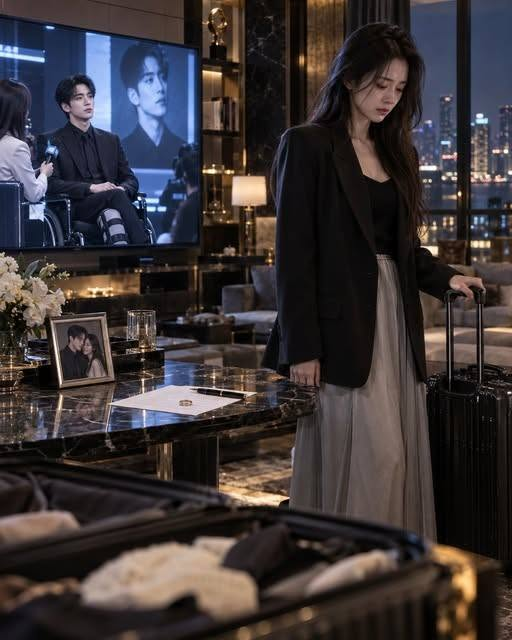
“Dr. Moore operated on me for hours after discovering that I had risked my life for another woman. Then she spent three years helping me recover.”
His voice faltered.
“The interview I gave recently was truthful about what I did during the accident, but it was cruel because I spoke as though that moment existed without everything Amelia did afterward.”
A reporter asked:
“Do you regret saving Vanessa?”
“No.”
My chest tightened.
Then Elliot added:
“But I regret making my wife pay for that choice every day afterward.”
I turned off the screen.
For once, he had told the truth.
It didn’t bring me back.
When I returned home seven weeks later, the divorce papers were waiting at my attorney’s office.
Signed.
No conditions.
No fight.
Just Elliot’s name.
I stared at it for a long time.
Then I signed the final documents.
Our marriage ended quietly.
Vanessa contacted me two months later.
I almost deleted her message.
Instead, I agreed to meet once.
She looked nervous.
“I owe you an apology.”
“You don’t owe me fidelity. Elliot did.”
She lowered her eyes.
“I loved him.”
“I know.”
“He loved me too.”
“I know that too.”
Her eyes filled.
“But after the accident, he told me we couldn’t continue whatever existed between us.”
That surprised me.
“He said you had saved him and stayed beside him when he had nothing left to offer anyone.”
I laughed softly.
“That didn’t stop him from making you the great love story of his interview.”
“No.”
She looked ashamed.
“I think Elliot spent years romanticizing the accident because admitting what it cost you would have forced him to admit what kind of husband he’d been.”
That stayed with me.
Perhaps she was right.
But understanding someone isn’t the same as returning to them.
A year passed.
I became director of trauma surgery at a new medical center.
Elliot underwent another operation on his leg.
I wasn’t his surgeon.
That mattered more than I expected.
For the first time, his pain belonged to him and his medical team.
Not to me.
He learned to walk short distances with a cane.
The first time I saw him standing again was at a medical foundation gala.
He crossed the room slowly.
Painfully.
But without assistance.
“Amelia.”
“Elliot.”
His eyes moved over my face.
“You look happy.”
“I am.”
He nodded.
Then he said:
“I used to think you stayed because you needed me.”
I almost smiled.
“I stayed because I loved you.”
“I know that now.”
He looked down at his cane.
“And I think I used that love like another mobility aid.”
That was such an Elliot way of saying it that I laughed.
To my surprise, he did too.
Then his expression softened.
“If I’d understood sooner…”
“Don’t.”
He stopped.
We both knew how that sentence ended.
If he’d understood.
If I’d left sooner.
If Vanessa hadn’t returned.
If the truck hadn’t lost control.
A life could disappear inside enough ifs.
“I am sorry,” he said.
“I know.”
“Do you forgive me?”
I thought about it.
“Yes.”
His eyes lifted.
“But I’m not coming back.”
“I know that too.”
There was sadness in his smile.
But no argument.
That was the last gift our marriage gave me.
An ending that no longer required someone to be destroyed.
Two years later, the same journalist interviewed me after I returned from another humanitarian mission.
He remembered our first conversation.
Of course he did.
“Dr. Moore, may I ask you the question again?”
I smiled.
“Go ahead.”
“If you had to choose one thing in your life that you will never regret, what would it be?”
This time, I didn’t look for Elliot in the crowd.
I didn’t need to.
“Leaving when I understood that staying was costing me who I was.”
The journalist lowered the microphone slightly.
I continued.
“I don’t regret saving my former husband’s life. I was his surgeon. That was my responsibility.”
And that was true.
For a long time, I had confused saving Elliot with loving Elliot.
They weren’t the same.
One belonged to the operating room.
The other belonged to a marriage.
I had succeeded at the first.
The second had ended.
And neither truth diminished the other.
Three years earlier, Elliot Whitmore had protected the person he cared about most when death came toward him.
I had spent too long wondering why that person wasn’t me.
Eventually, I understood that I had been asking the wrong question.
The important question was never who Elliot would save.
It was who I would save when my own life was disappearing.
In the end, the answer was simple.
Me.
