The next morning, I called a lawyer.
Not Álvaro.
Not my mother.
Not Marina.
A lawyer.
“My husband is a police officer,” I said. “I want a divorce, sole residential custody of my daughter, and every record related to the kidnapping.”
There was a pause.
“Every record?”
“Every second.”
Because something had been bothering me.
Marina had said she couldn’t protect Lía.
But nobody had asked the obvious question.
Why had my six-year-old daughter been with Marina when the kidnapping happened?
Lía had been supposed to be at school.
Three days later, my lawyer obtained the first reports.
Marina had picked Lía up early.
Without telling me.
She had used the emergency authorization I had given her years earlier.
Her explanation?
“A family outing.”
There had been no family outing.
The kidnappers had been following Marina.
And she knew it.
According to her first police statement, she had received threatening messages for two weeks because of a debt left by her late husband.
She told no one.
Instead, on the day of the kidnapping, she picked up Lía before collecting Teo.
But she never reached Teo’s school.
They took her first.
My hands shook as I read the report.
She had brought my daughter into danger while trying to protect her own son.
Exactly what everyone had accused me of being cruel for suggesting.
I requested the tactical recordings next.
That was where the truth became unbearable.
Álvaro had been positioned across from the abandoned warehouse.
The kidnapper stood behind Marina.
Lía was several meters away.
Then something changed.
The kidnapper moved.
Lía ran toward Marina.
And Álvaro fired.
First shot.
Lía’s right arm.
She fell.
Second shot.
Her left leg.
She screamed.
Third shot.
Her leg again.
Only the fourth bullet struck the kidnapper.
I watched the recording once.
Never again.
But my lawyer did.
So did an independent firearms expert.
His conclusion destroyed Álvaro’s explanation.
The first shot could possibly be defended as a catastrophic error made under pressure.
The next two could not be explained so easily.
Álvaro had changed his aim between shots.
He knew where Lía was.
He kept firing.
Why?
The answer came from the tactical radio recording.
A commander shouted:
“Castañeda, hold fire! Child in the line!”
Then Álvaro’s voice:
“He’s moving toward Marina.”
Not the hostage.
Not the civilian.
Marina.
His entire calculation had centered on her.
When I confronted him, he didn’t deny it.
He came to the hospital rehabilitation wing alone.
By then Lía had started learning how to balance her body again.
She hated everyone seeing her struggle.
So we spoke in the hallway.
“You heard the order to hold fire.”
Álvaro closed his eyes.
“Yes.”
“And you fired anyway.”
“Yes.”
“Three times into our daughter.”
His jaw trembled.
“I wasn’t aiming at her.”
“You were the best sniper in your unit.”
He looked at me.
“That’s what makes it worse.”
Silence.
Finally, he whispered:
“I thought Marina was going to die.”
“And Lía?”
“I thought…”
His voice failed.
“What?”
“I thought Lía’s injuries were survivable.”
For several seconds, I couldn’t breathe.
Then I understood.
“You chose.”
“No.”
“Yes.”
I stepped closer.
“You calculated that our daughter could afford to be shot because Marina couldn’t afford to die.”
His eyes filled with tears.
“I owed Javier.”
Javier.
Marina’s dead husband.
Seven years earlier, during an operation, Javier had pushed Álvaro out of the path of gunfire.
Javier died.
Álvaro survived.
From that day forward, guilt became our family religion.
But I finally saw the truth.
“You didn’t owe Javier Marina’s happiness.”
Álvaro said nothing.
“You didn’t owe him Teo’s birthdays.”
Nothing.
“You definitely didn’t owe him our daughter’s arm and leg.”
His shoulders collapsed.
“I know.”
“No.”
I shook my head.
“You know now.”
That distinction mattered.
The internal investigation began soon afterward.
I didn’t ask for revenge.
I asked them to examine the evidence.
Álvaro was removed from operational duty while the shooting was reviewed.
His reputation no longer protected him.
Neither did his medals.
The department had to answer one simple question:
Had an officer disregarded a command and accepted a foreseeable risk to a child because of his personal attachment to another hostage?
Meanwhile, Marina came to see me.
I almost refused.
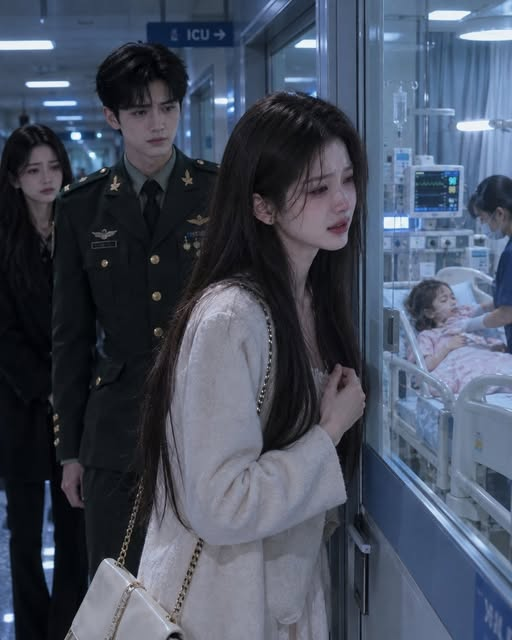
Then Lía asked:
“Why did Aunt Marina take me from school?”
So I agreed.
Marina sat across from me in the hospital cafeteria.
She looked terrible.
“I was scared.”
“So was Lía.”
“The messages threatened Teo.”
“And therefore you took my daughter?”
She started crying.
“I wasn’t thinking.”
“No. You were.”
That stopped her.
“You didn’t collect Teo.”
Her face went white.
“You collected Lía.”
“I thought if they saw I wasn’t alone—”
“You thought having another child with you might protect you.”
“No!”
“Then why mine?”
She couldn’t answer.
That silence told me everything.
Because somewhere inside her, she had made the same calculation Álvaro later made.
Not Teo.
Lía.
Someone else’s child.
My child.
Sacrifice had become so normal in our family that nobody even noticed when they started choosing who should pay.
I stood.
“You will never be alone with Lía again.”
“Selene…”
“And if you want a relationship with me someday, start by telling the truth.”
I walked away.
My mother was harder.
She insisted the family needed forgiveness.
She said Marina had suffered enough.
Álvaro had suffered enough.
Teo was innocent.
Everyone had suffered.
I asked:
“What about Lía?”
She went silent.
Exactly.
Months passed.
Lía’s rehabilitation became our entire world.
She hated her first prosthetic leg.
Called it stupid.
Threw it once.
Then apologized to the physiotherapist.
She learned to stand.
Then fall.
Then stand again.
The first time she crossed the rehabilitation room without assistance, I cried so hard she rolled her eyes.
“Mom, it’s just walking.”
“No.”
I kissed her hair.
“It’s you refusing to stay down.”
The divorce became final eleven months after the shooting.
Álvaro didn’t fight me.
The investigation had changed him.
He lost his sniper position permanently and faced disciplinary consequences for disregarding the command.
I didn’t celebrate.
Nothing they did to him could give Lía back what she had lost.
But consequences mattered.
So did truth.
Two years later, Álvaro asked permission to attend Lía’s school performance.
I asked her.
She thought about it.
“Can he sit in the back?”
“Yes.”
“Then okay.”
He came.
Alone.
No Marina.
No mother.
Just Álvaro.
Lía performed in a school play wearing a specially adapted costume over her prosthetic leg.
When she finished, the audience stood.
Álvaro remained seated for several seconds.
His hands covered his face.
Afterward, he approached us.
“You were incredible.”
Lía looked at him.
“Thanks.”
He didn’t try to hug her.
That mattered.
Then she asked:
“Dad?”
He froze.
“Yes?”
“Why did you shoot me?”
Every adult around us seemed to disappear.
Álvaro knelt.
Not dramatically.
Not asking forgiveness.
Just so he could look at her at eye level.
“Because I made a terrible decision.”
Lía waited.
“I thought I could control what happened.”
His voice shook.
“I thought I could hurt you without losing you.”
My daughter looked at her missing arm.
“You were wrong.”
Tears rolled down his face.
“Yes.”
“Do you still love Aunt Marina more than me?”
Álvaro broke.
“No.”
Lía frowned.
“That’s not what Mom asked.”
He looked at me.
Then back at her.
“On that day, I protected her before I protected you.”
Lía nodded slowly.
Children understand truth better than adults think.
“Okay.”
Álvaro looked almost desperate.
“Okay?”
“I didn’t say I forgive you.”
Then she took my hand.
“I’m hungry.”
We left.
Three more years passed.
Lía grew.
So did I.
My mother eventually learned that access to my daughter was a privilege, not a family entitlement.
Marina entered therapy and, for the first time, stopped using her widowhood as permission to let everyone else carry her life.
Álvaro rebuilt a relationship with Lía one centimeter at a time.
Never as the hero.
Never as the victim.
Just as a father who had failed catastrophically and understood that forgiveness could not be demanded.
One afternoon, I watched Lía race across a school athletics field with a running blade.
She came second.
She celebrated as though she had won the Olympics.
Maybe she had.
Álvaro stood on the opposite side of the track.
My mother beside him.
Marina and Teo farther back.
Nobody demanded that I stand with them.
Nobody told Lía to understand.
Nobody asked her to sacrifice her feelings so the adults could feel forgiven.
That was the family I had finally built.
Not perfect.
Accountable.
Lía ran toward me.
“Mom!”
I opened my arms.
She crashed into me laughing.
Over her shoulder, I saw Álvaro watching us.
Once, he had looked through a rifle scope and decided my daughter’s body could absorb the cost of saving someone else.
He had been wrong.
Lía was never anyone’s debt to pay.
Neither was I.
For years, our family had survived by finding one person to sacrifice whenever everyone else wanted peace.
First me.
Then my daughter.
But there was never a third.
Because the day Lía lost her arm and leg, I finally found the one thing that family had spent years teaching me to surrender.
The right to say:
Enough.
