The silence lasted only three seconds.
Then every journalist started talking at once.
“Dr. Moore, are you saying Mr. Whitmore was with another woman during the accident?”
“Were you already married?”
“Mr. Whitmore, is Vanessa Lane the woman you referred to in your interview?”
I handed the microphone back.
“I’m here to discuss San Aurelio.”
Then I walked away.
Elliot called my name.
“Amelia.”
I kept walking.
“Amelia, stop.”
I finally turned.
He was pushing his wheelchair through the crowd himself, ignoring the assistant trying to help him.
His face was pale.
“Five minutes,” he said.
“No.”
“Three.”
“I have a plane to catch.”
His eyes hardened.
“You planned that.”
“What?”
“What you said.”
I almost laughed.
“You publicly announced that protecting Vanessa was the proudest decision of your life, Elliot. I merely supplied the part of the story you forgot.”
“I didn’t forget.”
“Exactly.”
That hurt him.
Good.
He lowered his voice.
“It wasn’t what you think.”
“I don’t care anymore.”
His expression changed.
“You don’t mean that.”
For three years, Elliot had always spoken as though he understood my feelings better than I did.
So I crouched in front of his wheelchair.
“I operated on you for eleven hours.”
He went silent.
“My hands cramped so badly afterward that another surgeon had to remove my gloves.”
His eyes dropped.
“I knew.”
“No, you knew I performed the surgery. You didn’t know what it cost me.”
“Amelia—”
“I watched you nearly die. Then I learned you had almost died protecting another woman.”
His jaw tightened.
“And I still stayed.”
I stood.
“You never had to choose me, Elliot. I made the mistake of choosing you enough for both of us.”
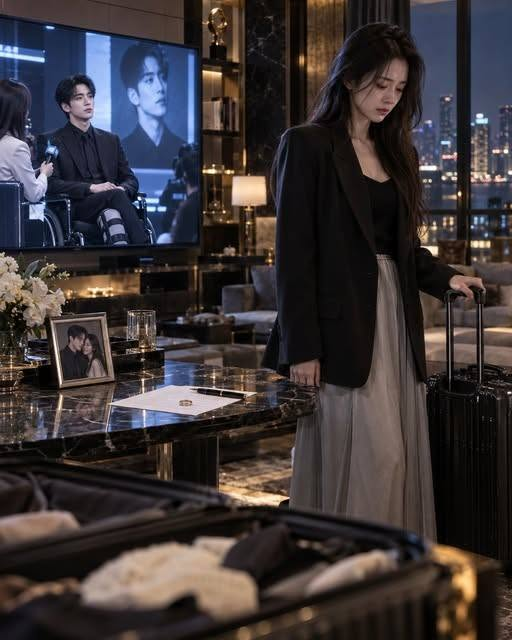
The boarding coordinator called my team.
I picked up my bag.
Elliot caught my wrist.
Not hard.
Almost desperately.
“Don’t go.”
I looked at his hand.
He released me immediately.
“For the marriage?” I asked.
He hesitated.
That hesitation was my final answer.
“No,” he said finally. “San Aurelio is unstable. Aftershocks are continuing. The hospitals are overwhelmed.”
“I’m aware.”
“You could die.”
“So could every doctor going with me.”
“You’re different.”
“Why?”
His mouth opened.
Nothing came out.
I smiled sadly.
“Still can’t say it.”
Then I left.
San Aurelio erased Elliot Whitmore from my thoughts for a while.
There were too many wounded people.
Too many children.
Too many surgeries performed under emergency lights.
For eighteen days, I slept in fragments.
On the nineteenth morning, a nurse handed me a satellite phone.
“Someone has been calling every day.”
I already knew.
“Tell him I’m working.”
“She has. Eighteen times.”
I stared at her.
“Eighteen?”
“One every day.”
I didn’t call back.
When I finally returned home six weeks later, Elliot was waiting outside my apartment.
Not in his wheelchair.
Standing.
With a cane.
I stopped.
His right leg trembled violently.
“What are you doing?”
“Standing.”
“I can see that.”
“My rehabilitation specialist says I can manage forty seconds.”
“You’re already shaking.”
“I know.”
“Sit down.”
“No.”
“Elliot.”
“Please.”
That word stopped me.
He had never been good at please.
“I spent three years using this leg as a chain around your neck,” he said.
My fingers tightened around my suitcase.
“Whenever you pulled away, it hurt. Whenever you wanted something for yourself, it hurt. Whenever I was afraid you might leave…”
He swallowed.
“…suddenly, my leg hurt.”
I stared at him.
“You knew?”
“Not at first.”
His voice cracked.
“But eventually? Yes.”
Something inside me turned cold.
“I knew you would come back if I needed you.”
I wanted to slap him.
Instead, I said:
“That was cruel.”
“Yes.”
No excuse.
No defense.
Just yes.
His leg buckled.
I instinctively moved forward.
Then stopped myself.
Elliot caught the railing.
For the first time, I let him struggle without rescuing him.
He finally sat.
“I signed the papers.”
My heart jumped.
“The divorce?”
He nodded.
“They’re with my attorney.”
I looked away.
It was what I wanted.
So why did it hurt?
“And Vanessa?” I asked.
Elliot became very still.
“She was never my lover.”
I looked at him again.
“Don’t.”
“I’m not asking you to believe me without proof.”
He handed me an envelope.
Inside were messages dated from before the accident.
Vanessa begging Elliot to meet her.
Vanessa saying someone was following her.
Then documents.
Police reports.
Restraining-order applications.
I frowned.
“What is this?”
“Vanessa’s former fiancé was stalking her.”
The night of the accident, Elliot had gone to help her reach a lawyer and secure evidence.
When the truck lost control, Vanessa had frozen.
Elliot pushed her down and covered her.
“So your interview was true.”
“Yes.”
“She mattered most.”
He closed his eyes.
“No.”
“Those were your words.”
“I said I protected the person who mattered most in that moment.”
“That distinction doesn’t help.”
“I know.”
His hands tightened around the cane.
“I thought I was talking about courage.”
He laughed bitterly.
“But when I watched your interview, I understood what everyone else heard.”
I said nothing.
He continued.
“I made one instinctive decision during an accident and spent three years treating it like proof that I was noble.”
His eyes met mine.
“Meanwhile, you made thousands of deliberate decisions to keep me alive.”
That was the apology I had needed three years earlier.
Now it arrived too late.
“I loved Vanessa once,” he said. “Before you. Maybe some part of me loved the memory of her that night. I won’t lie to make myself look better.”
I appreciated that more than I wanted to.
“But none of that excuses what I did to you afterward.”
“No.”
“No.”
He nodded.
Then he handed me another envelope.
The signed divorce agreement.
I looked at his signature.
“You’re not fighting it?”
“I’ve spent three years making your love feel like an obligation.”
His eyes were wet.
“I won’t turn your leaving into one too.”
Two months later, our divorce became final.
Elliot never asked me to reconsider.
He moved out of the house and transferred my belongings himself.
No dramatic flowers.
No midnight calls.
No conveniently painful leg.
He disappeared from my private life.
Almost.
Once every few months, I saw his name in medical charity reports.
The Whitmore Foundation had begun funding trauma rehabilitation programs.
Then emergency surgical teams.
Then a permanent hospital program in San Aurelio.
He never attached my name to any of them.
A year passed.
Then two.
One evening, I was leaving the hospital when someone held the elevator door.
Elliot.
Standing.
No wheelchair.
No cane.
We stared at each other.
“You’re walking.”
“Mostly.”
I smiled despite myself.
“Congratulations.”
“Thank you.”
The elevator descended.
For once, there was no tragedy forcing us together.
No blood.
No marriage.
No obligation.
Just two people who had once loved each other badly.
“How are you?” he asked.
“Happy.”
He nodded.
That answer hurt him.
But he smiled.
“I’m glad.”
I believed him.
When the doors opened, we walked into the lobby.
Vanessa was waiting there.
Beside her stood a man I didn’t recognize and a little girl holding her hand.
Vanessa smiled politely at me.
“Dr. Moore.”
“Vanessa.”
She turned to Elliot.
“The board is upstairs.”
So they worked together.
Nothing more.
And strangely, I felt nothing.
No jealousy.
No anger.
The story I had tortured myself with for years had finally become exactly what it should have been:
Someone else’s story.
Elliot walked beside me toward the exit.
Outside, rain had begun falling.
Almost like the night of his accident.
He stopped beneath the awning.
“Amelia.”
“Yes?”
“If that interviewer asked you the question again…”
I knew exactly what he meant.
What was the one thing I would never regret?
I thought about the operating room.
About leaving.
About San Aurelio.
About loving him.
Even about the divorce.
Then I smiled.
“I’d give a different answer now.”
“What?”
“I don’t regret saving you.”
His eyes widened.
“But I also don’t regret leaving you.”
For a moment, neither of us spoke.
Then Elliot smiled.
Not because he had won me back.
He hadn’t.
Not because everything was forgiven.
Some things didn’t need to be forgotten to stop hurting.
He smiled because, perhaps for the first time, he understood.
Three years earlier, Elliot Whitmore had nearly died protecting someone he cared about.
I had saved his life afterward.
But the greatest thing I ever saved wasn’t my husband.
It was myself.
And this time, I didn’t need a television interview to know I would never regret it.
