“Tang Ninh, don’t go too far.”
Tan Nghien’s voice echoed through the emergency department.
I looked at him.
“Too far?”
“That apartment has been our home for three years.”
“No.”
I corrected him calmly.
“It has been my apartment for eight.”
His expression changed.
The apartment had been bought by my parents before I met him.
Tan Nghien knew that.
He had simply lived there long enough to forget.
I picked up my bag.
“You have until noon tomorrow to remove your belongings.”
“You’re throwing me out?”
“Yes.”
Seven days before our wedding.
At one in the morning.
In front of half the emergency department.
I had never felt calmer.
To Duong immediately whispered:
“Sister Tang, Mr. Tan only helped me because I was sick. If you throw him out because of me, where will he go?”
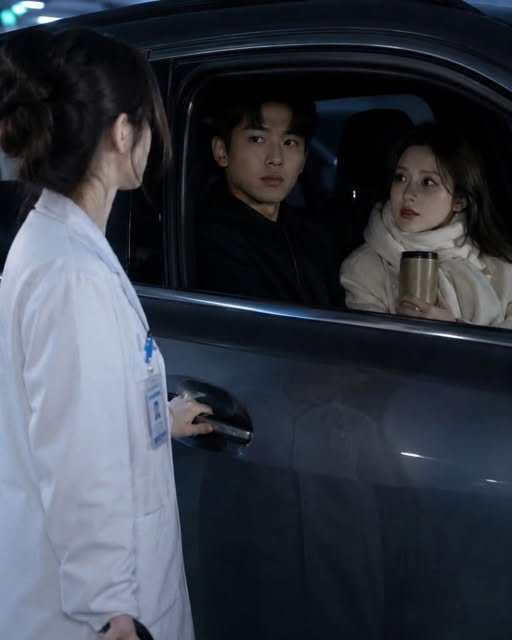
I looked at her scarf.
His scarf.
Then at the thermos in her hands.
“You seem very concerned.”
Her face stiffened.
“So you can help him.”
I walked away.
This time Tan Nghien didn’t follow.
At 8:20 the next morning, my mother called.
“Tang Ninh, what happened?”
“I canceled the wedding.”
Silence.
Then:
“Come home.”
I expected questions.
Pressure.
Maybe anger.
Instead, when I arrived, my father placed breakfast in front of me.
“Eat first.”
My mother sat opposite me.
“Now tell us.”
I told them everything.
The passenger seat.
The scarf.
The thermos.
The way Tan Nghien had stood in front of To Duong in the emergency room and accused me of jealousy.
My father listened without interrupting.
When I finished, he asked:
“Did he cheat?”
“I don’t know.”
“Do you want to know?”
I thought about it.
“No.”
My mother nodded.
“Then that’s enough.”
I looked at her.
She reached across the table.
“Marriage isn’t a criminal trial. You don’t need evidence beyond reasonable doubt to decide you don’t want to marry someone.”
That sentence loosened something inside me.
By noon, Tan Nghien hadn’t collected his things.
So I changed the electronic lock code.
At 12:17, he called.
“You changed the password?”
“I told you noon.”
“I had meetings.”
“That’s unfortunate.”
“Tang Ninh.”
He inhaled sharply.
“Open the door.”
“No.”
“My things are inside.”
“I packed them. Building management has the boxes.”
“You packed my things?”
“Yes.”
“Who gave you the right?”
I looked around my apartment.
“My property certificate.”
Silence.
Then:
“You’re really doing this.”
“Yes.”
He lowered his voice.
“Because To Duong sat in the passenger seat?”
There it was again.
I almost admired his determination not to understand.
“No, Tan Nghien.”
I stood beside the window.
“Because you knew what that seat meant to me.”
He became quiet.
Five years earlier, on our first road trip, Tan Nghien had laughed when I told him I never liked anyone sitting in my partner’s passenger seat.
He had tapped the dashboard.
“Then this is Tang Ninh’s permanent position.”
It was silly.
Childish, even.
But it became ours.
When colleagues needed rides, they sat behind.
When his mother rode with us, I voluntarily gave her the front.
When we argued, the seat stayed empty.
Not because leather and plastic had sacred meaning.
Because boundaries gain meaning when two people agree to respect them.
“You knew,” I said.
“And you still put her there.”
“She was sick.”
“You could have put her in a taxi.”
“She had just left the hospital.”
“So had I.”
He stopped breathing for a moment.
I continued.
“I had just finished a night shift.”
“You came to pick me up.”
“And somehow I became the least important woman in the car.”
“Tang Ninh…”
“Your boxes are downstairs.”
I hung up.
The wedding cancellation became a disaster.
His mother called me twelve times.
His aunt called my mother.
The hotel demanded a cancellation fee.
Relatives began asking questions.
Half the invitations had already been delivered.
I paid my share of the legitimate cancellation costs.
I returned every gift from Tan Nghien’s family.
I canceled the photographer.
Then the florist.
Then the honeymoon.
Every cancellation made the wedding more real in reverse.
Seven days earlier, I had been someone’s bride.
Now I was deleting him appointment by appointment.
On the third day, Trieu An entered the doctors’ lounge carrying her phone.
“You need to see this.”
“I probably don’t.”
“This time you do.”
She showed me a photograph.
To Duong had posted it six months earlier.
Tan Nghien was asleep on an office sofa.
His jacket covered her legs.
Caption:
“Some people pretend to be cold, but they’re actually the gentlest.”
Another photograph showed my thermos on her desk.
Three months earlier.
So that night hadn’t been the first time.
Then came a restaurant.
A business trip.
Two coffees.
Tan Nghien’s hand visible across the table.
Nothing proved an affair.
But everything proved familiarity.
I gave the phone back.
Trieu An looked furious.
“Aren’t you angry?”
“I was.”
“When?”
“When he told me it was just a cup.”
That had been enough.
That evening, Tan Nghien waited outside my apartment building.
He looked terrible.
“Tang Ninh.”
I stopped several steps away.
“To Duong resigned.”
I frowned.
“Why are you telling me?”
“She says everyone at work is talking about her.”
“That’s between her and the company.”
“I told her we need distance.”
I almost laughed.
Seven days too late.
“I’ve returned the scarf.”
“Congratulations.”
“And the thermos.”
“I don’t want it.”
His expression tightened.
“I washed it.”
“Tan Nghien.”
I looked at him.
“I don’t care whether it’s clean.”
He went still.
For the first time, I saw understanding flicker across his face.
It had never been about contamination.
It was ownership of meaning.
He stepped closer.
“Nothing happened between us.”
“I believe you.”
He looked stunned.
“You do?”
“Yes.”
His shoulders dropped in relief.
Then I said:
“I still won’t marry you.”
The relief disappeared.
“Why?”
“Because fidelity is not the only requirement for marriage.”
I spoke slowly.
“I need a husband who doesn’t deliberately test how much disrespect I’ll tolerate.”
“I wasn’t testing you.”
“Then why did you tell me to sympathize with her?”
He couldn’t answer.
“Why did you let her keep my seat when she offered to move?”
Silence.
“Why did she have your scarf?”
Nothing.
“Why had she been using my thermos for months?”
His eyes changed.
He hadn’t known I’d seen the older photograph.
“I can explain.”
“I know.”
I smiled faintly.
“That’s the problem. Everything has an explanation.”
Passenger seat.
Explanation.
Scarf.
Explanation.
Thermos.
Explanation.
Private meals.
Explanation.
Late-night messages.
Explanation.
A relationship can drown in explanations while each individual drop looks harmless.
Tan Nghien lowered his head.
After a while, he said:
“I liked being needed.”
That was the first honest thing he’d said.
“To Duong depended on me at work. She asked my opinion about everything.”
“And I didn’t.”
“No.”
He looked at me.
“You’ve always been independent.”
There it was.
He hadn’t fallen in love with To Duong.
He had fallen in love with the version of himself reflected in her dependence.
With me, he was a partner.
With her, he was necessary.
“Thank you,” I said.
He frowned.
“For what?”
“For finally explaining something that matters.”
His eyes brightened slightly.
I crushed that hope immediately.
“It doesn’t change my decision.”
“Tang Ninh, five years—”
“Five years are not a deposit I lose if I leave.”
His face went pale.
“We were getting married.”
“We almost did.”
“Do you really feel nothing?”
That hurt.
Because I did.
I still loved him.
That was what made leaving difficult.
But difficult wasn’t the same as wrong.
“I feel enough to know that if I marry you now, I’ll spend years checking every passenger seat.”
I stepped past him.
“I don’t want to become that woman.”
The wedding date arrived anyway.
Dates don’t disappear simply because plans do.
I volunteered for a shift.
At 1:03 in the morning, exactly one week after Tan Nghien came to collect me with To Duong beside him, I walked out of the same emergency entrance.
There was no black car waiting.
No fiancé.
No wedding ring.
Only cold air.
Trieu An came running behind me.
“Doctor Tang!”
I turned.
She threw me a set of keys.
“What?”
“Your parents left something downstairs.”
In the parking lot was a small white car.
A red ribbon was tied around it.
On the windshield was a note from my mother.
“Your father says this isn’t a breakup gift. He says you needed a car anyway.”
I laughed until my eyes watered.
I got in.
The passenger seat was empty.
For a moment, I stared at it.
Then I put my bag there.
And drove home.
Eight months later, I saw Tan Nghien again at a medical technology conference.
He approached during the coffee break.
“How are you?”
“Good.”
He nodded.
“To Duong left the company.”
“I heard.”
“She apologized to me before leaving.”
“For what?”
“For crossing boundaries.”
I stirred my coffee.
“And?”
“I told her I was the one who allowed them to move.”
I looked up.
That surprised me.
Tan Nghien smiled bitterly.
“You taught me something expensive.”
“I wasn’t trying to teach you.”
“I know.”
He looked at my hand.
No ring.
I noticed him noticing.
“Are you seeing someone?”
“No.”
He seemed relieved.
I almost laughed.
“You still do that.”
“What?”
“Look for hope where I didn’t offer any.”
He lowered his eyes.
“Sorry.”
Then he asked quietly:
“If I hadn’t let her sit there that night, would we have married?”
I thought about it.
Maybe.
And that answer frightened me more than no.
Because perhaps I would have married him without ever seeing the pattern clearly.
“I don’t know.”
He nodded.
“At least that’s honest.”
Before leaving, he said:
“I kept the engagement ring.”
“Why?”
“I don’t know.”
I looked at him for a moment.
“Maybe because some things should remind us of what we almost did.”
Then I walked away.
People who heard our story always focused on the passenger seat.
Some thought I was ridiculous.
Five years ended over a chair?
No.
The chair didn’t end anything.
It revealed something.
Tan Nghien knew my boundary.
He crossed it.
Then when I reacted, he asked me to make myself smaller so another woman could remain comfortable.
That was the part I couldn’t forget.
Not To Duong.
Not the scarf.
Not even the thermos.
It was the moment I stood outside that car after a night shift and realized my future husband expected me to climb into the back seat of my own relationship.
So I didn’t.
I closed the door.
I walked away.
And seven days before I was supposed to become Mrs. Tan, I made the most important decision of my life.
I stopped arguing about which seat belonged to me.
I chose a life where I didn’t need anyone’s permission to sit in front.
